Why Does My Guinea Pig Stare at Me? Guinea Pig Body Language Explained
- Why Does My Guinea Pig Stare at Me? (Quick Answer)
- What Your Guinea Pig's Stare Usually Means
- Do Guinea Pigs Recognize Their Owners?
- Does My Guinea Pig Staring at Me Mean They Trust Me?
- 7 Common Reasons Your Guinea Pig Stares at You
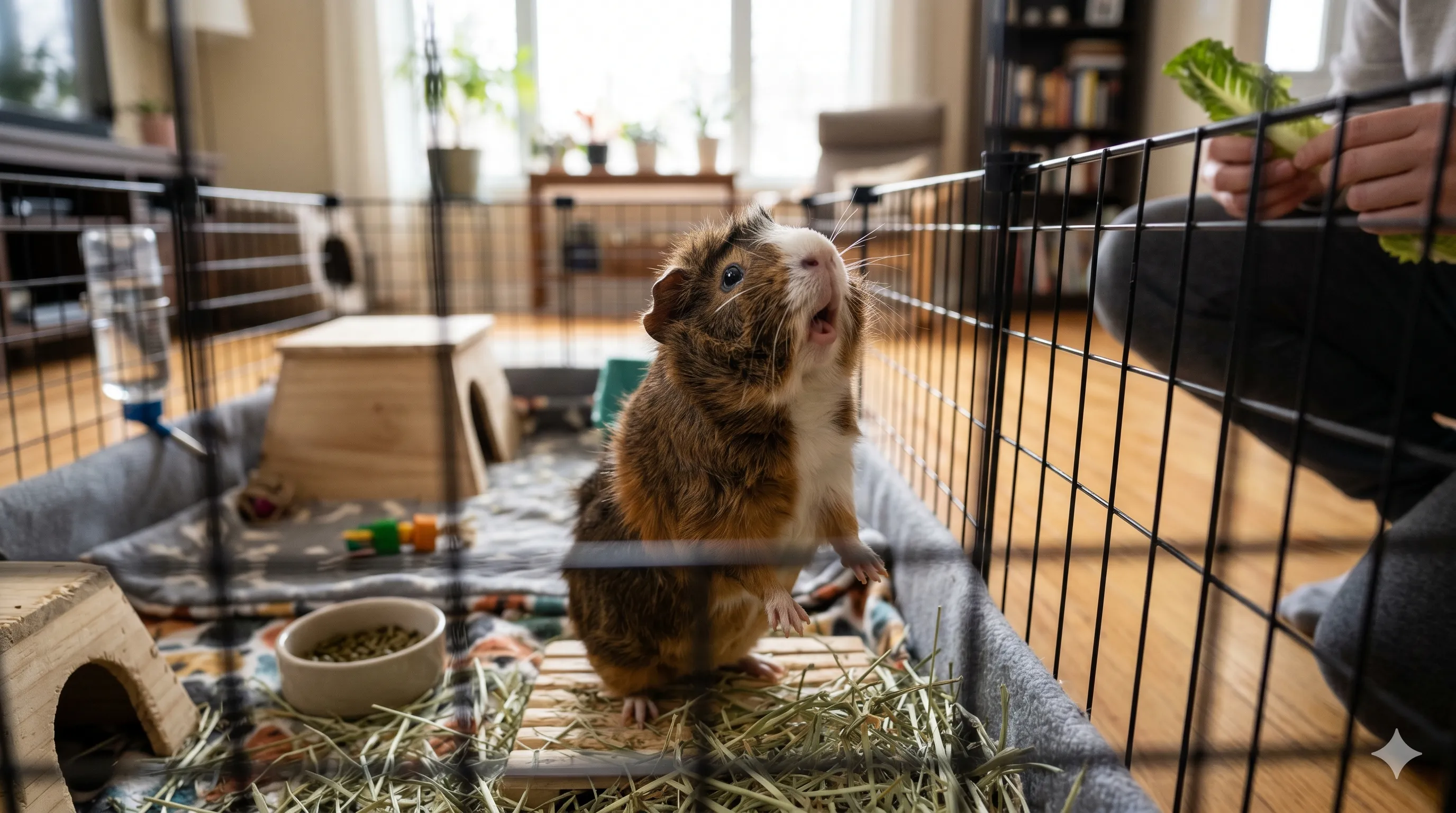
- 1. Your Guinea Pig Is Waiting for Food
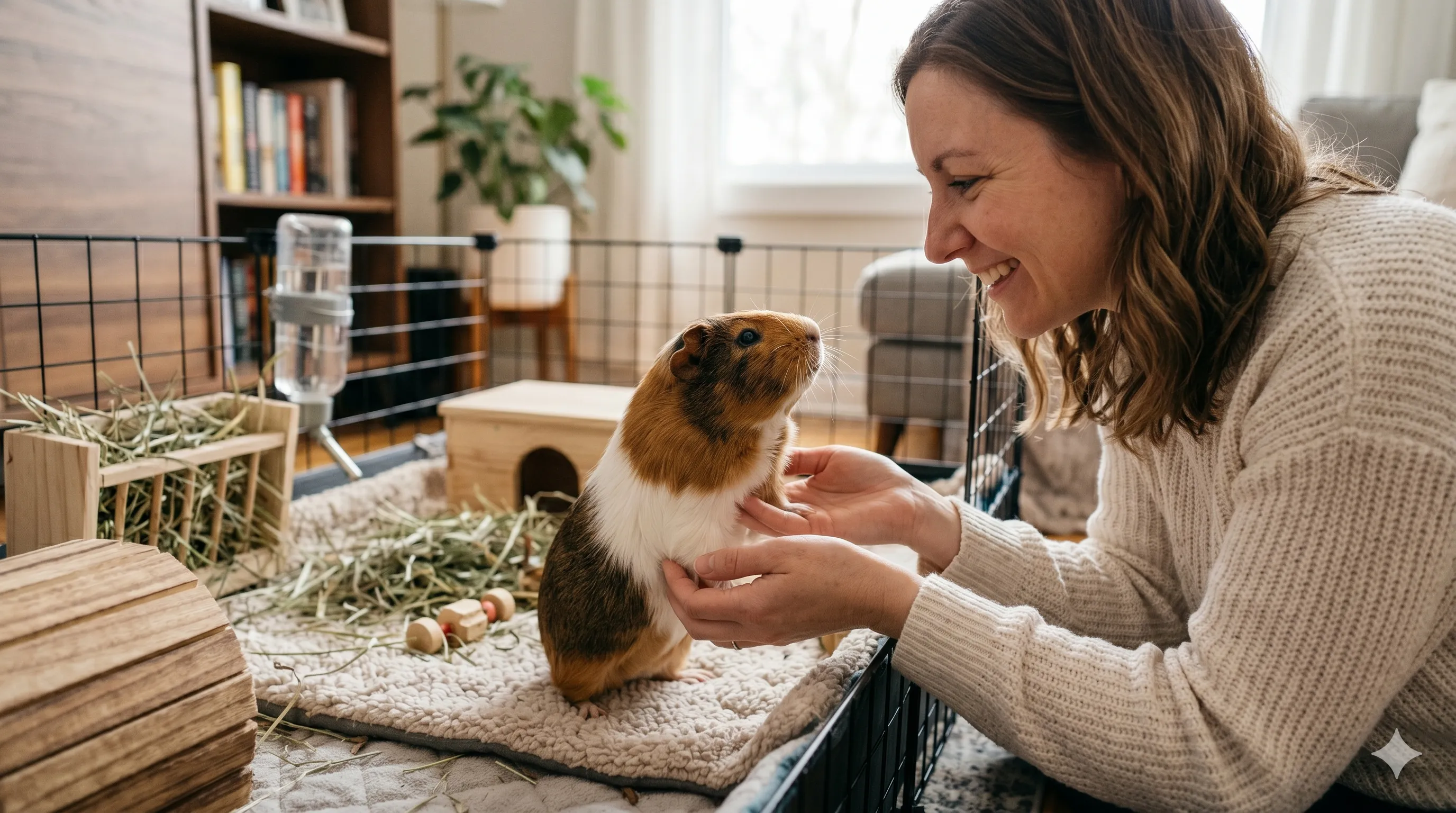
- 2. Curiosity About What You're Doing
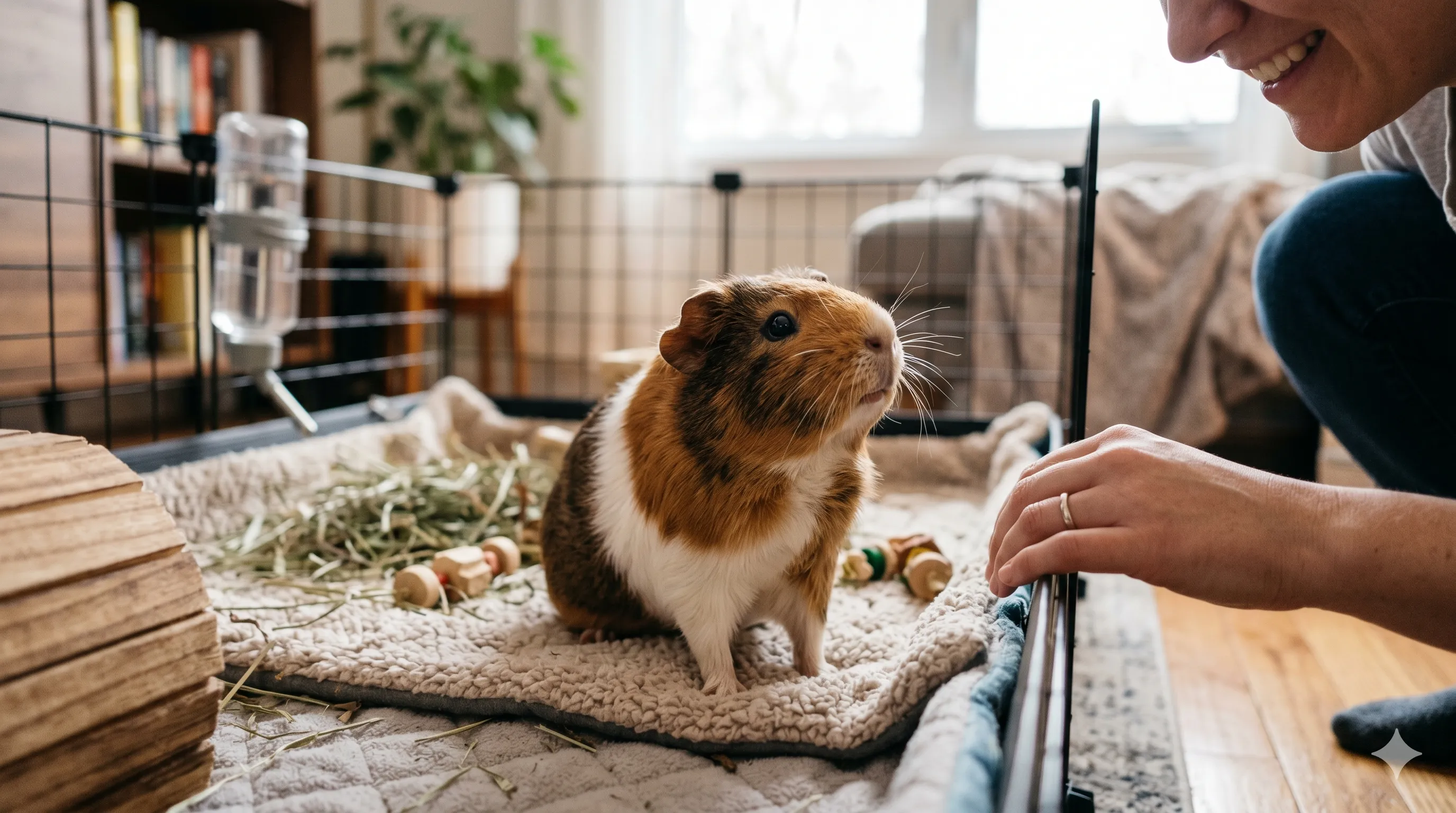
- 3. They Want Your Attention
- 4. They Feel Comfortable Around You
- 5. They Are Monitoring Their Environment
- 6. They're Trying to Predict Your Routine
- 7. Something Feels Unusual
- How to Tell the Difference Between Relaxed and Nervous Staring
- Normal Staring vs Staring That May Need Attention
- What Does It Mean When a Guinea Pig Stares Without Moving?
- Why Does My Guinea Pig Stare at Me While I Eat?
- Why Does My Guinea Pig Stare at Me and Squeak?
- Why Does My Guinea Pig Stare at Me From Its Hideout?
- When Should You Be Concerned About Staring?
- How to Build More Trust With Your Guinea Pig
- Create Predictable Routines
- Use Positive Interactions
- Provide Enough Space and Enrichment
- Expert Tips for Reading a Staring Guinea Pig
- Common Mistakes Owners Make
- Common Myths About Guinea Pig Staring
- Myth: Staring Always Means Hunger
- Myth: Guinea Pigs Don't Recognize People
- Myth: Staring Means Something Is Wrong
- Myth: A Staring Guinea Pig Is Always Scared
- Final Thoughts
Note: This article is for informational purposes only and does not replace professional veterinary advice.
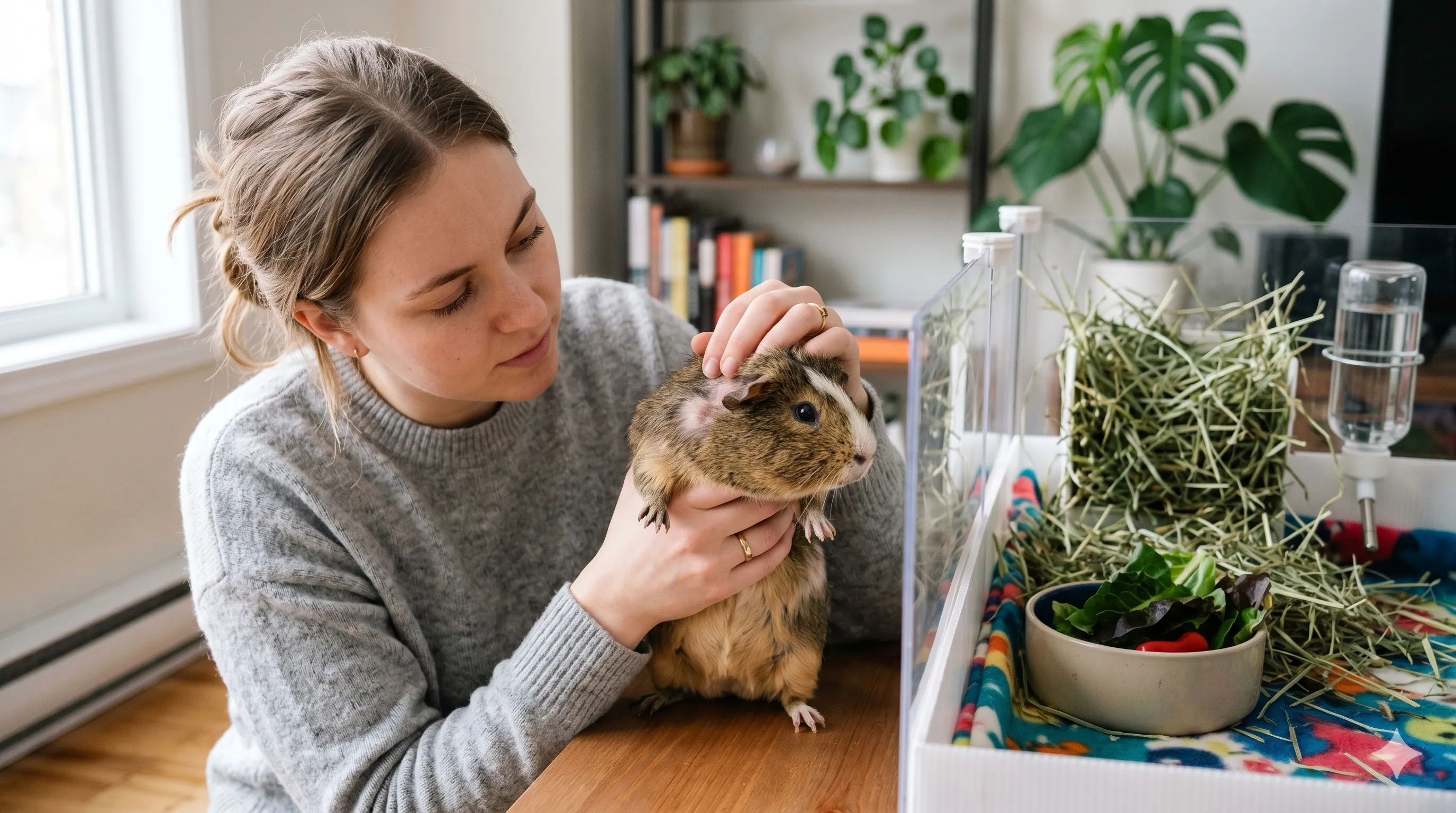
Your guinea pig may sit quietly in its hideout, pause in the middle of eating hay, or stand near the side of the cage and simply watch you. For many owners, this behavior can feel unusual or even a little unsettling. If you've been wondering why does my guinea pig stare at me, the answer is usually much more positive than you might think.
Guinea pigs are naturally observant animals. As prey animals, they rely heavily on watching their surroundings to stay safe, understand routines, locate food, and recognize familiar individuals. Because you play a major role in your guinea pig's daily life, it's completely normal for your pet to spend time watching and studying you.
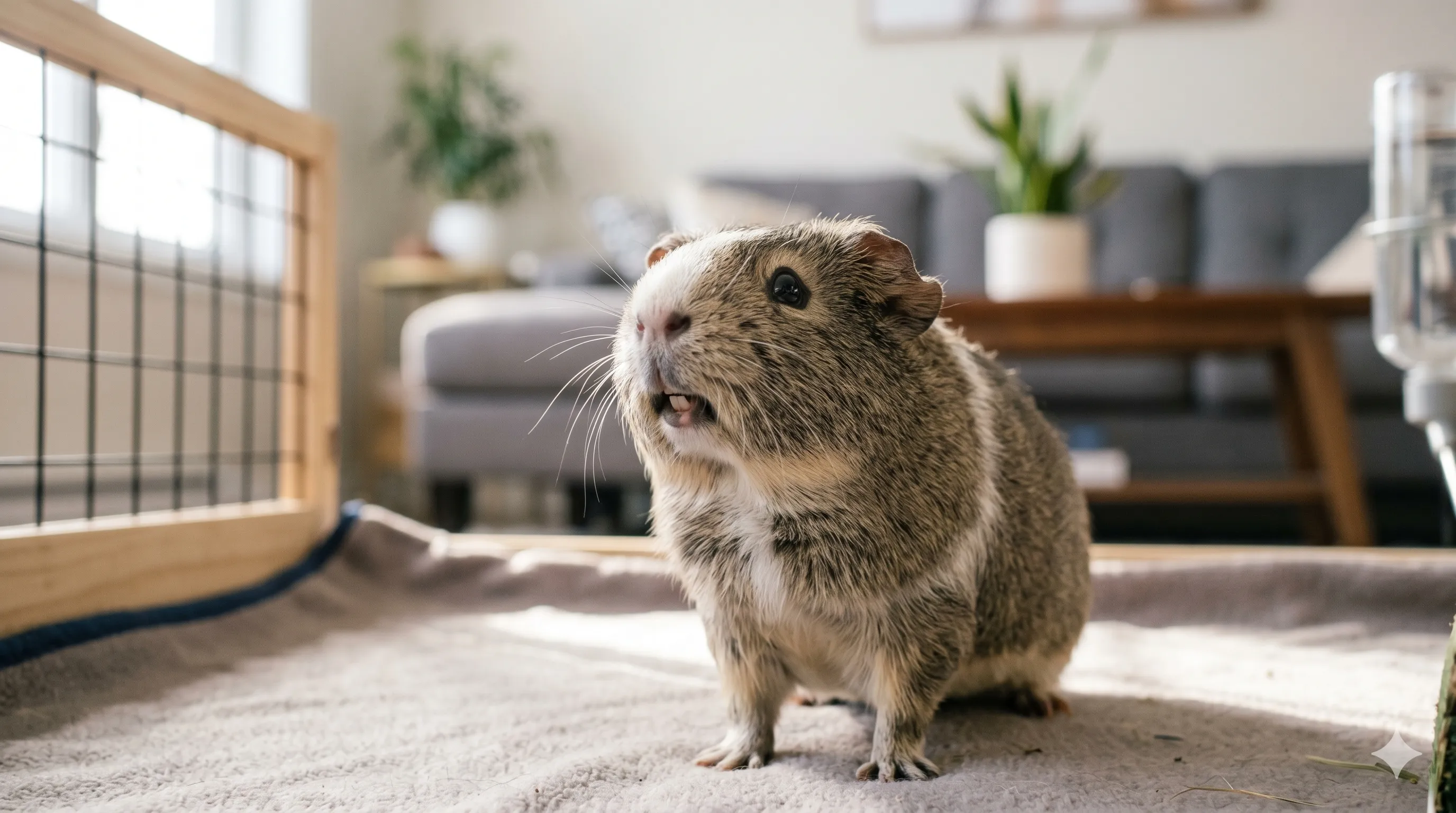
In most situations, staring is a sign that your guinea pig is paying attention, anticipating something, or simply observing its environment. However, body language and context are important because staring can sometimes indicate caution, stress, or even an underlying health issue.
Why Does My Guinea Pig Stare at Me? (Quick Answer)
Guinea pigs stare at their owners because they are curious, expecting food, seeking attention, recognizing familiar routines, or observing someone they trust. In most cases, staring is normal guinea pig behavior. The meaning depends on what other body language signals accompany the staring.
What Your Guinea Pig's Stare Usually Means
- Watching you near feeding time: expecting food
- Calm staring while relaxing: comfort and trust
- Staring while wheeking: seeking attention
- Watching from a hideout: feeling cautious but curious
- Frozen staring with tense posture: stress or uncertainty
- Staring with appetite loss: monitor for possible illness
Do Guinea Pigs Recognize Their Owners?
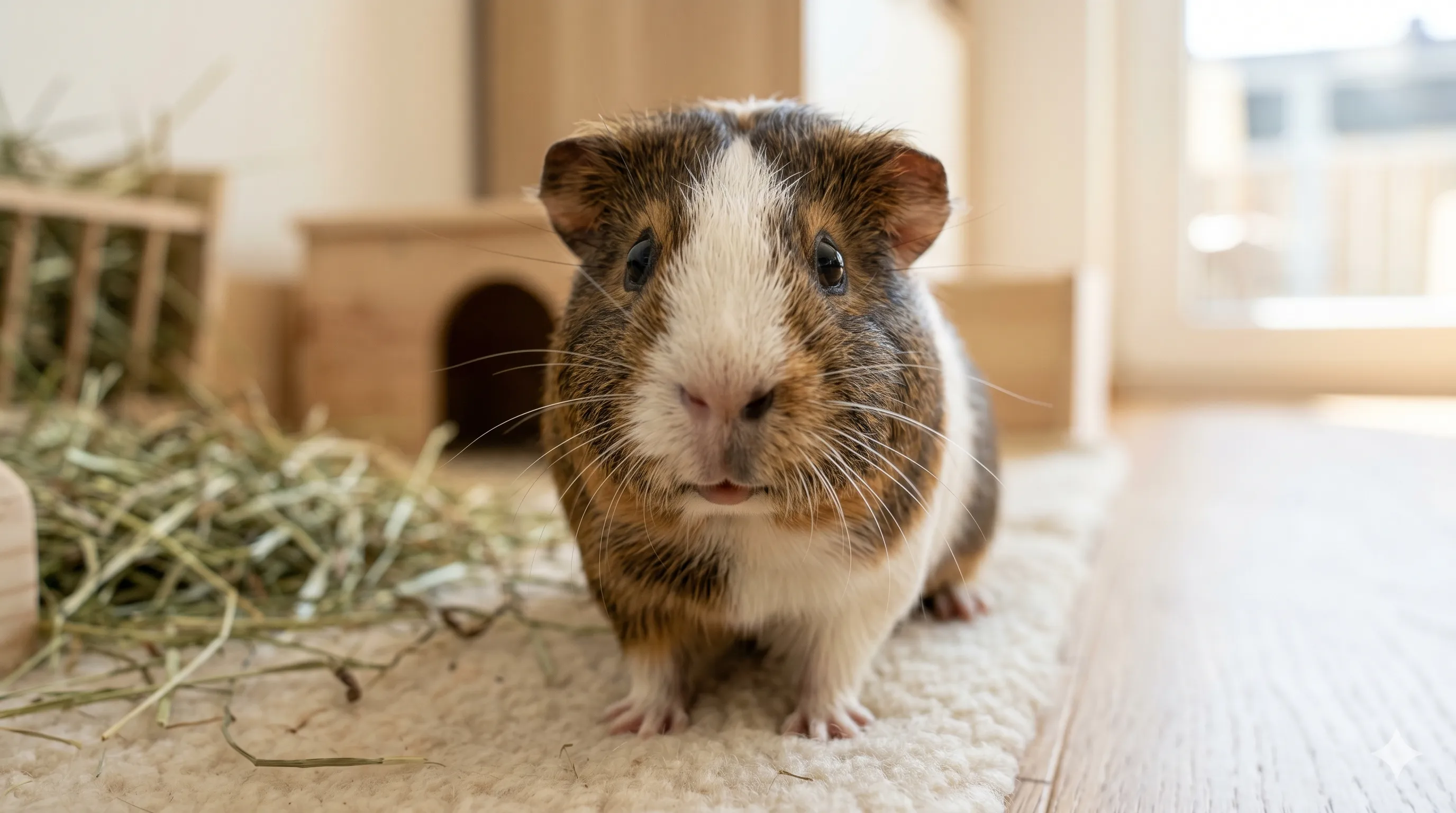
Yes. Guinea pigs may not recognize people in exactly the same way as dogs, but they can absolutely learn to identify familiar humans.
Over time, guinea pigs become familiar with:
- Voices
- Walking patterns
- Daily schedules
- Feeding routines
- Specific sounds associated with food
- Regular handling habits
Many guinea pig owners notice that their pets react differently to familiar people than they do to strangers. This recognition often explains why a guinea pig may stare attentively whenever its owner enters the room.
why guinea pigs lick their ownersDoes My Guinea Pig Staring at Me Mean They Trust Me?
Sometimes, yes. A guinea pig that calmly watches you while eating, relaxing, grooming, or remaining comfortable in your presence often feels safe around you. Staring by itself does not always mean trust, but when it is combined with relaxed body language and normal daily behavior, it can be a positive sign that your guinea pig recognizes and feels comfortable with you.
Rather than focusing only on eye contact, pay attention to your guinea pig's overall posture, vocalizations, and willingness to approach you. These behaviors together provide a much clearer picture of trust.
7 Common Reasons Your Guinea Pig Stares at You
1. Your Guinea Pig Is Waiting for Food
Food is one of the biggest motivations behind staring behavior.
Guinea pigs quickly learn daily feeding schedules and often know exactly when vegetables, pellets, or hay refills usually arrive.
If your guinea pig stares at you around feeding time, it may simply be waiting for:
- Fresh vegetables
- Hay replacement
- Treats
- Pellets
- Water bottle refills
Food-related staring is often accompanied by wheeking, excited movement, standing on hind legs, or running toward the cage door.
2. Curiosity About What You're Doing
Guinea pigs are naturally curious animals.
When they stare, they may be trying to understand:
- Why you're moving around the room
- What object you're carrying
- Whether food is involved
- Changes in their environment
- New sounds or activities
This type of staring is usually calm and relaxed. The guinea pig remains comfortable while simply observing events unfold around it.
Occasionally, a guinea pig may also stare off into space simply because it's under-stimulated and looking for something to hold its interest -- offering a new toy, tunnel, or forage activity can help in these cases.
3. They Want Your Attention
Some guinea pigs learn that watching their owner often leads to interaction.
If staring is regularly rewarded with:
- Petting
- Treats
- Playtime
- Floor time
- Conversation
your guinea pig may intentionally use staring as a way to get your attention.
Attention-seeking staring frequently occurs alongside vocalizations.
guinea pig squeaking meanings explained4. They Feel Comfortable Around You
Trust is another common reason guinea pigs stare at their owners.
Guinea pigs that feel secure often spend time quietly observing trusted people nearby. This isn't necessarily because they want something. Sometimes they simply feel comfortable enough to remain alert while sharing space with you.
Signs that staring is trust-related include:
- Relaxed posture
- Normal eating behavior
- No attempts to hide
- Calm breathing
- Approaching voluntarily
Comfortable observation is often a positive sign of an established bond.
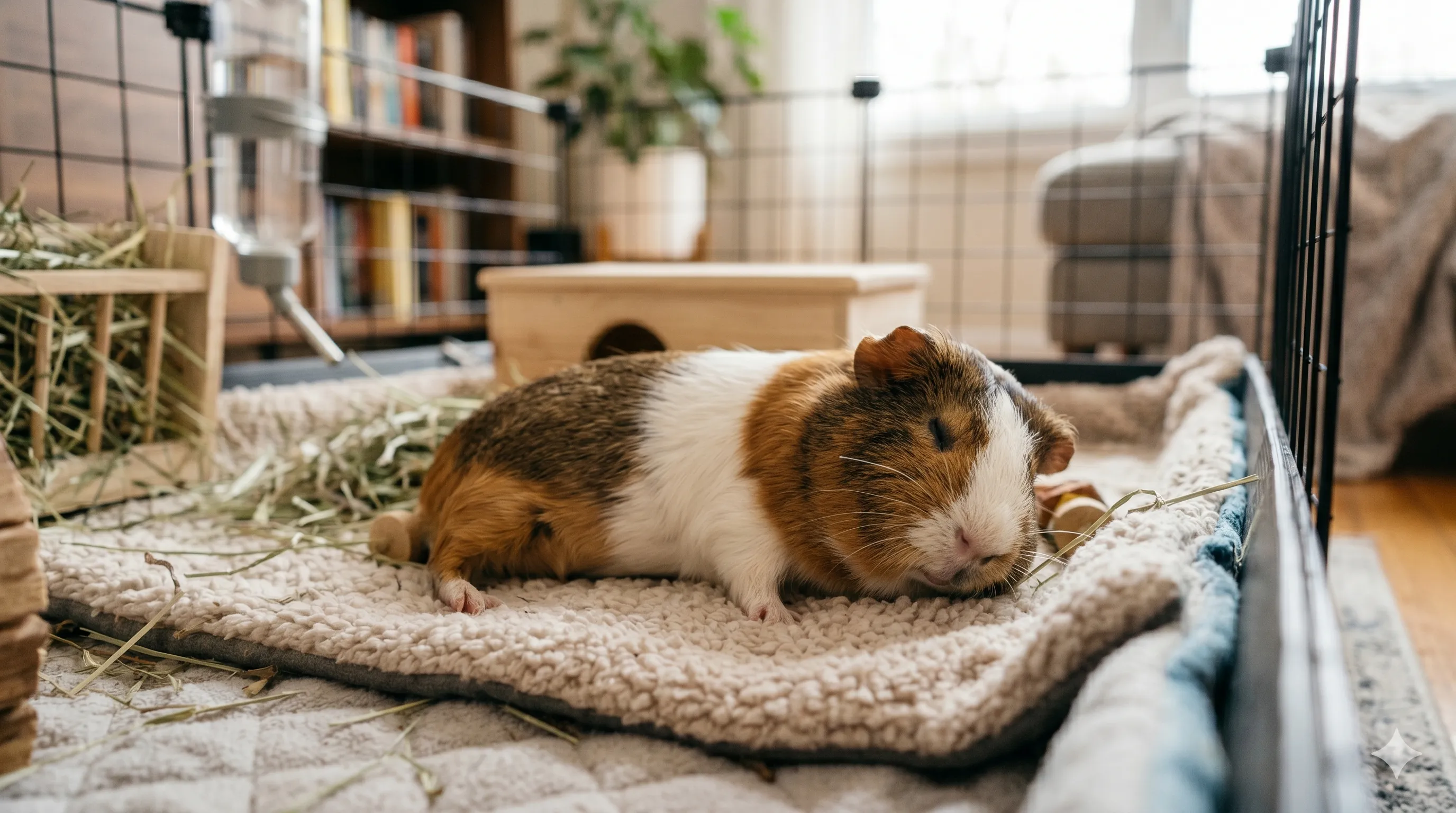
5. They Are Monitoring Their Environment
Guinea pigs evolved as prey animals.
In the wild, survival depends on continuously watching the environment for potential threats. Domestic guinea pigs retain these instincts even when living in safe indoor homes.
Watching people, pets, sounds, and movement is simply part of how guinea pigs process information about their surroundings.
6. They're Trying to Predict Your Routine
Guinea pigs thrive on consistency.
Many owners are surprised by how accurately guinea pigs learn household schedules.
Your guinea pig may stare because it recognizes:
- Your morning routine
- Work-from-home patterns
- Evening feeding times
- Cleaning schedules
- Playtime habits
In many cases, staring is simply anticipation.
7. Something Feels Unusual
Not all staring is positive.
Sometimes a guinea pig may stare because something appears unfamiliar or concerning.
Examples include:
- Visitors in the home
- Loud noises
- Furniture changes
- New pets
- Unexpected movement
When uncertainty is the cause, staring is usually accompanied by more cautious body language.
How to Tell the Difference Between Relaxed and Nervous Staring
- Relaxed body posture: comfort or curiosity
- Watching during feeding time: food anticipation
- Soft wheeking while staring: attention seeking
- Approaching while staring: trust or interest
- Frozen posture: caution or fear
- Wide eyes and hiding: stress or anxiety
- Lethargic unmoving stare: possible health concern
Normal Staring vs Staring That May Need Attention
- Watching you calmly: normal curiosity or trust
- Staring during feeding routines: food anticipation
- Watching while relaxing: comfort and familiarity
- Frozen staring with hiding: stress or fear
- Staring with appetite or weight changes: consider veterinary advice
What Does It Mean When a Guinea Pig Stares Without Moving?
Occasionally, guinea pigs will freeze and stare for short periods.
This behavior can be completely normal if:
- A new sound occurs
- They are evaluating a situation
- Something catches their attention
However, prolonged motionless staring combined with unusual behavior should not be ignored.
Pay attention to:
- Appetite changes
- Energy levels
- Breathing patterns
- Weight loss
- Social behavior changes
Why Does My Guinea Pig Stare at Me While I Eat?
This is one of the most common questions owners ask.
Guinea pigs often associate people with food and may wonder whether you're eating something they can have too.
They may also be:
- Curious about smells
- Hoping for vegetables
- Expecting treats
- Observing your activity
Always check whether foods are guinea pig-safe before sharing anything from your plate.
Why Does My Guinea Pig Stare at Me and Squeak?
Many guinea pigs squeak or wheek while staring because they associate their owners with food, treats, or interaction. This combination often means your guinea pig is excited, asking for attention, or anticipating a familiar routine such as feeding time.
If the squeaking is accompanied by relaxed body language and normal activity, it is usually a healthy form of communication. Looking at your guinea pig's posture and the situation can help you understand exactly what they are trying to express.
Why Does My Guinea Pig Stare at Me From Its Hideout?
Hideouts provide security.
A guinea pig staring from a tunnel, house, or shelter often feels safe enough to observe while maintaining a comfortable retreat option.
This behavior commonly occurs in:
- New guinea pigs adjusting to a home
- Shy personalities
- Guinea pigs monitoring household activity
- Pets observing feeding routines
Many guinea pigs become more interactive as trust develops.
understanding guinea pig popcorning behaviorWhen Should You Be Concerned About Staring?
Normal staring is usually harmless.
However, veterinary attention may be appropriate if staring occurs alongside:
- Loss of appetite
- Lethargy
- Labored breathing
- Weight loss
- Persistent hiding
- Difficulty moving
- Changes in vocalization
Guinea pigs often hide signs of illness. Behavioral changes may sometimes appear before obvious physical symptoms develop.
If your guinea pig suddenly begins staring much more than usual, especially alongside reduced appetite, weight loss, changes in breathing, hiding, or decreased activity, it is worth observing them closely. Staring itself is rarely the problem, but a noticeable change in normal behavior deserves attention.
How to Build More Trust With Your Guinea Pig
Create Predictable Routines
Consistency helps guinea pigs feel secure.
Try to maintain regular times for:
- Feeding
- Cleaning
- Exercise
- Interaction
Use Positive Interactions
Offer healthy vegetables, speak softly, and allow your guinea pig to approach voluntarily whenever possible.
Provide Enough Space and Enrichment
A comfortable guinea pig is more likely to display confident and curious behaviors.
Proper housing should include:
- Adequate cage size
- Hideouts
- Tunnels
- Fresh hay
- Daily enrichment
Expert Tips for Reading a Staring Guinea Pig
- Check for wheeking or standing on hind legs alongside the stare, since those almost always mean food anticipation rather than concern
- Watch what happens right after the stare, since a guinea pig that goes back to eating or grooming was likely just being observant
- Avoid reaching quickly toward a frozen, staring guinea pig, since sudden movement can turn caution into real fear
- Track staring alongside appetite and weight, since a sudden increase paired with either change is worth a closer look
Common Mistakes Owners Make
- Assuming every stare means the same thing instead of reading it alongside posture and vocalizations
- Reaching into the hideout to "check on" a cautious, staring guinea pig instead of letting it observe from safety
- Dismissing a sudden increase in staring paired with appetite or weight changes as just personality
- Interpreting a frozen stare as stubbornness rather than a normal prey-animal caution response
Common Myths About Guinea Pig Staring
Myth: Staring Always Means Hunger
Food is a common reason, but not the only one. Curiosity, trust, and observation are also frequent explanations.
Myth: Guinea Pigs Don't Recognize People
Most guinea pigs learn to recognize familiar voices, routines, and household patterns.
Myth: Staring Means Something Is Wrong
In most situations, staring is a normal behavior rather than a health problem.
Myth: A Staring Guinea Pig Is Always Scared
Relaxed staring is often linked to curiosity and comfort rather than fear.
Final Thoughts
If your guinea pig stares at you, there is usually no reason for concern. Guinea pigs are naturally observant animals that pay close attention to the people, routines, and activities around them.
Most staring behavior is connected to food expectations, curiosity, trust, attention-seeking, or simple environmental awareness. The key to understanding the behavior is looking at the complete picture rather than focusing on the stare alone.
By learning to interpret guinea pig body language, owners can better understand their pet's emotions, strengthen trust, and recognize when behavior is perfectly normal versus when it may require closer attention.
Every guinea pig has its own personality, so staring may have slightly different meanings depending on the situation. Looking at your guinea pig's body language, daily routine, vocalizations, and overall behavior will usually provide the clearest explanation for why they are watching you.
Staring is just one signal among many — understanding your guinea pig's shaking behavior covers another common behavior worth understanding alongside it.
This article is intended for educational purposes only and should not replace professional veterinary advice. If your guinea pig shows unusual staring behavior alongside signs of illness or distress, consult a qualified exotic animal veterinarian.
Medical Disclaimer
This content is provided for informational and educational purposes only and should not be considered veterinary, medical, behavioral, or training advice. While we strive for accuracy, we make no guarantees regarding completeness or results. Always consult a licensed veterinarian or qualified pet care professional before making decisions about your pet’s health, diet, or behavior.
AI Illustration Notice
Some images in this article may have been generated or enhanced using artificial intelligence for illustrative purposes.
Frequently Asked Questions
Guinea pigs often stare because they are curious or expecting food or seeking attention or recognizing familiar routines or simply observing their surroundings. Looking at your guinea pig's body language and the situation usually provides the best clue about what the staring means.
Yes. Many guinea pigs learn to recognize familiar voices and daily routines and feeding schedules and the people who care for them. Over time they often respond differently to familiar owners than they do to strangers.
Yes, observing people and household activity is normal behavior for guinea pigs.
Your guinea pig may associate you with vegetables treats or feeding time.
Relaxed staring combined with calm body language can be a sign of comfort and trust.
Many guinea pigs watch their environment from a safe location where they feel secure.
Consult a veterinarian if staring occurs alongside lethargy or appetite loss or breathing changes or other unusual symptoms.
Yes, nervous or stressed guinea pigs may stare while remaining tense or frozen or ready to hide.
Many guinea pigs squeak while staring because they associate their owners with food or treats or interaction. This behavior is commonly linked to excitement or anticipation.
Your guinea pig may continue watching you while eating because they feel comfortable in your presence or are simply keeping an eye on their surroundings while enjoying a meal.
Sometimes. If unusual staring is accompanied by appetite loss or weight loss or breathing changes or lethargy or other behavioral changes then veterinary evaluation is recommended.
Guinea pigs sometimes freeze and stare while evaluating unfamiliar sounds or movement or changes in their environment. If your guinea pig otherwise appears healthy and relaxed this behavior is often normal. Prolonged motionless staring alongside appetite loss or lethargy or other unusual symptoms should still be monitored carefully.
Editorial Note
This article is part of PetNurture's educational library.
Topics draw on publicly available educational resources, recognised veterinary organisations, academic publications and established animal welfare references where appropriate.
The specific sources this article draws on are listed in its References section. If you spot an error, please let us know.
References
The information in this article has been reviewed and supported using the following sources.
VCA Animal Hospitals
Confirms guinea pigs are interactive, affectionate, communicative animals; supports the general framing of staring as normal social attentiveness in this article.
Accessed Aug 6, 2026
RSPCA
Supports distinguishing relaxed observation from stress-related freezing and hunched posture referenced in the 'How to Tell the Difference Between Relaxed and Nervous Staring' section of this article.
Accessed Aug 6, 2026
Pet Emergency Guidance
Every pet is unique. If your pet exhibits severe symptoms, sudden behavioral changes, or a medical emergency, do not rely on online guides — contact a licensed veterinarian or emergency clinic immediately.
About PetNurture
PetNurture is an educational library of pet care guides, interactive tools and practical resources for pet parents. We work continuously to keep our content accurate and up to date. Reader feedback helps us maintain content quality.
Related Articles
Popular Guinea Pig Guides
Guinea Pig
Guinea Pig Feeding Calculator
Calculate daily food portions for your guinea pig by weight.
Guinea Pig
Guinea Pig Cage Size Calculator
Find the minimum recommended cage size for your guinea pigs.