How to Take Care of a Guinea Pig (Complete Beginner's Guide)
Guinea pigs are friendly, social, and relatively low-maintenance compared with many small pets, which makes them a popul…
Trusted by PetNurture pet parents
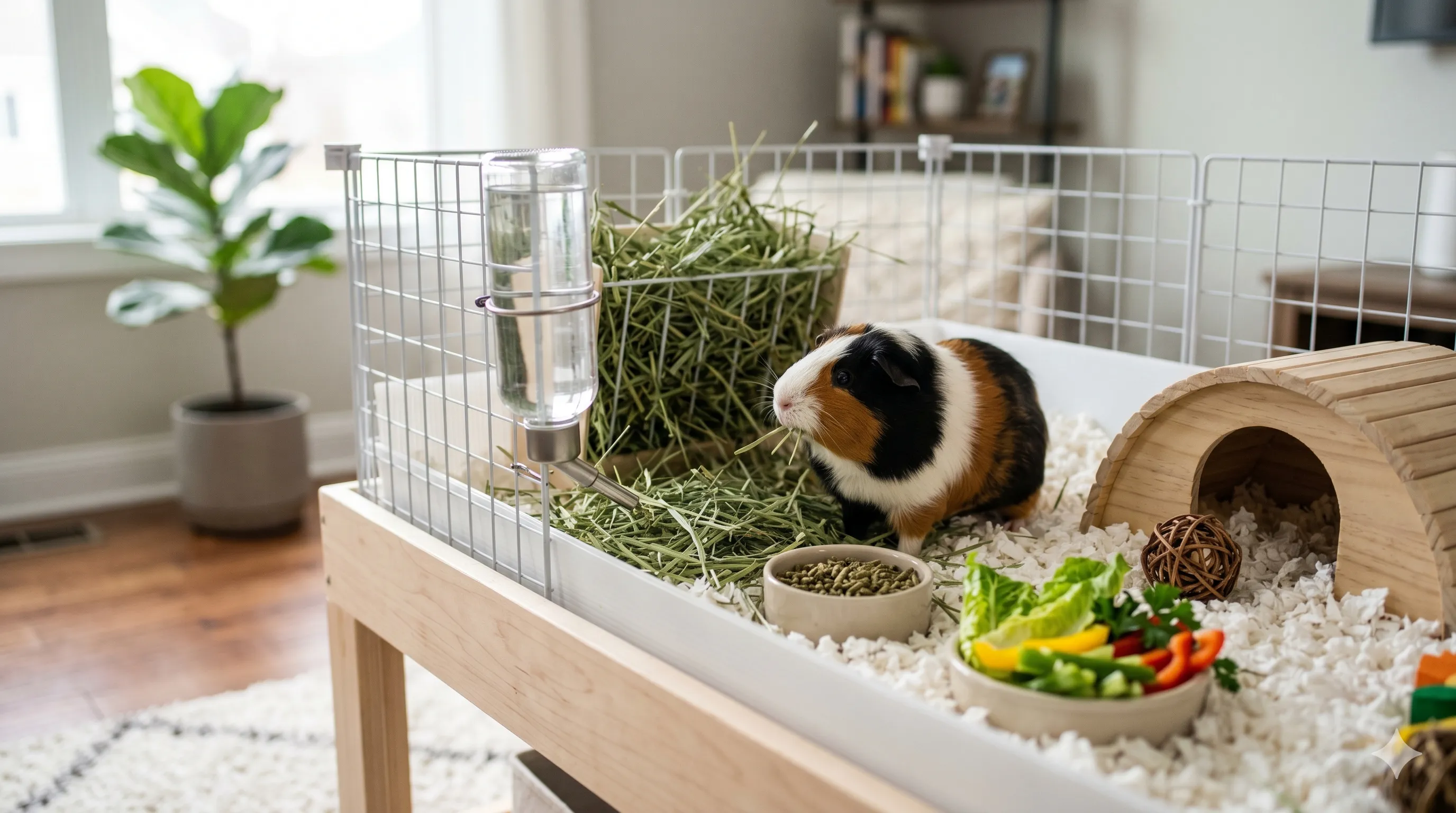
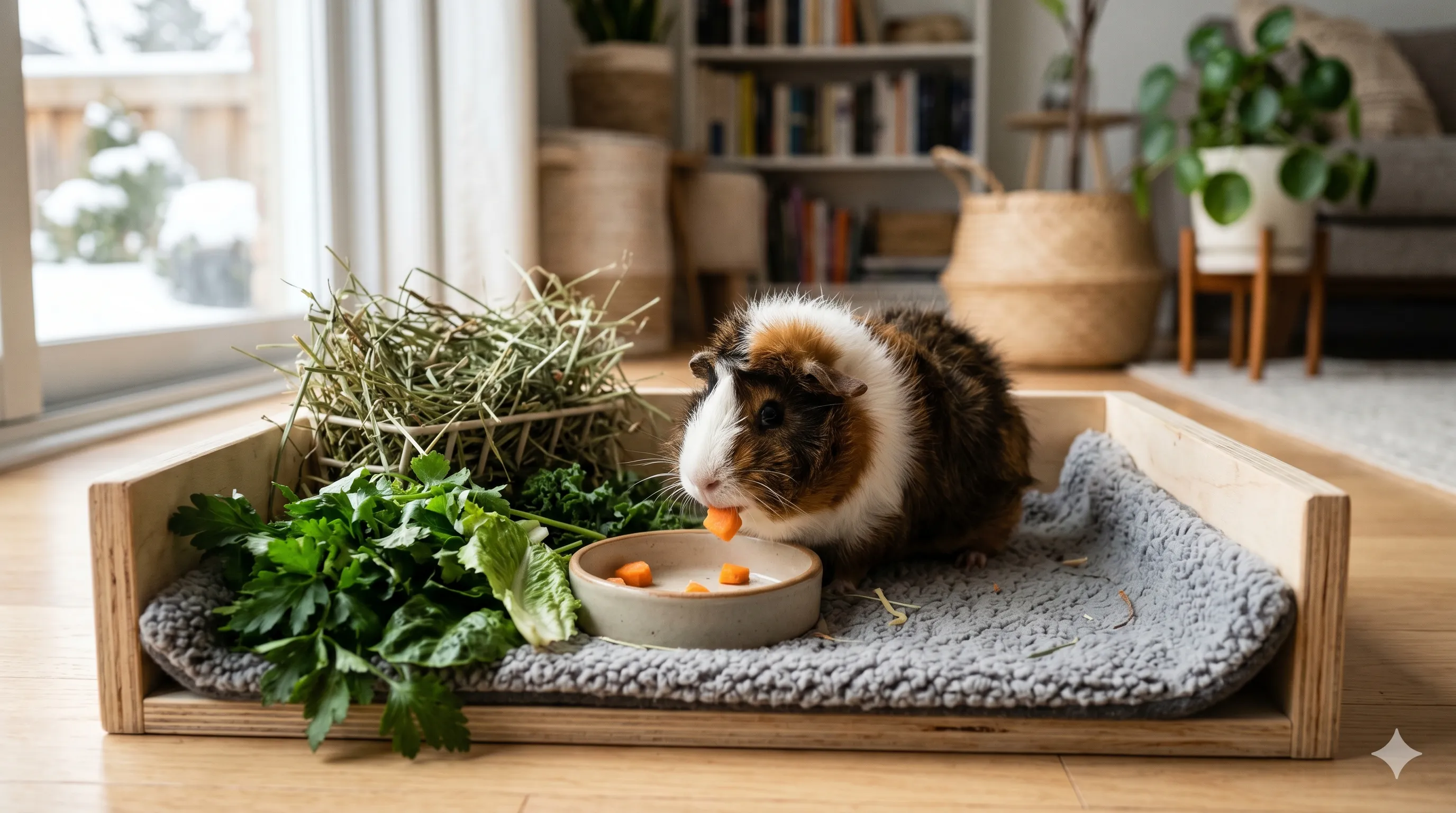
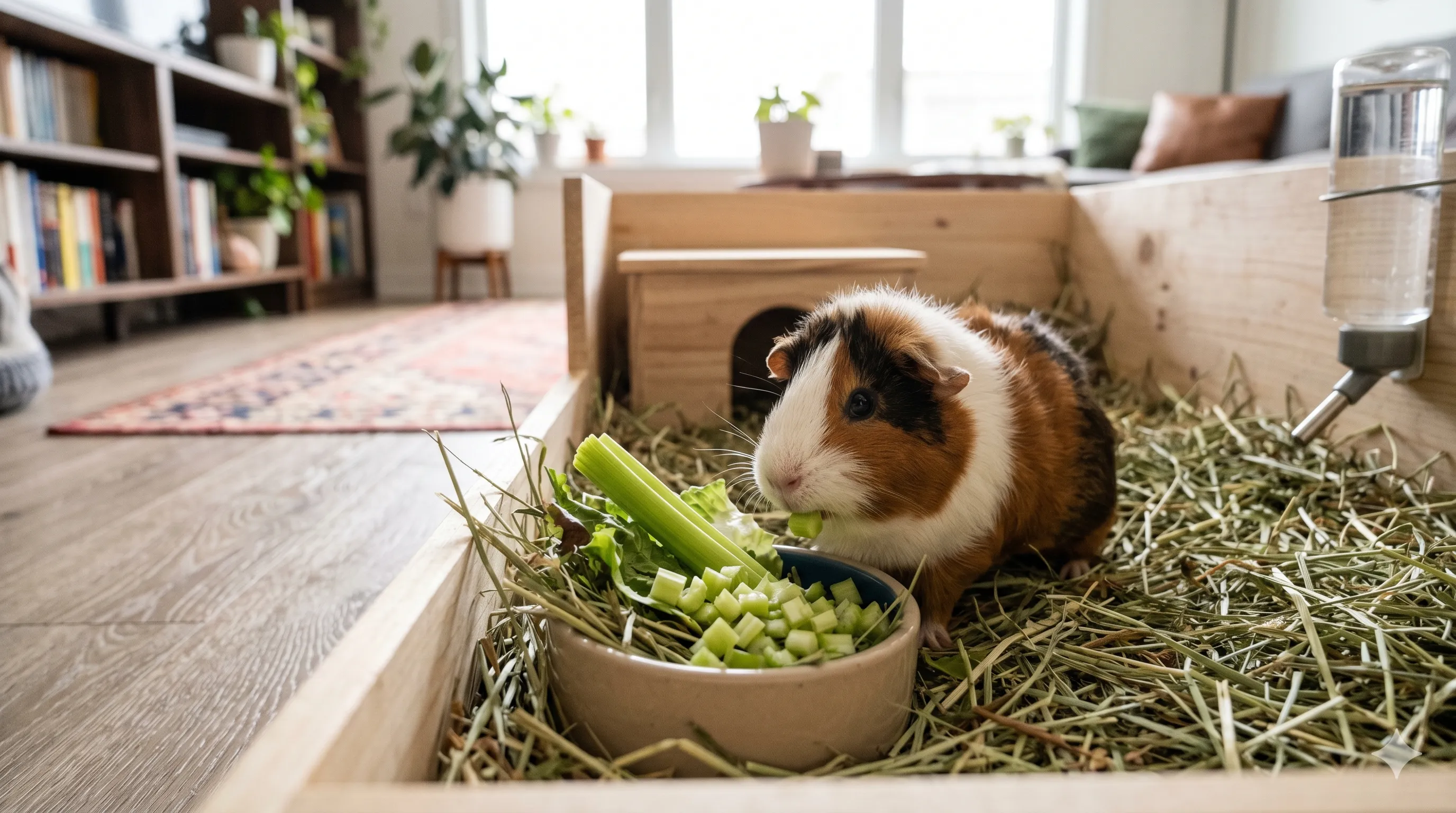
An adult guinea pig's daily diet should be about 80% unlimited grass hay, plus roughly 1/8 cup of pellets, at least 1 cup of fresh vegetables, and 80-120 ml of water per kg of body weight, per guinea pig — for example, one 1 kg adult guinea pig needs about 1/8 cup of pellets, 1 cup of vegetables, and roughly 80-120 ml of water daily.
Enter the number of guinea pigs, their weight, and age group to get daily hay, pellet, vegetable, and water guidance.
Hay is not a supplement or bedding material - it is the single most important component of a guinea pig's diet and must be available 24 hours a day, 7 days a week.
Guinea pig teeth grow continuously throughout their lives. The constant grinding action of chewing long-strand hay naturally wears teeth down, preventing dangerous overgrowth and painful dental spurs that require veterinary intervention.
Guinea pigs are hindgut fermenters whose digestive systems require a constant supply of long-strand fibre to keep moving. Without adequate hay, gut motility slows - leading to life-threatening GI stasis, bloat, and loss of appetite.
Hay is low in calories and high in fibre, making it the ideal food for maintaining a healthy weight. Guinea pigs on hay-rich diets are less prone to obesity - a significant health risk that shortens lifespan and causes joint pain.
Timothy hay is the gold standard for adult guinea pigs. Orchard and Meadow hay are excellent alternatives for variety. Alfalfa hay is too high in calcium and calories for healthy adults - offer it only to pregnant or nursing sows and young babies under 6 months.
Even well-intentioned guinea pig owners make feeding errors that can seriously impact their pet's health and lifespan. Here are the most common mistakes to avoid:
Guinea pigs are one of the few mammals - alongside humans and primates - that cannot synthesise their own Vitamin C. This makes daily dietary intake not optional, but life-critical.
Red and yellow bell peppers are the single best Vitamin C food for guinea pigs, containing significantly more per gram than most fruits. A few thin strips daily makes a dramatic difference to their health.
Fresh cilantro (coriander) and parsley are excellent Vitamin C sources that most guinea pigs love enthusiastically. Both are safe for daily feeding and provide a reliable nutritional baseline.
Dried rosehips are one of the most concentrated natural sources of Vitamin C available and are a popular supplement in guinea pig communities. Source from reputable, pesticide-free suppliers.
A deficiency develops within 2-4 weeks without adequate intake. Early recognition is critical:
If you notice these symptoms, consult an exotic animal veterinarian promptly. This content is for educational awareness only.
Like the rabbit feeding calculator, guinea pig portions are based on fixed per-animal amounts for pellets and vegetables, plus a body-weight-scaled water range, rather than a single calorie formula — reflecting a guinea pig's hindgut-fermenter digestive system built around a constant hay supply.
Pregnant or nursing sows and babies have somewhat different pellet needs than other adults; this tool adjusts for age group but not for individual health conditions.
This tool provides an estimate, not a diagnosis. Keep these limitations in mind when reading your result:
How the daily diet is estimated for one 1 kg adult guinea pig.
Explore our free tools to keep your guinea pig healthy, happy, and well-fed.
General public resources referenced while researching this tool's topic.
This tool is part of PetNurture's educational library. Its formulas and guidance draw on publicly available educational resources, recognised veterinary organisations, and established animal welfare references where appropriate — see the References section below for the specific sources used on this page.
It is provided for general educational purposes and is not a substitute for advice, diagnosis, or treatment from a qualified veterinarian.
The information provided by this tool is for general educational and informational purposes only. Results are estimates, not a diagnosis, and may vary based on your pet's breed, age, health conditions, activity level, diet, and individual factors.
PetNurture does not provide veterinary, medical, or emergency care advice. Always consult a licensed veterinarian or qualified pet care professional regarding your pet's specific health, nutrition, or medical needs.
While we strive to keep calculations accurate and up to date, PetNurture makes no guarantees regarding completeness, reliability, or accuracy. Use this tool at your own discretion.
How we calculate results: This tool uses commonly referenced veterinary formulas, feeding guidelines, and breed-size estimates to provide general educational guidance. Individual pets may have different nutritional, behavioral, or medical needs that are not captured by any generalized formula.
Join our newsletter for simple care guides, feeding charts, and trusted product recommendations.