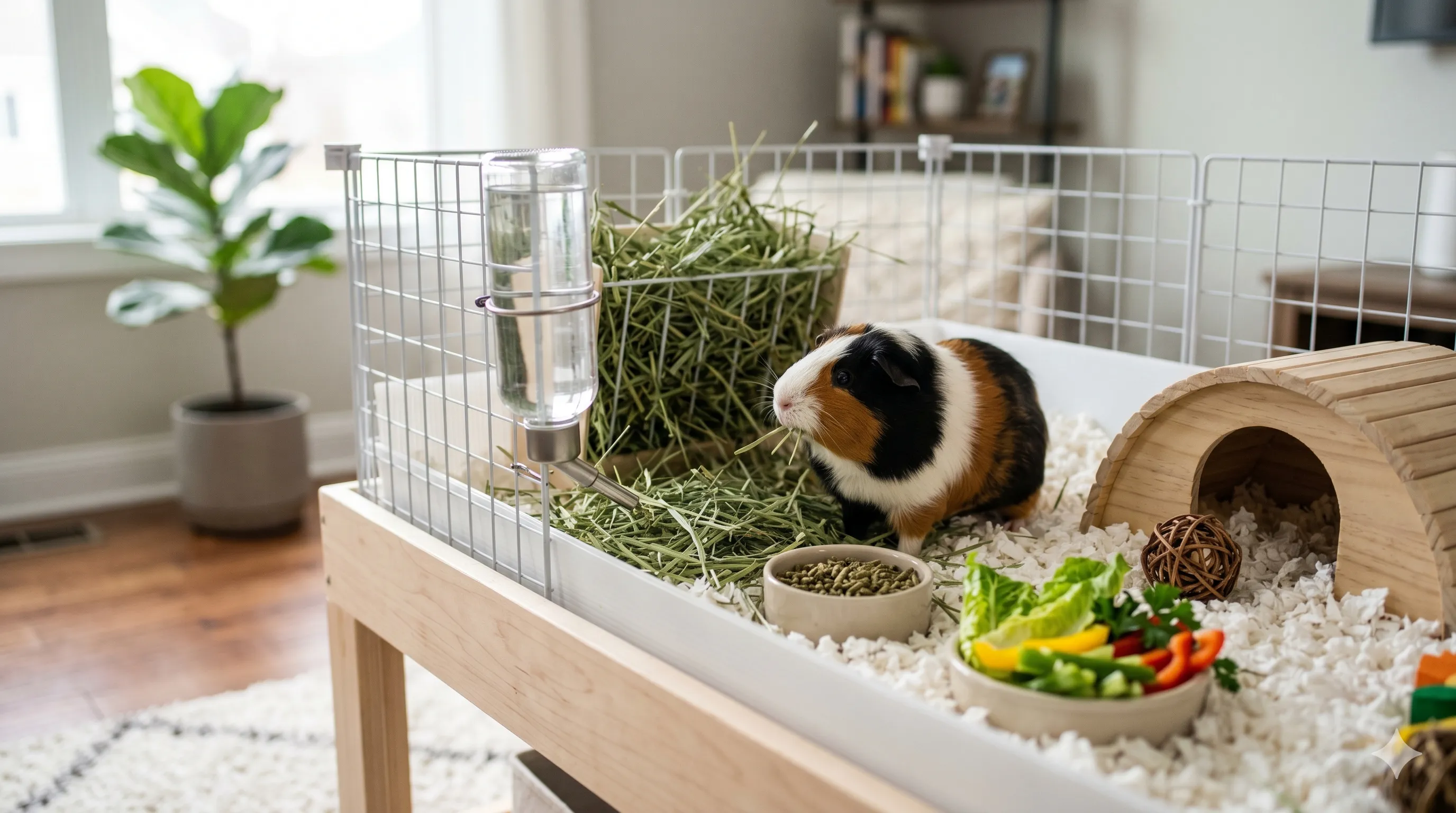
How to Take Care of a Guinea Pig (Complete Beginner's Guide)
Guinea pigs are friendly, social, and relatively low-maintenance compared with many small pets, which makes them a popul…
Gestation range: 59-72 days · Average: 68 days
Trusted by PetNurture pet parents
A guinea pig's due date is estimated by adding an average gestation length of 68 days to the breeding date, with a wider realistic window of 59 to 72 days — notably longer than most small pets because guinea pig pups are born fully developed. Breeding on March 1 gives an estimated window of April 29 to May 12, with May 8 as the average estimate.
Enter the date your guinea pig was bred, and the calculator estimates a due date window and tracks pregnancy progress.
Understanding the basics of guinea pig gestation helps owners provide the best possible care throughout the pregnancy.
Guinea pig gestation is among the longest of any small pet animal - and the variation from shortest to longest can span almost two weeks. Understanding this range is key to knowing when to prepare.
Guinea pig pregnancies can last anywhere from 59 to 72 days - a 13-day window of natural variation. The range exists because ovulation, fertilisation timing, and individual biology all affect how long development takes. Most pregnancies fall toward the middle of this range.
The most widely cited average gestation for guinea pigs is approximately 68 days. This is the figure used as the "expected due date" in this calculator. However, a delivery at day 62 or day 71 is equally normal - the average is a midpoint, not a precise deadline.
Litter size influences gestation length - smaller litters tend to have slightly longer gestations, and larger litters may arrive somewhat earlier. A single pup may gestate for longer than a litter of four. This is one reason the due date is always expressed as a window rather than a fixed date.
Guinea pig gestation is significantly longer than rats (~21 days), hamsters (~16 days), and rabbits (~31 days). This is because guinea pig pups are precocial - born fully furred, with eyes and ears open, teeth present, and capable of eating solid food within hours of birth.
The following changes are sometimes observed during guinea pig pregnancy. These signs may have other causes and should not be used to diagnose pregnancy. Only a veterinarian can confirm pregnancy through physical examination or imaging.
These are educational observations only - not a diagnostic checklist. Many other conditions can produce similar signs.
Good preparation from around week 7 onwards can significantly reduce stress for the mother and improve outcomes for the litter.
Set up a clean, quiet area with soft bedding and at least one hide large enough for the mother and pups. Remove any cage fixtures that could injure newborns. Ensure the enclosure is fully escape-proof for very small pups. Separate males completely to prevent immediate post-birth mating.
Ensure unlimited hay is always available. Increase Vitamin C-rich vegetables daily - bell peppers, parsley, and kale are ideal. See the Vitamin C Calculator for pregnancy-specific estimates. Freshwater must be accessible at all times. Continue quality pellets in measured amounts.
Continue weekly weight checks using a digital kitchen scale, noting the rate of weight gain. In the week before the expected due date, check for the widening pelvic gap (without applying pressure). Record any changes in appetite, behaviour, or stool quality. Track against the Weight Checker.
Keep the environment as calm as possible, especially in the final two weeks. Minimise loud noise, limit handling, and keep other pets away. Guinea pigs can delay labour under extreme stress. Ensure the sow has a private hide where she can feel safe. Avoid major cage changes once birth is near.
Most guinea pig pregnancies progress without complication - but complications can occur and move quickly. Knowing when to act is critical. This section is educational only and does not provide medical instructions.
Pregnancy toxaemia (ketosis) is one of the most serious complications of late guinea pig pregnancy. It can develop rapidly and is life-threatening. Contact a vet urgently if you observe:
This educational tool does not diagnose or treat any condition. Always seek veterinary advice for any health concern.
The estimate adds a standard gestation length to the breeding date. Guinea pig gestation is unusually long for a small pet because pups are born precocial — fully furred, eyes open, and able to eat solid food within hours.
Litter size can affect actual timing — smaller litters tend to gestate slightly longer, while larger litters may arrive a few days earlier.
This tool provides an estimate, not a diagnosis. Keep these limitations in mind when reading your result:
How the due date window is estimated for a guinea pig bred on March 1.
Support your pregnant guinea pig with these free companion tools.
General public resources referenced while researching this tool's topic.
This tool is part of PetNurture's educational library. Its formulas and guidance draw on publicly available educational resources, recognised veterinary organisations, and established animal welfare references where appropriate — see the References section below for the specific sources used on this page.
It is provided for general educational purposes and is not a substitute for advice, diagnosis, or treatment from a qualified veterinarian.
The information provided by this tool is for general educational and informational purposes only. Results are estimates, not a diagnosis, and may vary based on your pet's breed, age, health conditions, activity level, diet, and individual factors.
PetNurture does not provide veterinary, medical, or emergency care advice. Always consult a licensed veterinarian or qualified pet care professional regarding your pet's specific health, nutrition, or medical needs.
While we strive to keep calculations accurate and up to date, PetNurture makes no guarantees regarding completeness, reliability, or accuracy. Use this tool at your own discretion.
How we calculate results: This tool uses commonly referenced veterinary formulas, feeding guidelines, and breed-size estimates to provide general educational guidance. Individual pets may have different nutritional, behavioral, or medical needs that are not captured by any generalized formula.

Join our newsletter for simple care guides, feeding charts, and trusted product recommendations.