Why Is My Guinea Pig Hiding? Stress, Fear or Normal Behavior Explained
Finding your guinea pig tucked away inside a tunnel, hideout, or corner of the cage can leave you wondering whether ever…
Search our database of 75+ foods to instantly find out what's safe, toxic, or an occasional treat for your guinea pig.
Whether a food is safe for guinea pigs depends entirely on the specific food — this tool searches a database of 75+ vegetables, fruits, herbs, and plants, each labeled Safe, Limited, Rare Treat, or Unsafe. Guinea pigs also can't produce their own Vitamin C, so daily fresh food matters for more than just safety.
Search or filter by category to look up a specific food and see its safety status.
Guinea pigs are strict herbivores with a highly specialised digestive system. Unlike many other small pets, they are unable to synthesise their own Vitamin C - meaning they must obtain it entirely through food every single day.
The following foods are dangerous or potentially fatal. Never feed any of these to your guinea pig under any circumstances:
Understanding what guinea pigs eat is only part of good care. How and how much you feed matters equally.
Offer 1 cup of fresh leafy greens per guinea pig per day. Aim for variety - rotate between romaine, cilantro, bell pepper, arugula, and endive to cover all nutritional bases.
Timothy or Meadow hay must be available 24/7. Guinea pigs are hindgut fermenters - they need constant fibre for gut motility and dental health. Hay should always be the largest part of the diet.
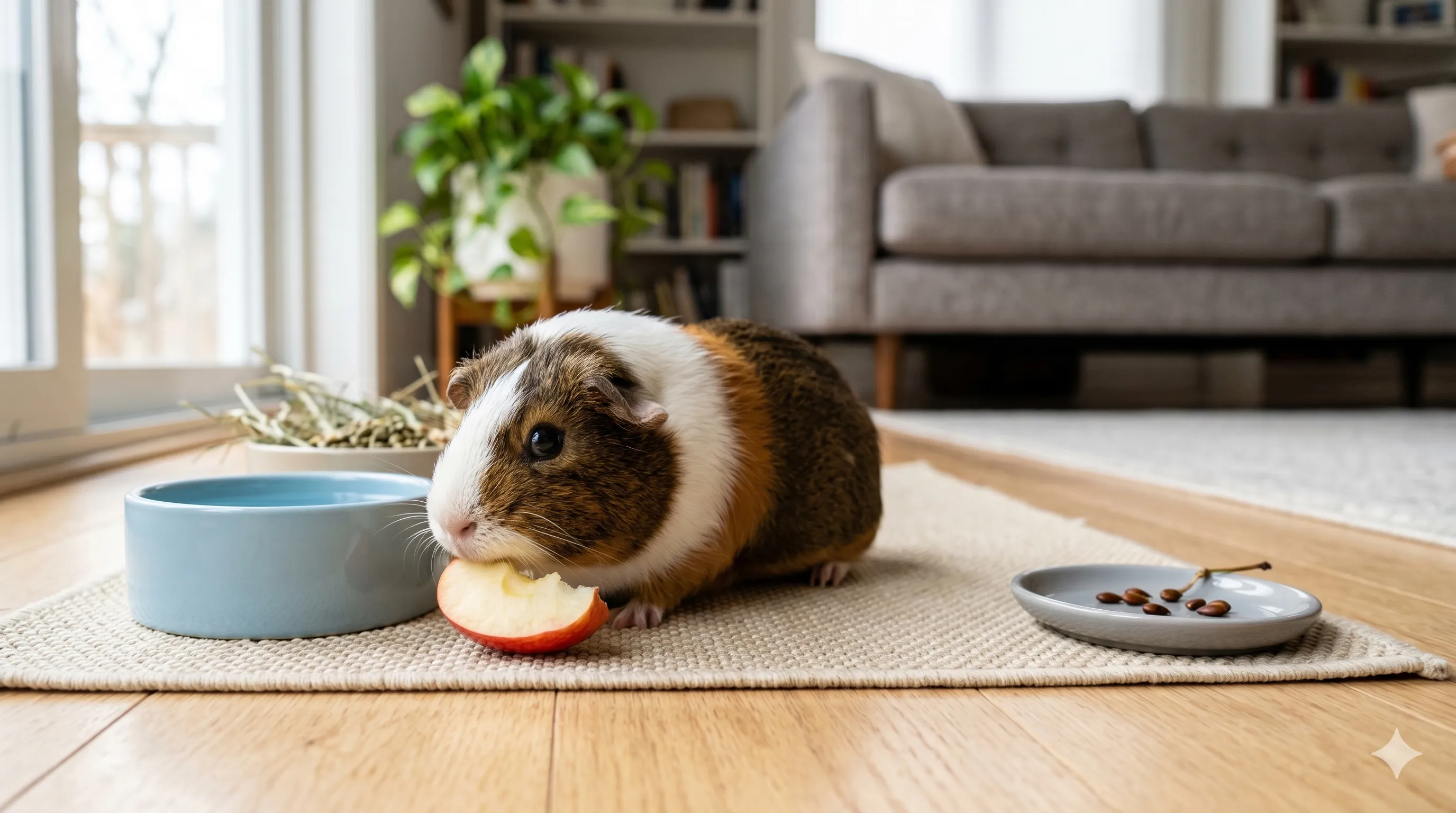
Fruits are naturally high in sugar and should be limited to once or twice a week in small amounts. Good choices include strawberries, blueberries, kiwi (peeled), and apple (seeds removed).
Familiarise yourself with toxic foods and keep them completely away from your guinea pig. Onions, rhubarb, avocado, and chocolate are common household items that are life-threatening.
Unlike the calculators elsewhere on this site, this tool doesn't compute a formula — each food's status comes from a maintained reference database, informed by commonly cited guinea pig nutrition and toxicology guidance.
Guinea pigs cannot synthesise their own Vitamin C, so daily fresh vegetables matter for more than just avoiding toxicity — this tool focuses on safety status, not complete nutritional planning.
This tool provides an estimate, not a diagnosis. Keep these limitations in mind when reading your result:
How a search for "iceberg lettuce" resolves to an Unsafe result.
General public resources referenced while researching this tool's topic.
This tool is part of PetNurture's educational library. Its formulas and guidance draw on publicly available educational resources, recognised veterinary organisations, and established animal welfare references where appropriate — see the References section below for the specific sources used on this page.
It is provided for general educational purposes and is not a substitute for advice, diagnosis, or treatment from a qualified veterinarian.
This tool is intended for educational purposes only and should not be used as a substitute for emergency veterinary advice, diagnosis, or treatment.
If your pet may have consumed toxic foods, chocolate, medications, chemicals, or other dangerous substances, seek immediate help from a licensed veterinarian or emergency animal service in your area. Do not delay professional care based on calculator or search results alone.
US pet poison hotlines (24/7):
ASPCA Animal Poison Control Center: (888) 426-4435
·
Pet Poison Helpline: (855) 764-7661
A consultation fee may apply to both services. Outside the US, use local emergency veterinary directories.
How we calculate results: This tool uses commonly referenced veterinary toxicity thresholds and food safety guidelines. Actual toxicity can vary based on your pet's size, health status, and exact substance consumed. These results are estimates only and do not replace a veterinary assessment.
Join our newsletter for simple care guides, feeding charts, and trusted product recommendations.