Best Low-Shedding Dog Breeds for First-Time Owners

Note: This article is for informational purposes only and does not replace professional veterinary advice.
Quick Answer
No dog breed is completely hypoallergenic, according to AKC, and a 2012 peer-reviewed study found no evidence for classifying any breed as hypoallergenic. AKC scores the Poodle, Bichon Frise and Maltese 1 of 5 for shedding, the Havanese and Portuguese Water Dog 2, and the Miniature Schnauzer 3. Spend time around the specific dog before committing, and talk to an allergist if allergies are a serious concern.
The American Kennel Club (AKC) says no dog breed is completely hypoallergenic, and that low-shedding and hairless breeds are often better options for allergy sufferers. A peer-reviewed study went further and found no evidence for classifying any breed as "hypoallergenic". Low shedding is still useful if you simply want less hair around the house. This guide uses AKC's own trait scores for six low-shedding breeds, explains what the research says about allergies, and covers what to check before you commit.

Why "Hypoallergenic" Overpromises
AKC says all dogs produce allergens and no breed can guarantee an allergy-free experience; some breeds may trigger fewer symptoms for certain individuals because they shed less. A 2012 study in the Journal of Allergy and Clinical Immunology (Vredegoor and colleagues) measured Can f 1, the major dog allergen, in hair and coat samples and in the homes of so-called hypoallergenic dogs (Labradoodle, Poodle, Spanish Water Dog and Airedale Terrier) and other dogs. It found higher Can f 1 levels in the hair and coat of the "hypoallergenic" dogs, that differences between breeds were small compared with the variation within a breed, and that these differences did not lead to higher environmental exposure. Its conclusion: "There is no evidence for the classification of certain dog breeds as being 'hypoallergenic.'"
Six Low-Shedding Breeds, From AKC's Scores
AKC scores shedding from 1 ("no shedding") to 5 ("hair everywhere"), and also scores trainability, energy, coat grooming frequency and good with young children. AKC does not rate whether a breed suits a first-time owner; we chose these six breeds because AKC either lists them for allergy sufferers or gives them a low shedding score. Contact a licensed veterinarian or breeder for advice on a specific dog.
Poodle
AKC scores the Standard Poodle 1 of 5 for shedding, 4 for coat grooming frequency, 5 for trainability and 4 for energy, and says its low-shedding, continuously growing coat may help reduce the spread of dander and loose hair around the home. It comes in toy, miniature and standard sizes; AKC's scores here are for the Standard Poodle.
Bichon Frise
AKC scores the Bichon Frise 1 of 5 for shedding, 5 for coat grooming frequency (the highest), 4 for trainability and 4 for energy. AKC describes it as one of the world's great "personality dogs".
Maltese
AKC scores the Maltese 1 of 5 for shedding, 4 for coat grooming frequency, 3 for trainability and 3 for energy, and describes it as a tiny, playful, charming and adaptable toy companion famous for its floor-length coat.
Havanese
AKC scores the Havanese 2 of 5 for shedding, 3 for coat grooming frequency, 4 for trainability and 3 for energy. It is not among the breeds AKC lists for allergy sufferers. AKC describes it as cheerful and sociable, and notes it is popular with city dwellers.
Miniature Schnauzer
AKC's description calls the Miniature Schnauzer low-shedding, but its shedding score for the breed is 3 of 5, so the two AKC statements differ. It scores 4 for coat grooming frequency, 5 for trainability and 3 for energy, and AKC lists it among breeds commonly recommended for allergy sufferers.
Portuguese Water Dog
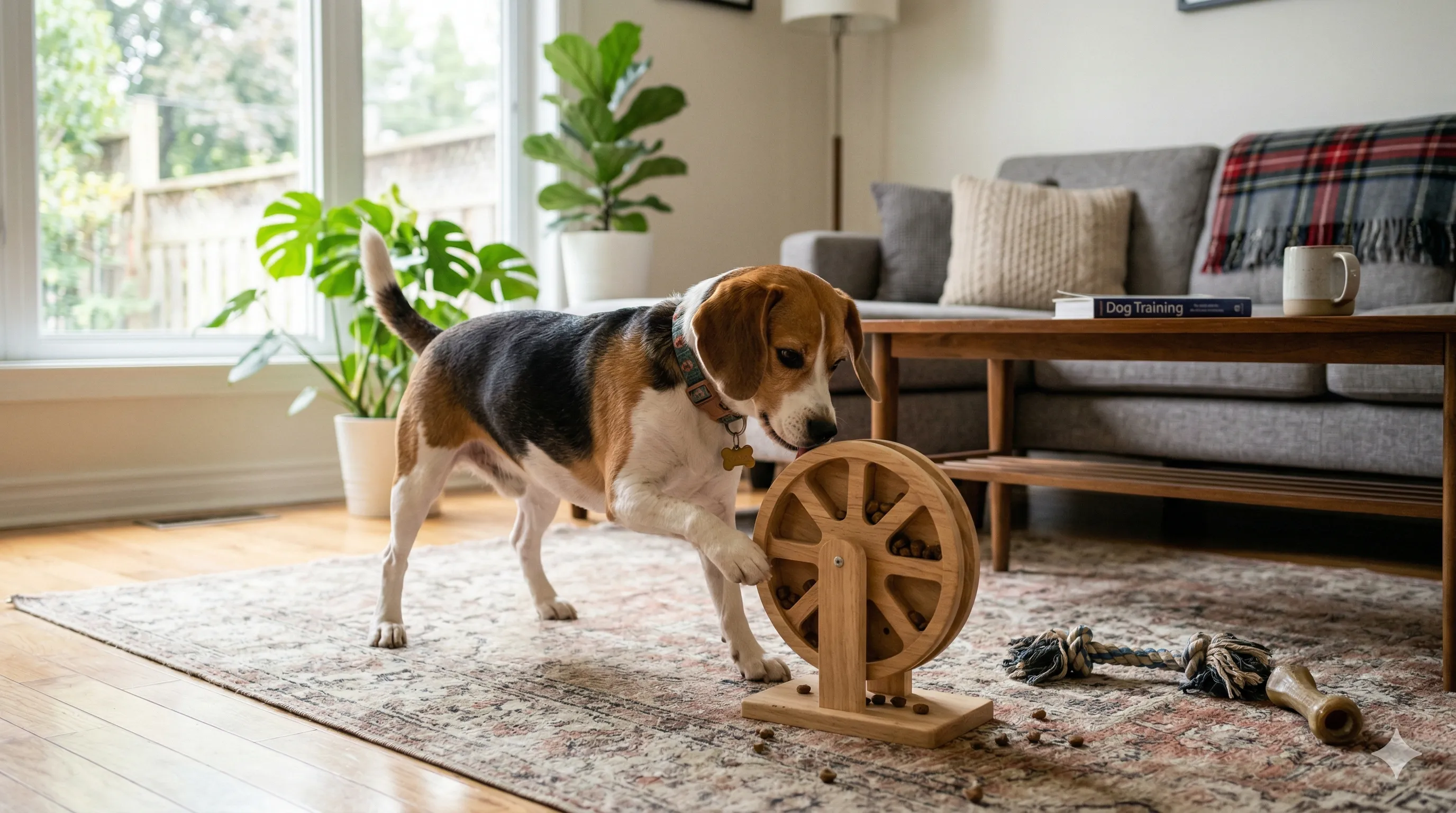
AKC describes a coat of tight, low-shedding curls and scores the Portuguese Water Dog 2 of 5 for shedding, 4 for coat grooming frequency, 5 for trainability and 5 for energy, the highest. This breed suits an active owner more than someone wanting a low-energy dog, and indoor mental stimulation activities can help on days when outdoor exercise isn't enough.

A Note on Doodle Breeds
AKC does not recognise Goldendoodles, Labradoodles and similar Poodle crosses as breeds, and notes that purebred dogs offer more predictable coat characteristics and grooming needs. In the 2012 study, settled floor dust in Labradoodle homes had lower Can f 1 than in other groups' homes, but airborne levels did not differ between breeds, and the authors found no evidence for calling any breed hypoallergenic.
Test Your Reaction Before Committing
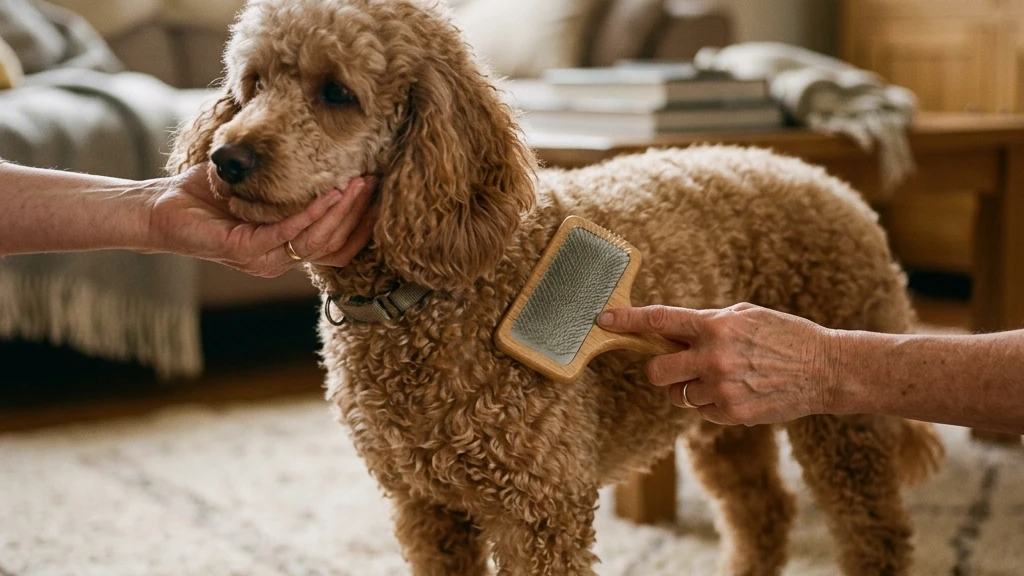
Because AKC says some breeds may trigger fewer symptoms for certain individuals and the study found wide variation within breeds, spend time around the specific dog, ideally several times, before committing. If allergies are a serious health concern, talk to an allergist before getting any dog. AKC says regular grooming and home cleaning can help reduce allergen exposure, and that consistent coat care is especially important for low-shedding breeds. See our guide on a bathing schedule suited to your dog's coat type.
Common Mistakes
- Assuming "hypoallergenic" means allergy-free; AKC and the 2012 study both say no breed is.
- Skipping time with the specific dog before committing, especially with known allergies.
- Underestimating coat care: AKC scores coat grooming frequency 3 to 5 of 5 for these breeds.
- Assuming a doodle puppy will have a Poodle's coat; AKC says purebreds are more predictable.
- Choosing a high-energy breed such as the Portuguese Water Dog (AKC energy 5 of 5) for a low-activity lifestyle.
- Skipping regular grooming because a breed is called low-shedding.
Final Thoughts
Low-shedding breeds can mean less hair around the home, but no breed is hypoallergenic, and the best test is time with the individual dog. Once you've brought a dog home, our guide covers training fundamentals every new owner needs.
No dog is truly hypoallergenic, so spend time around the specific dog before committing, even one marketed as low-shedding.
If allergies are a serious health concern, talk to an allergist before getting any dog, since individual reactions vary. This guide is general education and not a substitute for medical or veterinary advice.
Medical Disclaimer
This content is provided for informational and educational purposes only and should not be considered veterinary, medical, behavioral, or training advice. While we strive for accuracy, we make no guarantees regarding completeness or results. Always consult a licensed veterinarian or qualified pet care professional before making decisions about your pet’s health, diet, or behavior.
AI Illustration Notice
Some images in this article may have been generated or enhanced using artificial intelligence for illustrative purposes.
Frequently Asked Questions
AKC scores shedding from 1 to 5. Among the breeds in this guide it gives the Standard Poodle, Bichon Frise and Maltese 1 of 5, the Havanese and Portuguese Water Dog 2, and the Miniature Schnauzer 3.
No. AKC says no dog breed is completely hypoallergenic and that all dogs produce allergens. A 2012 study in the Journal of Allergy and Clinical Immunology found no evidence for classifying any dog breed as hypoallergenic.
AKC does not recognise doodle crosses as breeds and says purebreds offer more predictable coat characteristics. In the 2012 study, Labradoodle homes had lower Can f 1 in settled floor dust, but airborne levels did not differ between breeds, and the authors found no evidence for calling any breed hypoallergenic.
AKC scores coat grooming frequency from 1 to 5: Bichon Frise 5, Poodle, Maltese, Miniature Schnauzer and Portuguese Water Dog 4, and Havanese 3.
It is a sensible step. AKC says some breeds may trigger fewer symptoms for certain individuals, and the 2012 study found differences between breeds were small compared with the variation within a breed, so spend time around the specific dog and talk to an allergist if allergies are serious.
AKC's description calls the Miniature Schnauzer low-shedding, but its shedding score for the breed is 3 of 5, so the two AKC statements differ.
AKC gives it 5 of 5 for trainability and energy, so it needs a lot of activity. AKC does not rate suitability for first-time owners.
AKC says all dogs produce allergens. The 2012 study measured Can f 1, which it describes as the major dog allergen, in hair, coat and household dust.
AKC says regular grooming can help remove loose hair, dirt and debris that may contribute to allergen build-up in the home, and that consistent coat care is especially important for low-shedding breeds.
What Should I Do Next?
A general decision guide — always use your own judgement and contact a veterinarian for anything beyond routine care.
- Understand that no breed is allergen-free AKC says no dog breed is completely hypoallergenic, and a 2012 study found no evidence for the label.
- Check AKC trait scores against your lifestyle AKC scores shedding, coat grooming frequency, trainability and energy from 1 to 5 for each breed.
- Plan for coat care AKC scores coat grooming frequency 3 to 5 of 5 for these six breeds.
- Spend time around the specific dog before committing Differences within a breed were larger than differences between breeds in the 2012 study.
- Talk to an allergist if allergies are a serious health concern A breed label cannot guarantee comfort living with a specific dog.
Common Mistakes
- Assuming "hypoallergenic" means allergy-free
- Skipping time with the specific dog before committing
- Underestimating coat care
- Assuming a doodle puppy will have a Poodle's coat
- Choosing a high-energy breed for a low-activity lifestyle
- Skipping regular grooming because a breed is called low-shedding
Prevention Tips
- Spend time around the specific dog before committing
- Plan and budget for regular coat care
- Remember that AKC says regular grooming and home cleaning can help reduce allergen exposure
- Meet the specific puppy and its parents rather than trusting a doodle breed name
- Talk to an allergist if allergies are a significant health concern
Illustrative Example
Consider a first-time owner with allergies who is drawn to a Goldendoodle because of its "hypoallergenic" reputation. Reading AKC and the 2012 study, they learn that no breed is hypoallergenic and that reactions vary within a breed. They arrange to spend time around the specific dog before committing and talk to an allergist first, rather than relying on the label.
Practical Checklist
- Compare AKC shedding, grooming, trainability and energy scores
- Plan for regular coat care
- Spend time around the specific dog before committing
- Meet the specific puppy if considering a doodle
- Talk to an allergist first if allergies are a serious health concern
Editorial Note
This article is part of PetNurture's educational library.
Topics draw on publicly available educational resources, recognised veterinary organisations, academic publications and established animal welfare references where appropriate.
The specific sources this article draws on are listed in its References section. If you spot an error, please let us know.
References
The information in this article has been reviewed and supported using the following sources.
Other
American Kennel Club
Accessed Oct 30, 2026
Vredegoor et al., Journal of Allergy and Clinical Immunology, 2012
Accessed Oct 30, 2026
Pet Emergency Guidance
Every pet is unique. If your pet exhibits severe symptoms, sudden behavioral changes, or a medical emergency, do not rely on online guides — contact a licensed veterinarian or emergency clinic immediately.
Was this article helpful?
About PetNurture
PetNurture is an educational library of pet care guides, interactive tools and practical resources for pet parents. We work continuously to keep our content accurate and up to date. Reader feedback helps us maintain content quality.
Related Articles
Popular Dog Guides



Dog
Dog Age Calculator
Convert your dog's age to human years with two published conversions and the AAHA life stage.
Dog
Dog Calorie Calculator
Find the right daily calorie target for your dog's weight and activity level.