How to Potty Train a Puppy Fast: 7-Day Routine, Common Mistakes & Proven House Training Tips
- How to Potty Train a Puppy Fast (Quick Answer)
- Why Puppies Have So Many Accidents
- Realistic Puppy Bladder Expectations
- The Most Important Rule: Prevention
- When Puppies Need Bathroom Breaks
- Step-by-Step Potty Training System
- Create a Fixed Daily Routine
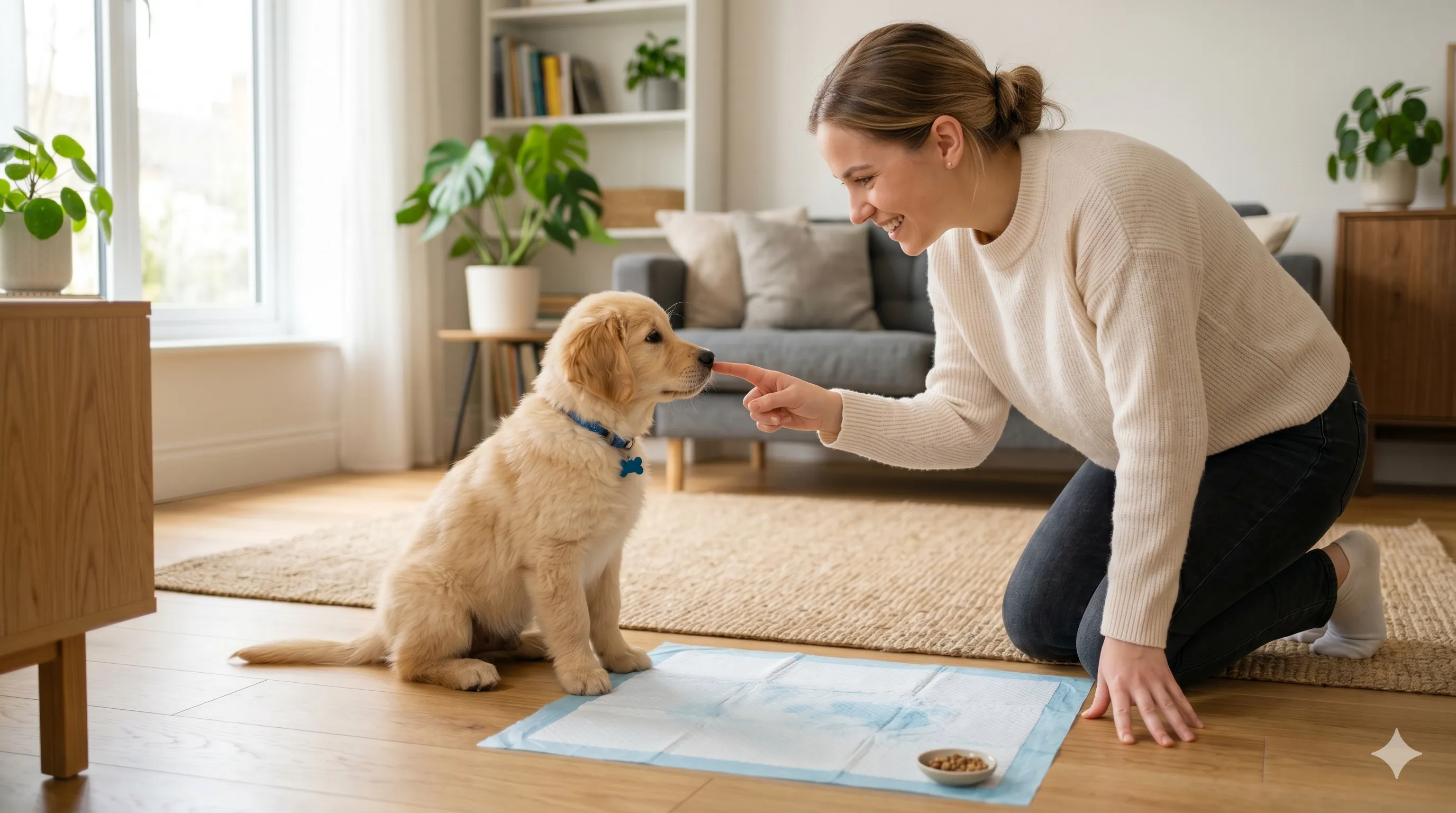
- Use the Same Potty Spot Every Time
- Reward Immediately After Success
- Supervise Constantly Indoors
- Limit Freedom Early On
- Handle Accidents Calmly
- 7-Day Potty Training Foundation Plan
- Days 1-2: Introduce the Routine
- Days 3-4: Build Pattern Recognition
- Days 5-6: Strengthen Habit Formation
- Day 7 and Beyond: Stabilization
- Common Potty Training Problems
- Puppy Pees Immediately After Coming Inside
- Puppy Has Accidents at Night
- Puppy Keeps Returning to the Same Indoor Spot
- Puppy Seems to Forget Training Suddenly
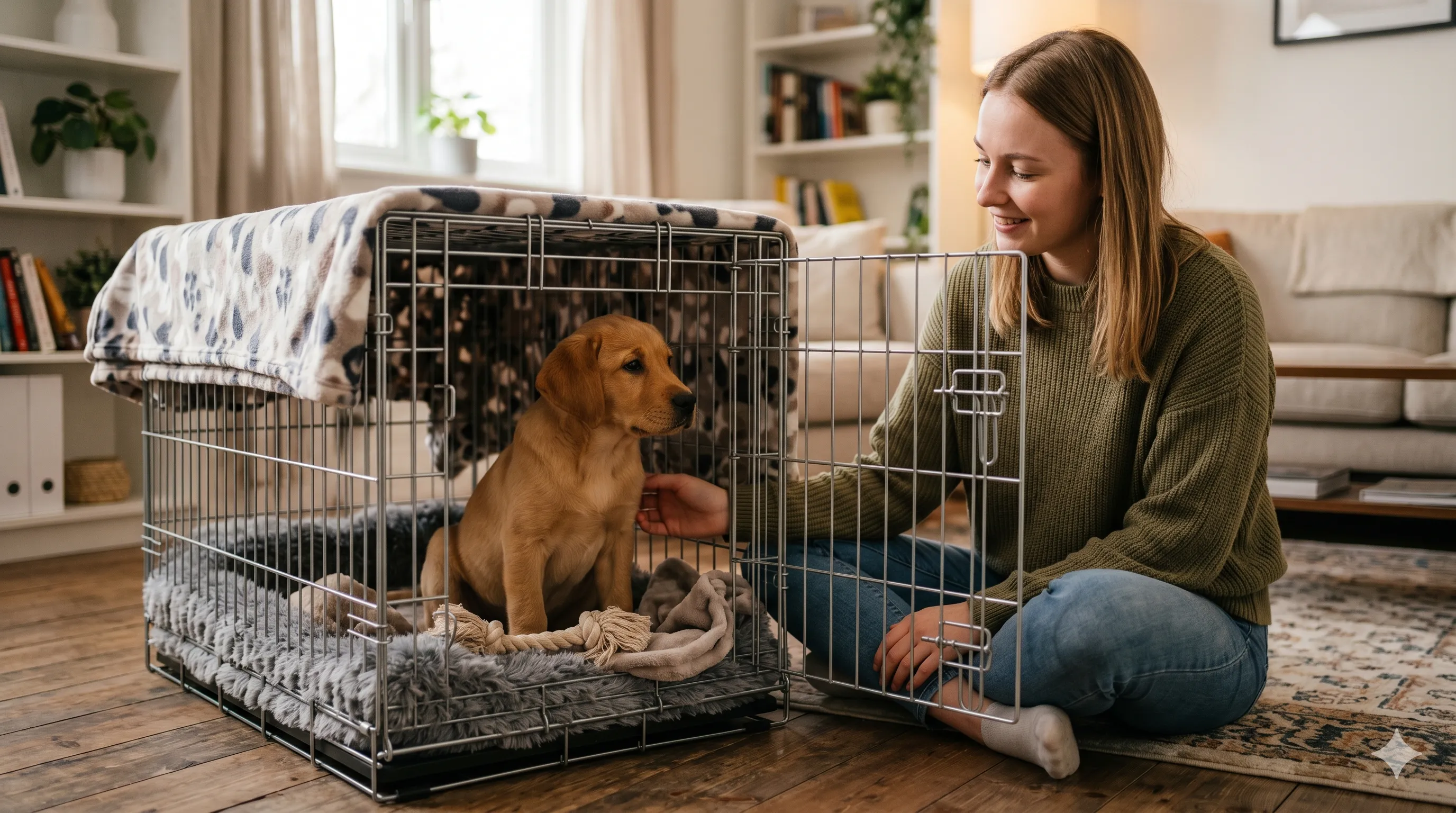
- Crate Training and Potty Training
- Why Consistency Matters More Than Speed
- Common Potty Training Mistakes
- Punishing Accidents
- Giving Too Much Freedom Too Early
- Missing Potty Timing Windows
- Not Rewarding Outdoor Success
- Inconsistent Household Rules
- Example Scenario
- When Potty Training May Take Longer
- Final Thoughts
Note: This article is for informational purposes only and does not replace professional veterinary advice.
Potty training is one of the first major challenges every puppy owner faces and it often feels overwhelming during the early days.
Accidents on carpets, nighttime wakeups, random peeing indoors, and confusion about schedules are extremely common for new puppy owners.
The good news is that most puppies are fully capable of learning quickly when training is structured correctly.
If you want to potty train a puppy fast, success depends far more on consistency, supervision, timing, and routine than punishment or strict correction.
Many owners accidentally slow potty training by giving puppies too much freedom too early or by expecting bladder control that is not developmentally realistic. teaching your puppy not to bite also improves overall obedience and discipline
This guide explains exactly how potty training works, how puppies learn bathroom habits, realistic timelines, the biggest owner mistakes, and a step-by-step system designed to build reliable potty habits as quickly as possible.
How to Potty Train a Puppy Fast (Quick Answer)
To potty train a puppy quickly, follow a predictable bathroom schedule, supervise constantly indoors, reward outdoor success immediately, limit unsupervised freedom, and build consistent habits every day.
Most puppies begin showing major improvement within 1-2 weeks, while complete reliability often develops over several months depending on age, consistency, and routine quality.
Why Puppies Have So Many Accidents
One of the biggest misconceptions about potty training is expecting puppies to "know better".
Young puppies do not naturally understand:
- where they should go,
- how long to hold it,
- or why indoor accidents are a problem.
Puppies have:
- small bladders,
- limited muscle control,
- high excitement levels,
- and almost no established routine.
Potty training is really about building predictable biological habits through repetition.
Realistic Puppy Bladder Expectations
| Puppy Age | Average Bladder Control | Training Expectation |
|---|---|---|
| 8-10 weeks | 1-2 hours | Frequent accidents are normal |
| 10-12 weeks | 2-3 hours | Routine begins developing |
| 3-4 months | 3-4 hours | Improvement becomes noticeable |
| 4-6 months | Better control develops | Fewer accidents expected |
| 6+ months | Much stronger control | Mostly reliable with consistency |
The Most Important Rule: Prevention
Fast potty training is not only about rewarding success.
It is mainly about preventing repeated indoor accidents.
Every accident indoors strengthens the habit of using the house as a bathroom.
The fewer opportunities your puppy has to make mistakes, the faster learning usually happens.
When Puppies Need Bathroom Breaks
Most accidents happen because owners wait too long.
Puppies almost always need to go:
- immediately after waking up,
- after eating,
- after drinking water,
- after play sessions,
- after excitement,
- before bedtime,
- and every 1-2 hours during early training.
Many puppies also need nighttime potty breaks during the early weeks.
Step-by-Step Potty Training System
Create a Fixed Daily Routine
Dogs learn fastest through predictability.
Try to keep:
- feeding times,
- sleep times,
- play periods,
- and potty breaks
consistent every day.
Routine helps regulate both digestion and bathroom timing.
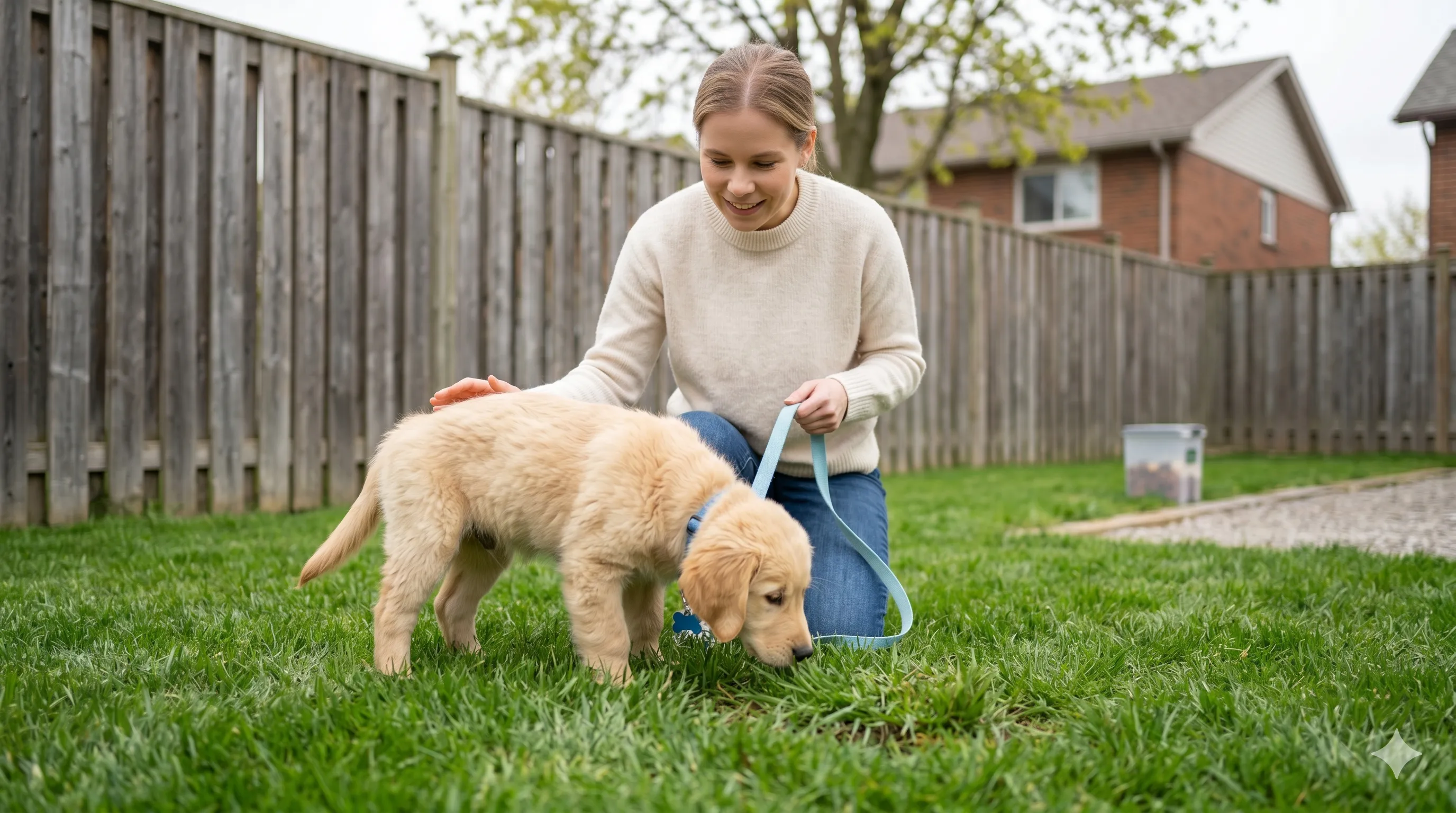
Use the Same Potty Spot Every Time
Returning to the same outdoor location helps puppies associate scent with bathroom behavior.
This creates stronger habit formation much faster than constantly changing locations.
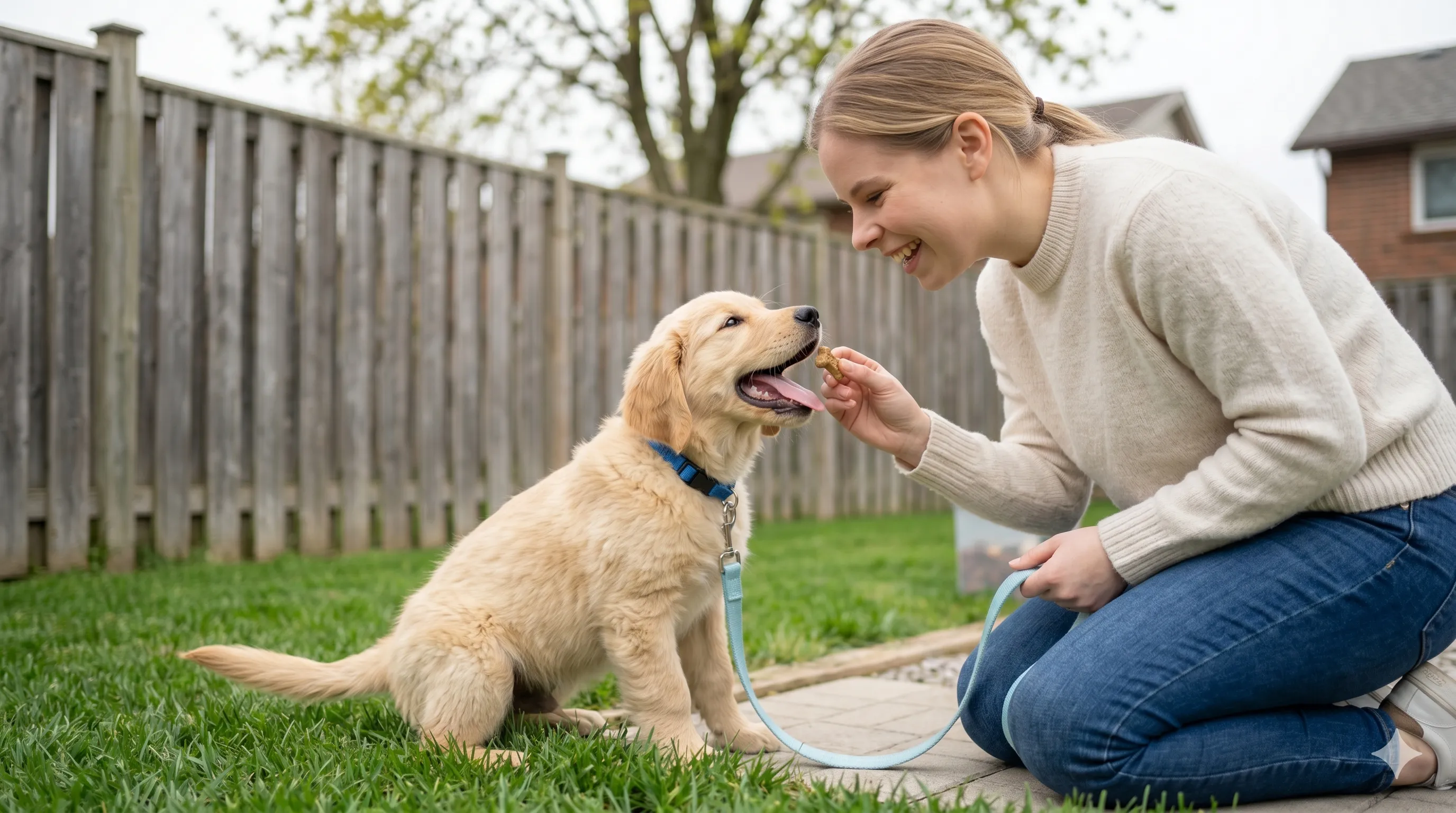
Reward Immediately After Success
Timing matters enormously.
Reward your puppy within seconds after they finish using the correct spot.
Delayed rewards confuse the learning process.
Use:
- calm praise,
- small treats,
- or positive affection.
Supervise Constantly Indoors
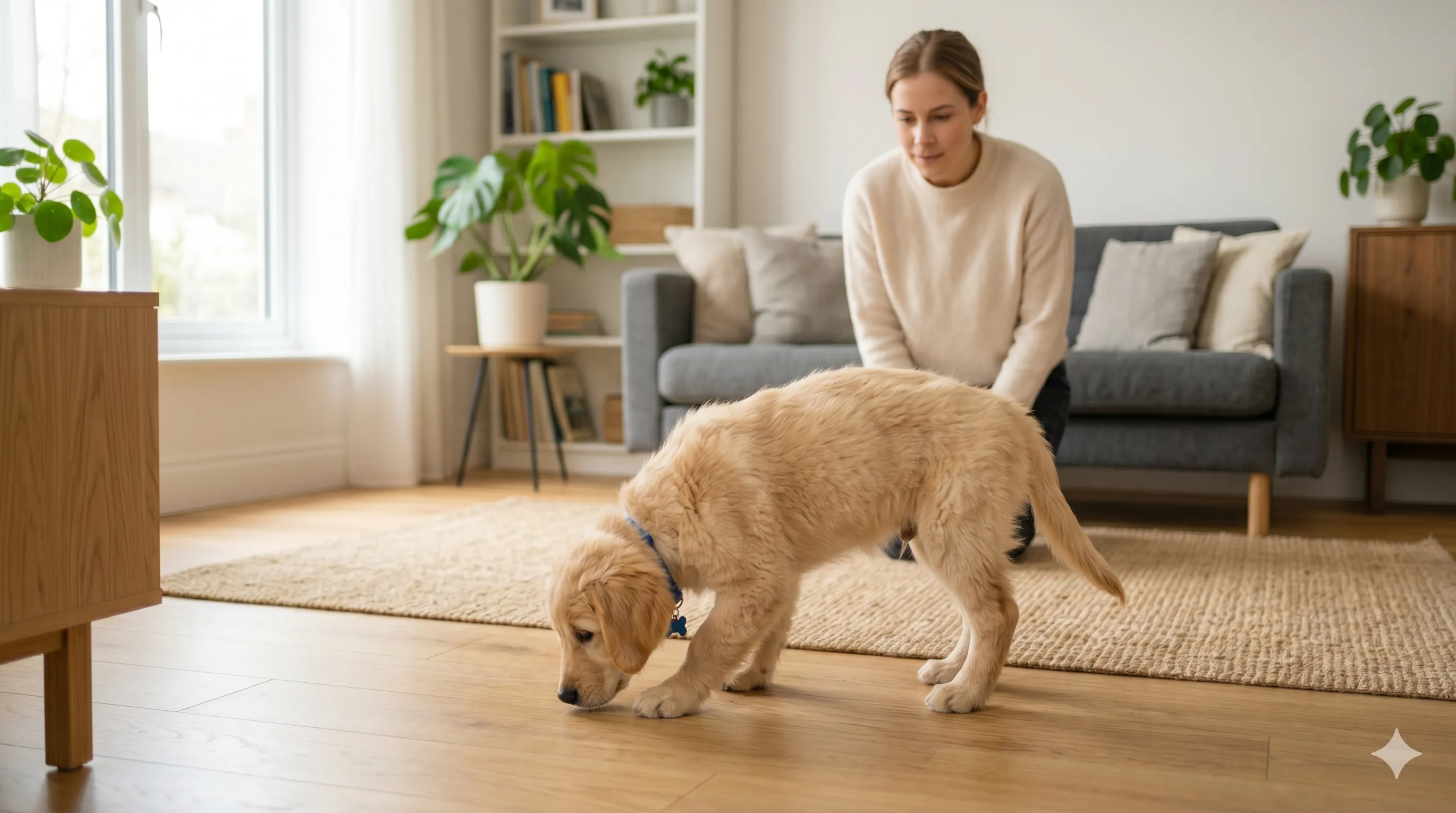
Most potty training failures happen because owners miss early warning signs.
Watch carefully for:
- sniffing,
- circling,
- suddenly wandering away,
- or restlessness.
These behaviors often happen seconds before accidents.
Limit Freedom Early On
Too much house access too early creates confusion.
Puppies should gradually earn freedom after demonstrating reliability.
Using:
- baby gates,
- playpens,
- or supervised rooms
helps reduce accidents dramatically.
properly socialize a puppy early to build confidence and reduce training problemsHandle Accidents Calmly
Never punish accidents after they happen.
Puppies do not connect delayed punishment to bathroom behavior.
Harsh reactions often create:
- fear,
- hiding behavior,
- stress urination,
- or sneaky accidents.
Instead:
- clean thoroughly,
- adjust supervision,
- and improve timing.
7-Day Potty Training Foundation Plan
Days 1-2: Introduce the Routine
Focus entirely on:
- frequent outdoor trips,
- consistent timing,
- and building familiarity with the potty location.
Expect accidents during this phase.
Days 3-4: Build Pattern Recognition
Your puppy begins recognizing:
- where to go,
- what earns rewards,
- and what the routine looks like.
Supervision remains critical.
Days 5-6: Strengthen Habit Formation
Many puppies begin showing visible improvement.
Accidents often decrease when consistency remains strong.
Day 7 and Beyond: Stabilization
The puppy is not "fully trained" yet.
However, strong early habits usually begin developing during this stage.
Consistency after the first week matters even more than the first week itself.
Common Potty Training Problems
Puppy Pees Immediately After Coming Inside
This often happens because the puppy became distracted outdoors.
Stay outside longer and reduce distractions.
Puppy Has Accidents at Night
Young puppies frequently need overnight bathroom breaks.
Late evening water management and scheduled nighttime trips help significantly.
Puppy Keeps Returning to the Same Indoor Spot
Residual scent encourages repeated accidents.
Use proper enzymatic cleaners designed for pet accidents.
Puppy Seems to Forget Training Suddenly
Regression is common during growth phases, excitement periods, or schedule changes.
Return temporarily to stricter supervision and routine.
Crate Training and Potty Training
Crates can become one of the most powerful potty-training tools when used correctly.
Most puppies naturally avoid soiling their sleeping area.
Proper crate training helps:
- reduce accidents,
- build bladder control,
- and create predictable bathroom timing.
However, crates should never be used as punishment.
Why Consistency Matters More Than Speed
Many owners search for "fast potty training" expecting instant results.
In reality, fast success usually comes from:
- routine consistency,
- constant supervision,
- clear communication,
- and preventing bad habits early.
Inconsistent schedules slow learning dramatically.
Common Potty Training Mistakes
Punishing Accidents
This creates fear instead of understanding.
Giving Too Much Freedom Too Early
Large unsupervised spaces almost always increase accidents.
Missing Potty Timing Windows
Late potty breaks are one of the biggest reasons training stalls.
Not Rewarding Outdoor Success
Puppies repeat behaviors that produce positive outcomes.
Inconsistent Household Rules
All family members should follow the same routine and commands.
Example Scenario
The scenario below is an illustrative example of how this situation can play out, not a documented case study.
A 10-week-old puppy initially had accidents almost every day because the owners allowed unrestricted access to multiple rooms.
After switching to structured supervision, scheduled potty trips every 90 minutes, crate-assisted routine management, and immediate rewards outdoors, accidents dropped significantly within the first week.
By the third week, the puppy consistently signaled before needing bathroom breaks.
The biggest improvement came from preventing mistakes rather than reacting after accidents occurred.
When Potty Training May Take Longer
Some puppies naturally require more time due to:
- very young age,
- high excitement levels,
- anxiety,
- inconsistent previous training,
- or medical conditions.
Patience and structure matter far more than perfection.
Final Thoughts
Potty training a puppy fast is absolutely possible when training focuses on:
- prevention,
- routine,
- timing,
- supervision,
- and positive reinforcement.
Most puppies want to succeed they simply need clear structure and consistent guidance.
Once strong bathroom habits become routine, training usually becomes dramatically easier and daily stress decreases for both the puppy and owner.
This content is written for general educational purposes and should not replace veterinary guidance if a puppy shows unusual urination patterns, digestive issues, or persistent training difficulties.
Medical Disclaimer
This content is provided for informational and educational purposes only and should not be considered veterinary, medical, behavioral, or training advice. While we strive for accuracy, we make no guarantees regarding completeness or results. Always consult a licensed veterinarian or qualified pet care professional before making decisions about your pet’s health, diet, or behavior.
AI Illustration Notice
Some images in this article may have been generated or enhanced using artificial intelligence for illustrative purposes.
Frequently Asked Questions
Most puppies show noticeable improvement within 1–2 weeks, but complete reliability often takes several months depending on age and consistency.
Young puppies usually need bathroom breaks every 1–2 hours and after sleeping, eating, drinking, or playtime.
No. Punishment often creates fear and confusion instead of improving learning.
A puppy can begin building strong habits within 7 days, but full training usually requires ongoing consistency for several weeks or months.
The fastest method combines strict routine, supervision, immediate rewards, and prevention of indoor accidents.
This usually happens because the puppy became distracted outdoors or did not fully finish going to the bathroom.
Yes. Proper crate training helps build bladder control and prevents unsupervised accidents indoors.
Many puppies become mostly reliable between 4–6 months of age with structured training and consistent routines.
Editorial Note
This article is part of PetNurture's educational library.
Topics draw on publicly available educational resources, recognised veterinary organisations, academic publications and established animal welfare references where appropriate.
The specific sources this article draws on are listed in its References section. If you spot an error, please let us know.
References
The information in this article has been reviewed and supported using the following sources.
American Kennel Club
Puppy Potty Training Schedule: A Timeline for Housebreaking Your Puppy
The AKC recommends a 'month-plus-one rule' for estimating bladder control, taking a puppy's age in months and adding one to estimate the maximum hours they can typically hold their bladder, for example about 4 hours for a 3-month-old puppy.
Accessed Aug 6, 2026
American Kennel Club
Puppy Potty Training Schedule: A Timeline for Housebreaking Your Puppy
The AKC advises taking puppies out immediately upon waking, shortly after meals, after naps and playtime, and before bedtime, and notes that AKC Chief Veterinarian Dr. Jerry Klein says a 6-month-old puppy who started training early is usually dependable most of the time, though full reliability takes patience and consistency.
Accessed Aug 6, 2026
Pet Emergency Guidance
Every pet is unique. If your pet exhibits severe symptoms, sudden behavioral changes, or a medical emergency, do not rely on online guides — contact a licensed veterinarian or emergency clinic immediately.
About PetNurture
PetNurture is an educational library of pet care guides, interactive tools and practical resources for pet parents. We work continuously to keep our content accurate and up to date. Reader feedback helps us maintain content quality.
Related Articles
Popular Dog Guides
Dog
Dog Pregnancy Calculator
Estimate your dog's due date, pregnancy timeline, and key gestation milestones.