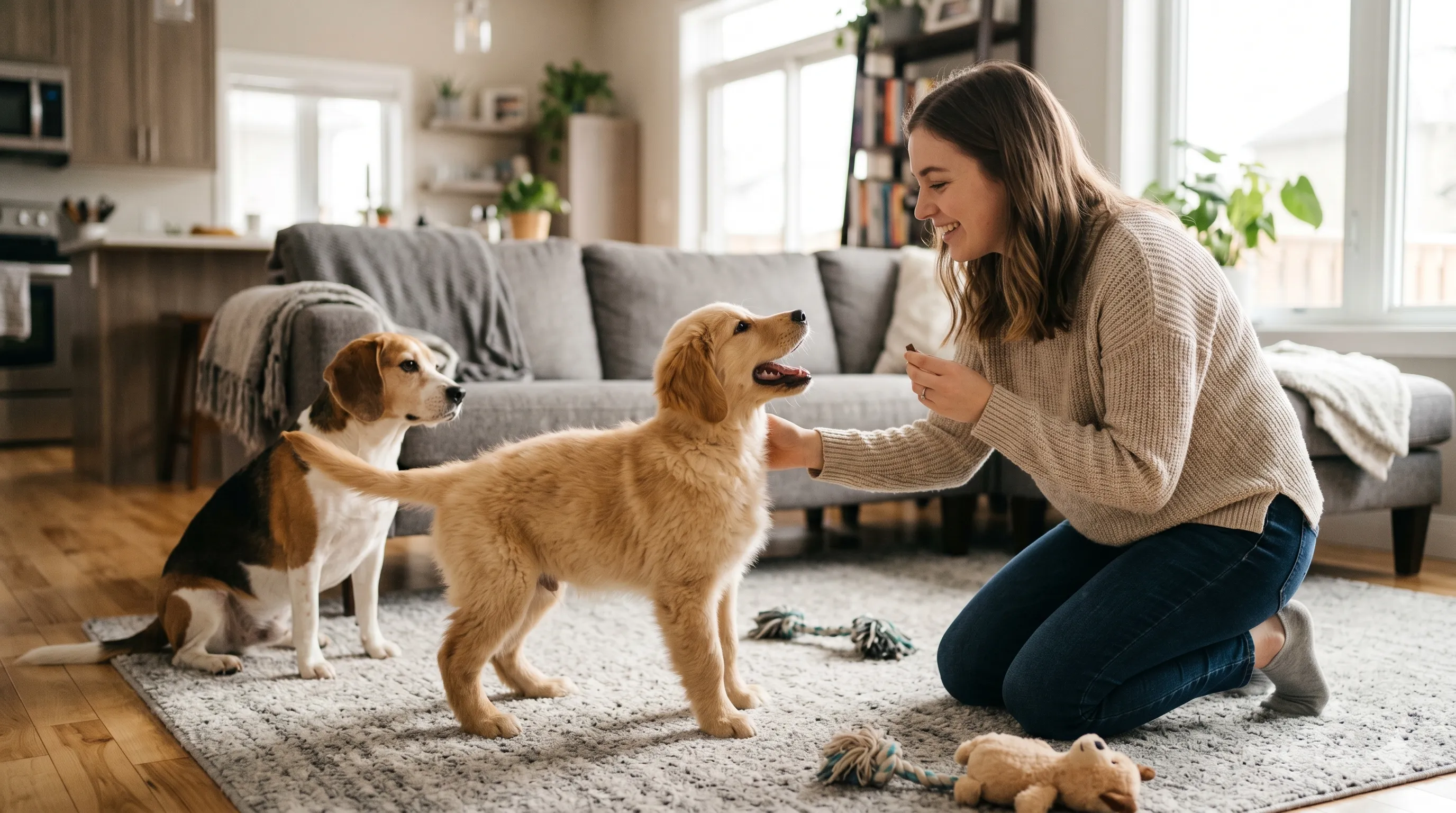
How to Stop a Puppy from Biting: Fast Training Methods That Actually Work
- How to Stop a Puppy from Biting (Quick Answer)
- Puppy Biting Timeline: What Is Normal?
- Why Puppies Bite So Much
- 1. Teething Pain and Gum Discomfort
- 2. Puppies Explore with Their Mouth
- 3. Play and Social Learning
- 4. Overstimulation and Excitement
- 5. Attention-Seeking Behavior
- The Biggest Mistake Owners Make
- Step-by-Step Training to Stop Puppy Biting
- 1. Teach Bite Inhibition
- 2. Redirect Biting Immediately
- 3. End Play When Biting Escalates
- 4. Prevent Overtired "Land Shark" Behavior
- 5. Reward Calm Behavior Constantly
- 6. Use Structured Play Sessions
- What to Do in Common Puppy Biting Situations
- Puppy Bites Hands During Play
- Puppy Attacks Feet or Ankles
- Puppy Bites Clothes
- Puppy Bites More at Night
- How Exercise and Mental Stimulation Affect Biting
- Why Punishment Usually Fails
- How Long Does It Take to Stop Puppy Biting?
- Signs Puppy Biting May Be More Serious
- Daily Routine That Helps Reduce Puppy Biting
- Common Mistakes to Avoid
- 1. Encouraging Hand Wrestling
- 2. Yelling or Hitting
- 3. Inconsistent Family Rules
- 4. Ignoring Sleep Needs
- 5. Expecting Instant Results
- Example Scenario
- Final Thoughts
Note: This article is for informational purposes only and does not replace professional veterinary advice.
Puppy biting is one of the most common and frustrating challenges new dog owners face. One moment your puppy is playful and adorable, and the next they are biting hands, ankles, clothes, furniture, or anything they can reach. While those sharp puppy teeth may seem harmless at first, uncontrolled biting can quickly become exhausting if proper training does not begin early. discover how to train a puppy not to bite using positive reinforcement methods
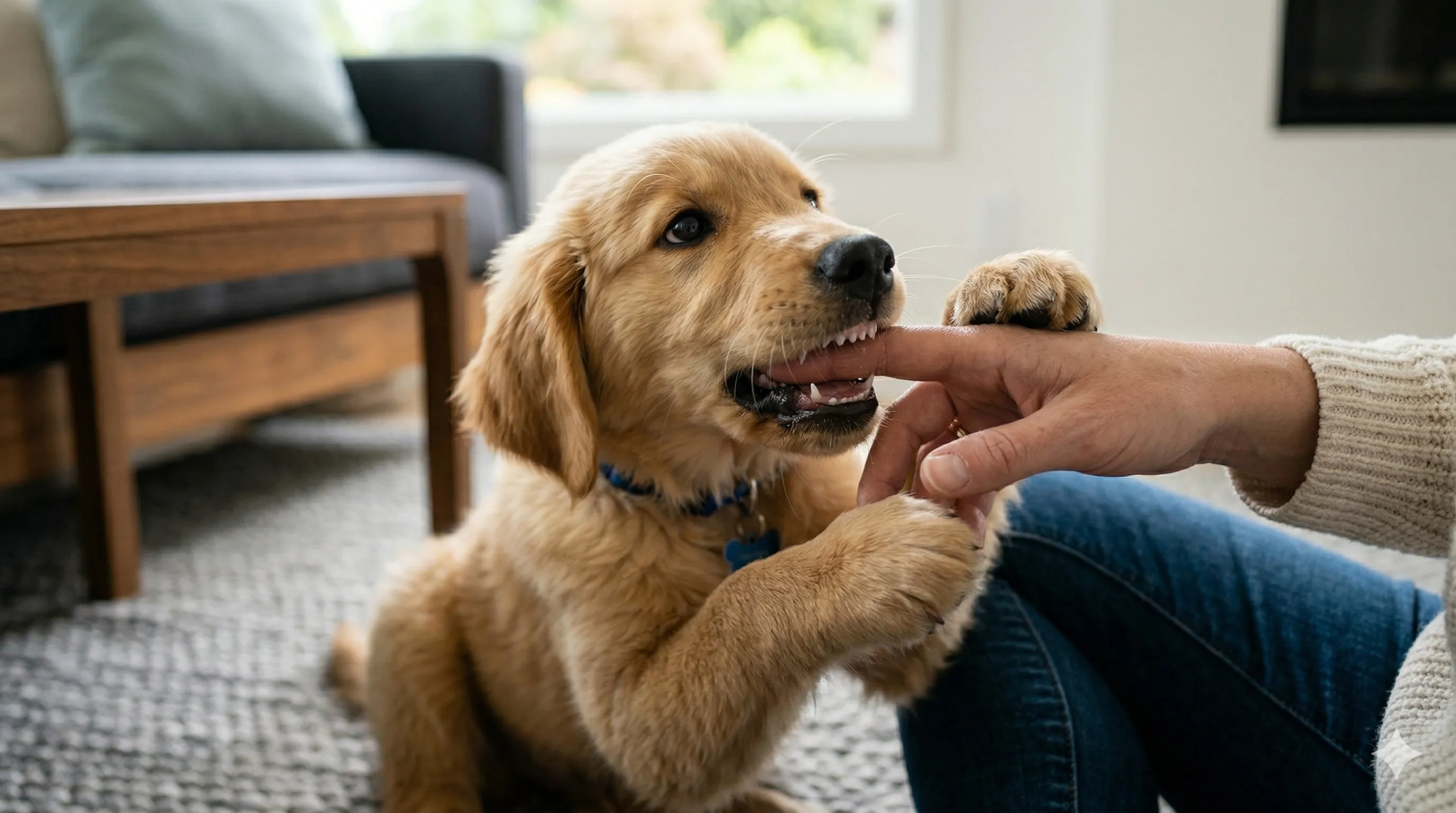
The good news is that puppy biting is usually a completely normal part of development. Puppies use their mouths to explore the world, interact socially, relieve teething discomfort, and release excitement. However, normal biting still needs guidance so your puppy learns appropriate behavior and bite control.
Many owners accidentally make biting worse without realizing it by reacting inconsistently, encouraging rough play, or overstimulating the puppy during play sessions.
This guide focuses specifically on fast-working, practical ways to stop puppy biting in real-life situations. You'll learn why puppies bite, what behaviors accidentally reinforce biting, how to respond in the moment, and realistic timelines for improvement.
How to Stop a Puppy from Biting (Quick Answer)
To stop a puppy from biting, teach bite inhibition, redirect biting toward appropriate toys, avoid overstimulation, stop play immediately after painful bites, reward calm behavior, and maintain consistent training routines.
Most puppies improve significantly within several weeks when training remains calm, structured, and consistent.
Puppy Biting Timeline: What Is Normal?
| Puppy Age | Typical Behavior | What Owners Should Expect |
|---|---|---|
| 8-12 weeks | Frequent playful biting | Normal exploration and teething |
| 3-4 months | Increased chewing and excitement biting | Training consistency becomes critical |
| 4-6 months | Improving bite control | Teething slowly decreases |
| 6+ months | Reduced puppy nipping | Better impulse control develops |
Why Puppies Bite So Much
Understanding why puppies bite makes training much easier because the goal is not simply stopping behavior it is teaching better alternatives.
1. Teething Pain and Gum Discomfort
Puppies go through intense teething phases that create discomfort and pressure in their gums.
Biting and chewing help relieve that discomfort naturally.
This is why puppies often bite more heavily during certain growth stages.
2. Puppies Explore with Their Mouth
Young puppies experience the world differently than humans.
They naturally investigate objects, textures, movement, and reactions through their mouths.
This exploratory behavior is normal developmental learning.
3. Play and Social Learning
Puppies learn bite control through play with littermates.
When one puppy bites too hard, the other puppy usually stops playing immediately.
This teaches important bite-pressure boundaries.
properly socialize a puppy so they learn healthy play and interaction habitsHuman owners must continue teaching these boundaries after adoption.
4. Overstimulation and Excitement
Many puppies bite most aggressively when overly excited.
This commonly happens during:
- Rough play
- Evening zoomies
- Overtired behavior
- Excessive excitement
- Chaotic environments
Overstimulated puppies often lose impulse control temporarily.
5. Attention-Seeking Behavior
Puppies quickly learn that biting gets reactions.
Even negative reactions like yelling, pushing, or dramatic movements may unintentionally reinforce the behavior because the puppy still receives engagement and stimulation.
The Biggest Mistake Owners Make
One of the most common reasons puppy biting continues is inconsistent owner response.
For example:
- Sometimes laughing at biting
- Sometimes allowing rough play
- Sometimes yelling
- Sometimes ignoring
Mixed signals confuse puppies and slow learning dramatically.
Consistency matters far more than harsh correction.
Step-by-Step Training to Stop Puppy Biting
1. Teach Bite Inhibition
Bite inhibition teaches puppies how much pressure is acceptable.
When your puppy bites too hard:
- Say "ouch" calmly and briefly
- Immediately stop interaction
- Pause play for several seconds
This mirrors how littermates naturally teach boundaries.
Avoid screaming or dramatic reactions because these sometimes increase excitement instead of reducing it.
2. Redirect Biting Immediately
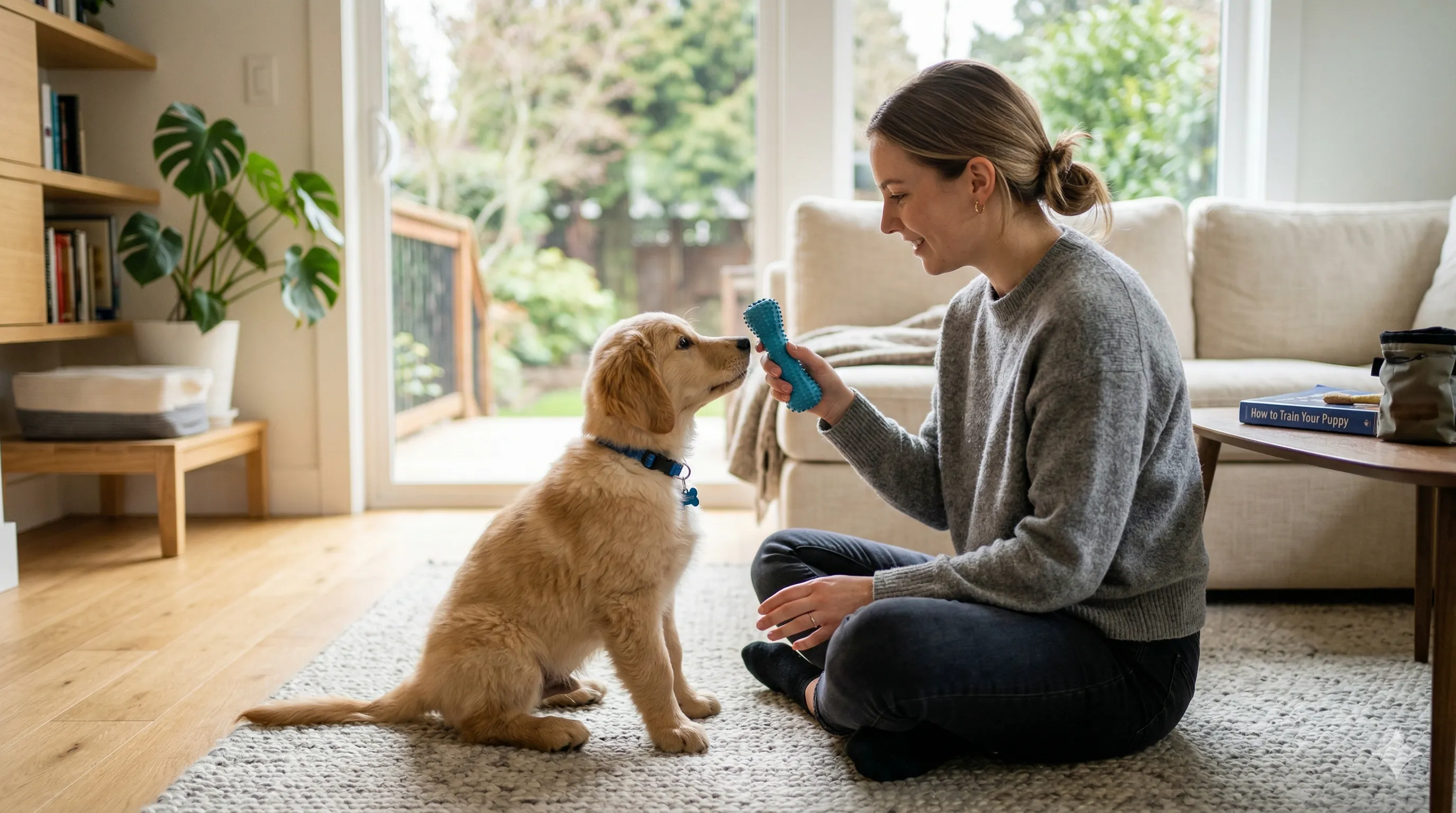
Always provide appropriate chewing alternatives.
When your puppy bites:
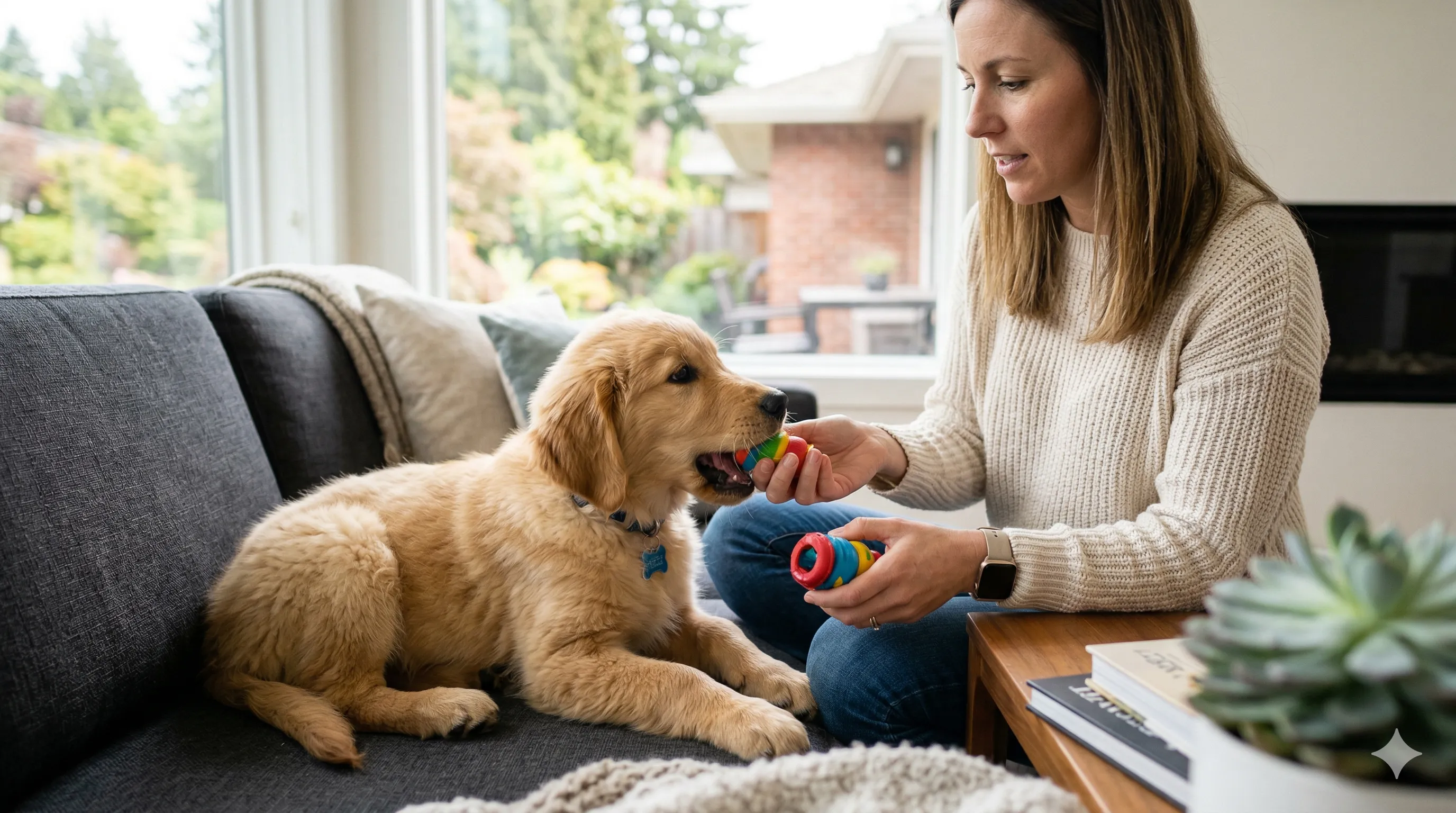
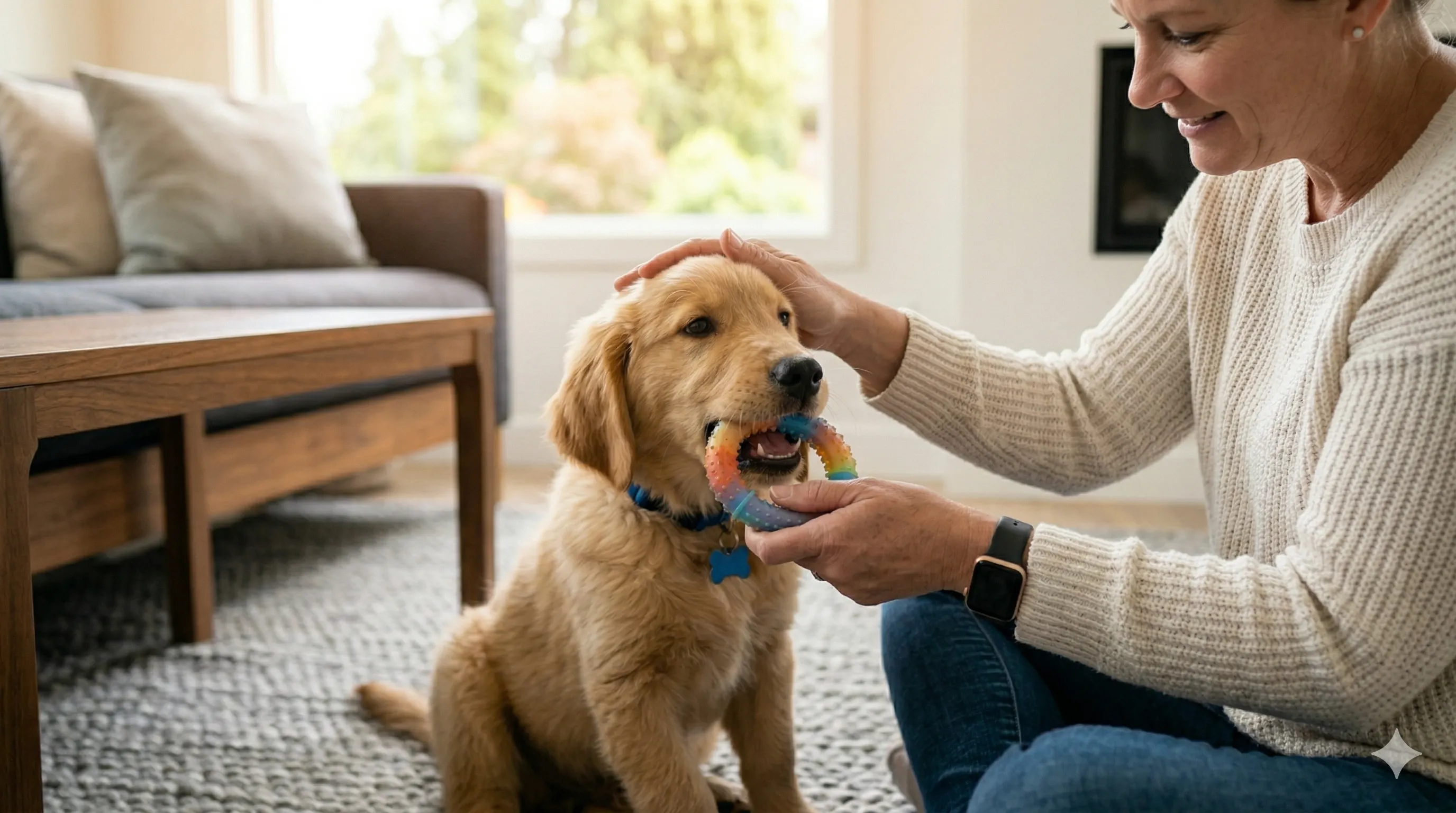
- Redirect to a chew toy
- Offer teething-safe items
- Praise chewing on correct objects
Puppies need acceptable outlets for chewing behavior rather than constant suppression.
3. End Play When Biting Escalates
If biting becomes overly intense:
- Stand up calmly
- Pause interaction briefly
- Avoid emotional reactions
Puppies learn quickly that rough biting causes fun to stop.
4. Prevent Overtired "Land Shark" Behavior
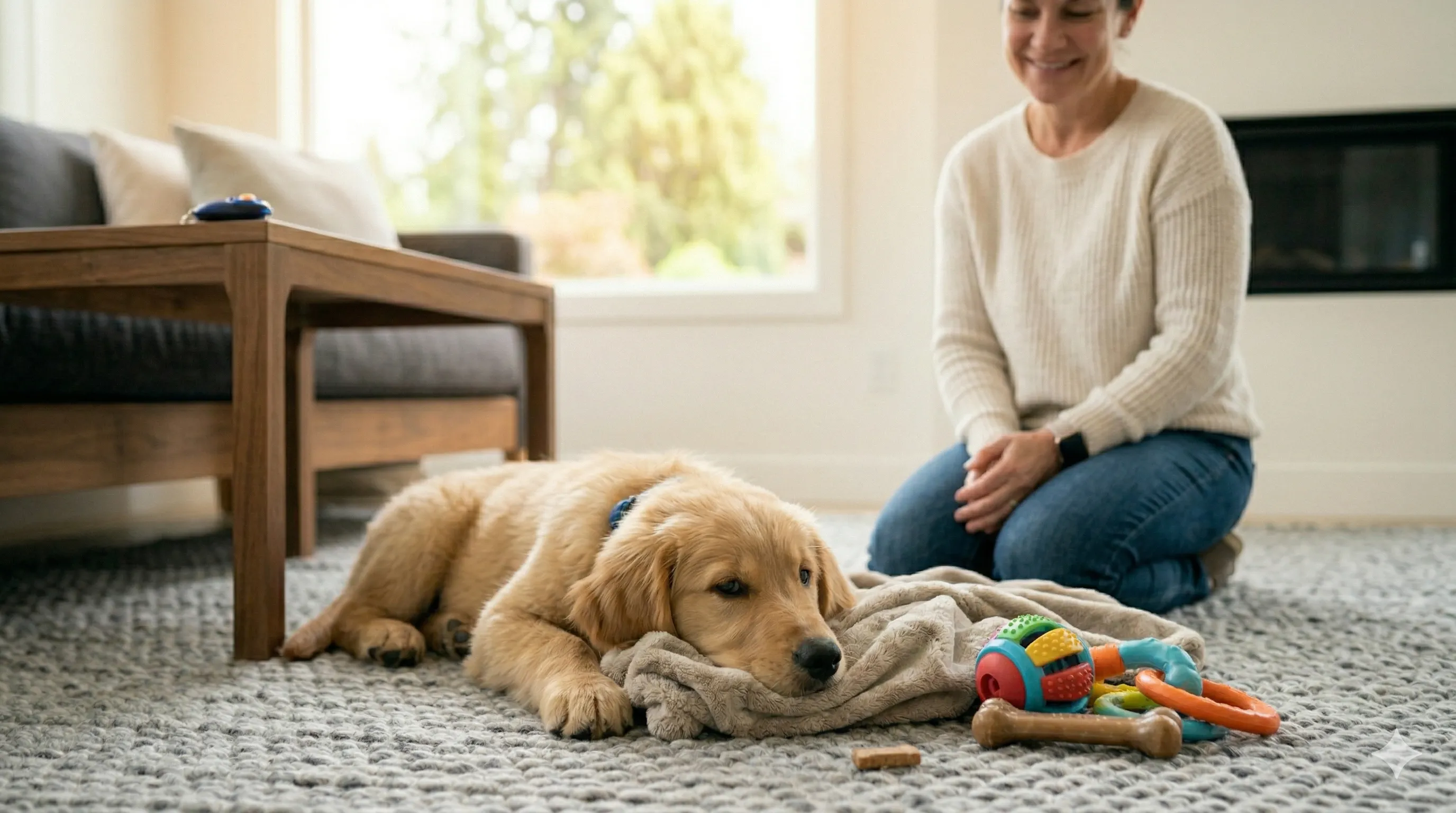
Many owners miss one extremely important trigger: exhaustion.
Overtired puppies often become hyperactive, bite harder, and lose self-control.
Signs your puppy may need rest:
- Sudden zoomies
- Wild biting bursts
- Ignoring commands
- Frantic energy
Young puppies need significant sleep throughout the day.
consistent routines like crate training help puppies feel calm and secure5. Reward Calm Behavior Constantly
Do not only focus on stopping bad behavior.
Actively reward:
- Gentle play
- Calm sitting
- Toy chewing
- Relaxed interactions
This helps puppies understand what behavior earns positive attention.
6. Use Structured Play Sessions
Uncontrolled play often increases biting.
Short structured sessions work far better.
Good play sessions include:
- Toy interaction
- Training breaks
- Calm pauses
- Predictable endings
Avoid encouraging biting games with bare hands.
What to Do in Common Puppy Biting Situations
Puppy Bites Hands During Play
Immediately redirect toward toys.
Keep chew toys nearby during interaction.
Puppy Attacks Feet or Ankles
This often happens during excitement bursts.
Stop movement briefly and redirect calmly.
Running away can accidentally trigger chasing instincts.
Puppy Bites Clothes
Avoid tugging clothing aggressively because it may turn into a game.
Freeze briefly and redirect to a toy instead.
Puppy Bites More at Night
Evening biting is extremely common because puppies become overtired and overstimulated late in the day.
Structured naps and calm evening routines help significantly.
How Exercise and Mental Stimulation Affect Biting
Bored puppies often bite more because they have excess energy and insufficient mental engagement.
Helpful activities include:
- Short walks
- Puzzle feeders
- Basic training sessions
- Scent games
- Chew enrichment
Mental stimulation is often just as important as physical exercise.
Why Punishment Usually Fails
Harsh punishment may:
- Increase fear
- Create confusion
- Damage trust
- Increase defensive behavior
- Overstimulate energetic puppies
Positive reinforcement and clear boundaries usually produce better long-term results.
How Long Does It Take to Stop Puppy Biting?
Most puppies show noticeable improvement within 2-4 weeks when training remains consistent.
However, complete bite control develops gradually with age, maturity, teething progression, and repetition.
Many puppies continue occasional nipping during teething months even while improving overall behavior.
Progress is usually gradual rather than immediate.
Signs Puppy Biting May Be More Serious
Most puppy biting is playful and developmentally normal.
However, you should monitor if your puppy:
- Shows stiff body posture
- Growls intensely with tension
- Guards food aggressively
- Shows fear-based reactions
- Does not improve with training
Professional training support may help in these situations.
Daily Routine That Helps Reduce Puppy Biting
Many puppies behave better when daily routines stay predictable.
A healthy routine may include:
- Morning potty break
- Short training session
- Play and chew time
- Scheduled naps
- Mental stimulation activities
- Calm evening routine
Predictability helps puppies regulate energy and emotions more effectively.
Common Mistakes to Avoid
1. Encouraging Hand Wrestling
Hands should not become chew toys during play.
2. Yelling or Hitting
Harsh corrections often increase fear or excitement.
3. Inconsistent Family Rules
Everyone in the household should respond similarly to biting.
4. Ignoring Sleep Needs
Overtired puppies frequently become bitey and hyperactive.
5. Expecting Instant Results
Puppy learning takes repetition, maturity, and patience.
Example Scenario
The scenario below is an illustrative example of how this situation can play out, not a documented case study.
One young Labrador puppy regularly bit hands, sleeves, and ankles during evening play sessions.
The owners initially reacted by pushing the puppy away loudly, which accidentally increased excitement and rough behavior.
After switching to calm redirection, scheduled naps, chew toys, and short training sessions, the puppy's biting improved dramatically within several weeks.
The biggest improvement came from recognizing that overtired behavior was triggering most biting episodes.
Final Thoughts
Puppy biting can feel overwhelming at times, especially during intense teething phases, but it is usually a normal and temporary stage of development.
The goal is not simply stopping biting immediately it is teaching your puppy how to interact gently, regulate excitement, and choose appropriate behaviors.
Consistency, patience, calm responses, structured routines, and positive reinforcement create the fastest long-term improvement.
With proper guidance, most puppies gradually develop excellent bite control and become calm, well-mannered adult dogs.
This content is written to provide general educational guidance for puppy owners. It should not replace professional behavioral or veterinary support for severe aggression or fear-based biting issues.
Medical Disclaimer
This content is provided for informational and educational purposes only and should not be considered veterinary, medical, behavioral, or training advice. While we strive for accuracy, we make no guarantees regarding completeness or results. Always consult a licensed veterinarian or qualified pet care professional before making decisions about your pet’s health, diet, or behavior.
AI Illustration Notice
Some images in this article may have been generated or enhanced using artificial intelligence for illustrative purposes.
Frequently Asked Questions
Use bite inhibition calm redirection chew toys structured routines and positive reinforcement consistently to reduce puppy biting quickly.
Yes, puppy biting is usually a normal part of teething play and early social development.
Puppies often bite hands because they explore the world with their mouths and become excited during interaction and play.
Most puppies improve significantly between 4 and 6 months as teething decreases and training progresses.
No, harsh punishment can increase fear confusion and overstimulation while calm consistent training works much better long term.
Many puppies bite more at night because they become overtired overstimulated and temporarily lose impulse control.
Editorial Note
This article is part of PetNurture's educational library.
Topics draw on publicly available educational resources, recognised veterinary organisations, academic publications and established animal welfare references where appropriate.
The specific sources this article draws on are listed in its References section. If you spot an error, please let us know.
References
The information in this article has been reviewed and supported using the following sources.
ASPCA
Mouthing, Nipping and Biting in Puppies
The ASPCA explains that puppies normally learn bite inhibition through play with littermates, and recommends mimicking this by giving a high-pitched yelp and briefly ending play when a puppy bites too hard.
Accessed Aug 6, 2026
American Kennel Club
How to Stop Puppy Biting and Train Bite Inhibition
The AKC recommends keeping a chew toy on hand to redirect biting and immediately ending playtime when a puppy bites, noting that an overtired puppy often needs a quiet space or crate to nap rather than more play.
Accessed Aug 6, 2026
Pet Emergency Guidance
Every pet is unique. If your pet exhibits severe symptoms, sudden behavioral changes, or a medical emergency, do not rely on online guides — contact a licensed veterinarian or emergency clinic immediately.
About PetNurture
PetNurture is an educational library of pet care guides, interactive tools and practical resources for pet parents. We work continuously to keep our content accurate and up to date. Reader feedback helps us maintain content quality.
Related Articles
Popular Dog Guides
Dog
Dog Calorie Calculator
Find the right daily calorie target for your dog's weight and activity level.