
Why Does My Dog Bark at Night? Real Causes and How to Stop It
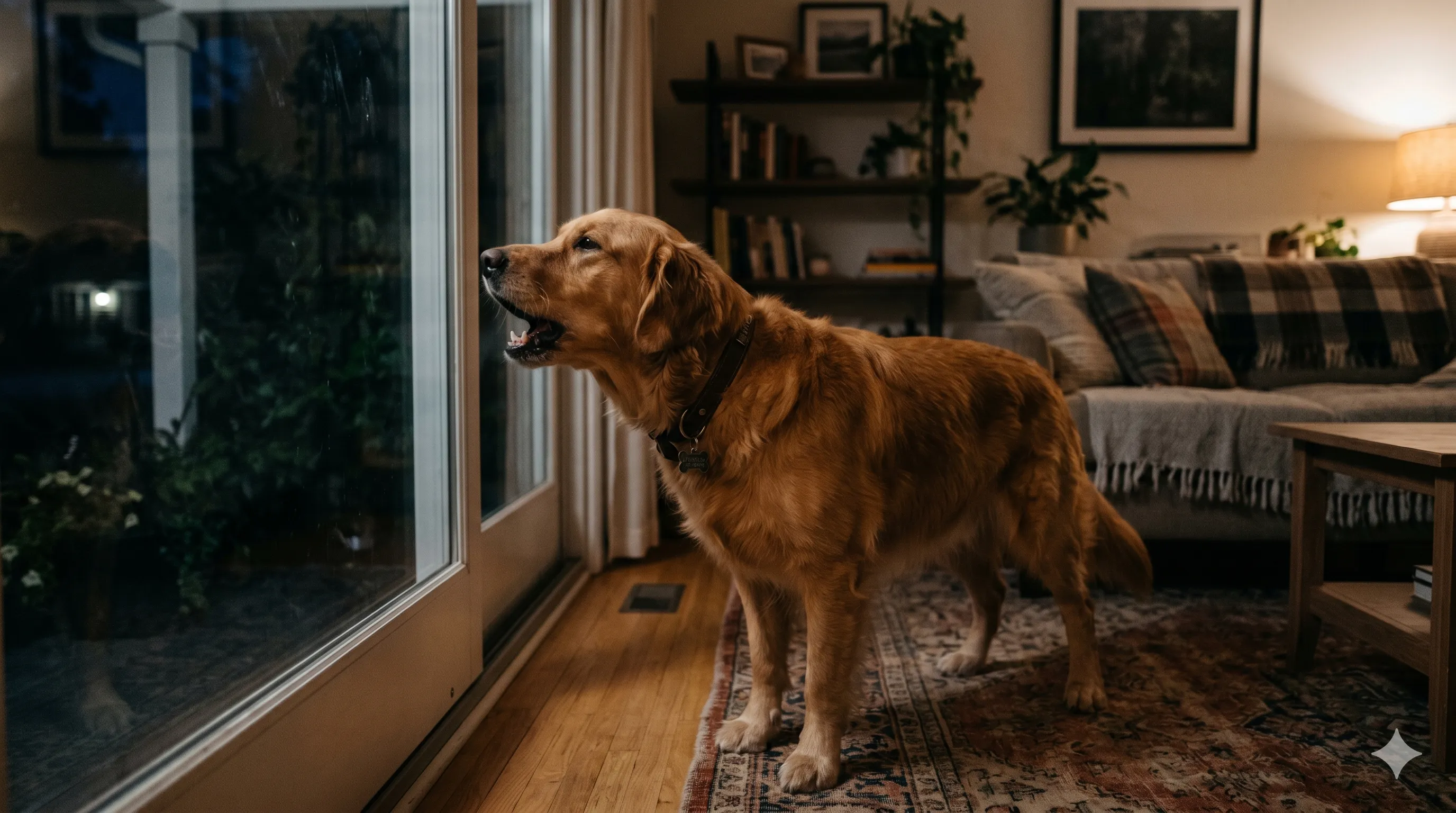
- Why Does My Dog Bark at Night? (Quick Answer)
- Why Dogs Become More Alert at Night
- Nighttime Dog Barking Causes & Solutions (Quick Guide)
- 6 Real Reasons Why Dogs Bark at Night
- 1. Natural Alert and Guarding Instincts
- 2. Dogs Hear Sounds Humans Cannot Detect
- 3. Lack of Exercise Can Create Restlessness
- 4. Separation Anxiety and Emotional Stress
- 5. Attention-Seeking Behavior Can Become a Habit
- 6. Environmental or Routine Changes Can Trigger Barking
- Normal vs Problematic Night Barking
- When Should You Be Concerned?
- How to Stop Dog Barking at Night
- 1. Increase Daytime Exercise and Mental Stimulation
- 2. Reduce Environmental Triggers
- 3. Maintain a Predictable Evening Routine
- 4. Avoid Rewarding Barking Behavior
- 5. Help Anxious Dogs Feel Secure
- 6. Teach a Reliable "Quiet" Command
- Ideal Evening Routine for a Quieter Dog
- Common Mistakes Owners Make
- Example Scenario
- Final Thoughts
Note: This article is for informational purposes only and does not replace professional veterinary advice.
You finally fall asleep, the house becomes quiet, and suddenly your dog starts barking loudly in the middle of the night. For many dog owners, nighttime barking quickly becomes frustrating, stressful, and exhausting.
If you've been wondering "why does my dog bark at night?", the behavior almost always has a specific trigger behind it. Dogs rarely bark randomly. dogs that don't get enough indoor stimulation often become more restless at night
Night barking is usually connected to alert instincts, environmental sounds, excess energy, boredom, anxiety, routine changes, or learned behavior patterns.
In some situations, occasional barking is completely normal. However, repeated nighttime barking often means your dog is reacting to something emotionally, physically, or environmentally.
The key to solving the problem is not simply stopping the barking but understanding why your dog feels the need to bark in the first place.

Why Does My Dog Bark at Night? (Quick Answer)
Dogs bark at night because of alert instincts, external noises, boredom, anxiety, excess energy, territorial behavior, or learned habits. Occasional barking is normal, but sudden or repetitive nighttime barking often indicates that something in your dog's environment, emotional state, or routine needs attention.
Understanding the trigger behind the barking is the first step toward solving it effectively.
Why Dogs Become More Alert at Night
Dogs naturally become more aware of their surroundings when the environment becomes quiet.
At night, small sounds and movements become easier for dogs to notice because there are fewer daytime distractions.
Dogs may react to:
- Passing cars
- Neighbors
- Animals outside
- Footsteps
- Wind or moving objects
- Unfamiliar sounds
Because canine hearing is significantly more sensitive than human hearing, dogs often respond to noises owners cannot even detect.
This is why some dogs suddenly bark while owners hear absolutely nothing unusual.

Nighttime Dog Barking Causes & Solutions (Quick Guide)
| Cause | Possible Meaning | Helpful Solution |
|---|---|---|
| Alert instinct | Reacting to movement or sounds | Reduce triggers and distractions |
| External noises | Sensitive hearing response | Use white noise or close curtains |
| Excess energy | Not enough physical activity | Increase daytime exercise |
| Anxiety or stress | Fear or insecurity | Provide comfort and routine |
| Attention-seeking | Learned behavioral pattern | Avoid reinforcing barking |
| Routine changes | Environmental adjustment stress | Create predictable schedules |
6 Real Reasons Why Dogs Bark at Night
1. Natural Alert and Guarding Instincts
Dogs are naturally protective and highly aware animals.
Many breeds are instinctively wired to alert owners about unusual sounds, movement, or unfamiliar activity.
At night, these instincts often become stronger because the environment is quieter and darker.
Dogs may bark at:
- Animals outside
- People walking nearby
- Outdoor movement
- Unexpected noises
- Changes in the environment
This type of barking is especially common in territorial or protective breeds.
2. Dogs Hear Sounds Humans Cannot Detect
Canine hearing is far more sensitive than human hearing.
Your dog may react to sounds that seem nonexistent to you, including:
- Distant barking
- Wildlife movement
- Passing vehicles
- Wind vibrations
- Household noises
Some dogs become highly stimulated by nighttime sounds because the rest of the home environment is calm and silent.
This can make even small noises feel important or threatening to your dog.
3. Lack of Exercise Can Create Restlessness
Dogs that do not release enough physical or mental energy during the day often become restless at night.
Instead of sleeping calmly, they may:
- Pace
- Whine
- Bark repeatedly
- Seek attention
- React more intensely to sounds
Dogs that don't get enough indoor stimulation often become more restless at night. separation anxiety is one of the most common reasons dogs bark when left alone
This is especially common in energetic breeds, young dogs, and indoor dogs with limited daytime activity.
4. Separation Anxiety and Emotional Stress
Some dogs bark at night because they feel emotionally insecure or anxious when separated from their owners.
This is especially common if:
- The dog sleeps alone
- Recent routine changes occurred
- The dog recently moved homes
- The owner returned to work after being home frequently
Separation anxiety is one of the most common reasons dogs bark when left alone. dogs that constantly follow their owners may struggle more during nighttime separation
Dogs that constantly follow their owners may struggle more during nighttime separation as well. night barking is often linked to anxiety and stress-related behavior changes
Stress-related barking often appears alongside pacing, whining, or inability to settle down.
5. Attention-Seeking Behavior Can Become a Habit
Dogs quickly learn which behaviors generate human responses.
If barking consistently causes owners to:
- Get out of bed
- Talk to the dog
- Offer treats
- Provide attention
- Allow the dog into the room
the dog may continue barking because the behavior successfully creates interaction.
Even frustrated reactions can unintentionally reinforce barking habits.
6. Environmental or Routine Changes Can Trigger Barking
Dogs generally feel safest when routines remain predictable.
Night barking sometimes increases after:
- Moving to a new home
- Visitors arriving
- Changes in schedules
- New pets
- Environmental stress
Night barking is often linked to anxiety and stress-related behavior changes. sudden changes in sleep patterns combined with barking may indicate a deeper issue
Some dogs become temporarily more reactive until they adjust to the new environment.

Normal vs Problematic Night Barking
Not every nighttime bark is a behavioral problem.
- Normal barking: Occasional alert barking in response to a clear trigger
- Potential problem: Continuous barking, distressed vocalization, pacing, or excessive reactivity
The frequency, intensity, and emotional state behind the barking matter much more than isolated barking incidents.
When Should You Be Concerned?
Night barking becomes more concerning when it appears suddenly or alongside major behavior changes.
Potential warning signs include:
- Sudden increase in barking frequency
- Pacing or restlessness
- Destructive behavior
- Loss of appetite
- Fearful body language
- Sleep disruption
- Withdrawal or anxiety
Sudden changes in sleep patterns combined with barking may indicate a deeper issue. establishing a consistent bedtime routine, similar to structured crate training, helps owners respond more effectively instead of simply reacting to the noise itself
If barking behavior changes dramatically or appears connected to distress, health concerns or emotional imbalance may be contributing factors.
How to Stop Dog Barking at Night
1. Increase Daytime Exercise and Mental Stimulation
A physically and mentally fulfilled dog is far more likely to sleep peacefully at night.
Good daily activities include:
- Walks
- Play sessions
- Training exercises
- Sniffing games
- Puzzle toys
Mental stimulation during the day helps reduce boredom-driven barking at night. regular structured walks and physical exercise during the day help reduce boredom-driven barking at night
2. Reduce Environmental Triggers
Try minimizing the sounds and visual triggers that activate alert barking.
Helpful strategies include:
- Closing curtains
- Using white noise
- Blocking outdoor views
- Moving sleeping areas away from windows
3. Maintain a Predictable Evening Routine
Dogs generally relax more easily when bedtime routines remain consistent.
A healthy nighttime routine may include:
- Evening walk
- Calm bonding time
- Bathroom break
- Consistent sleep schedule
Predictability helps reduce anxiety and overstimulation.
4. Avoid Rewarding Barking Behavior
If your dog barks for attention, responding inconsistently can unintentionally strengthen the behavior.
Calm, consistent responses work far better than yelling or punishment.
5. Help Anxious Dogs Feel Secure
Some dogs simply feel safer sleeping near familiar people, smells, or routines.
Comfortable beds, calming routines, and emotional reassurance often reduce nighttime anxiety significantly.
6. Teach a Reliable "Quiet" Command
Positive reinforcement training can help dogs learn when barking should stop.
Reward calm quiet behavior consistently rather than focusing only on correction.
Ideal Evening Routine for a Quieter Dog
Many dogs improve significantly once they follow a structured nighttime schedule.
- Evening walk: Release physical energy
- Mental enrichment: Puzzle toys or training
- Calm bonding: Reduce emotional stress
- Bathroom break: Prevent overnight discomfort
- Consistent bedtime: Stabilize sleep patterns
This type of routine aligns more naturally with healthy canine behavior patterns.
Common Mistakes Owners Make
- Yelling during barking episodes
- Ignoring exercise needs
- Responding inconsistently
- Overlooking anxiety signs
- Punishing fearful behavior
Example Scenario
The scenario below is an illustrative example of how this situation can play out, not a documented case study.
A young rescue dog began barking nightly whenever outdoor sounds occurred near the apartment building.
Initially, the owner responded by repeatedly checking windows and speaking to the dog during each barking episode, unintentionally reinforcing the behavior.
After introducing evening exercise, white noise, consistent bedtime routines, and calm redirection training, the barking reduced significantly within several weeks.
Final Thoughts
Nighttime barking is usually your dog's way of reacting to environmental triggers, emotional stress, alert instincts, or unmet physical and mental needs.
Most dogs improve substantially once owners identify the underlying trigger and create healthier routines, stimulation, and emotional balance.
Understanding nighttime canine behavior helps owners respond more effectively instead of simply reacting to the noise itself. understanding common dog anxiety signs can help identify emotional stress earlier
With patience, consistency, and proper daily structure, most dogs can learn to feel calmer and quieter at night.
This content is written to provide general educational guidance for dog owners and pet families and is not a substitute for professional veterinary advice.
Medical Disclaimer
This content is provided for informational and educational purposes only and should not be considered veterinary, medical, behavioral, or training advice. While we strive for accuracy, we make no guarantees regarding completeness or results. Always consult a licensed veterinarian or qualified pet care professional before making decisions about your pet’s health, diet, or behavior.
AI Illustration Notice
Some images in this article may have been generated or enhanced using artificial intelligence for illustrative purposes.
Frequently Asked Questions
Dogs usually bark at night because of alert instincts, environmental sounds, boredom, anxiety, excess energy, or learned behavior patterns.
Increase exercise, reduce nighttime triggers, maintain consistent routines, and avoid accidentally rewarding barking behavior.
Yes, occasional alert barking is normal, especially when dogs react to unfamiliar sounds or movement outside.
Yes, anxiety and emotional insecurity can cause dogs to bark repeatedly at night, especially when separated from owners.
Sudden night barking may happen because of environmental changes, stress, fear, routine disruptions, health issues, or new triggers.
Ignoring attention-seeking barking is often necessary because inconsistent responses can unintentionally reinforce the behavior.
Yes, dogs without enough physical or mental stimulation frequently become more restless and vocal during nighttime hours.
You should become concerned if barking becomes excessive, distress-related, sudden, or appears alongside pacing, fear, appetite loss, or behavioral changes.
Editorial Note
This article is part of PetNurture's educational library.
Topics draw on publicly available educational resources, recognised veterinary organisations, academic publications and established animal welfare references where appropriate.
The specific sources this article draws on are listed in its References section. If you spot an error, please let us know.
References
The information in this article has been reviewed and supported using the following sources.
American Kennel Club
How to Stop Nuisance Dog Barking
Explains that barking causes vary by trigger (boredom, separation anxiety, alerting) and that identifying the cause guides the solution; supports the causes and quick-guide sections of this article.
Accessed Aug 6, 2026
ASPCA
General overview of causes and patterns of nuisance barking in dogs; supports the alert-instinct and environmental-trigger sections of this article.
Accessed Aug 6, 2026
Pet Emergency Guidance
Every pet is unique. If your pet exhibits severe symptoms, sudden behavioral changes, or a medical emergency, do not rely on online guides — contact a licensed veterinarian or emergency clinic immediately.
About PetNurture
PetNurture is an educational library of pet care guides, interactive tools and practical resources for pet parents. We work continuously to keep our content accurate and up to date. Reader feedback helps us maintain content quality.
Related Articles


Popular Dog Guides



Dog
Dog Calorie Calculator
Find the right daily calorie target for your dog's weight and activity level.