Rabbit Cage Setup Guide: Best Indoor Setup for Happy & Healthy Rabbits
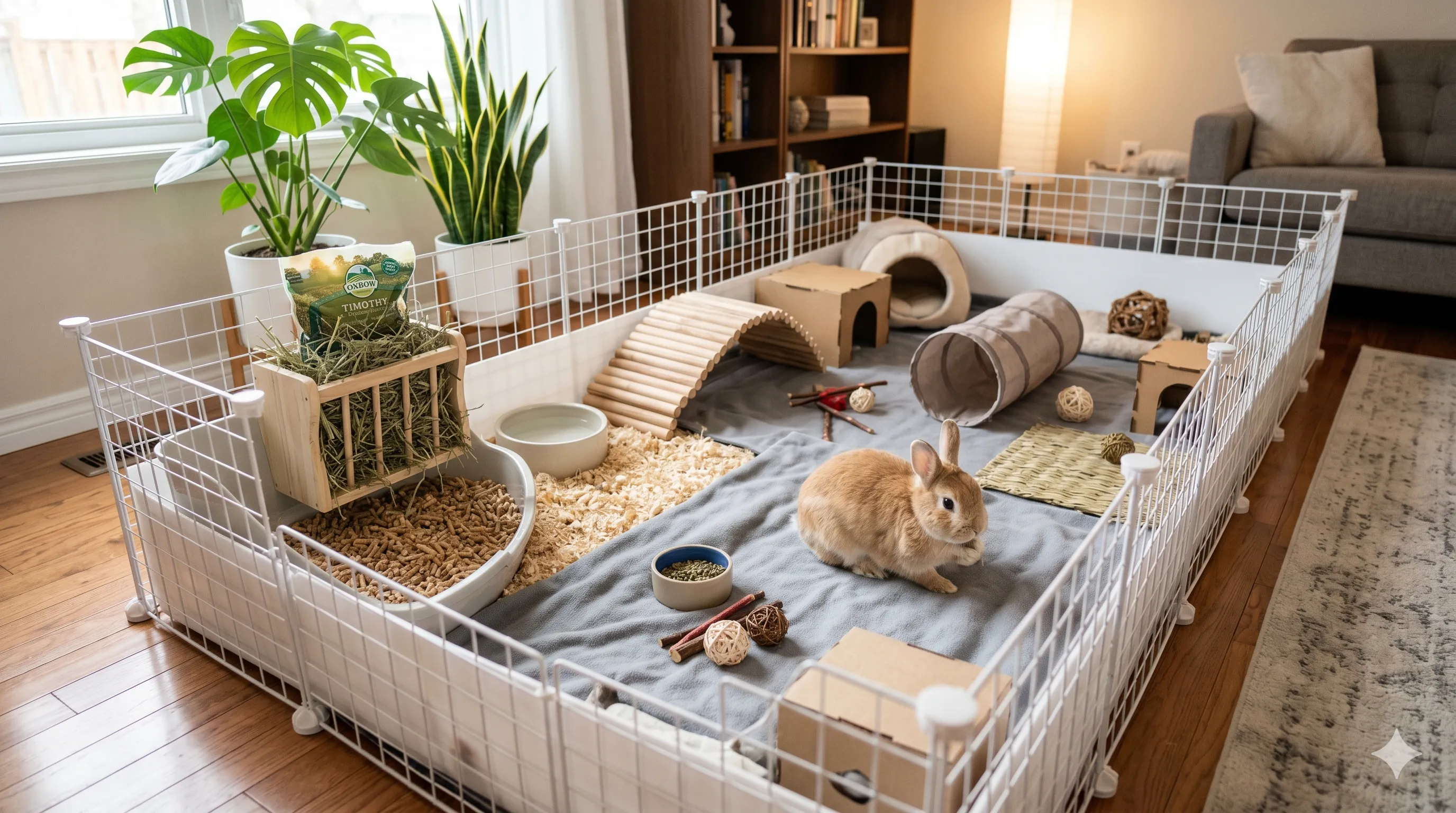
- Rabbit Cage Setup Guide (Quick Overview)
- How Much Space Does a Rabbit Need?
- Best Indoor Rabbit Housing Options
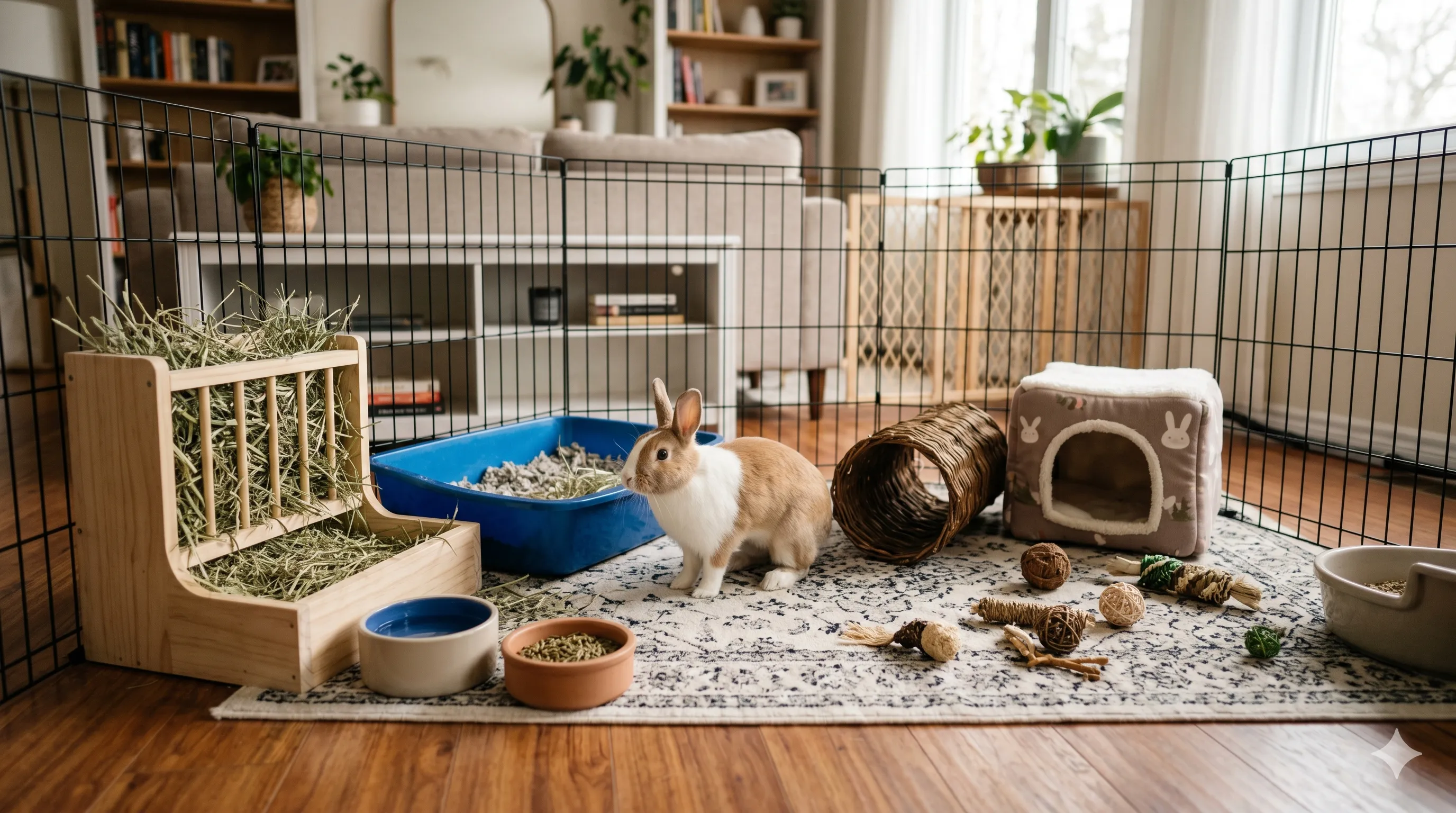
- Exercise Pens (X-Pens)
- Rabbit-Proofed Rooms
- Large Condo-Style Enclosures
- C&C (Cubes and Coroplast) Cages
- Essential Items Every Rabbit Cage Setup Needs
- Large Litter Box
- Unlimited Hay Station
- Fresh Water Bowl
- Hiding Areas
- Rabbit-Safe Flooring
- Toys and Enrichment
- Best Place to Put a Rabbit Cage Indoors
- How to Rabbit-Proof Around the Cage
- Should Rabbits Stay in Their Cage All Day?
- How Often Should You Clean a Rabbit Cage?
- Common Rabbit Cage Setup Mistakes
- Signs Your Rabbit Likes Its Setup
- Example Scenario
- Final Thoughts
Note: This article is for informational purposes only and does not replace professional veterinary advice.
Creating the right home environment is one of the most important parts of rabbit care. If you're searching for a rabbit cage setup guide, understanding how rabbits naturally behave can help you build a safer, healthier, and happier indoor living space.
Many beginners mistakenly believe rabbits can live comfortably in small pet store cages full-time. In reality, rabbits need spacious environments that allow them to hop, stretch, explore, and exercise daily.
A proper rabbit setup should support:
- Physical exercise
- Mental stimulation
- Digestive health
- Comfort and security
- Easy litter training
- Natural rabbit behavior
In this complete indoor rabbit cage setup guide, you'll learn how to create the ideal rabbit enclosure, what supplies you actually need, setup mistakes to avoid, and how to design a comfortable home your bunny will truly enjoy.
Rabbit Cage Setup Guide (Quick Overview)
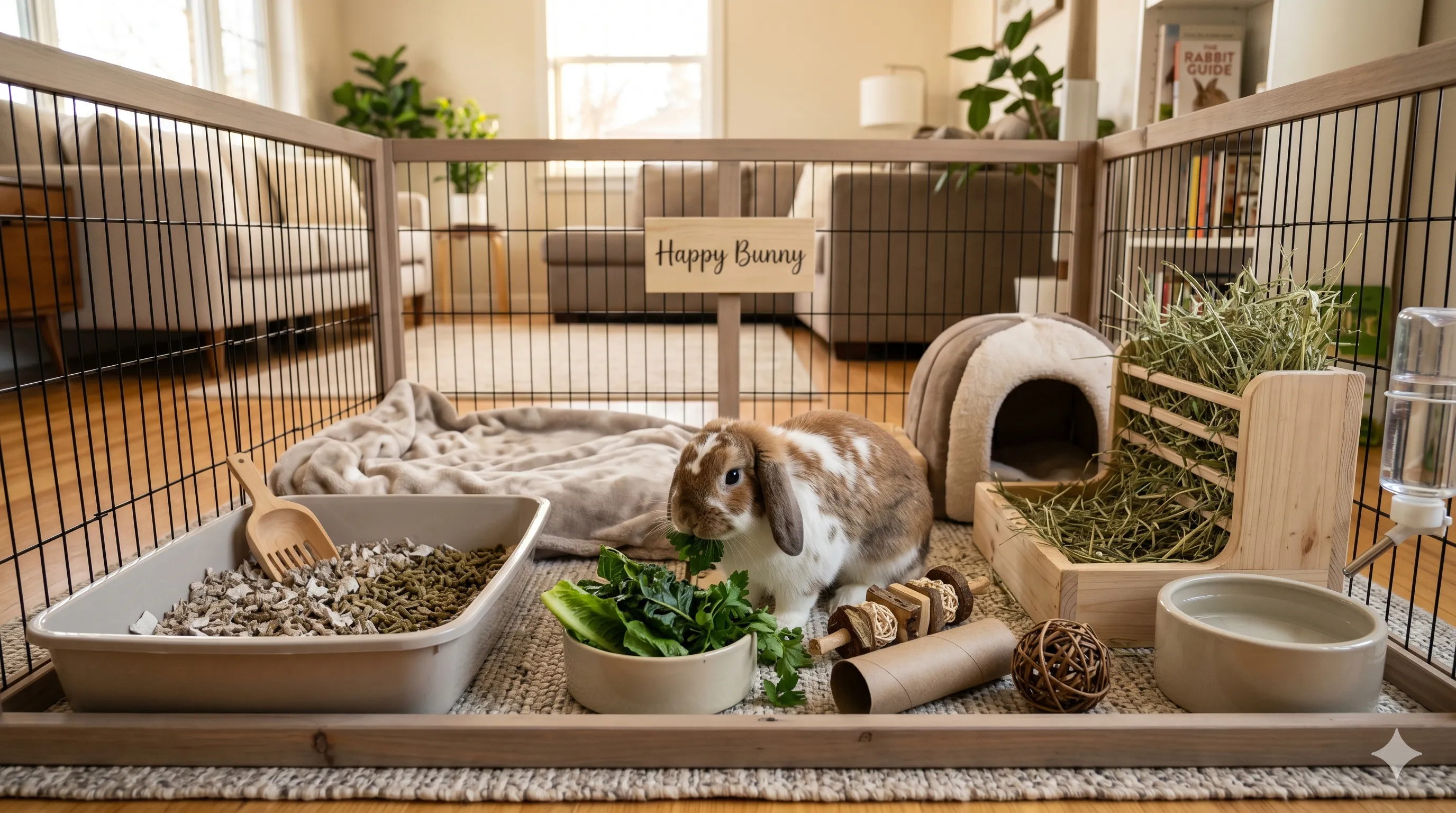
The best rabbit cage setup includes a spacious enclosure or exercise pen, rabbit-safe flooring, unlimited hay access, a litter box, hiding areas, enrichment toys, fresh water, and enough room for daily movement. Rabbits should never be confined to tiny cages permanently.
Indoor exercise pens and rabbit-proofed rooms are often healthier than traditional small cages.
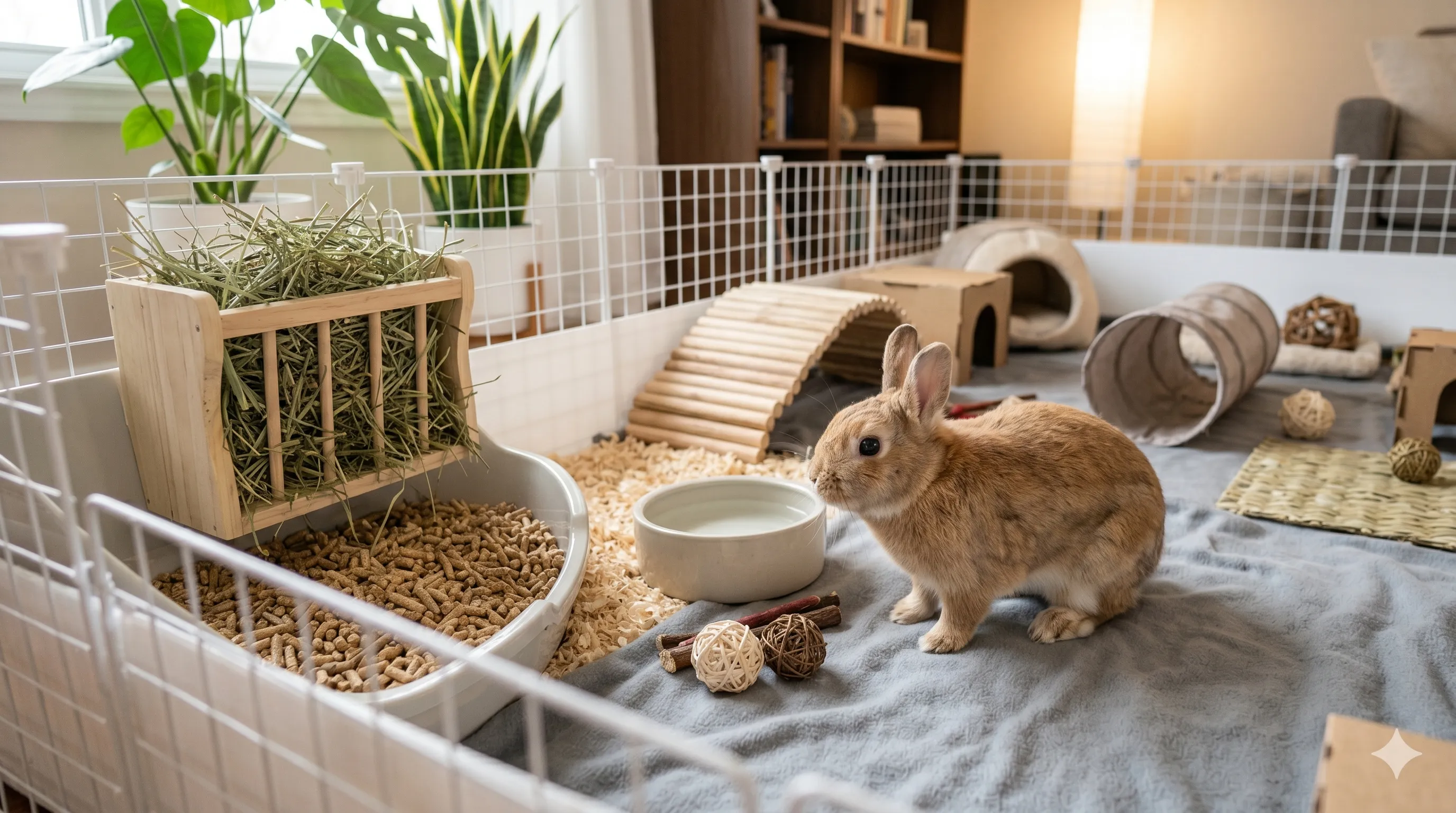
How Much Space Does a Rabbit Need?
One of the biggest rabbit care mistakes is underestimating space requirements.
Healthy rabbits need enough room to:
- Hop several times in a row
- Stretch fully
- Stand upright comfortably
- Run and explore
- Play with enrichment items
- Relax naturally
Small cages may contribute to:
- Obesity
- Boredom
- Stress
- Muscle weakness
- Behavioral problems
Most rabbits thrive better in exercise pens or free-roam setups compared to cramped cages.
As a general guideline, most rabbit welfare organizations recommend a minimum enclosure size of about 12 square feet, plus a separate exercise area of 30 square feet or more, with enough height for your rabbit to stand fully upright on its hind legs without ducking.
free roam rabbit setup ideasBest Indoor Rabbit Housing Options
Exercise Pens (X-Pens)
Exercise pens are one of the most popular indoor rabbit housing choices.
Benefits include:
- More space
- Better airflow
- Easy cleaning
- Flexible layouts
- Expandable design
Many owners combine exercise pens with supervised free-roam time.
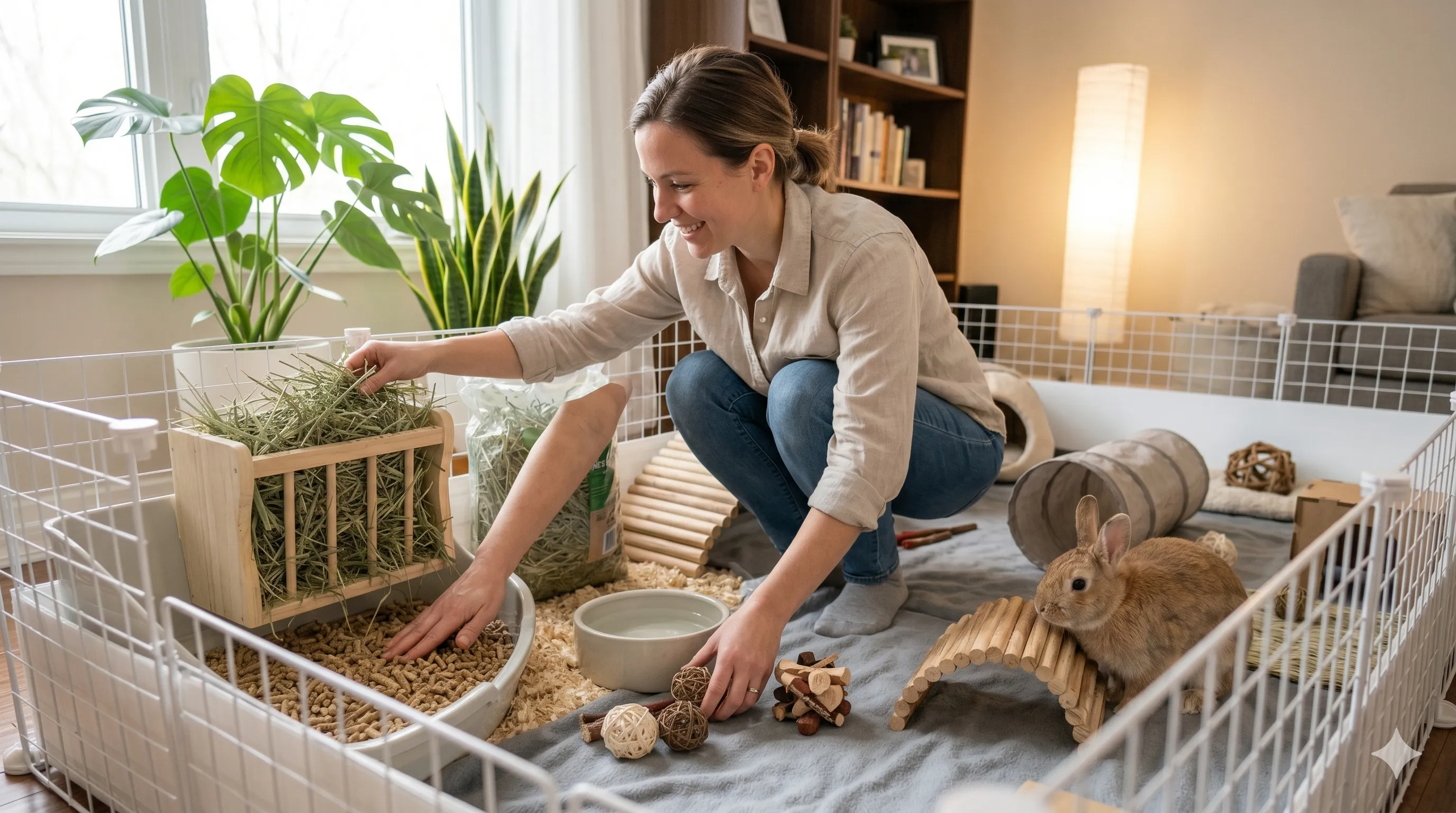
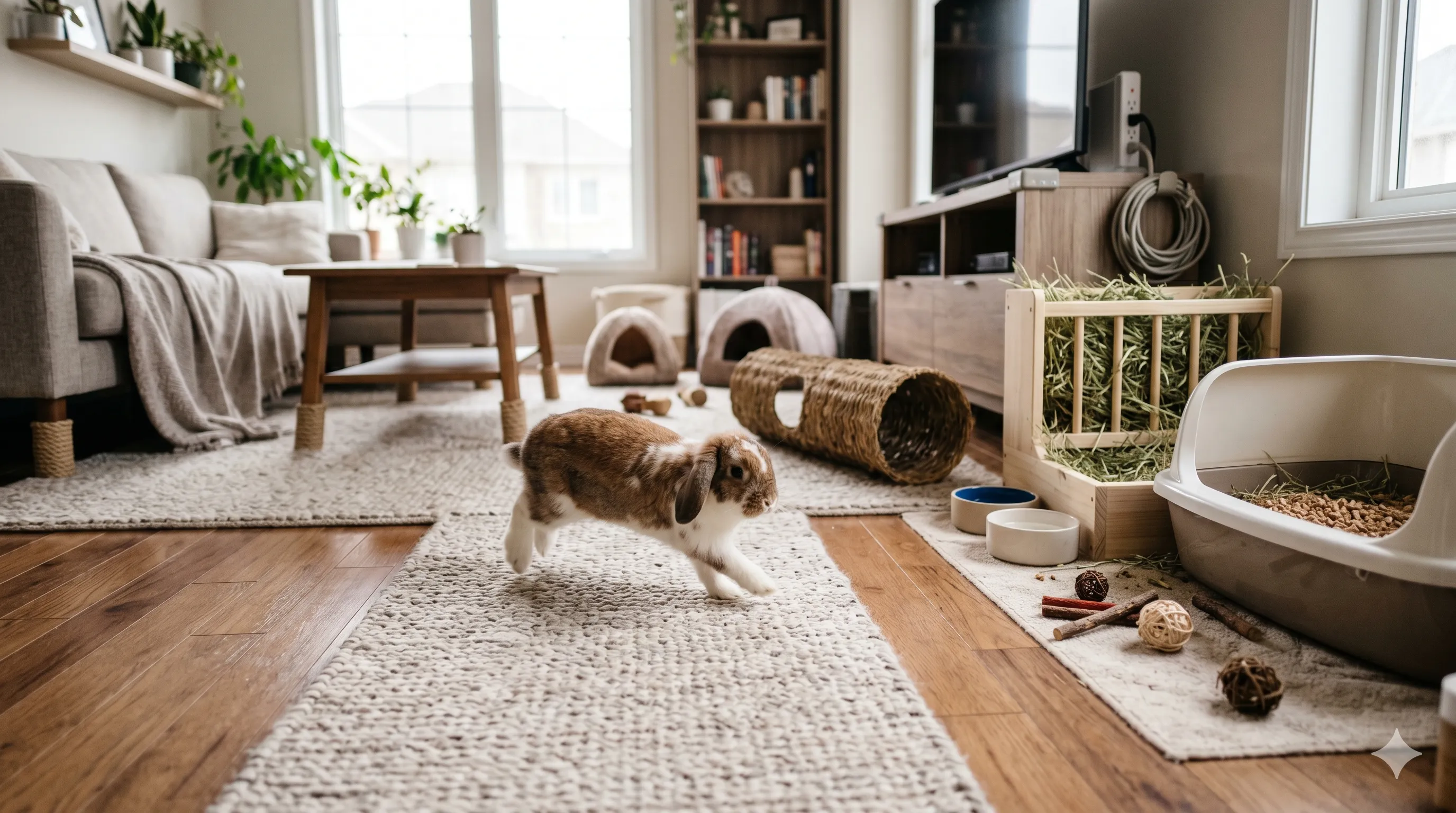
Rabbit-Proofed Rooms
Some rabbits live in fully rabbit-proofed rooms or large indoor areas.
This setup provides:
- Maximum exercise
- Mental stimulation
- Freedom to explore
- Natural movement opportunities
- Better emotional enrichment
However, rabbit-proofing becomes extremely important.
complete indoor rabbit care guideLarge Condo-Style Enclosures
Multi-level rabbit condos may work well when designed safely.
Important features include:
- Solid flooring
- Safe ramps
- Easy litter access
- Enough horizontal movement space
Rabbits generally value floor space more than height alone.
C&C (Cubes and Coroplast) Cages
C&C cages are a popular DIY option built from wire storage cubes and corrugated plastic (coroplast) panels.
Benefits include:
- Highly customizable size and shape
- Affordable compared to pre-made enclosures
- Easy to expand as your rabbit's needs grow
Many rabbit owners consider C&C cages one of the best value options for a spacious indoor setup.
Essential Items Every Rabbit Cage Setup Needs
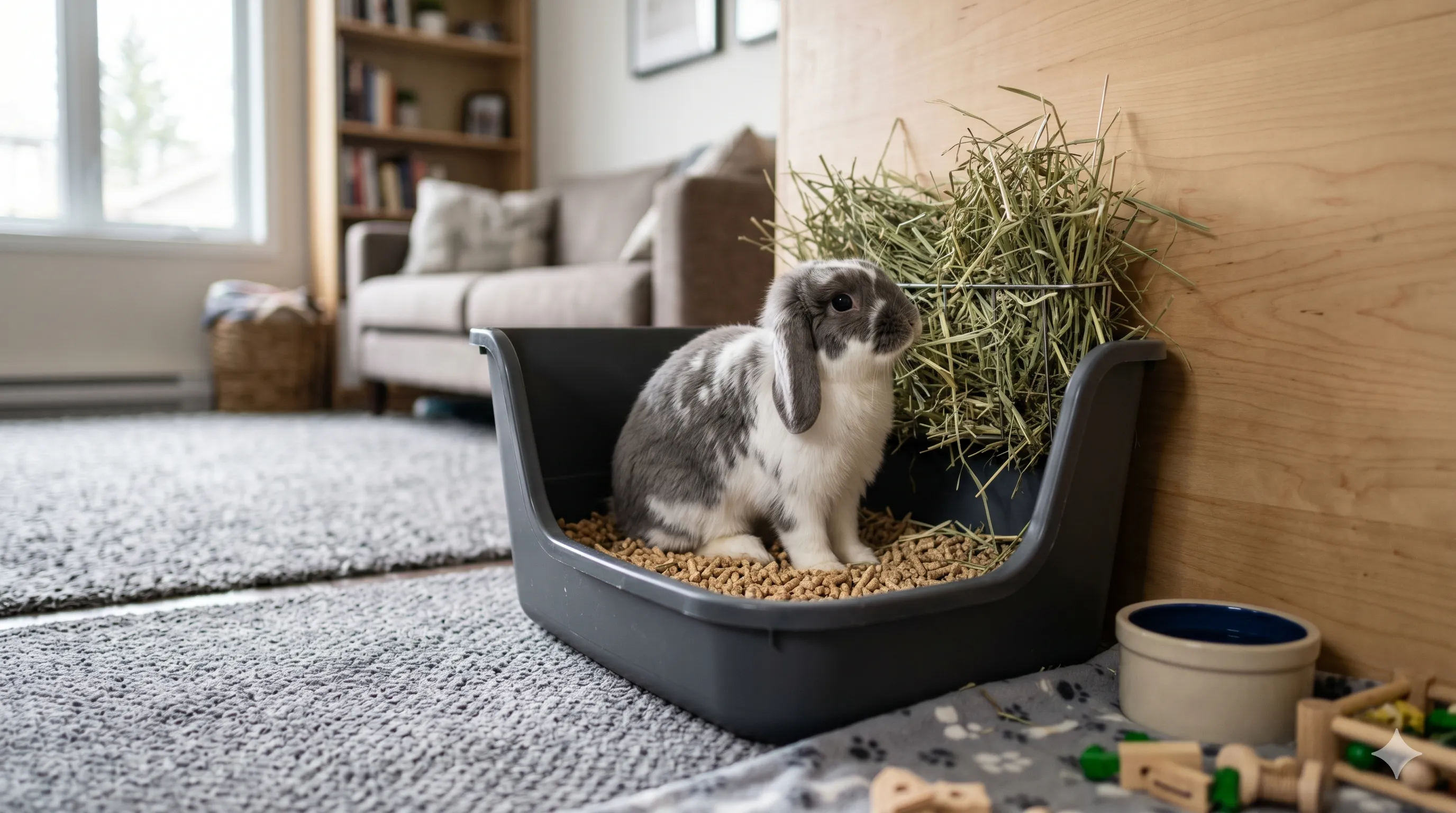
Large Litter Box
Most rabbits naturally prefer bathroom corners.
A good litter box should:
- Be large enough to turn around in
- Use rabbit-safe litter
- Stay clean regularly
- Allow hay access nearby
Adding hay near the litter box encourages healthy litter habits.
how to litter train a rabbitUnlimited Hay Station
Hay is the foundation of rabbit health.
Hay supports:
- Healthy digestion
- Tooth wear
- Gut movement
- Healthy droppings
- Prevention of GI stasis
Timothy hay is one of the best choices for adult rabbits.
Fresh Water Bowl
Many rabbits prefer water bowls over bottles because bowls allow more natural drinking behavior.
Fresh clean water should always remain available.
Hiding Areas
Rabbits are prey animals and naturally feel safer with hiding spots.
Helpful hideouts include:
- Cardboard houses
- Tunnels
- Wooden hide boxes
- Covered resting areas
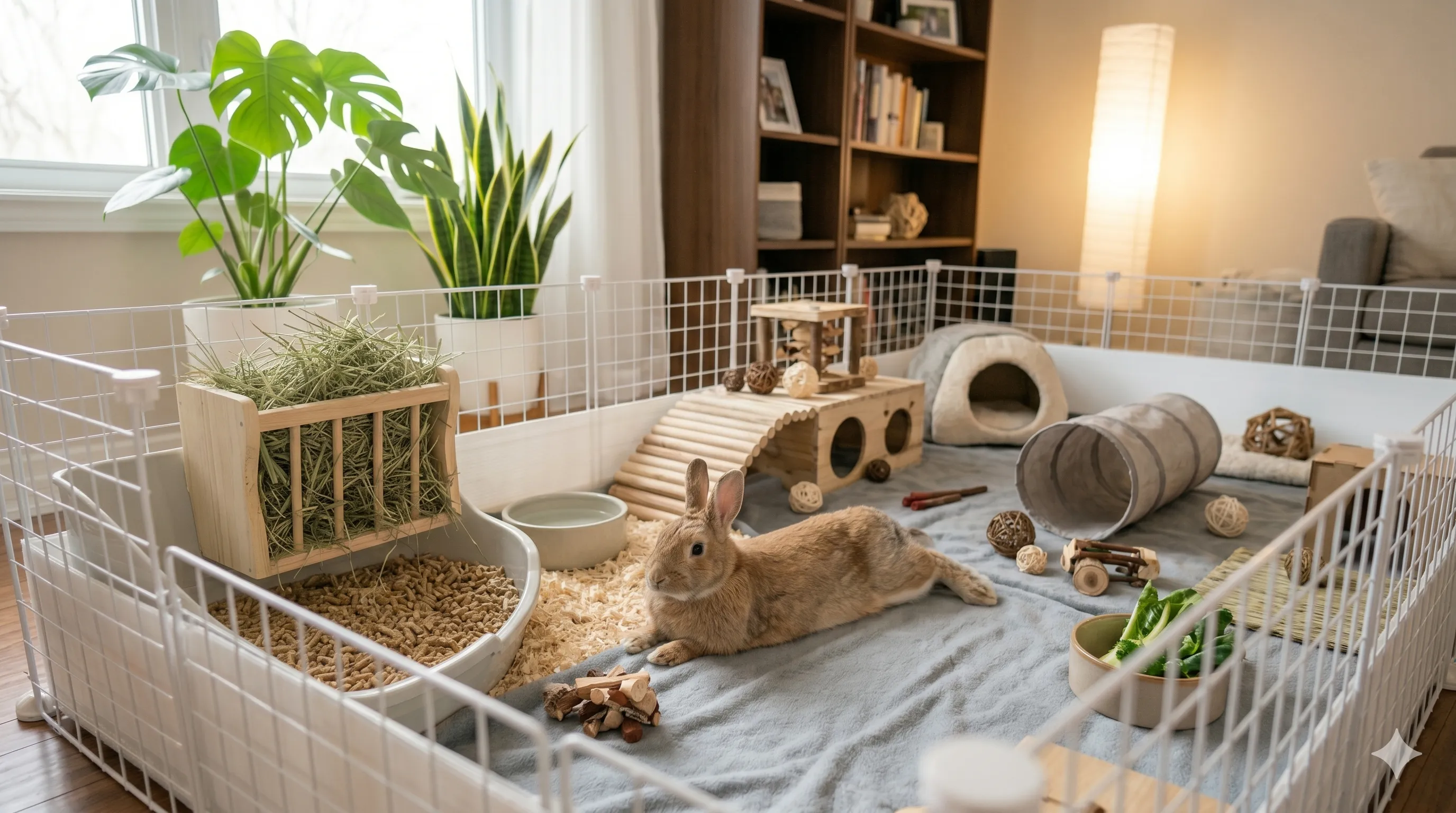
Rabbit-Safe Flooring
Slippery flooring may stress rabbits and increase injury risk.
Wire-bottomed flooring is especially harmful, since it can cause sore hocks and joint pain over time — always cover wire flooring with a solid mat or remove it entirely.
Safer flooring options include:
- Rugs
- Foam mats
- Fleece blankets
- Carpet tiles
Comfortable footing encourages more movement and confidence.
Toys and Enrichment
Rabbits need mental stimulation daily.
Popular enrichment ideas include:
- Chew toys
- Tunnels
- Dig boxes
- Puzzle feeders
- Cardboard castles
- Foraging toys
Enrichment helps prevent boredom-related behavior problems.
how to take care of a rabbitBest Place to Put a Rabbit Cage Indoors
Rabbits usually do best in calm indoor areas away from extreme noise and temperature changes.
Good cage locations should avoid:
- Direct sunlight
- Drafts
- Loud televisions
- Constant foot traffic
- Overheating
Rabbits can't sweat and are prone to heatstroke, so aim to keep the room between about 60 and 75°F.
Rabbits thrive best in stable environments with predictable routines.
How to Rabbit-Proof Around the Cage
Rabbits naturally chew constantly because their teeth grow continuously.
Rabbit-proofing steps may include:
- Cover electrical cords
- Remove toxic plants
- Protect furniture edges
- Block dangerous gaps
- Keep chemicals out of reach
- Prevent access behind appliances
- Remove small swallowable objects
Rabbit-proofing is especially important during free-roam time.
rabbit appetite emergency signsShould Rabbits Stay in Their Cage All Day?
No.
Even large enclosures should not completely replace daily exercise and interaction.
Most rabbits benefit from:
- At least four hours of exercise daily
- Exploration opportunities
- Mental stimulation
- Social interaction
- Safe free-roam sessions
Exercise supports both physical and emotional health.
How Often Should You Clean a Rabbit Cage?
Clean housing is extremely important for rabbit health.
Helpful cleaning routines include:
- Daily litter cleaning
- Refreshing hay frequently
- Spot-cleaning accidents
- Weekly deep cleaning
- Washing bowls regularly
Dirty environments may increase stress, odor, and illness risks.
healthy rabbit poop meaning chartCommon Rabbit Cage Setup Mistakes
- Using tiny cages permanently
- Providing slippery flooring
- Skipping enrichment toys
- Using unsafe litter
- Not rabbit-proofing cords
- Providing insufficient hay
- Keeping rabbits isolated constantly
- Ignoring hiding space needs
- Providing too little daily exercise
Most housing problems are preventable with proper setup planning.
Signs Your Rabbit Likes Its Setup
Happy comfortable rabbits often show:
- Relaxed stretching
- Binkies and zoomies
- Good appetite
- Consistent litter habits
- Curiosity
- Playfulness
- Comfortable resting positions
- Confident exploration
Behavior usually improves significantly when rabbits feel safe and enriched.
Example Scenario
The scenario below is an illustrative example of how this situation can play out, not a documented case study.
One rabbit owner initially kept their bunny in a small pet store cage with limited movement space. After upgrading to a larger exercise pen setup with tunnels, rugs, litter station improvements, and daily free-roam time, the rabbit became noticeably more active, social, and litter trained.
Another owner solved repeated chewing problems simply by adding more enrichment toys and safe chew items inside the enclosure.
Small environmental changes often create major improvements in rabbit wellbeing.
Final Thoughts
Creating the best rabbit cage setup means designing a safe, spacious, enriching environment that supports natural rabbit behavior.
Healthy rabbits need far more than a tiny cage and food bowl. They thrive with proper flooring, litter areas, hay access, hiding spaces, enrichment, and daily exercise opportunities.
Indoor rabbits generally live happier, healthier lives when owners focus on comfort, stimulation, and safety rather than confinement.
With the right setup and consistent care, your rabbit can feel secure, active, and emotionally fulfilled inside your home.
This article is intended for educational purposes and should not replace professional veterinary advice. Always consult a rabbit-experienced veterinarian for personalized rabbit care recommendations and health concerns.
Medical Disclaimer
This content is provided for informational and educational purposes only and should not be considered veterinary, medical, behavioral, or training advice. While we strive for accuracy, we make no guarantees regarding completeness or results. Always consult a licensed veterinarian or qualified pet care professional before making decisions about your pet’s health, diet, or behavior.
AI Illustration Notice
Some images in this article may have been generated or enhanced using artificial intelligence for illustrative purposes.
Frequently Asked Questions
The best rabbit setup includes a spacious enclosure litter box unlimited hay fresh water safe flooring hiding areas and enrichment toys.
No, rabbits need daily exercise and should not stay confined to small cages all day.
Rugs fleece blankets foam mats and carpet tiles often provide safer traction than slippery floors.
Yes, rabbits naturally eat hay while using the bathroom so hay near the litter area improves habits and digestion.
Rabbit enclosures should allow rabbits to fully stretch hop multiple times and stand upright comfortably.
Yes, many owners prefer exercise pens because they provide more space and flexibility than traditional small cages.
Editorial Note
This article is part of PetNurture's educational library.
Topics draw on publicly available educational resources, recognised veterinary organisations, academic publications and established animal welfare references where appropriate.
The specific sources this article draws on are listed in its References section. If you spot an error, please let us know.
References
The information in this article has been reviewed and supported using the following sources.
House Rabbit Society
House Rabbit Society recommends at least 4 or more hours of cardiovascular play each day in a dedicated exercise space, describing a cage as functioning more like a bedroom than a rabbit's primary living space.
Accessed Aug 6, 2026
PetMD
PetMD identifies wire cage bottoms as a risk factor for pododermatitis (sore hocks) in rabbits and recommends eliminating wire or hard flooring in favor of soft, solid alternatives.
Accessed Aug 6, 2026
Pet Emergency Guidance
Every pet is unique. If your pet exhibits severe symptoms, sudden behavioral changes, or a medical emergency, do not rely on online guides — contact a licensed veterinarian or emergency clinic immediately.
About PetNurture
PetNurture is an educational library of pet care guides, interactive tools and practical resources for pet parents. We work continuously to keep our content accurate and up to date. Reader feedback helps us maintain content quality.
Related Articles
Popular Rabbit Guides