Why Does My Rabbit Lick Me? Bunny Affection & Grooming Explained
Note: This article is for informational purposes only and does not replace professional veterinary advice.
Four of the sources we read describe licking as affection, and none gives another reason. This guide sets out what the House Rabbit Society, the RSPCA, the PDSA and PetMD (an article by a veterinarian) say.
Why Does My Rabbit Lick Me? (Quick Answer)
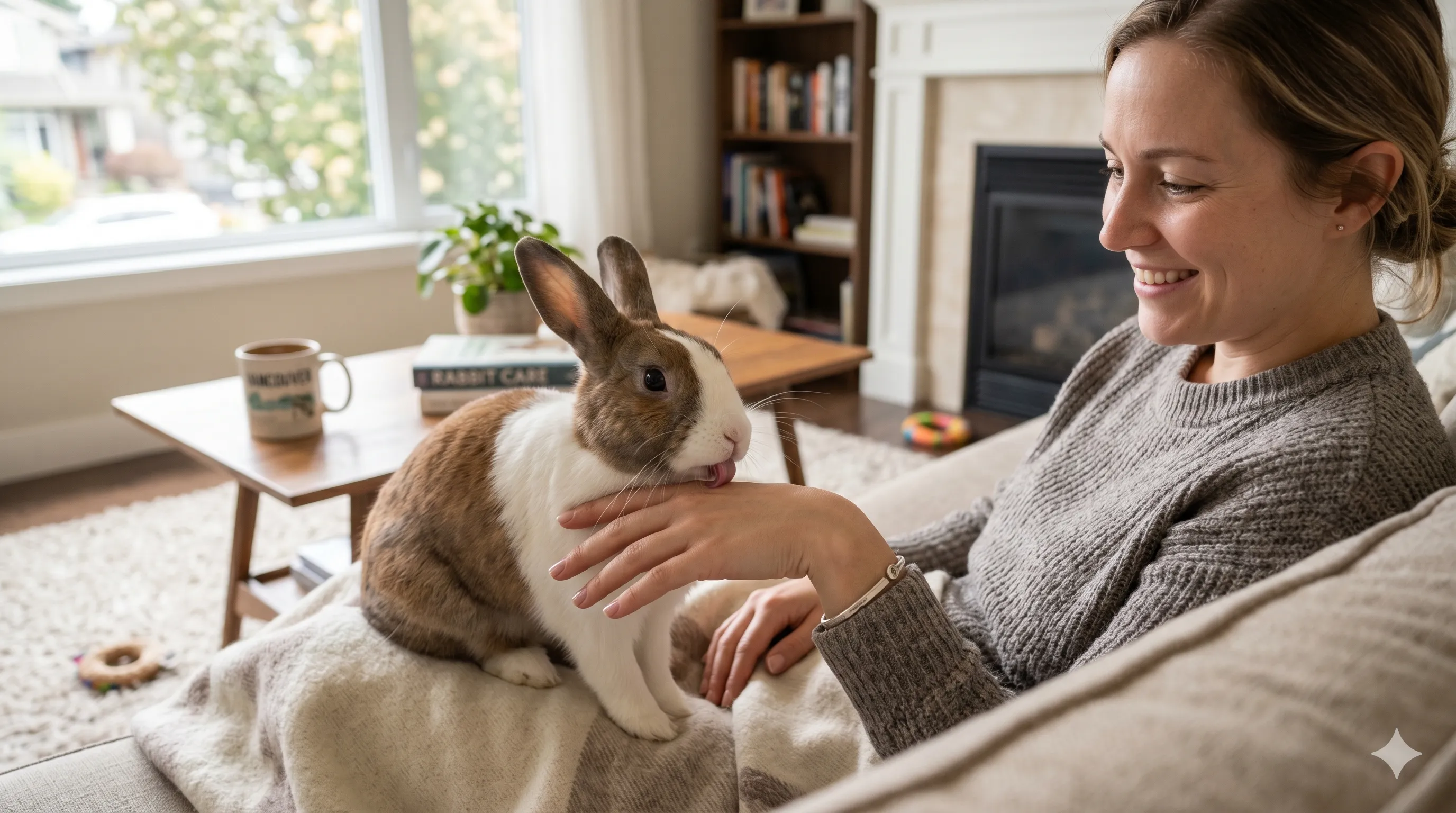
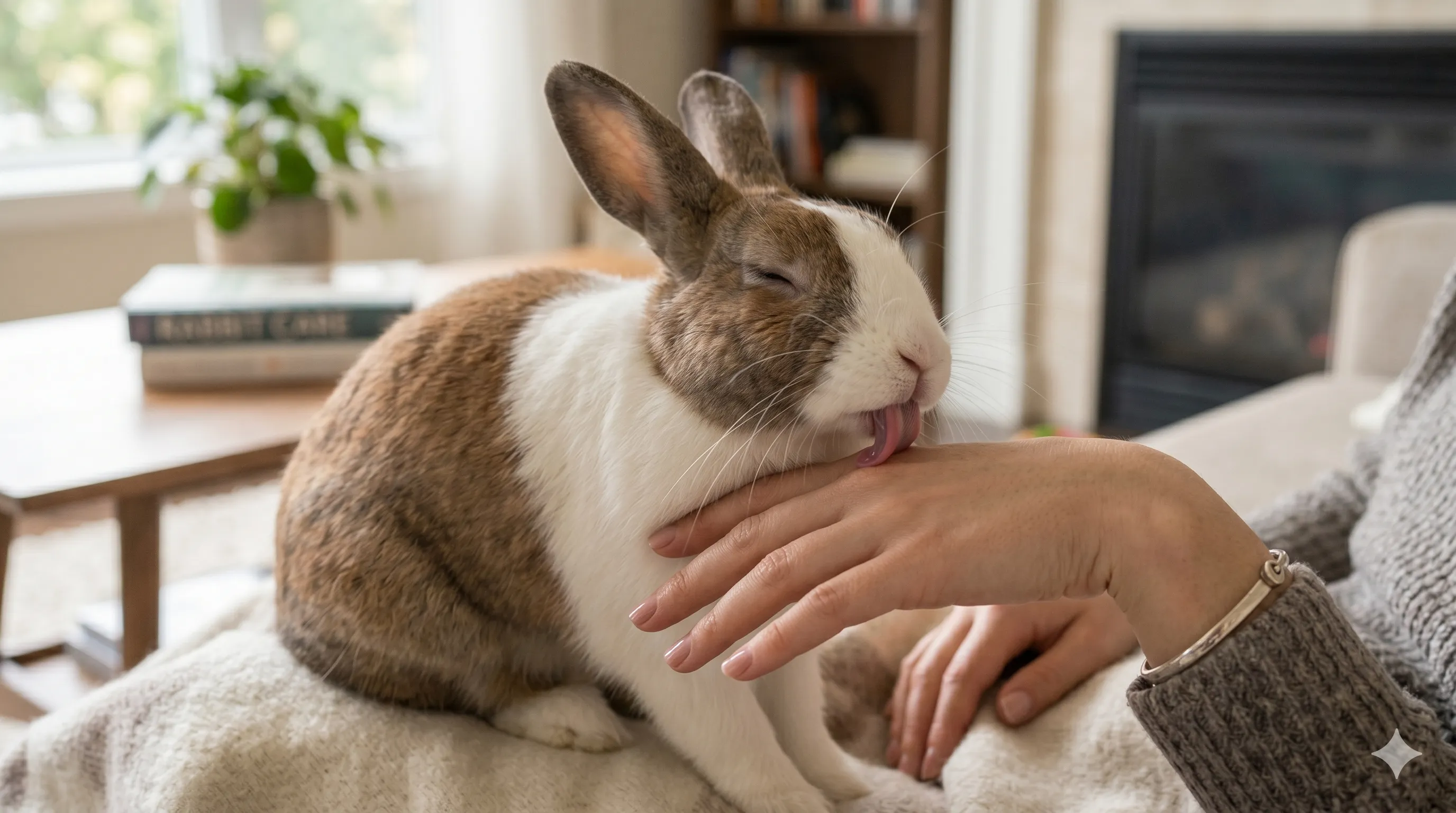
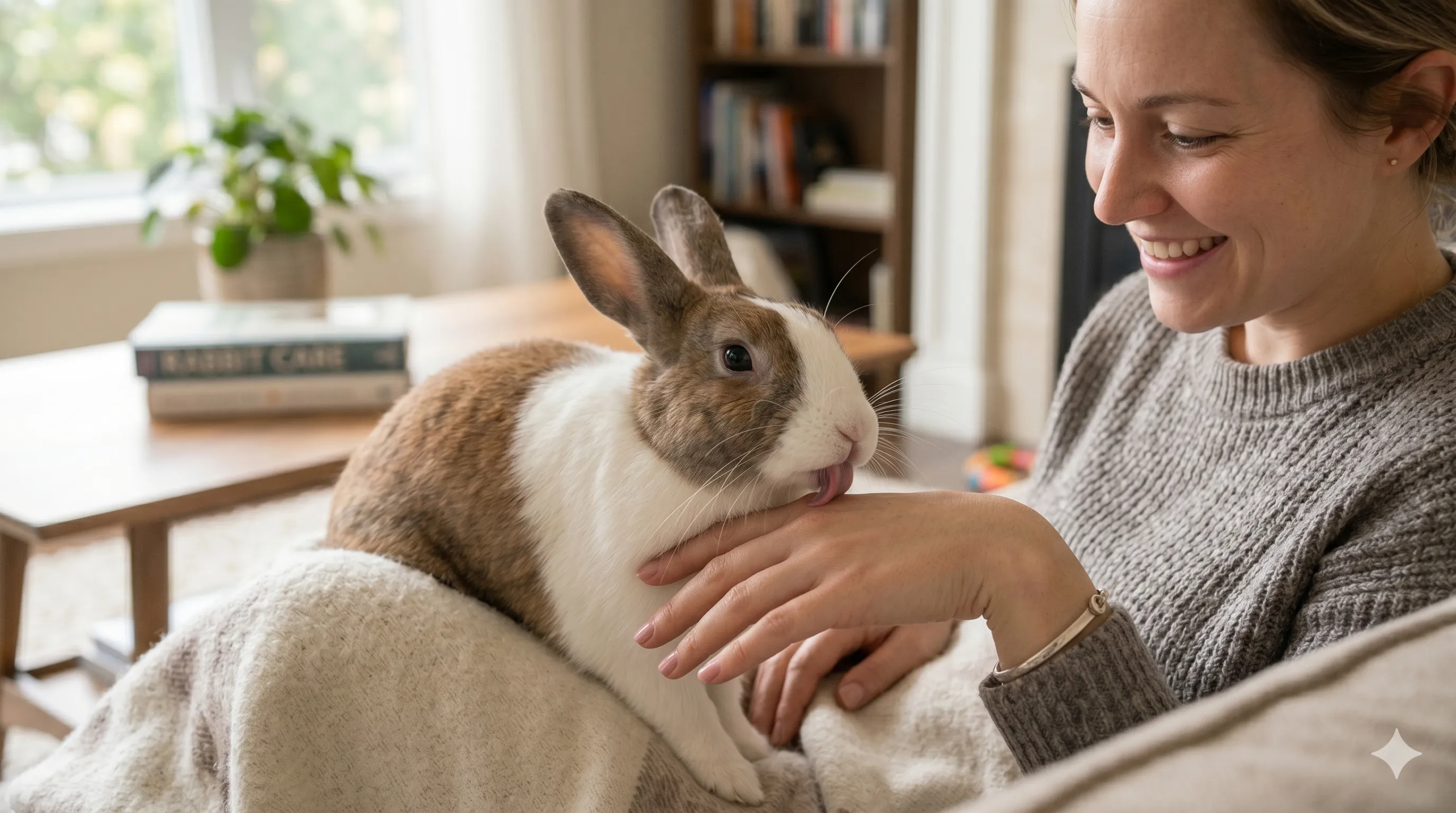
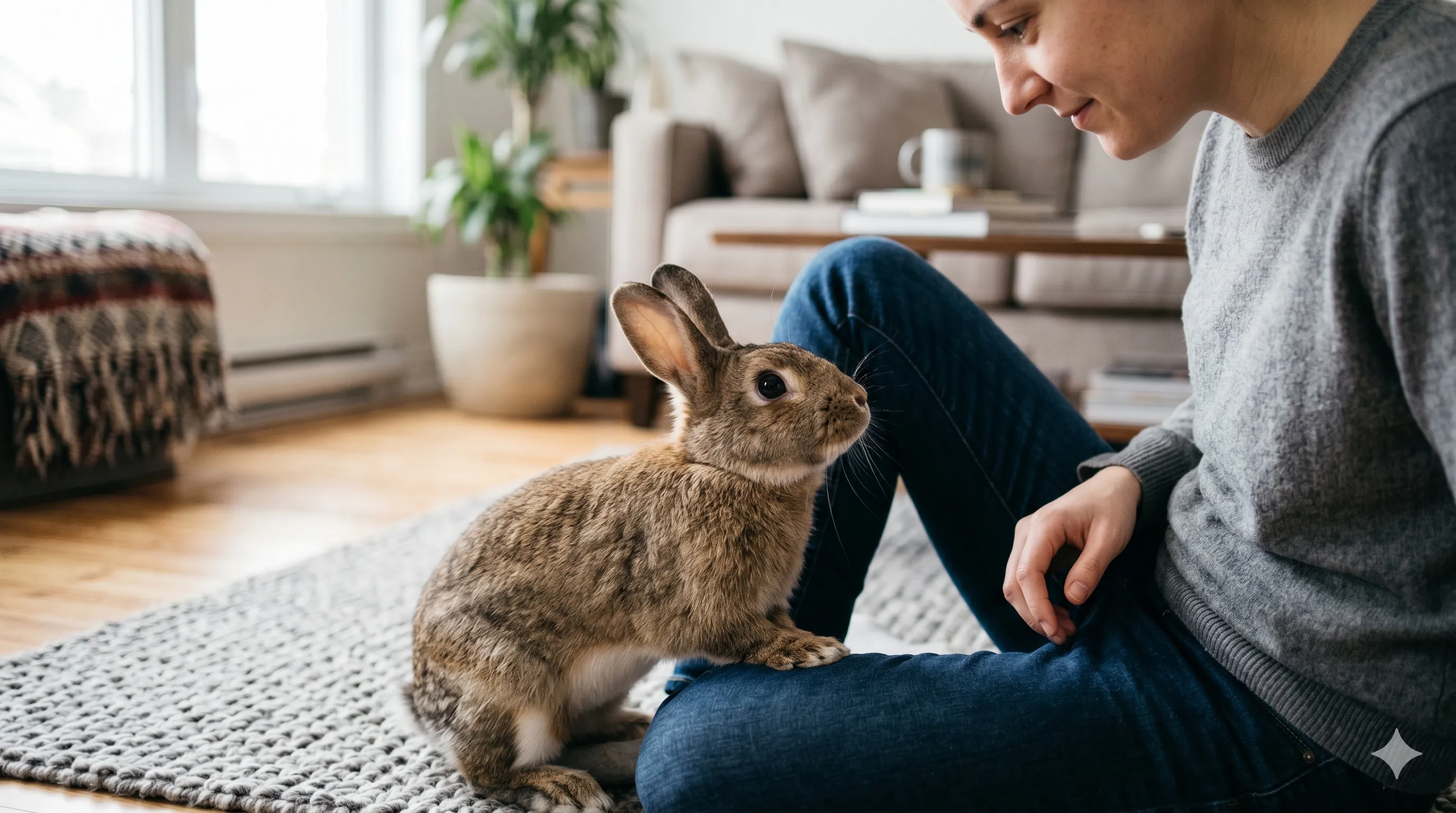
The House Rabbit Society says licking is obvious affection that rabbits give each other and sometimes human friends. The RSPCA says licking a person or a companion rabbit is a common sign of affection. The PDSA says it is how rabbits show love and bond with you. PetMD says rabbits lick you or other rabbits as a sign of affection.
Sources Side by Side
| Source | On licking |
|---|---|
| House Rabbit Society (Rabbitspeake) | Obvious affection toward rabbits and sometimes humans |
| House Rabbit Society (Reading Your Rabbit's Behavior) | I trust you |
| RSPCA | A common sign of affection; listed under signs of a happy rabbit |
| PDSA | How they show love and bond with you; may be like grooming a bunny pal |
| PetMD | A sign of affection |
Nose Touching
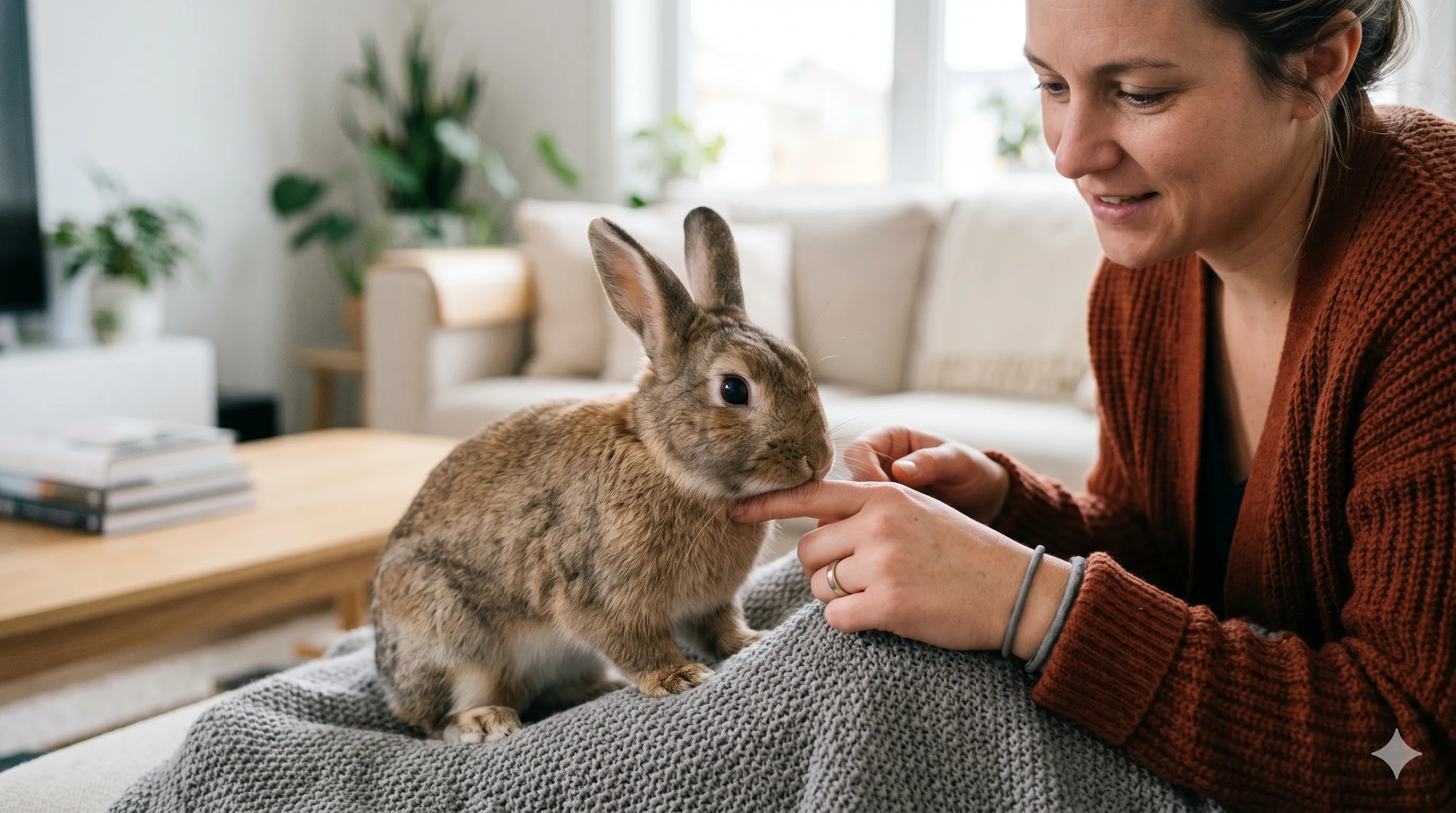
The House Rabbit Society says many house rabbits touch noses with their human friends instead of licking. See also why rabbits nudge you.
Related Signals
- Nudging your ankle means notice me (House Rabbit Society).
- Nipping is not necessarily angry and can mean move over or I am scared (House Rabbit Society).
See why rabbits bite softly. The RSPCA says that if you are concerned about your rabbit's behaviour you should speak to a vet first, and that if behaviour changes suddenly you can ask a vet for advice.
What We Could Not Find a Source For
We found no source for a salt, taste or grooming-hierarchy explanation of licking, so we leave them out. We also found no source on excessive licking.
Final Thoughts
Licking is described as affection by every source we read. A sudden change in behaviour is a reason to contact a licensed veterinarian.
This article is for general education and is not a substitute for veterinary advice. If your rabbit stops eating or seems unwell, contact a licensed veterinarian.
Medical Disclaimer
This content is provided for informational and educational purposes only and should not be considered veterinary, medical, behavioral, or training advice. While we strive for accuracy, we make no guarantees regarding completeness or results. Always consult a licensed veterinarian or qualified pet care professional before making decisions about your pet’s health, diet, or behavior.
AI Illustration Notice
Some images in this article may have been generated or enhanced using artificial intelligence for illustrative purposes.
Frequently Asked Questions
The House Rabbit Society and the RSPCA and the PDSA and PetMD all describe licking as affection.
The House Rabbit Society reading guide translates licking as I trust you.
The PDSA says it may be like the grooming rabbits give their bunny pals.
The House Rabbit Society says many house rabbits touch noses instead.
The RSPCA says to ask a vet if behaviour changes suddenly.
Editorial Note
This article is part of PetNurture's educational library.
Topics draw on publicly available educational resources, recognised veterinary organisations, academic publications and established animal welfare references where appropriate.
The specific sources this article draws on are listed in its References section. If you spot an error, please let us know.
References
The information in this article has been reviewed and supported using the following sources.
House Rabbit Society (Marinell Harriman)
Undated. Nudging your ankle or tugging on your pantleg means notice me. Licking is obvious affection. Honking and oinking is a love song with circling each other or your feet; spayed and neutered rabbits may still do it. Tooth purring is contentment. Tooth crunching is louder and slower and means sick or discomfort. Nipping may mean move over or I am scared.
Accessed Nov 5, 2026
House Rabbit Society (Amy Espie)
Reading Your Rabbit's Behavior
Undated. Circling: let us play let us court I feel frisky. Grinding: happy as a purr; tooth chattering signals pain. Licking: I trust you. Nose-nudge at the shin: make way. Nose thrust toward hand with chin flat: pet me.
Accessed Nov 5, 2026
RSPCA
Natural Behaviours of Pet Rabbits
No date or author. Digging is natural and not being able to dig can cause high stress. Continuously circling the enclosure perimeter is a coping mechanism for nervous energy. Flicking back feet or ears against back: unhappy or wants space. Binky: very happy. Soft grinding: content. Loud grinding: may mean pain and need to see a vet. Licking: common sign of affection. Ears forward and staring at a spot: high alert. If behaviour changes suddenly ask a vet.
Accessed Nov 5, 2026
PDSA
No date or author. Licking is how they show their love and bond. Walking around you and nibbling your feet: probably hormonal and sexually frustrated; time to talk to the vet about neutering. Thumping could be a danger warning.
Accessed Nov 5, 2026
PetMD (Melissa Witherell DVM)
Rabbit Body Language: What Different Positions Mean
Published 24 March 2026. Hops away and flicks feet: unhappy. Nudge a hand foot or pant leg: wants attention. Circle you or another rabbit: social or sexual behaviour. Binky: very happy. Lick: affection. Content: lightly chatter or vibrate teeth like purring.
Accessed Nov 5, 2026
Pet Emergency Guidance
Every pet is unique. If your pet exhibits severe symptoms, sudden behavioral changes, or a medical emergency, do not rely on online guides — contact a licensed veterinarian or emergency clinic immediately.
Was this article helpful?
About PetNurture
PetNurture is an educational library of pet care guides, interactive tools and practical resources for pet parents. We work continuously to keep our content accurate and up to date. Reader feedback helps us maintain content quality.
Related Articles
Popular Rabbit Guides