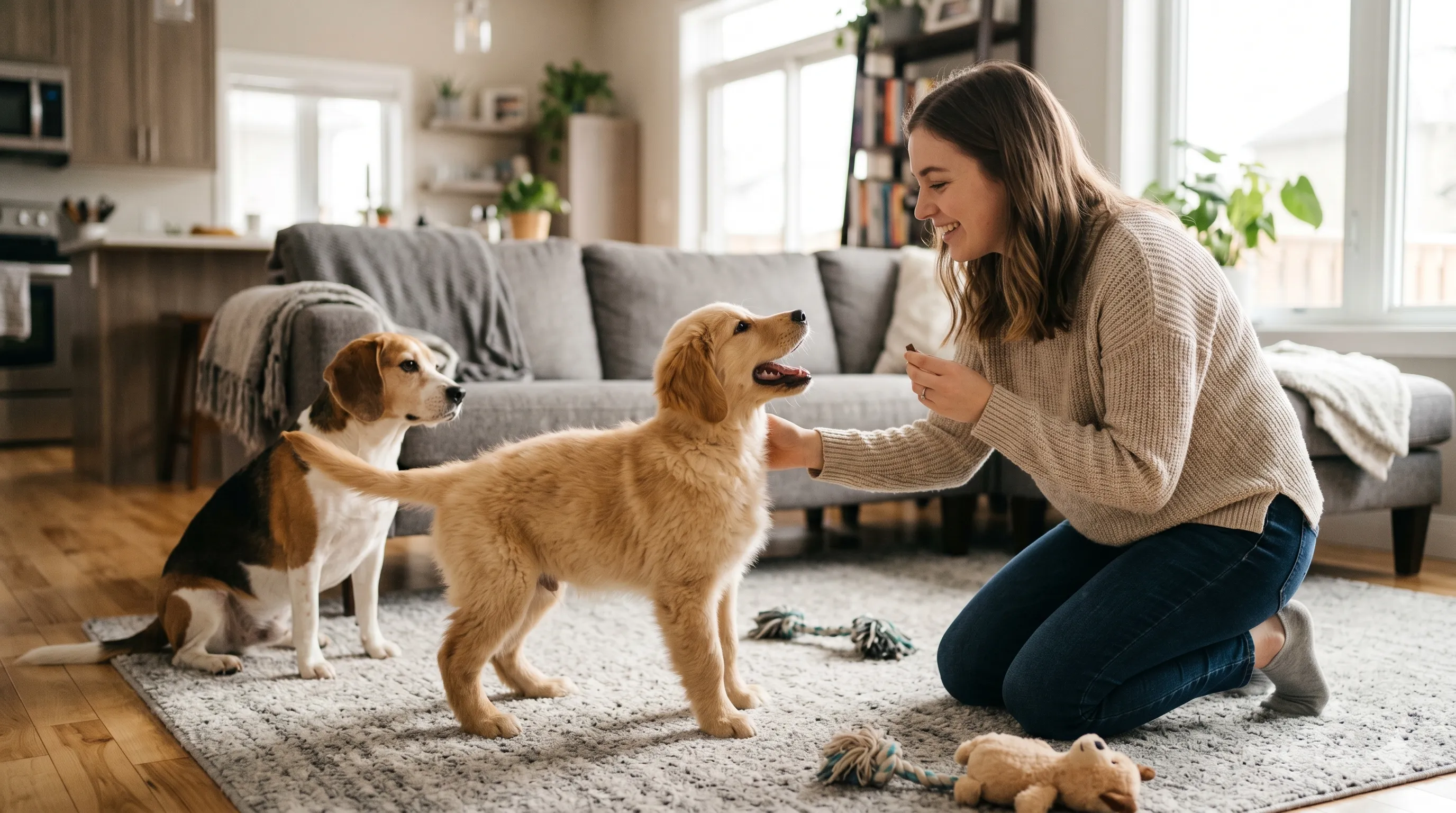
How to Train a Puppy Not to Bite: Step-by-Step Guide for Beginners
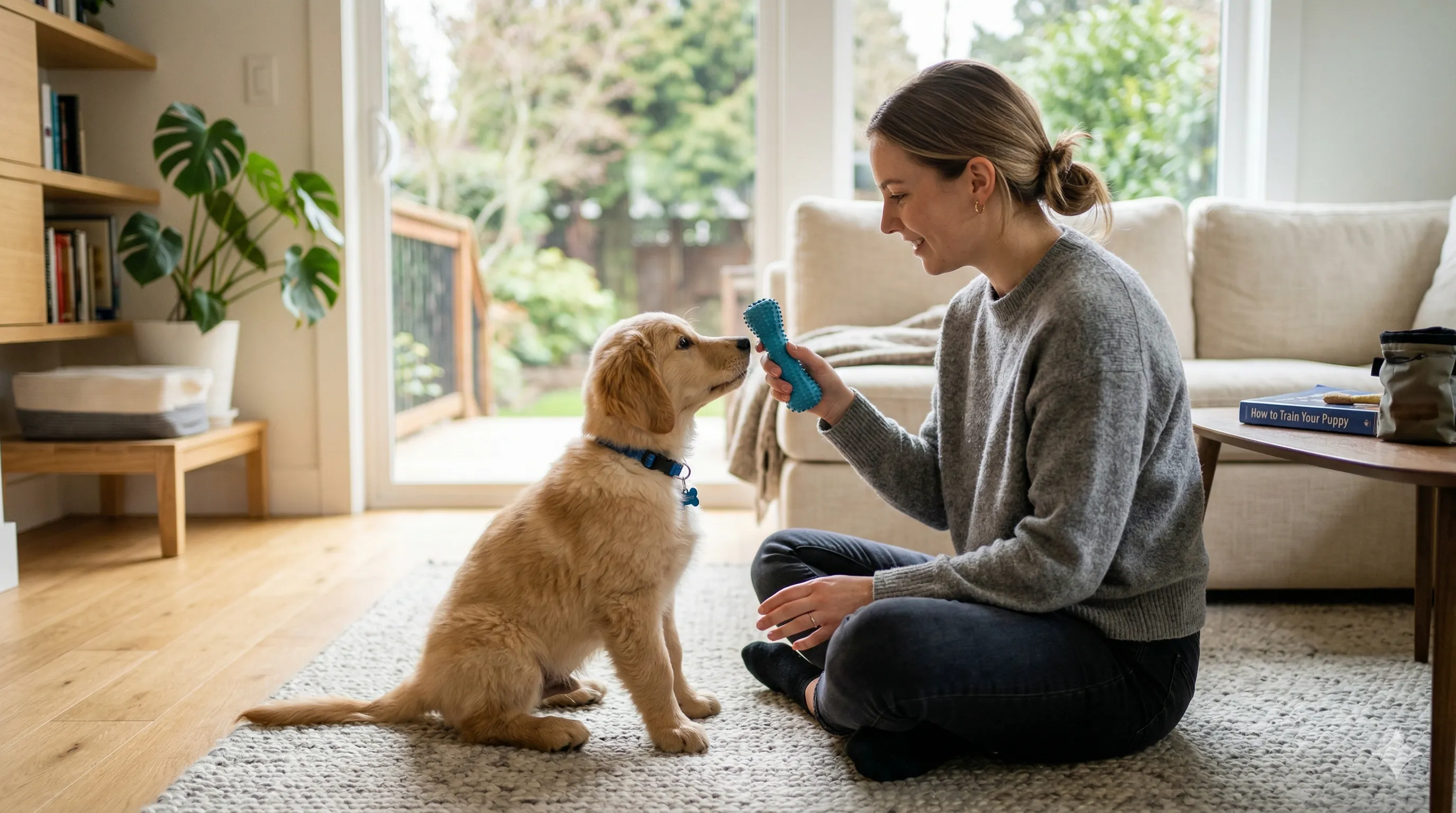
- How to Train a Puppy Not to Bite (Quick Answer)
- Quick Ways to Stop Puppy Biting
- Best Methods to Train a Puppy Not to Bite
- Why Do Puppies Bite?
- 1. Teething Discomfort
- 2. Play Behavior
- 3. Exploration and Curiosity
- 4. Overstimulation
- 5. Attention-Seeking Behavior
- Playful Puppy Biting vs Aggressive Biting
- Normal Puppy Biting
- Concerning Aggressive Behavior
- Step-by-Step Training to Stop Puppy Biting
- 1. Teach Bite Inhibition
- 2. Redirect Biting to Toys Immediately
- 3. Stop Play When Biting Escalates
- 4. Reward Calm Behavior Frequently
- 5. Provide Enough Physical Exercise
- 6. Build a Structured Routine
- 7. Socialize Your Puppy Properly
- Common Puppy Biting Mistakes Owners Make
- 1. Using Physical Punishment
- 2. Encouraging Rough Play
- 3. Inconsistent Responses
- 4. Ignoring Overtired Behavior
- Ideal Daily Routine to Reduce Puppy Biting
- When Should You Be Concerned?
- Example Scenario
- Final Thoughts
Note: This article is for informational purposes only and does not replace professional veterinary advice.
If your puppy constantly bites your hands, clothes, or ankles during play, you're not alone. Puppy biting is one of the most common challenges new dog owners face, especially during the first few months of training. The good news is that this behavior is completely normal and can usually be corrected with proper guidance and consistency. learn effective ways to stop puppy biting before it becomes a long-term habit
Many puppies bite because they are teething, exploring the world with their mouths, becoming overstimulated, or simply trying to play. However, if owners accidentally reward biting behavior or fail to teach bite inhibition early, playful nipping can gradually become a difficult habit.
Understanding why puppies bite and how dogs naturally learn bite control is the key to successful training. The goal is not to punish your puppy, but to teach them how to interact gently and calmly.
In this guide, you'll learn exactly how to train a puppy not to bite using positive reinforcement, bite inhibition training, realistic routines, and beginner-friendly methods that actually work.
How to Train a Puppy Not to Bite (Quick Answer)
To train a puppy not to bite, teach bite inhibition, redirect biting to toys, stop interaction immediately after hard bites, reward calm behavior, and stay consistent with training. Puppies learn best through repetition, structure, and positive reinforcement.
Most puppies improve significantly within several weeks when owners respond consistently and avoid encouraging rough play.
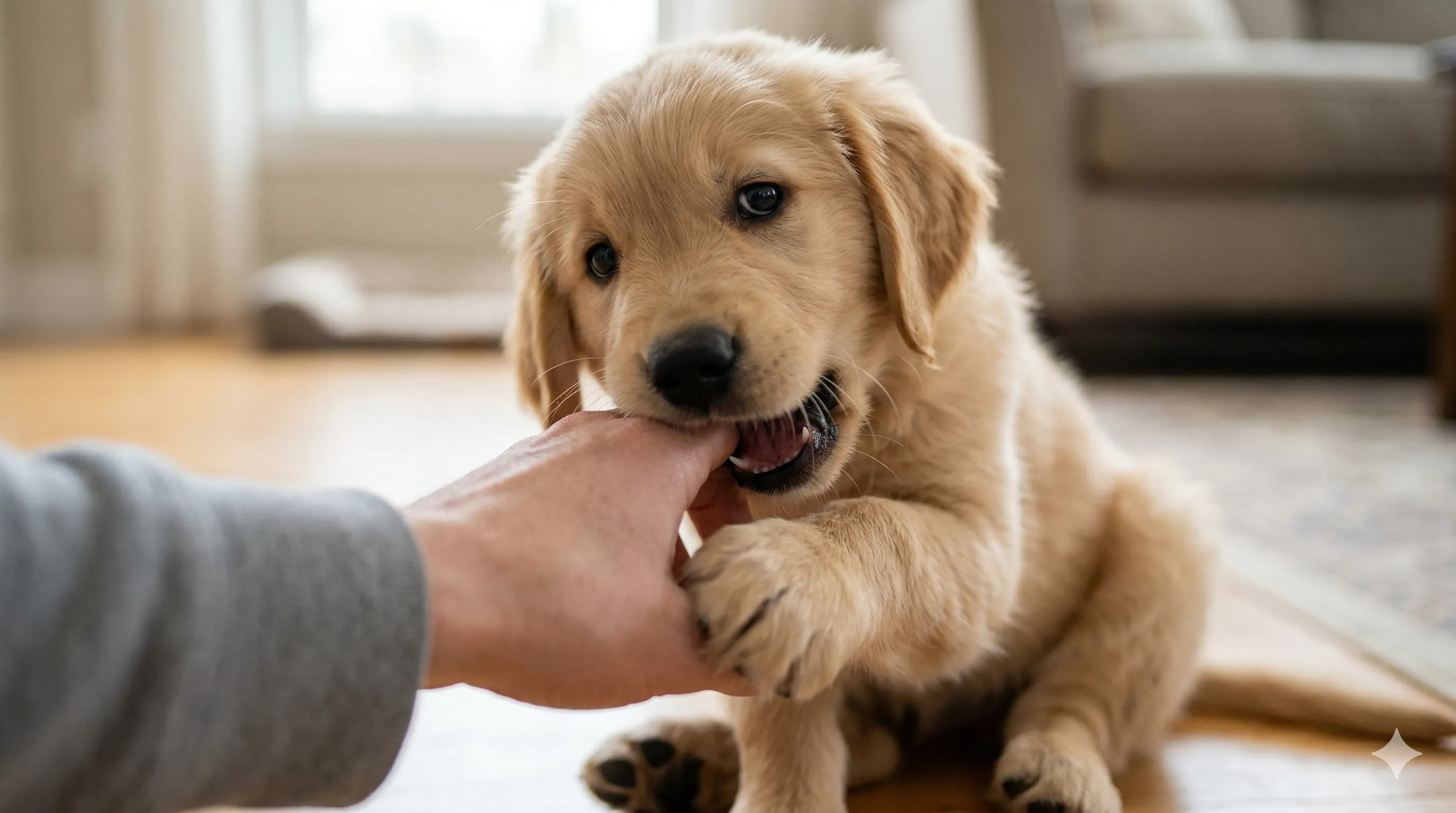
Quick Ways to Stop Puppy Biting
- Immediately redirect biting to an appropriate chew toy
- Use short time-outs when biting becomes excessive
- Reward calm and gentle play behavior
- Avoid rough games that encourage chasing or biting
- Keep training sessions short and consistent
- Teach bite inhibition early
- discover how to crate train a puppy for better behavior and routine control
- Provide enough physical exercise and mental stimulation
Best Methods to Train a Puppy Not to Bite
| Training Method | Effectiveness | Best For |
|---|---|---|
| Bite inhibition training | High | All puppies |
| Redirecting to chew toys | High | Teething puppies |
| Ending play immediately | Medium-High | Attention-seeking biting |
| Positive reinforcement | High | Long-term behavior shaping |
| Structured exercise routine | Medium-High | High-energy puppies |
| Socialization training | High | Fear-based biting prevention |
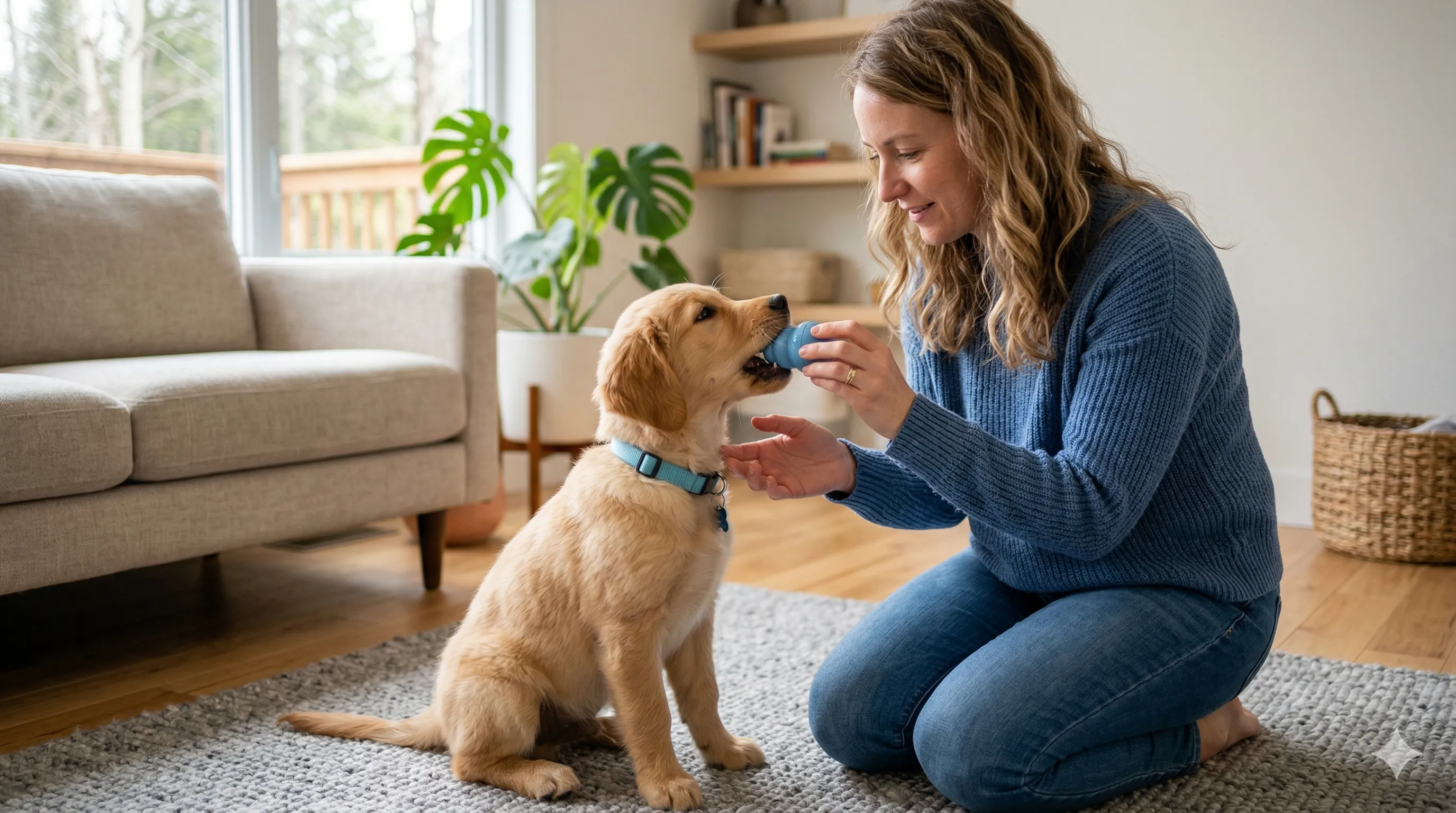
Why Do Puppies Bite?
Before correcting biting behavior, it's important to understand why puppies bite in the first place. Most biting is not aggression. In fact, biting is a completely natural part of puppy development.
1. Teething Discomfort
Puppies begin teething around 3-4 months of age, and chewing helps relieve gum discomfort. During this stage, puppies naturally seek things to bite and chew.
This is why puppies often target hands, shoes, furniture, or clothing if appropriate chew toys are not available.
2. Play Behavior
Puppies learn social skills through play. When puppies interact with littermates, they naturally nip, wrestle, and mouth each other.
During these interactions, puppies gradually learn bite inhibition. If one puppy bites too hard, the other usually yelps or stops playing. This teaches the puppy to control bite pressure.
Your training should mimic this natural learning process.
3. Exploration and Curiosity
Puppies explore the world using their mouths much like human babies use their hands.
Everything is new and exciting, which means puppies often bite objects, people, or clothing simply out of curiosity.
4. Overstimulation
Many puppies bite more aggressively when overtired, overstimulated, or overly excited.
This commonly happens:
- During evening zoomies
- After intense play sessions
- When children excite the puppy too much
- When puppies miss naps
Overstimulated puppies often lose impulse control temporarily.
5. Attention-Seeking Behavior
If biting gets attention, puppies quickly learn to repeat it.
Even negative attention like yelling or pushing the puppy away can accidentally reinforce the behavior because the puppy still receives interaction.
consistent training and stimulation can also help stop dog barking at night try these indoor activities for bored dogs to reduce excess energy and chewing behaviorPlayful Puppy Biting vs Aggressive Biting
Most puppy biting is playful and developmentally normal. However, owners should still understand the difference between normal nipping and true aggression.
Normal Puppy Biting
- Loose body language
- Play bows
- Wagging tail
- Short playful nips
- Easily redirected
Concerning Aggressive Behavior
- Stiff body posture
- Growling intensely
- Guarding food or toys
- Repeated lunging
- Fear-based reactions
- Biting without play signals
If aggressive behavior appears severe or worsens over time, professional training may be necessary.
Step-by-Step Training to Stop Puppy Biting
1. Teach Bite Inhibition
Bite inhibition is one of the most important skills puppies can learn.
When your puppy bites too hard during play:
- Say “ouch” calmly but clearly
- Immediately pause interaction
- Withdraw attention briefly
- Resume play once calm behavior returns
This teaches the puppy that hard biting makes fun stop.
Consistency is critical. Puppies learn through repetition and clear consequences.
2. Redirect Biting to Toys Immediately
Never allow your hands or clothing to become chew toys.
If your puppy starts biting:
- Immediately offer an approved chew toy
- Praise the puppy for chewing the correct item
- Keep toys nearby during playtime
Timing matters. Redirection works best when done immediately after biting begins.
3. Stop Play When Biting Escalates
Many puppies become overly excited during rough play.
If biting increases:
- Stand up calmly
- End interaction briefly
- Avoid yelling or physical punishment
- Wait for calm behavior before resuming play
This teaches emotional control and reduces overstimulation.
4. Reward Calm Behavior Frequently
Owners often focus only on correcting bad behavior while ignoring good behavior.
Reward your puppy when they:
- Play gently
- Remain calm
- Choose toys appropriately
- Respond to commands
- Settle quietly
Positive reinforcement helps puppies repeat desired behaviors more consistently.
5. Provide Enough Physical Exercise
Puppies with excess energy are more likely to bite excessively.
Daily walks, training sessions, sniff games, and supervised play help reduce frustration and improve impulse control.
follow these tips to potty train a puppy fast while building better habitsHowever, avoid over-exercising very young puppies because growing joints still need protection.
6. Build a Structured Routine
Puppies thrive on predictable schedules.
A consistent routine helps reduce:
- Overstimulation
- Anxiety
- Hyperactivity
- Attention-seeking behavior
Structured routines should include:
- Regular naps
- Potty breaks
- Training sessions
- Meal times
- Exercise periods
- Quiet downtime
7. Socialize Your Puppy Properly
Proper socialization helps puppies learn confidence, impulse control, and healthy interaction skills.
Well-socialized puppies are generally less fearful and less reactive during play.
learn how to calm an anxious dog if your puppy shows signs of stress or fearIntroduce your puppy gradually to:
- People
- Sounds
- Environments
- Friendly vaccinated dogs
- Handling and grooming
Common Puppy Biting Mistakes Owners Make
1. Using Physical Punishment
Harsh punishment may increase fear, anxiety, and defensive behavior.
Puppies learn best through calm, consistent guidance rather than intimidation.
2. Encouraging Rough Play
Games that involve chasing hands, wrestling aggressively, or allowing biting during play can confuse puppies.
Mixed signals slow training progress.
3. Inconsistent Responses
If one family member allows biting while another discourages it, the puppy becomes confused.
Everyone in the household should follow the same rules.
4. Ignoring Overtired Behavior
Many puppies bite excessively when they need rest.
Overtired puppies often become hyperactive, mouthy, and difficult to calm.
Ideal Daily Routine to Reduce Puppy Biting
- Morning Walk: Burn early energy
- Training Session: Build focus and obedience
- Interactive Toys: Encourage proper chewing
- Scheduled Naps: Prevent overstimulation
- Evening Calm Time: Reduce hyperactivity before bedtime
Many biting problems improve significantly once puppies follow a healthier daily structure.
When Should You Be Concerned?
Most puppy biting improves naturally with training and maturity. However, some situations deserve closer attention.
Consult a professional trainer or veterinarian if:
- Biting becomes increasingly aggressive
- Your puppy guards food or toys intensely
- The puppy appears fearful or reactive
- Biting causes repeated injuries
- Behavior does not improve after consistent training
Early intervention is much easier than correcting serious behavior problems later.
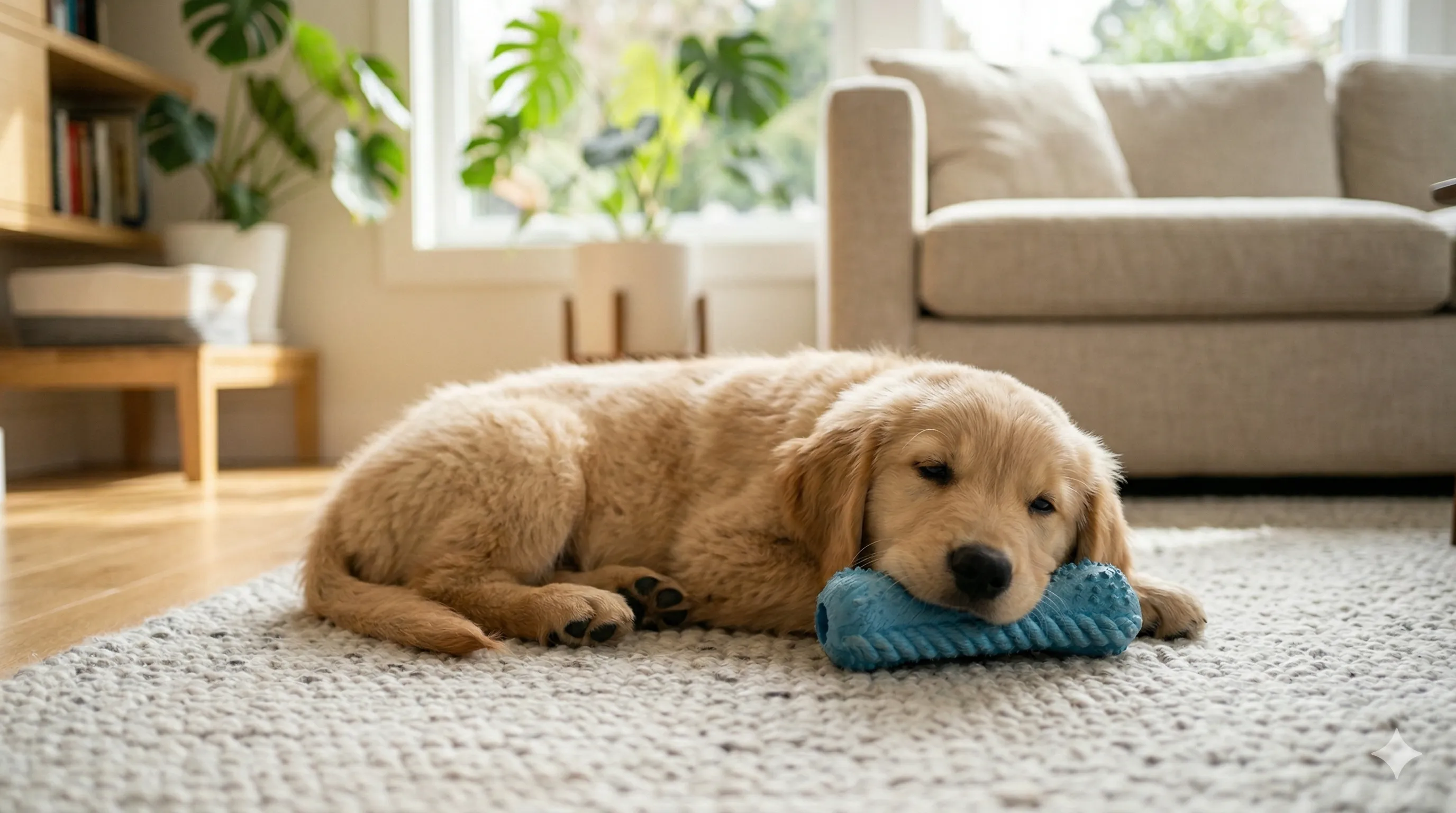
Example Scenario
The scenario below is an illustrative example of how this situation can play out, not a documented case study.
One first-time puppy owner struggled with constant ankle biting from a 12-week-old Labrador puppy. The puppy became especially mouthy during evening play sessions and often ignored verbal corrections.
After introducing structured naps, redirecting biting immediately to chew toys, and consistently ending play after hard bites, the puppy gradually improved over three weeks.
The owner also realized the puppy became much more bitey when overtired. Once daily routines became more structured, the excessive biting reduced significantly.
This situation is extremely common among young puppies and shows why consistency matters more than punishment.
Final Thoughts
Learning how to train a puppy not to bite takes patience, repetition, and realistic expectations. Puppy biting is a normal developmental phase, but early training plays a major role in shaping long-term behavior.
The most effective approach combines bite inhibition, positive reinforcement, proper socialization, mental stimulation, and structured routines.
Most importantly, remember that puppies are still learning impulse control. Calm and consistent guidance usually produces far better results than frustration or punishment.
With time, proper training, and daily consistency, most puppies learn to play gently and develop into well-behaved adult dogs.
This content is written to provide general educational guidance for puppy owners. It should not replace professional behavioral or veterinary advice for severe aggression cases.
Medical Disclaimer
This content is provided for informational and educational purposes only and should not be considered veterinary, medical, behavioral, or training advice. While we strive for accuracy, we make no guarantees regarding completeness or results. Always consult a licensed veterinarian or qualified pet care professional before making decisions about your pet’s health, diet, or behavior.
AI Illustration Notice
Some images in this article may have been generated or enhanced using artificial intelligence for illustrative purposes.
Frequently Asked Questions
Train a puppy not to bite by teaching bite inhibition, redirecting to toys, rewarding calm behavior, and consistently stopping play after hard bites.
Yes, puppy biting is completely normal during teething, play, and early development.
Puppies bite because of teething, play behavior, curiosity, overstimulation, and attention-seeking habits.
No, harsh punishment may increase fear and anxiety. Positive reinforcement works much better.
Most puppies improve significantly within several weeks to a few months with consistent training.
You should worry if biting becomes aggressive, causes injuries, or worsens despite proper training.
Yes, teething often increases chewing and biting because puppies use chewing to relieve gum discomfort.
Editorial Note
This article is part of PetNurture's educational library.
Topics draw on publicly available educational resources, recognised veterinary organisations, academic publications and established animal welfare references where appropriate.
The specific sources this article draws on are listed in its References section. If you spot an error, please let us know.
References
The information in this article has been reviewed and supported using the following sources.
ASPCA
Mouthing, Nipping and Biting in Puppies
The ASPCA notes that bite inhibition is the priority skill to teach first, since a puppy who has learned to control the force of its mouth is less likely to bite hard if it ever bites out of fear or pain later in life.
Accessed Aug 6, 2026
American Kennel Club
How to Stop Puppy Biting and Train Bite Inhibition
The AKC recommends substituting a chew toy the moment a puppy starts mouthing skin, and identifies teething, hunger, thirst, and excess energy as common triggers behind puppy biting.
Accessed Aug 6, 2026
Pet Emergency Guidance
Every pet is unique. If your pet exhibits severe symptoms, sudden behavioral changes, or a medical emergency, do not rely on online guides — contact a licensed veterinarian or emergency clinic immediately.
About PetNurture
PetNurture is an educational library of pet care guides, interactive tools and practical resources for pet parents. We work continuously to keep our content accurate and up to date. Reader feedback helps us maintain content quality.
Related Articles
Popular Dog Guides
Dog
Dog Pregnancy Calculator
Estimate your dog's due date, pregnancy timeline, and key gestation milestones.
Dog
Dog Calorie Calculator
Find the right daily calorie target for your dog's weight and activity level.