Why Does My Cat Scratch Furniture? Real Reasons and How to Stop It
- Why Does My Cat Scratch Furniture? (Quick Answer)
- Why Scratching Is Essential for Cats
- Cat Scratching Causes & Solutions (Quick Guide)
- 6 Real Reasons Why Cats Scratch Furniture
- 1. Scratching Keeps Cat Claws Healthy
- 2. Cats Scratch to Mark Territory
- 3. Scratching Helps Cats Stretch Their Bodies
- 4. Stress and Emotional Tension Can Increase Scratching
- 5. Cats Scratch Furniture When Proper Alternatives Are Missing
- 6. Scratching Can Become a Learned Habit
- Normal vs Problematic Scratching
- When Should You Be Concerned?
- How to Stop Cats From Scratching Furniture
- 1. Provide Multiple Scratching Posts
- 2. Match Your Cat's Scratching Preferences
- 3. Place Scratchers Near Existing Furniture Targets
- 4. Reward Correct Scratching Behavior
- 5. Make Furniture Less Appealing Temporarily
- 6. Trim Nails Regularly
- 7. Increase Daily Play and Mental Stimulation
- Ideal Routine to Reduce Furniture Scratching
- Common Mistakes Owners Make
- Example Scenario
- Final Thoughts
Note: This article is for informational purposes only and does not replace professional veterinary advice.
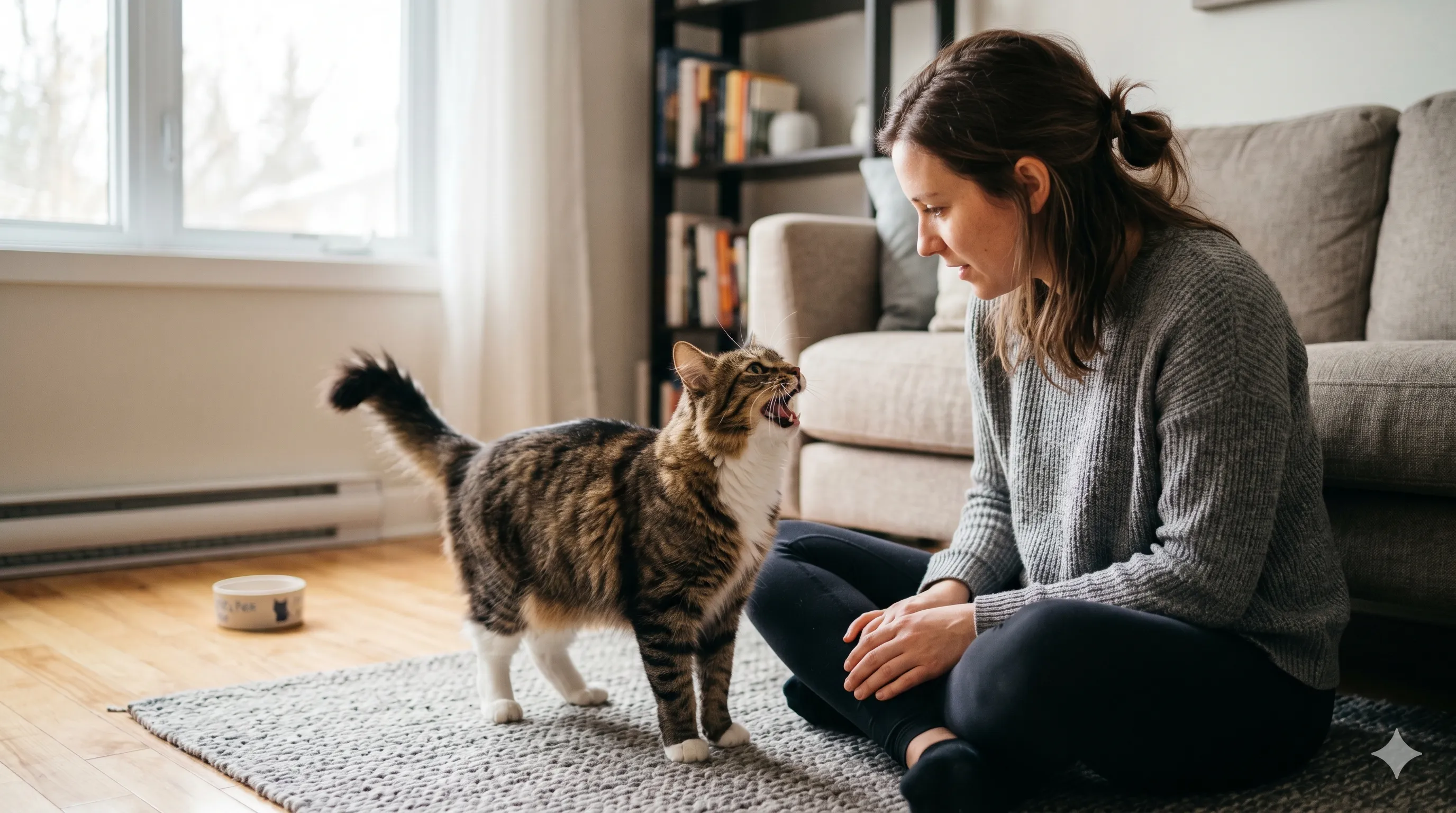
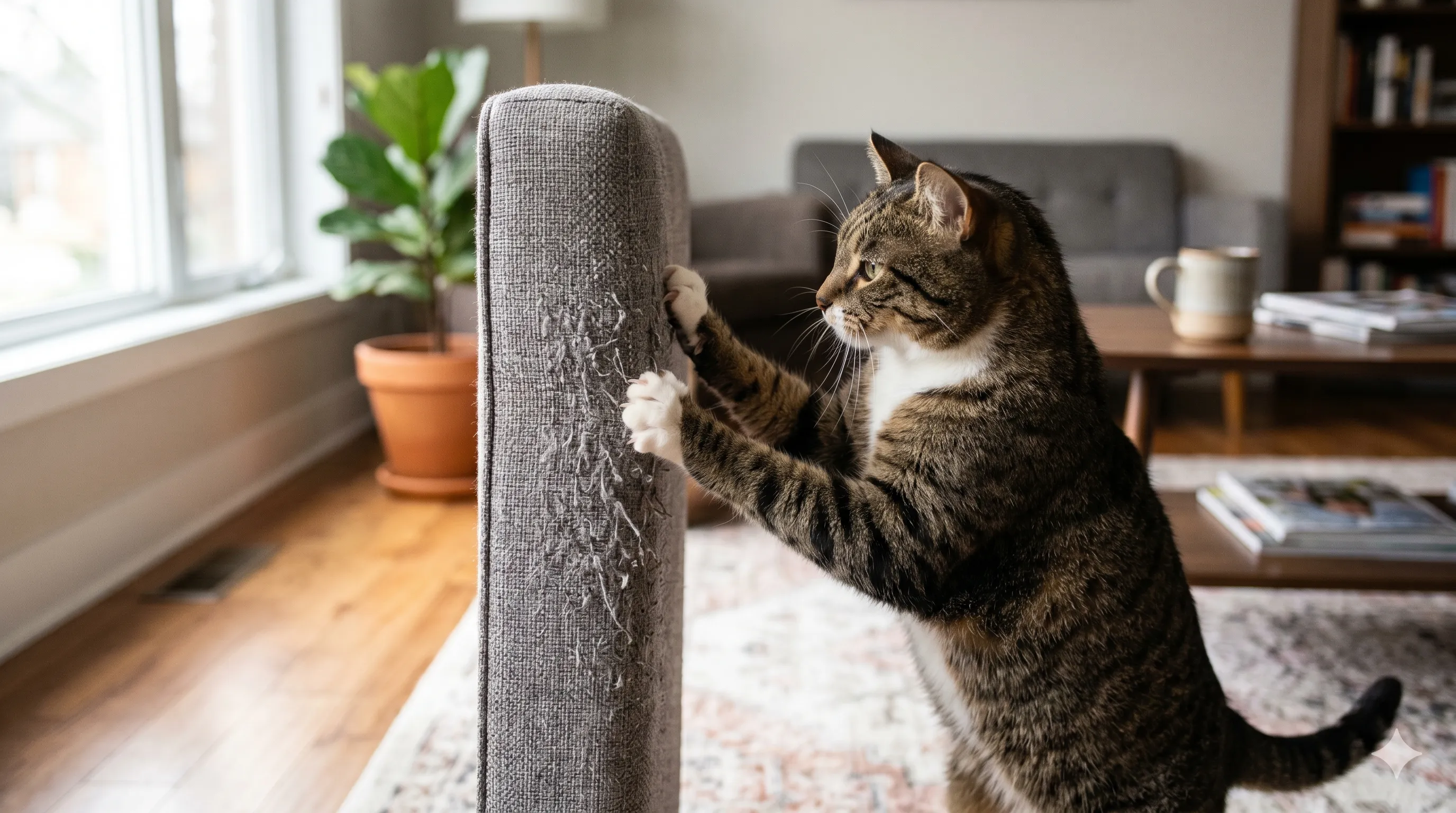
You walk into your living room and immediately notice fresh claw marks on your couch, chair, carpet, or curtains. For many cat owners, this becomes one of the most frustrating pet-related problems in the home.
If you've been wondering "why does my cat scratch furniture?", the answer is actually much simpler and much more natural than most people think. stress-related behaviors in pets often become more noticeable after environmental changes
Cats do not scratch furniture because they are being disobedient, aggressive, or intentionally destructive. Scratching is a deeply instinctive behavior connected to claw health, territory marking, stretching, emotional release, and natural feline communication.
The real problem is not that your cat scratches.
The real issue is that your cat has chosen your furniture as the preferred scratching surface.
Once you understand why cats scratch and what motivates the behavior, it becomes much easier to redirect the habit without punishment, stress, or damage to your relationship with your pet.
Why Does My Cat Scratch Furniture? (Quick Answer)
Cats scratch furniture to maintain healthy claws, stretch muscles, mark territory, release stress, and satisfy natural instincts. Scratching itself is completely normal and healthy. The solution is not stopping the behavior entirely but redirecting it toward appropriate scratching surfaces.
Most furniture scratching problems happen because cats lack appealing alternatives or because environmental stress increases scratching behavior.
Why Scratching Is Essential for Cats
Scratching is not optional behavior for cats.
It serves several important physical and emotional purposes that are deeply connected to feline health and natural instincts.
When cats scratch, they:
- Remove dead claw layers
- Stretch muscles and joints
- Release built-up energy
- Mark territory visually and through scent
- Relieve emotional tension
This is why trying to completely stop scratching usually creates frustration for both cats and owners.
The healthier solution is teaching your cat where scratching is appropriate.
Cat Scratching Causes & Solutions (Quick Guide)
| Cause | Possible Meaning | Impact | Helpful Solution |
|---|---|---|---|
| Claw maintenance | Removing dead claw layers | Healthy behavior | Provide scratching posts |
| Territory marking | Scent and visual communication | Normal instinct | Place scratchers in key areas |
| Stretching | Physical muscle extension | Healthy activity | Use tall vertical scratchers |
| Boredom | Lack of stimulation | Destructive habits | Increase enrichment and play |
| Stress or anxiety | Emotional release behavior | Repeated scratching | Reduce environmental stress |
| Lack of alternatives | No proper scratching surfaces | Furniture targeting | Add multiple scratchers |
6 Real Reasons Why Cats Scratch Furniture
1. Scratching Keeps Cat Claws Healthy
One of the biggest reasons cats scratch is simple claw maintenance.
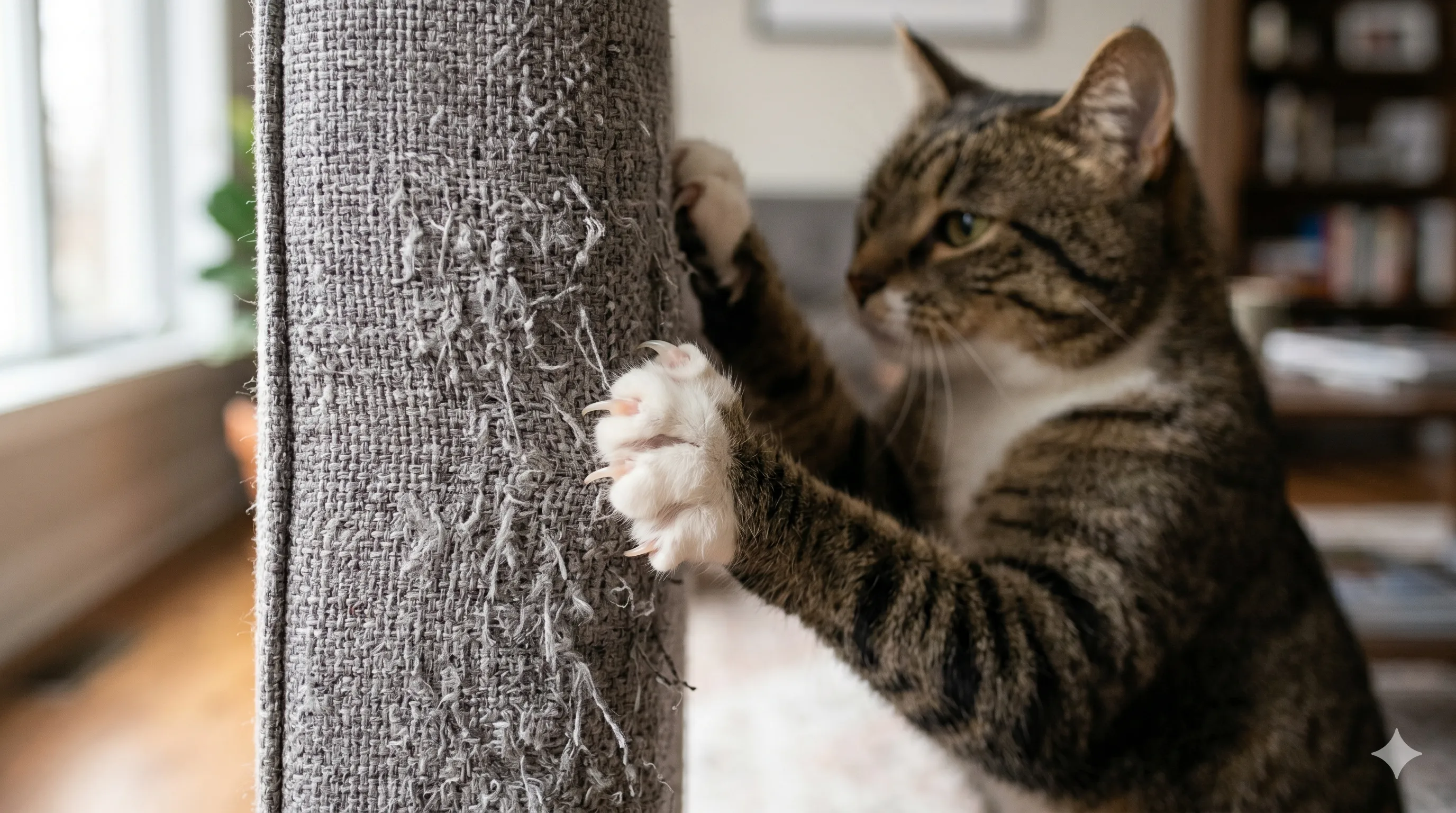
Scratching helps remove the dead outer layer of the claw sheath, keeping claws healthy, sharp, and functional.
Without proper scratching surfaces, cats naturally choose whatever texture feels satisfying which often includes:
- Couches
- Carpets
- Curtains
- Wood furniture
- Mattresses
Furniture materials frequently provide the resistance and texture cats instinctively enjoy.
2. Cats Scratch to Mark Territory
Cats have scent glands located in their paws.
When they scratch surfaces, they leave both:
- Visible claw marks
- Invisible scent signals
This combination acts as territorial communication.
Scratching essentially tells other animals:
"This space belongs to me."
This is why cats often scratch in highly visible or socially important locations within the home.
3. Scratching Helps Cats Stretch Their Bodies
Many owners notice cats scratching immediately after waking up.
This happens because scratching allows cats to stretch important muscles throughout their:
- Back
- Shoulders
- Legs
- Paws
Vertical scratching especially provides a full-body extension that feels physically satisfying and healthy.
This stretching behavior is completely natural and beneficial.
4. Stress and Emotional Tension Can Increase Scratching
Scratching is also an emotional release behavior.
Cats sometimes scratch more frequently when experiencing:
- Stress
- Anxiety
- Environmental changes
- New pets
- Visitors
- Routine disruption
Stress-related behaviors in pets often become more noticeable after environmental changes. cats with excess energy are more likely to redirect their zoomies into furniture scratching
In these situations, scratching may temporarily increase because the behavior helps cats self-soothe and re-establish a sense of security.
5. Cats Scratch Furniture When Proper Alternatives Are Missing
Many owners underestimate how selective cats can be about scratching surfaces.
Some cats strongly prefer:
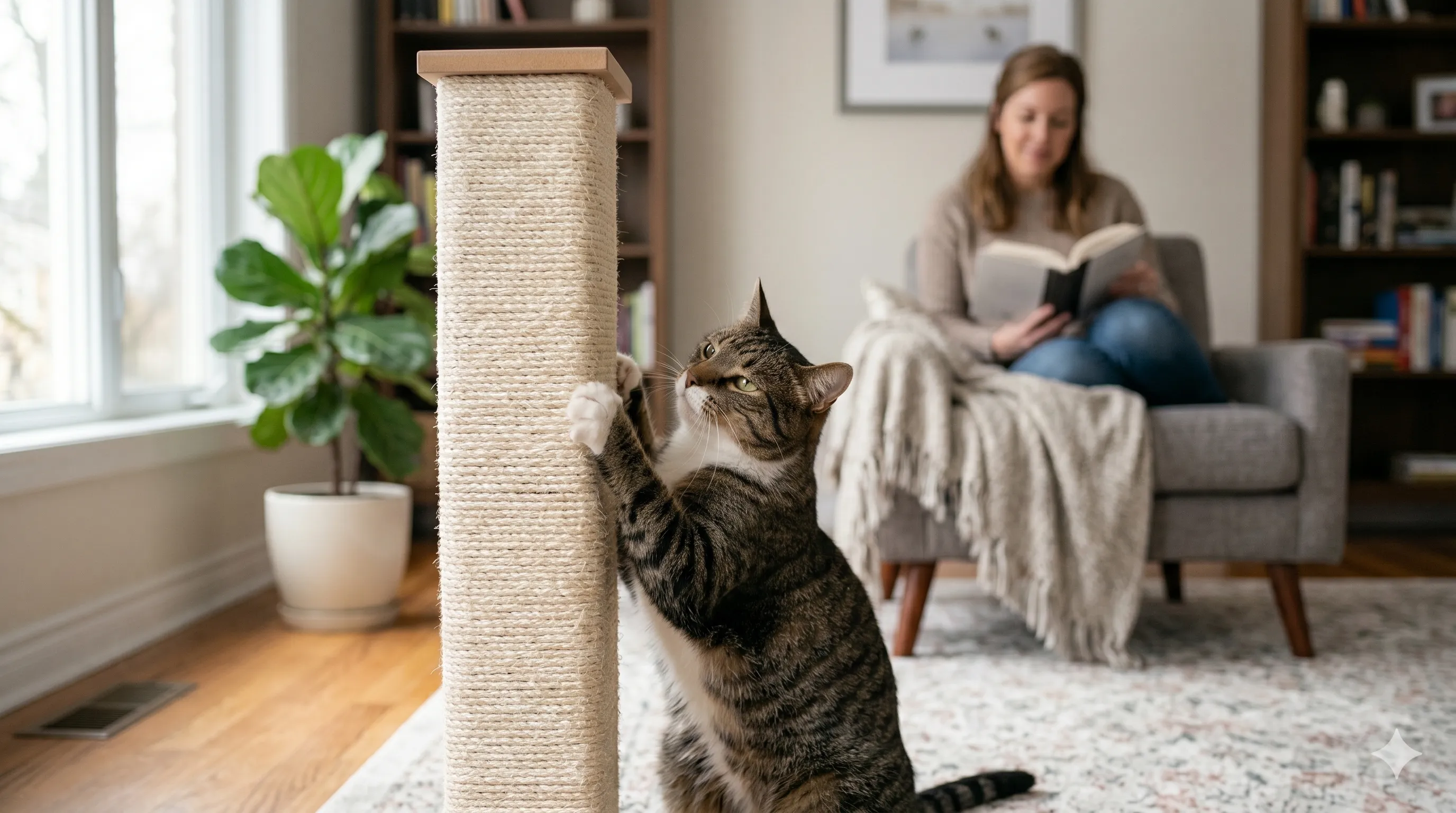
- Vertical scratching
- Horizontal scratching
- Cardboard textures
- Sisal rope
- Carpet materials
- Wood-like surfaces
If the available scratchers do not match your cat's natural preference, furniture often becomes more attractive.
Location matters too.
A scratching post hidden in a quiet corner may never compete successfully against a large comfortable couch placed in the center of the home.
6. Scratching Can Become a Learned Habit
If a cat repeatedly scratches a satisfying furniture surface, the behavior can become deeply reinforced over time.
Cats remember:
- Texture
- Location
- Emotional satisfaction
- Physical relief
The more often the scratching occurs successfully, the stronger the habit becomes.
Cats with excess energy are more likely to redirect their zoomies into furniture scratching. cats that become restless or overstimulated at night may also increase destructive scratching behavior
Normal vs Problematic Scratching
Scratching itself is not bad behavior.
- Normal scratching: Occasional scratching during stretching, waking up, or territorial behavior
- Potential concern: Constant destructive scratching, obsessive behavior, aggression, or stress-related scratching across multiple areas
The frequency, emotional intensity, and environmental context help determine whether scratching has become problematic.
When Should You Be Concerned?
Furniture scratching becomes more concerning when it suddenly increases or appears alongside emotional or behavioral changes.
Potential warning signs include:
- Sudden excessive scratching
- Aggressive behavior
- Constant restlessness
- Stress-related hiding
- Changes in appetite
- Major environmental stress
Cats that become restless or overstimulated at night may also increase destructive scratching behavior. regular nail care helps reduce discomfort caused by kneading and scratching habits
If scratching appears connected to anxiety or emotional distress, environmental adjustment and behavioral support may be necessary.
How to Stop Cats From Scratching Furniture
1. Provide Multiple Scratching Posts
One scratching post is often not enough.
Most cats prefer having several scratching areas throughout the home, especially near:
- Sleeping spots
- Entrances
- Favorite rooms
- Existing scratching areas
Placement is just as important as the scratching surface itself.
2. Match Your Cat's Scratching Preferences
Observe how your cat naturally scratches.
Does your cat prefer:
- Vertical surfaces?
- Horizontal surfaces?
- Soft textures?
- Firm resistance?
Choosing scratchers that match your cat's instinctive preferences dramatically improves success.
3. Place Scratchers Near Existing Furniture Targets
Many owners place scratching posts too far away from problem areas.
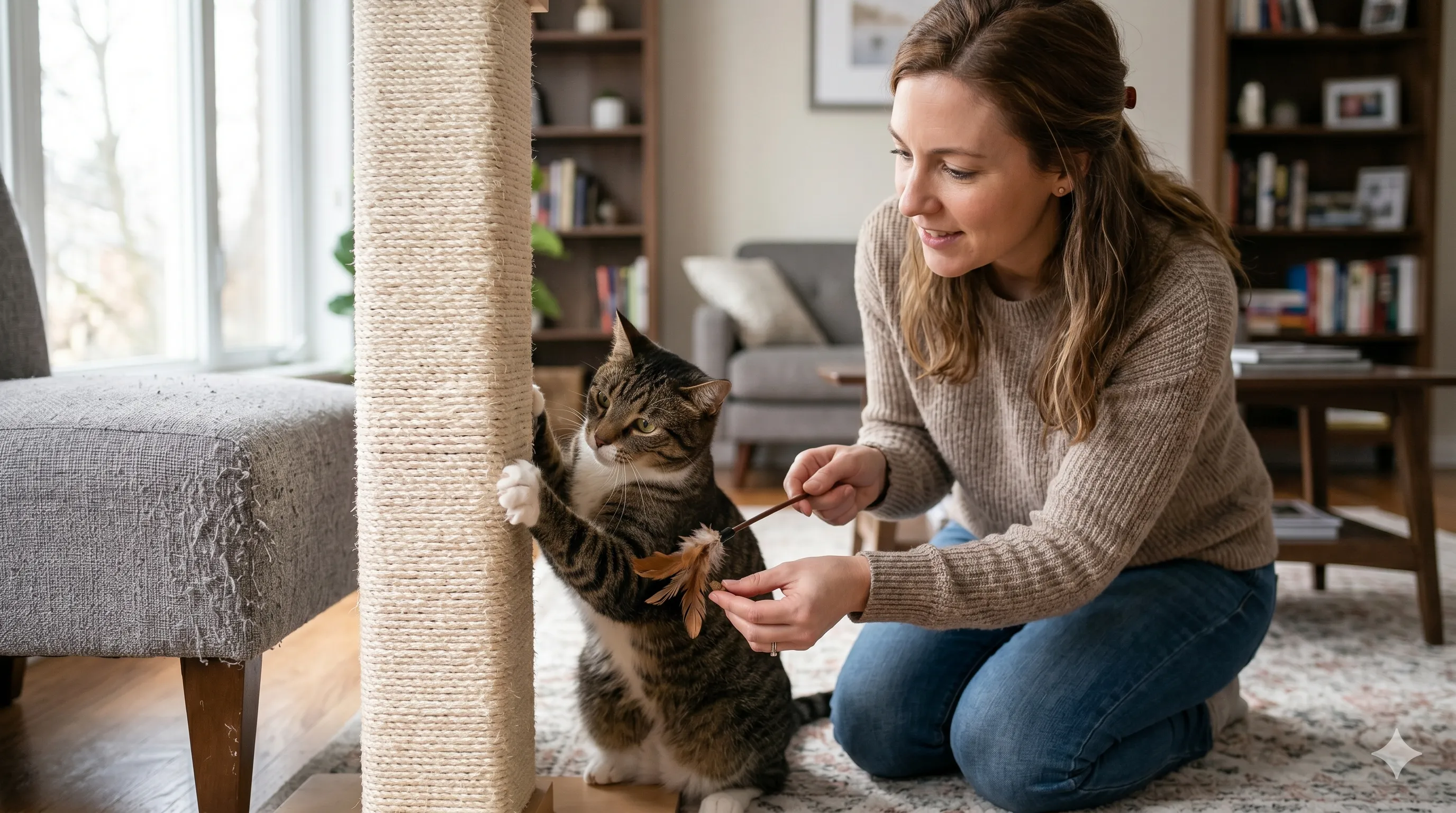
If your cat constantly scratches the couch, place a scratching post directly beside it initially.
This makes the alternative easier and more rewarding to use.
4. Reward Correct Scratching Behavior
Positive reinforcement works much better than punishment.
Whenever your cat uses the correct scratching surface, reward the behavior with:
- Treats
- Praise
- Playtime
- Affection
Cats learn much faster when good behavior feels rewarding and safe.
5. Make Furniture Less Appealing Temporarily
Protective barriers can help break existing habits while your cat adjusts to new scratching surfaces.
Helpful options include:
- Double-sided tape
- Furniture covers
- Scratch guards
- Temporary deterrent textures
The goal is gentle redirection not punishment.
6. Trim Nails Regularly
Regular nail maintenance reduces furniture damage significantly.
Regular nail care helps reduce discomfort caused by kneading and scratching habits. regular vet checkups can include nail trims and grooming guidance to help reduce accidental furniture damage
Trimming claws also helps prevent accidental injury without interfering with healthy scratching behavior.
7. Increase Daily Play and Mental Stimulation
Bored or under-stimulated cats are more likely to develop destructive scratching habits.
Interactive play helps reduce:
- Stress
- Excess energy
- Boredom
- Frustration
Daily enrichment often improves scratching behavior naturally.
Ideal Routine to Reduce Furniture Scratching
Many cats improve significantly once their daily routine becomes more balanced and stimulating.
- Morning: Light play and scratching opportunities
- Afternoon: Independent enrichment activities
- Evening: Interactive exercise and bonding
- Night: Calm predictable environment
A stable routine helps cats feel physically and emotionally balanced.
Common Mistakes Owners Make
- Punishing scratching behavior
- Using only one scratching post
- Ignoring scratching preferences
- Providing low-quality scratchers
- Expecting immediate behavior change
Example Scenario
The scenario below is an illustrative example of how this situation can play out, not a documented case study.
A young indoor cat repeatedly scratched the corner of a fabric sofa despite having a scratching post elsewhere in the house.
The owner eventually moved a tall sisal scratching post directly beside the sofa and rewarded the cat consistently whenever it used the new surface.
Within two weeks, the cat naturally shifted most scratching activity away from the furniture without punishment or stress.
Final Thoughts
Understanding why does my cat scratch furniture changes the entire approach to solving the behavior.
Scratching is not a sign of a bad cat it is a healthy, instinctive, emotionally important feline behavior.
The goal is not to eliminate scratching completely but to redirect it toward safe, satisfying alternatives that meet your cat's natural needs.
Understanding normal feline scratching behavior helps owners create healthier indoor environments without unnecessary stress or punishment. understanding structured behavior training, like litter box training, helps owners create healthier indoor environments without unnecessary stress or punishment
With proper scratching surfaces, enrichment, patience, and consistency, most cats can learn to protect both their emotional needs and your furniture at the same time.
This content is written to provide general educational guidance for cat owners and pet families and is not a substitute for professional veterinary advice.
Medical Disclaimer
This content is provided for informational and educational purposes only and should not be considered veterinary, medical, behavioral, or training advice. While we strive for accuracy, we make no guarantees regarding completeness or results. Always consult a licensed veterinarian or qualified pet care professional before making decisions about your pet’s health, diet, or behavior.
AI Illustration Notice
Some images in this article may have been generated or enhanced using artificial intelligence for illustrative purposes.
Frequently Asked Questions
Cats scratch furniture to maintain healthy claws, stretch muscles, mark territory, release stress, and satisfy natural instincts.
Provide multiple scratching posts, reward correct scratching behavior, and make furniture temporarily less appealing while redirecting the habit.
Yes, scratching is completely natural and essential for feline physical health, emotional release, and territorial communication.
No, punishment often increases fear and stress and usually makes scratching behavior worse instead of improving it.
The best scratching post depends on your cat's preference for vertical or horizontal scratching and texture types like sisal or cardboard.
Sudden increases in scratching may happen because of stress, environmental changes, boredom, anxiety, or lack of proper scratching alternatives.
Yes, emotionally stressed cats often scratch more frequently as a way to self-soothe and release tension.
You should become concerned if scratching becomes obsessive, highly destructive, aggressive, or appears alongside major behavioral changes or anxiety signs.
Editorial Note
This article is part of PetNurture's educational library.
Topics draw on publicly available educational resources, recognised veterinary organisations, academic publications and established animal welfare references where appropriate.
The specific sources this article draws on are listed in its References section. If you spot an error, please let us know.
References
The information in this article has been reviewed and supported using the following sources.
ASPCA
Confirms scratching removes the worn outer claw sheath and recommends tall, stable scratching posts with rough material as the primary redirection strategy; supports the 'Scratching Keeps Cat Claws Healthy' and 'How to Stop Cats From Scratching Furniture' sections of this article.
Accessed Aug 6, 2026
VCA Animal Hospitals
Scratching Behavior in Cats: Various Approaches
Covers territorial and stress-related motivations behind scratching and management approaches; supports the 'Cats Scratch to Mark Territory' and 'Stress and Emotional Tension Can Increase Scratching' sections of this article.
Accessed Aug 6, 2026
Pet Emergency Guidance
Every pet is unique. If your pet exhibits severe symptoms, sudden behavioral changes, or a medical emergency, do not rely on online guides — contact a licensed veterinarian or emergency clinic immediately.
About PetNurture
PetNurture is an educational library of pet care guides, interactive tools and practical resources for pet parents. We work continuously to keep our content accurate and up to date. Reader feedback helps us maintain content quality.
Related Articles
Popular Cat Guides

Cat
Cat Feeding Calculator
Calculate how much food your cat needs daily based on weight, age, and activity level.