Why Does My Rabbit Flick Its Feet? Understanding Bunny Attitude, Emotions & Rabbit Body Language
Note: This article is for informational purposes only and does not replace professional veterinary advice.
A foot flick can look similar to a happy jump, and the sources we read separate the two. This guide sets out what the RSPCA and PetMD (an article by a veterinarian) say.
Why Does My Rabbit Flick Its Feet? (Quick Answer)
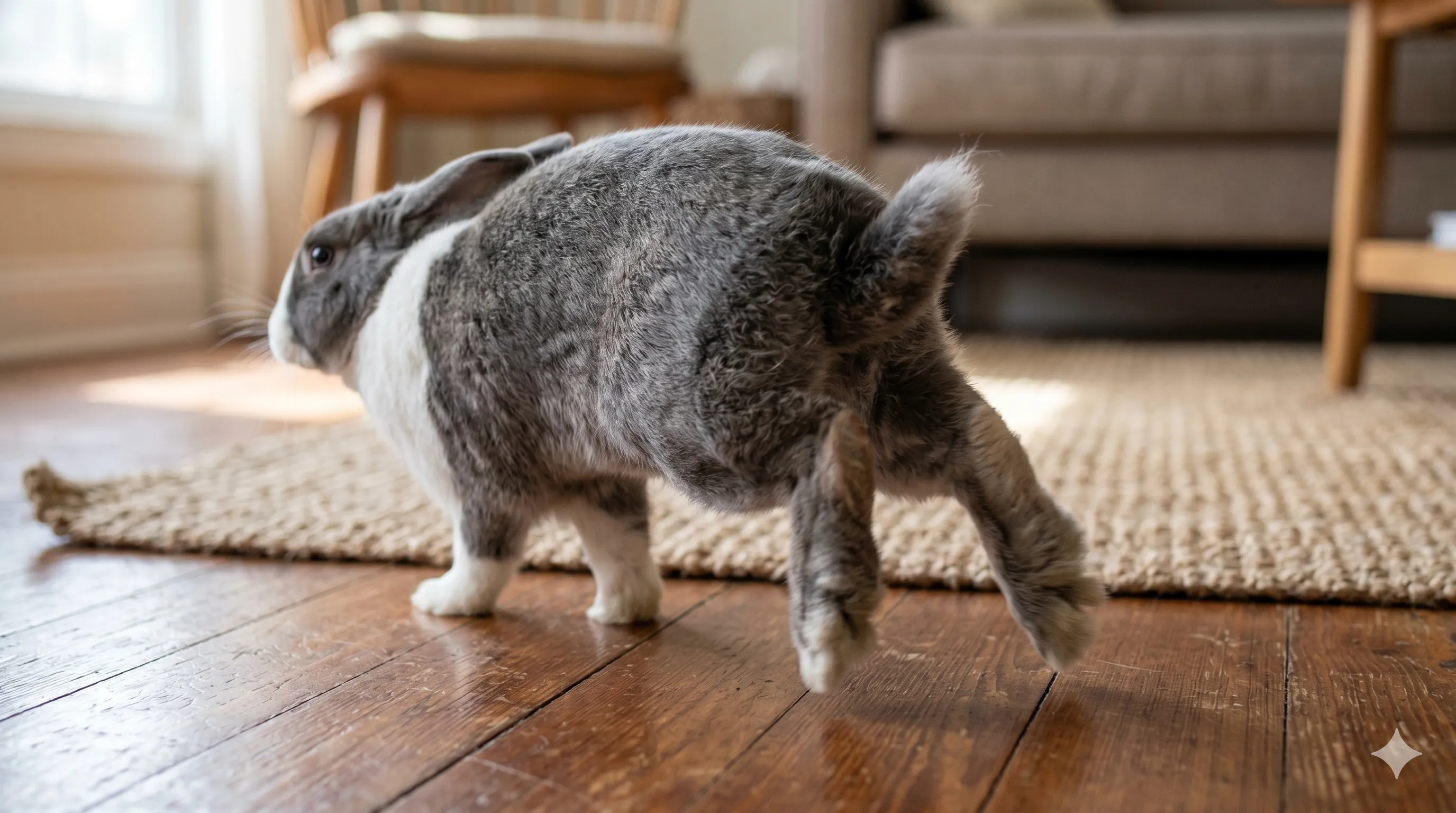
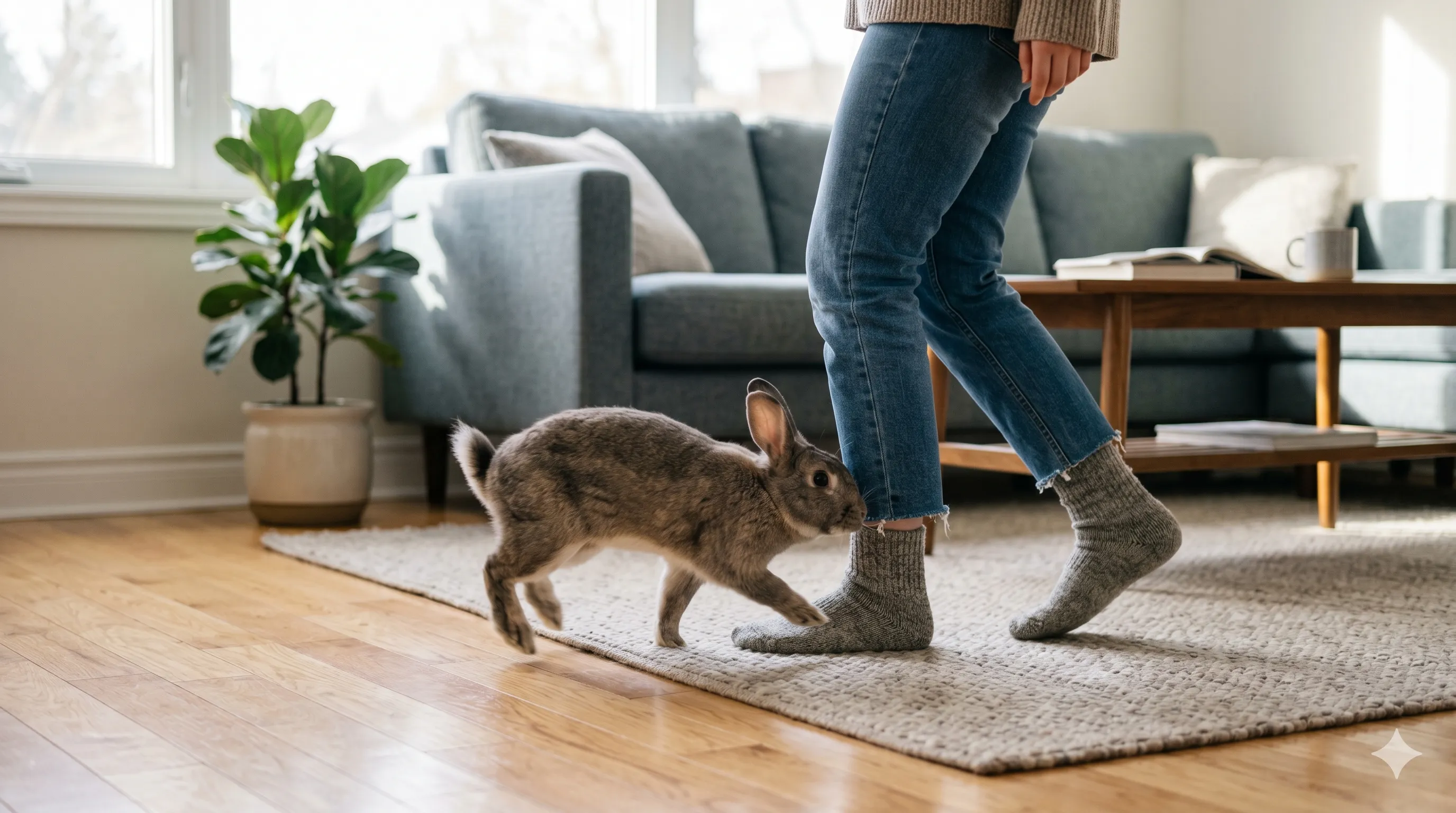
The RSPCA says a rabbit that flicks its back feet, or holds its ears against its back, is expressing unhappiness or wanting space. PetMD says a rabbit that hops away and flicks its feet up aggressively is unhappy with the current situation.
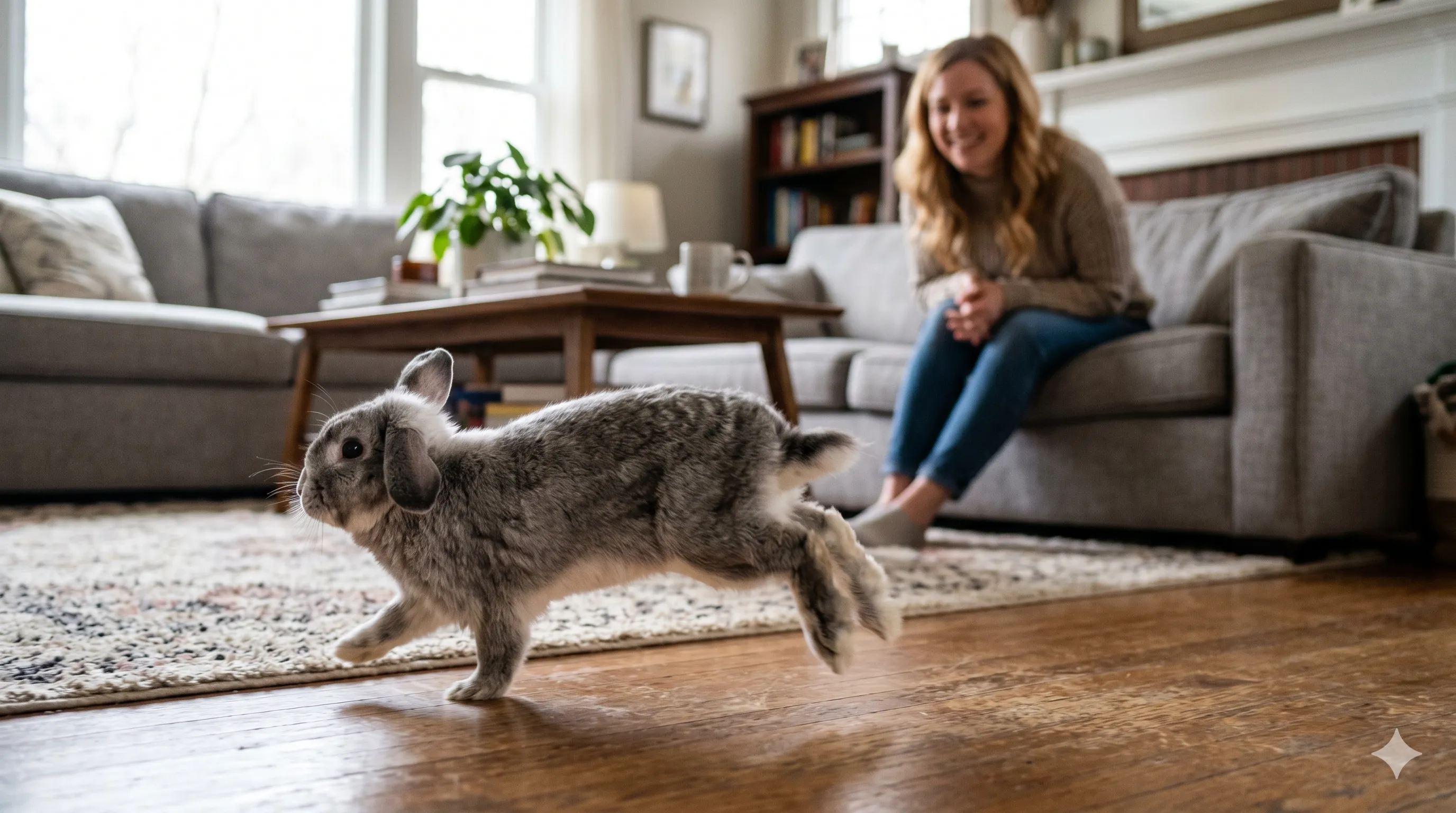
Flick or Binky?
| Behaviour | RSPCA | PetMD |
|---|---|---|
| Back-foot flick | Unhappiness or wanting space; also part of the angry "turns and moves away" signs | Unhappy with the situation, often as the rabbit hops away |
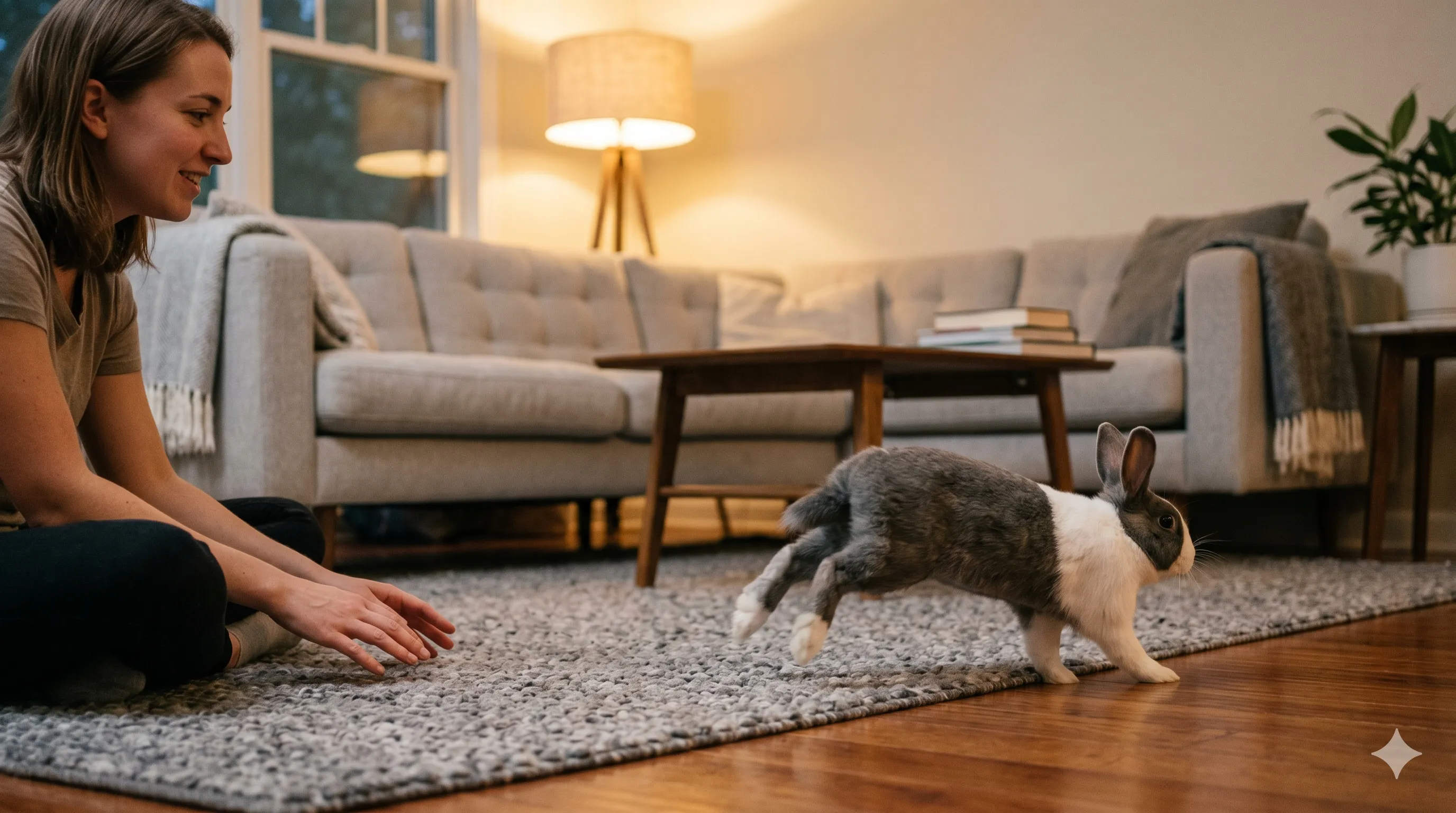
| Binky | A leap and twist in mid-air with all four paws off the ground; very happy | A jump with a sideways kick or body shake when very happy |
The RSPCA and PetMD agree that the two mean different things, so look at what the rabbit does next. See also why rabbits thump.
Other Signs of Unease
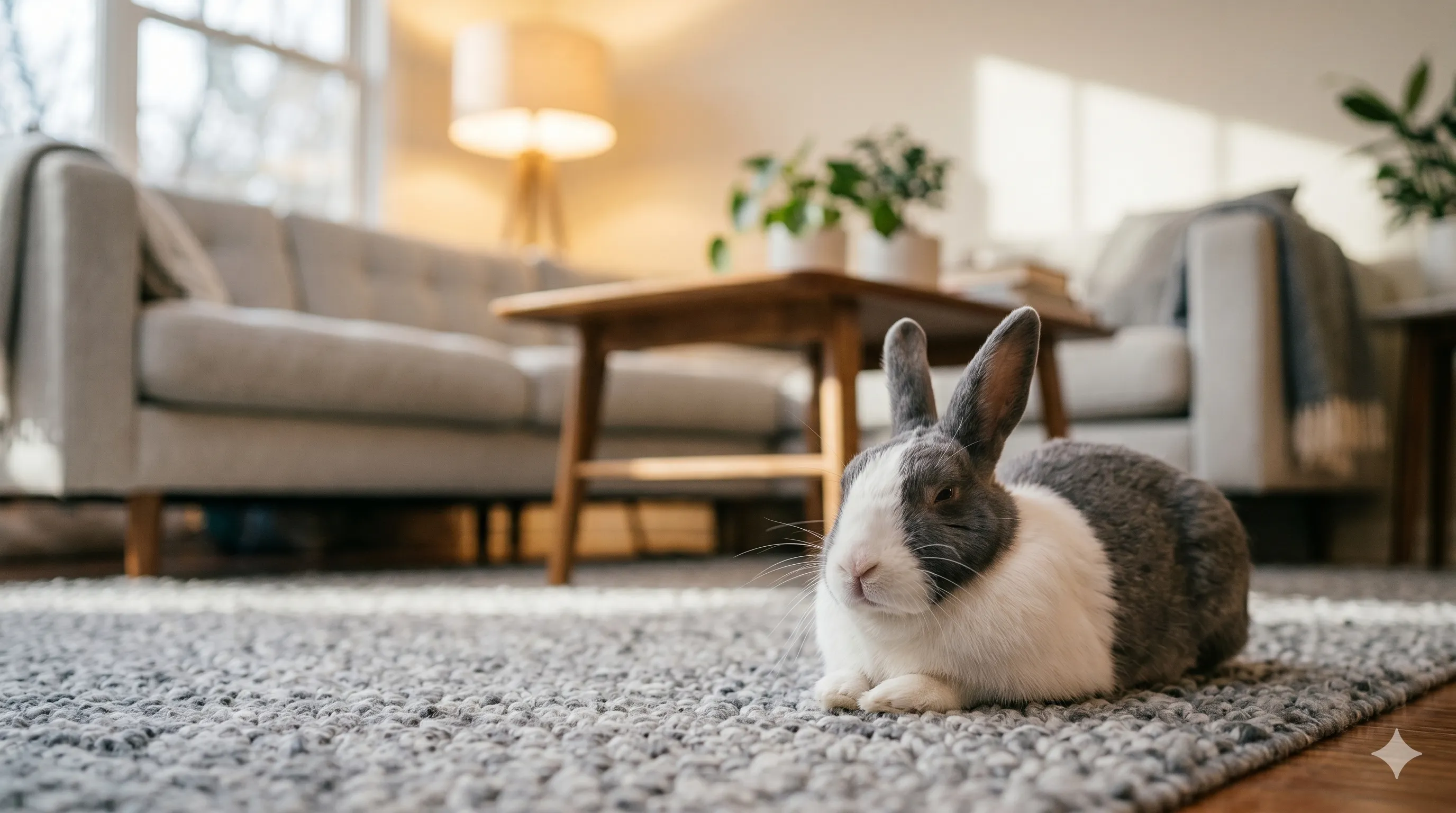
- The RSPCA says worried rabbits have ears flat against the back and dilated pupils and may hide.
- The PDSA says flattened ears can mean stress or anxiety and boxing with the front paws means a rabbit is very unhappy.
What to Do
The RSPCA reads a back-foot flick as unhappiness or a wish for space. The RSPCA says that if you are concerned about your rabbit's behaviour you should speak to a vet first, and that if behaviour changes suddenly you can ask a vet for advice. See why rabbits bite softly.
What We Could Not Find a Source For
We found no source that links foot flicking to a medical problem, and none that says why a particular rabbit flicks at a particular time. We leave those out.
Final Thoughts
A foot flick is a message to back off, not a game. If the rabbit seems unwell or behaviour changes suddenly, contact a licensed veterinarian.
This article is for general education and is not a substitute for veterinary advice. If your rabbit stops eating or seems unwell, contact a licensed veterinarian.
Medical Disclaimer
This content is provided for informational and educational purposes only and should not be considered veterinary, medical, behavioral, or training advice. While we strive for accuracy, we make no guarantees regarding completeness or results. Always consult a licensed veterinarian or qualified pet care professional before making decisions about your pet’s health, diet, or behavior.
AI Illustration Notice
Some images in this article may have been generated or enhanced using artificial intelligence for illustrative purposes.
Frequently Asked Questions
The RSPCA says it expresses unhappiness or wanting space. PetMD says the rabbit is unhappy with the situation.
No. The RSPCA and PetMD describe a binky as a sign of being very happy.
The RSPCA says a rabbit that flicks its back feet is expressing unhappiness or that it wants space.
We found no source that says so.
The RSPCA says to speak to a vet if you are concerned or behaviour changes suddenly.
Editorial Note
This article is part of PetNurture's educational library.
Topics draw on publicly available educational resources, recognised veterinary organisations, academic publications and established animal welfare references where appropriate.
The specific sources this article draws on are listed in its References section. If you spot an error, please let us know.
References
The information in this article has been reviewed and supported using the following sources.
RSPCA
Natural Behaviours of Pet Rabbits
No date or author. Digging is natural and not being able to dig can cause high stress. Continuously circling the enclosure perimeter is a coping mechanism for nervous energy. Flicking back feet or ears against back: unhappy or wants space. Binky: very happy. Soft grinding: content. Loud grinding: may mean pain and need to see a vet. Licking: common sign of affection. Ears forward and staring at a spot: high alert. If behaviour changes suddenly ask a vet.
Accessed Nov 5, 2026
RSPCA
Understanding rabbit behaviour
No date or author. Relaxed: ears close together and pointing outwards eyes partly closed legs tucked. Worried: ears flat against back pupils dilated may hide. Angry: back feet flick or thump. If concerned about behaviour speak to a vet first.
Accessed Nov 5, 2026
PetMD (Melissa Witherell DVM)
Rabbit Body Language: What Different Positions Mean
Published 24 March 2026. Hops away and flicks feet: unhappy. Nudge a hand foot or pant leg: wants attention. Circle you or another rabbit: social or sexual behaviour. Binky: very happy. Lick: affection. Content: lightly chatter or vibrate teeth like purring.
Accessed Nov 5, 2026
PDSA
Understanding rabbit body language
No date or author. Flattened ears: stressed or anxious. Relaxed body: comfortable. Boxing with front paws: very unhappy. Showing teeth: extreme fear and final warning. Does not address staring.
Accessed Nov 5, 2026
Pet Emergency Guidance
Every pet is unique. If your pet exhibits severe symptoms, sudden behavioral changes, or a medical emergency, do not rely on online guides — contact a licensed veterinarian or emergency clinic immediately.
Was this article helpful?
About PetNurture
PetNurture is an educational library of pet care guides, interactive tools and practical resources for pet parents. We work continuously to keep our content accurate and up to date. Reader feedback helps us maintain content quality.
Related Articles
Popular Rabbit Guides