Best Rabbit Breeds for Beginners: What Sources Say About Temperament & Health
Note: This article is for informational purposes only and does not replace professional veterinary advice.
No source we read ranks rabbit breeds for beginners. This guide sets out what PetMD (breed pages written by a veterinary technician and reviewed by a veterinarian), the Merck Veterinary Manual and the RSPCA say, including health concerns the RSPCA raises about some breeds.
Best Rabbit Breeds for Beginners (Quick Answer)
The Merck Veterinary Manual names no breeds. It says larger rabbits are often calmer and sturdier, and smaller rabbits are more delicate and need especially careful handling. PetMD says Dutch rabbits are fairly easy to care for compared with other breeds and a good fit for first-time owners. The RSPCA says it always encourages rescuing rabbits over buying them.
Breeds Side by Side
| Breed | PetMD | RSPCA (breed groups) |
|---|---|---|
| Dutch | 3.5 to 5.5 lb; 5 to 10 years; skittish at first; brush 1 to 2 times a week; fairly easy to care for and a good fit for first-time owners | Not named |
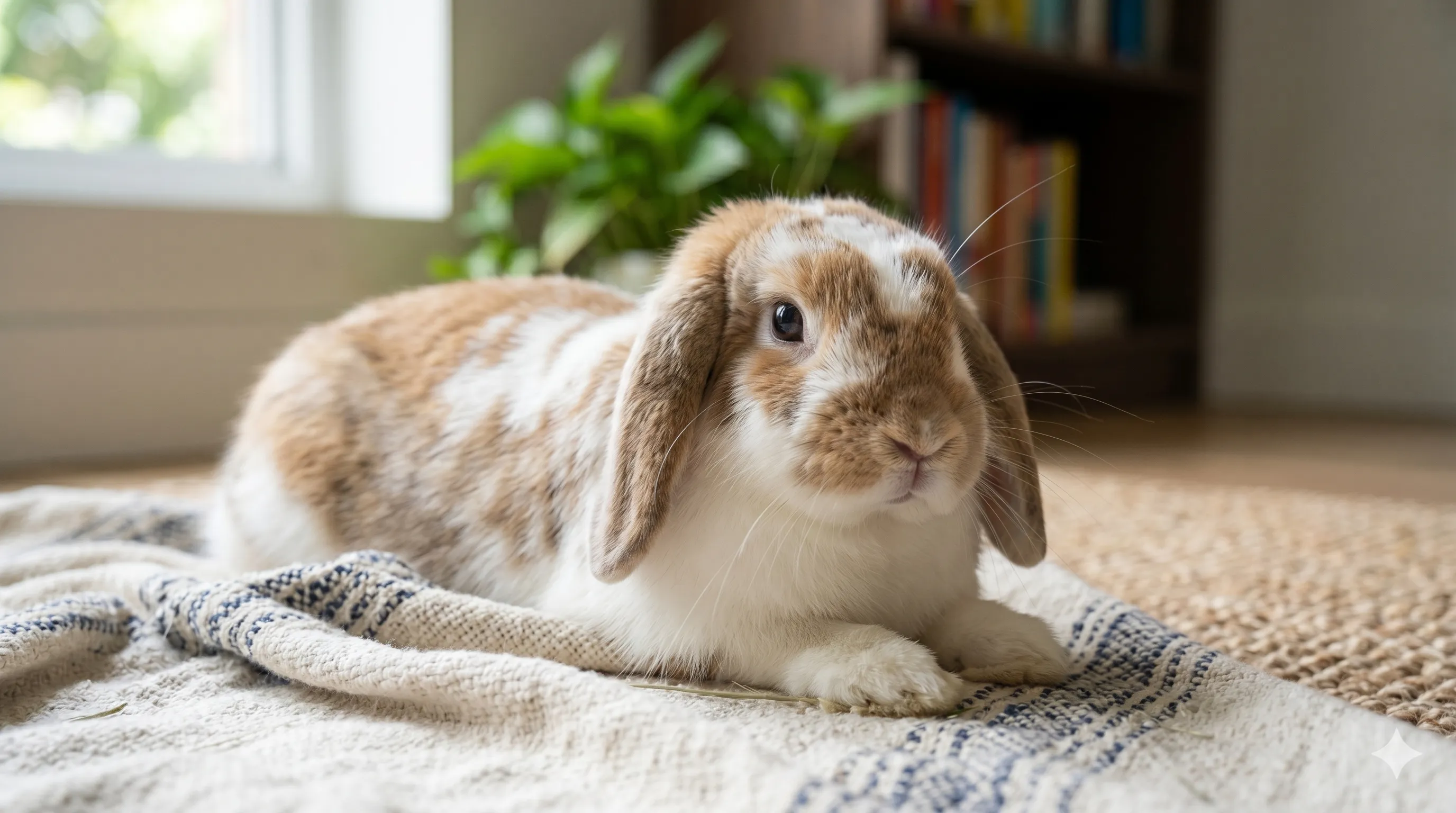
| Holland Lop | Max 4 lb; 7 to 10 years; friendly and playful; quiet household with adults or older children; weekly ear cleaning; no known hereditary issues | Lop-eared rabbits more prone to ear problems; dwarf and mini varieties commonly suffer inherited health issues |
| Lionhead | Friendly and people-bonding; sheds more; needs more attention | Lionheads among purebreds that commonly suffer inherited health issues |
| Flemish Giant | 15 to 20 lb; 8 to 10 years; easygoing and docile; needs a very large cage and plenty of space and time | Giant breeds may suffer osteoarthritis at a younger age |
| Mini Rex and Himalayan | Not covered | Not named |
The sources disagree in places: PetMD says Holland Lops have no known hereditary health issues, while the RSPCA lists lop-eared and dwarf varieties among breeds with health concerns. We show both.
Choosing a Rabbit
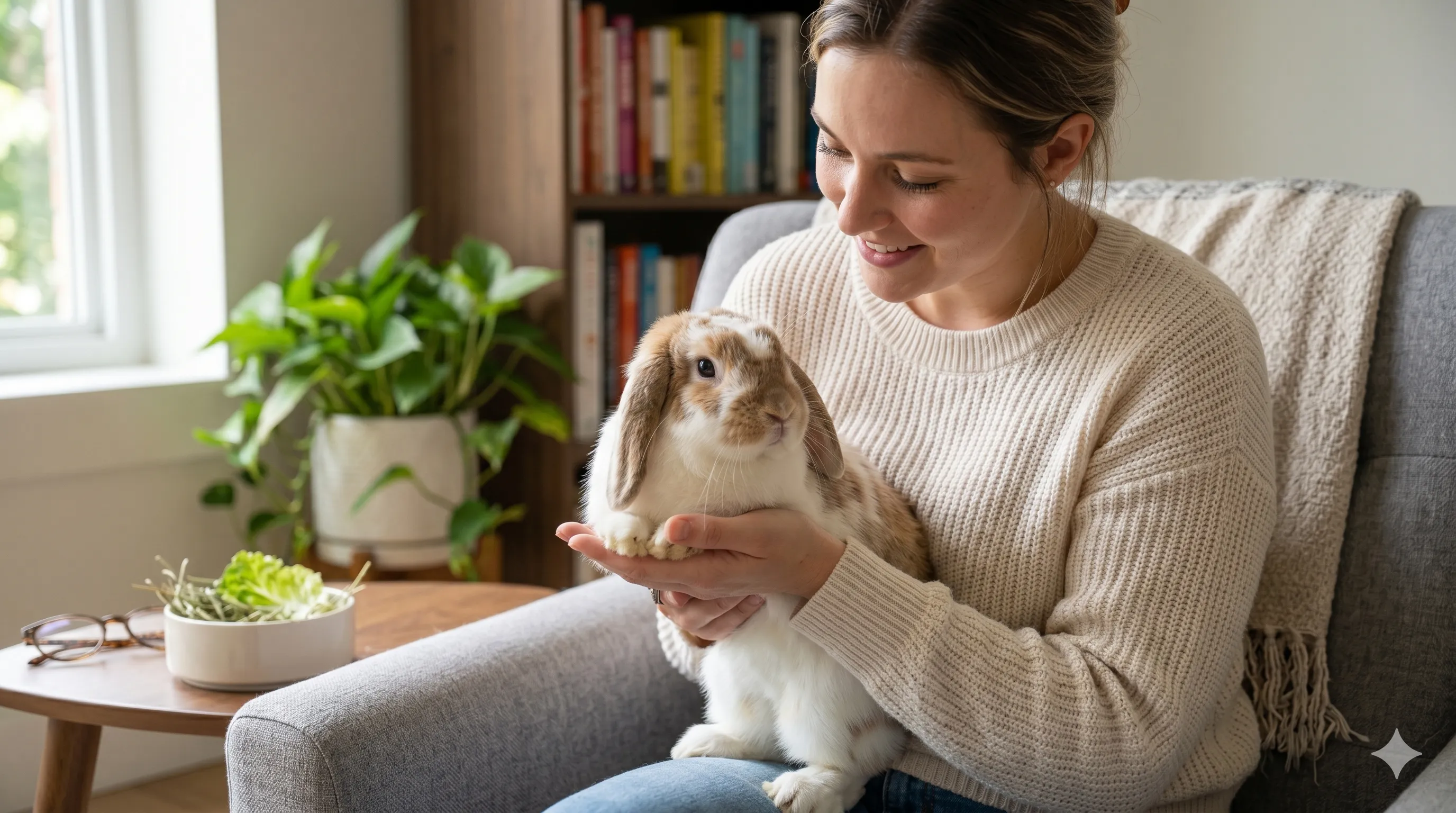
- Merck: visit when rabbits are most active, early morning or evening, to judge personality, and choose a rabbit that looks healthy and is kept in a clean environment.
- Merck: short-haired rabbits need brushing at least twice a week.
- RSPCA: if buying, choose a responsible and reputable breeder and avoid rabbits with extreme physical features.
- RSPCA: crossbreeds can still suffer from conditions caused by lop ears or flat faces.
See our guides to how to take care of a rabbit and how to adopt a rescue rabbit.
Size and Weight
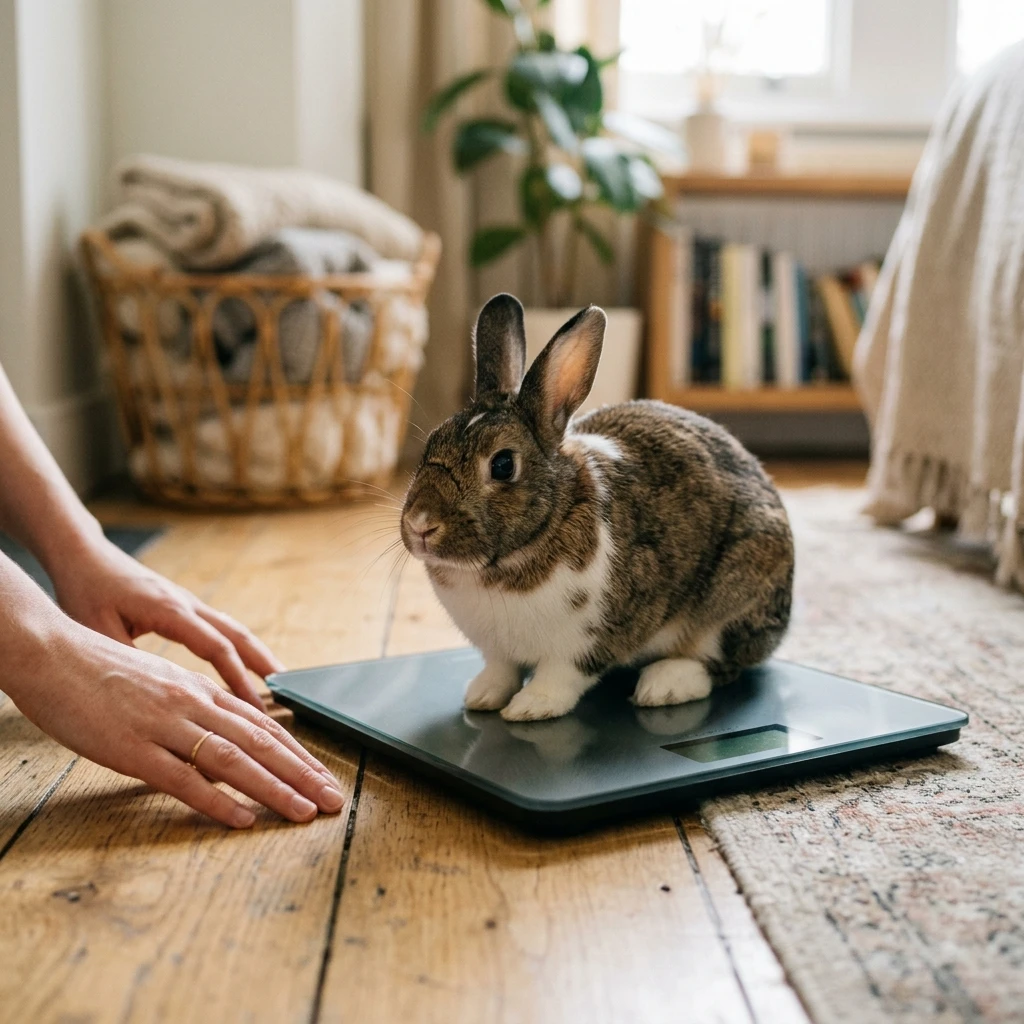
Weight bands by size are on our rabbit weight chart. PetMD gives the weights above for the breeds it covers.
What We Could Not Find a Source For
We found no source on Mini Rex or Himalayan rabbits. We also found no source that ranks any breed as best for beginners. PetMD says the Dutch is a good fit, but its Holland Lop and Flemish Giant pages do not address first-time owners.
Final Thoughts
Temperament varies by individual, and the RSPCA warns that some breed types carry inherited health risks. Ask a licensed veterinarian who treats rabbits, or a rescue, about the rabbit in front of you.
This article is for general education and is not a substitute for veterinary advice. If your rabbit stops eating or seems unwell, contact a licensed veterinarian.
Medical Disclaimer
This content is provided for informational and educational purposes only and should not be considered veterinary, medical, behavioral, or training advice. While we strive for accuracy, we make no guarantees regarding completeness or results. Always consult a licensed veterinarian or qualified pet care professional before making decisions about your pet’s health, diet, or behavior.
AI Illustration Notice
Some images in this article may have been generated or enhanced using artificial intelligence for illustrative purposes.
Frequently Asked Questions
No source ranks breeds. PetMD says the Dutch is a good fit for first-time owners.
The RSPCA says lop-eared rabbits are more prone to ear problems. One study found about 25 percent had ear conditions.
Merck says larger rabbits are often calmer and sturdier while smaller ones are more delicate.
The RSPCA says it always encourages rescuing over buying.
No. PetMD does not cover the Mini Rex or the Himalayan in the pages we read.
Editorial Note
This article is part of PetNurture's educational library.
Topics draw on publicly available educational resources, recognised veterinary organisations, academic publications and established animal welfare references where appropriate.
The specific sources this article draws on are listed in its References section. If you spot an error, please let us know.
References
The information in this article has been reviewed and supported using the following sources.
Merck Veterinary Manual (Laurie Hess DVM DABVP)
Last updated July 2026. Larger rabbits are often calmer and sturdier; smaller rabbits more delicate and need especially careful handling; short-haired rabbits need brushing at least twice a week; visit when rabbits are most active to judge personality. Names no breeds.
Accessed Nov 5, 2026
RSPCA
Genetic health issues in rabbits
No date or author. Lop-eared rabbits are more prone to ear problems (one study about 25 percent); Lionheads and Angoras and dwarf or mini varieties are among purebreds that commonly suffer inherited health issues; giant breeds may suffer osteoarthritis at a younger age; always encourage rescuing over buying; avoid rabbits with extreme physical features.
Accessed Nov 5, 2026
PetMD (Catherine Gose CVT, reviewed by Laurie Hess DVM DABVP)
Updated 20 October 2023. 3.5 to 5.5 pounds and 5 to 10 years; can be skittish or wary at first; brush once or twice a week; prone to uterine cancer in unspayed females and dental problems and GI stasis; fairly easy to care for compared with other breeds and a good fit for first-time owners with supervised children.
Accessed Nov 5, 2026
PetMD (Catherine Gose CVT, reviewed by Laurie Hess DVM DABVP)
Updated 7 July 2023. Maximum 4 pounds; 7 to 10 years; friendly playful energetic but can be skittish; best in a quiet calm household with adults or older children; weekly ear cleaning recommended; no known hereditary health issues but prone to various ailments; does not address first-time owners.
Accessed Nov 5, 2026
PetMD (Catherine Gose CVT, reviewed by Laurie Hess DVM DABVP)
Updated 12 July 2023. 15 to 20 pounds; 8 to 10 years; easygoing and docile; supervise around children; minimum cage 36 inches wide 36 inches tall 120 inches long; sore hocks obesity GI stasis; great pets for people with plenty of space and time.
Accessed Nov 5, 2026
PetMD (Cheryl Lock)
The Five Most Lovable Rabbit Breeds
Published 14 April 2017; no reviewer listed. Lionhead friendly people-bonding sheds more and needs more attention; Rex playful; Netherland Dwarf most do not like being picked up; Mini Lop prone to ear infections and dental problems. Does not cover Mini Rex or Himalayan.
Accessed Nov 5, 2026
Pet Emergency Guidance
Every pet is unique. If your pet exhibits severe symptoms, sudden behavioral changes, or a medical emergency, do not rely on online guides — contact a licensed veterinarian or emergency clinic immediately.
Was this article helpful?
About PetNurture
PetNurture is an educational library of pet care guides, interactive tools and practical resources for pet parents. We work continuously to keep our content accurate and up to date. Reader feedback helps us maintain content quality.
Related Articles
Popular Rabbit Guides