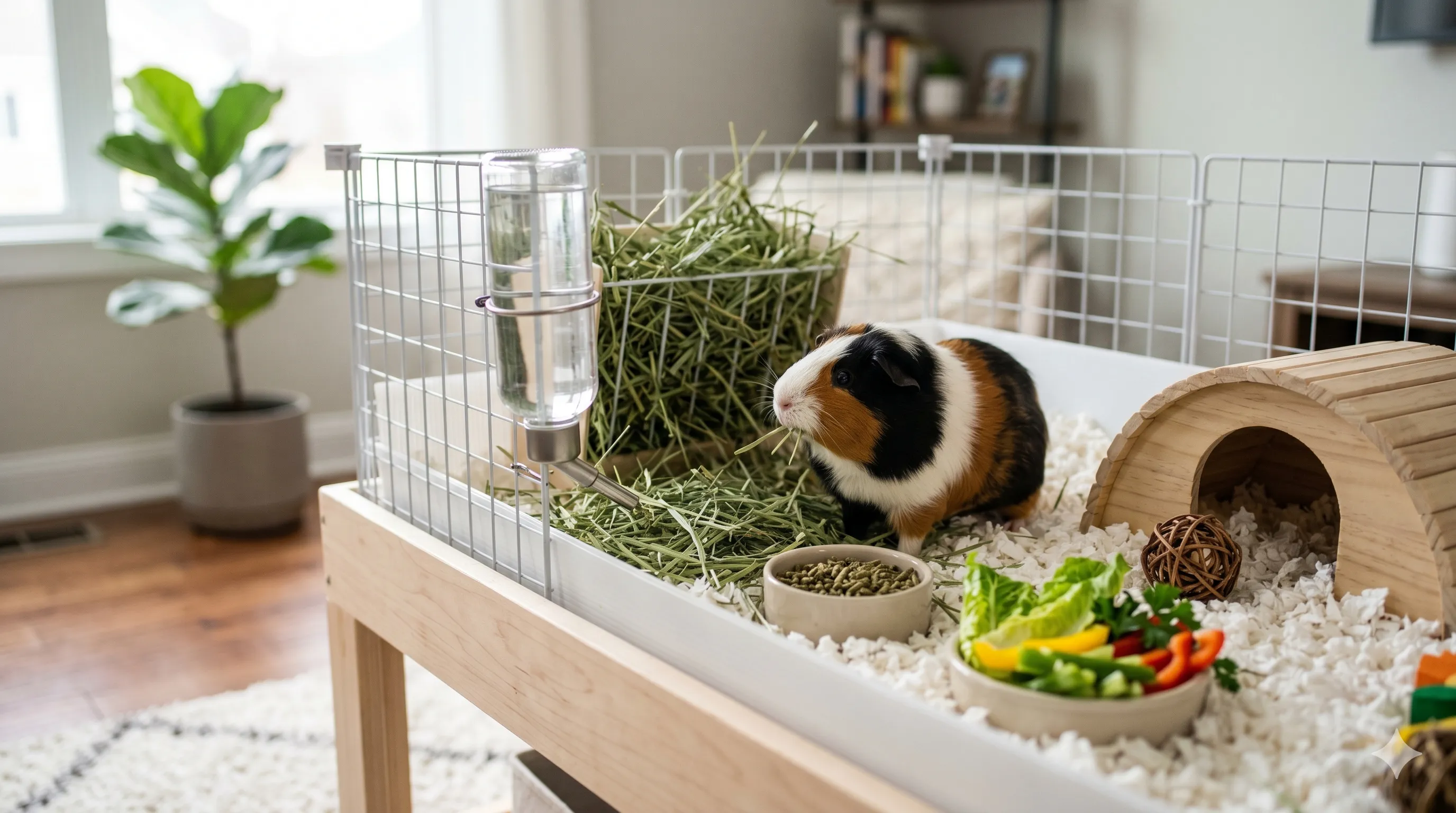
Guinea Pig Age Chart: Years to Human Years & Life Stages
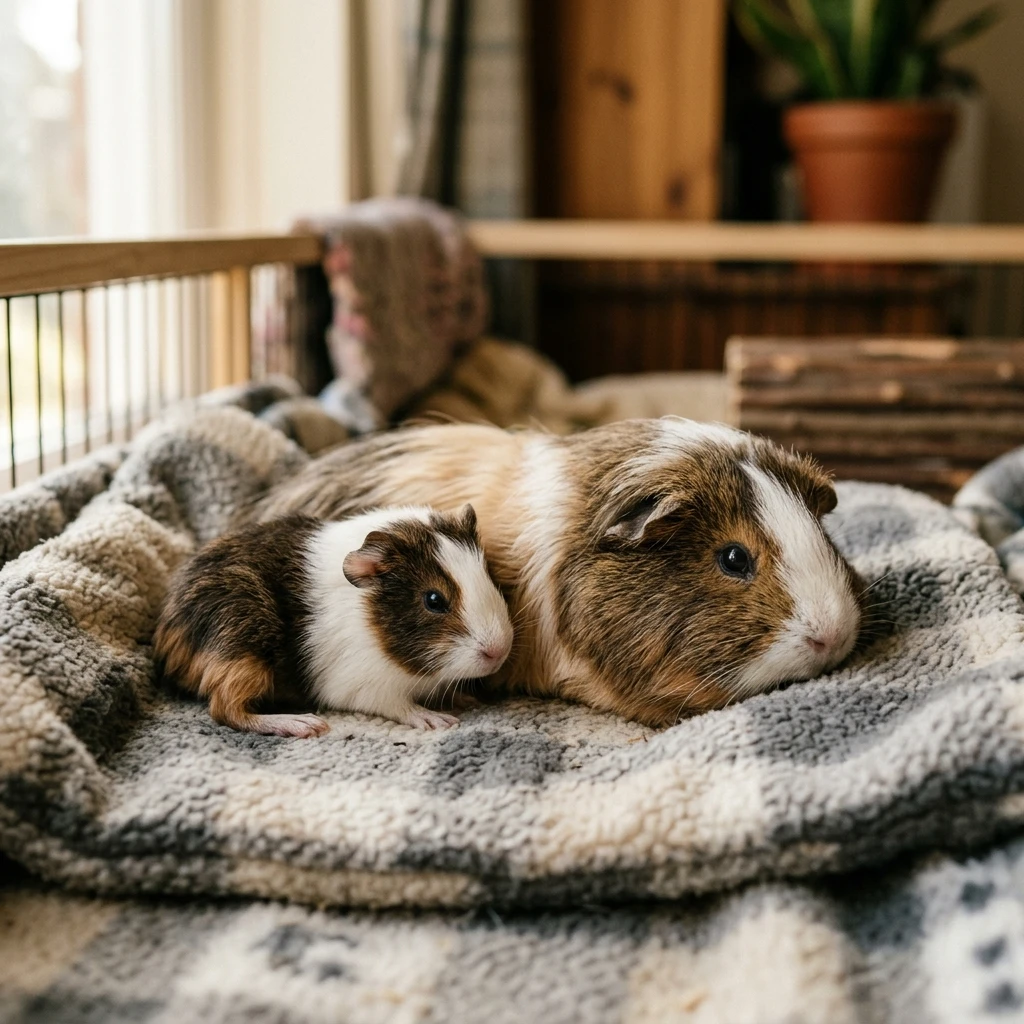
- Why Guinea Pig Age Matters for Care
- Guinea Pig Age Chart: Years to Human Years
- Why This Conversion Isn't an Exact Science
- Guinea Pig Life Stages
- Baby (Birth to 3 Weeks)
- Juvenile (3 Weeks to 4 Months)
- Young Adult (4 Months to 1 Year)
- Adult (1 to 4 Years)
- Senior (4 Years and Older)
- How Long Do Guinea Pigs Live?
- Lifespan by Breed and Coat Type
- What Influences How Long a Guinea Pig Lives
- How to Tell a Guinea Pig's Age If You Don't Know It
- Teeth Condition
- Nail Appearance
- Coat and Mobility
- What a Vet Checks During an Age Estimate
- Signs Your Guinea Pig Is Entering Her Senior Years
- Caring for a Senior Guinea Pig
- More Frequent Vet Checkups
- Diet Adjustments
- Comfort and Accessibility
- Expert Tips for Tracking Guinea Pig Age and Health
- Common Mistakes to Avoid
- Final Thoughts
Note: This article is for informational purposes only and does not replace professional veterinary advice.
Quick Answer
A commonly used approximation treats 1 guinea pig year as roughly equal to 50 human years, though this is a rough gauge rather than an exact conversion. Most guinea pigs live 5 to 8 years and are generally considered senior starting around 4 years old, when more frequent vet checkups become important.
Knowing roughly how old a guinea pig is in human terms helps explain a lot, from why a two year old is still bursting with energy to why a five year old suddenly needs softer bedding and more frequent vet visits. This guide covers a guinea pig years to human years chart, the general life stages a guinea pig passes through, and the physical signs that can help estimate age when a guinea pig's exact birthdate is unknown, such as with a rescue or shelter adoption.
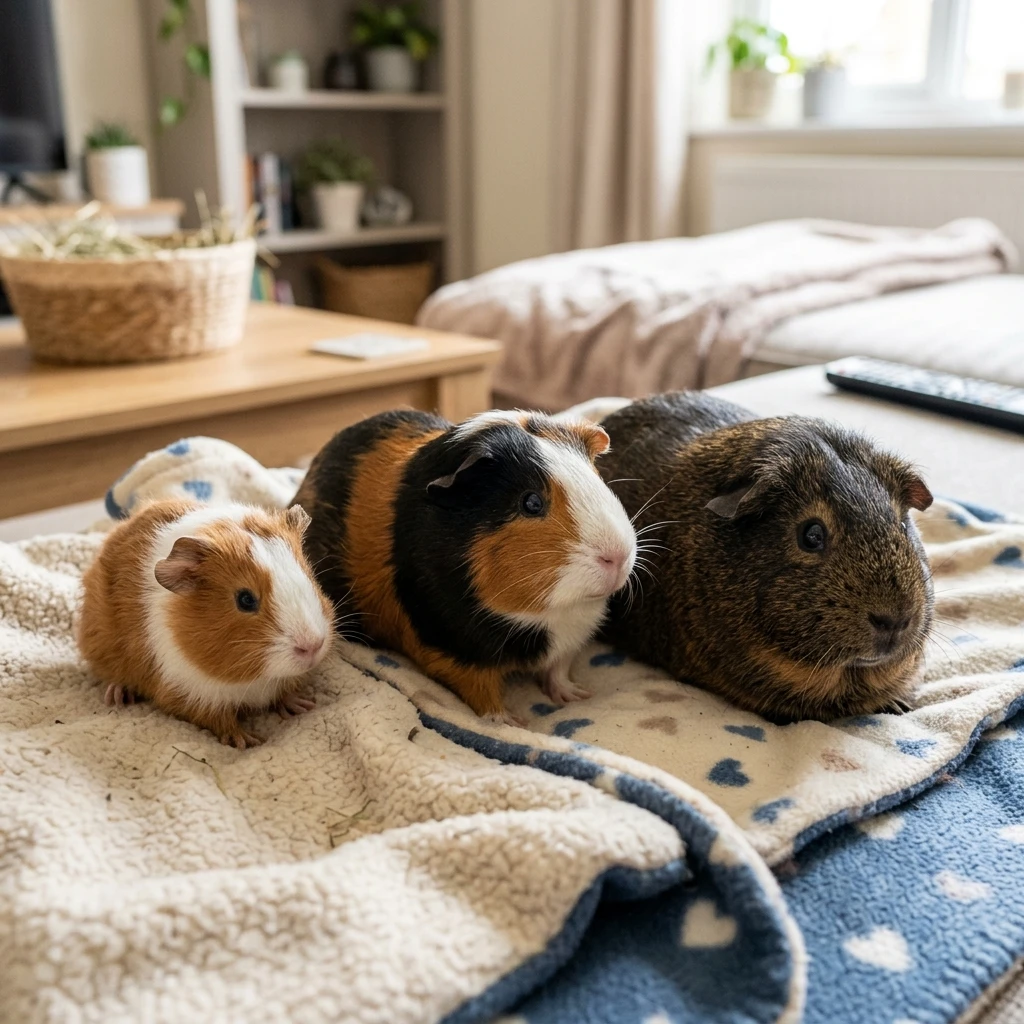
Why Guinea Pig Age Matters for Care
A guinea pig's nutritional needs, ideal vet checkup frequency, and even the risks worth watching for all shift as she moves through different life stages. A young guinea pig in her first year has very different care priorities than a guinea pig in her senior years, so having even a rough sense of where she falls on that timeline helps an owner adjust care before small issues become bigger ones. To see where your own pet falls, our free guinea pig age calculator converts age into human years and life stage.
This matters even more for guinea pigs adopted without paperwork, since shelters and rescues frequently estimate age from physical signs rather than a documented birthdate.
Age also explains a lot of behavior that owners sometimes mistake for a personality change. A guinea pig who suddenly seems less social, slower to greet you at feeding time, or less interested in exploring isn't necessarily developing a different temperament, since that shift is often the earliest behavioral hint of an age-related change happening underneath rather than anything to do with her personality.
Guinea Pig Age Chart: Years to Human Years
Guinea pig years cannot be converted to human years with scientific precision, since the two species mature and age along very different timelines. That said, a commonly used approximation, based on a guinea pig's roughly 5 to 8 year lifespan compared to an average human lifespan, gives a rough sense of scale that many owners find useful.
- 1 guinea pig year: roughly equivalent to a 50 year old human
- 2 guinea pig years: roughly equivalent to a 68 year old human
- 3 guinea pig years: roughly equivalent to a 92 year old human
- 4 guinea pig years: roughly equivalent to a 116 year old human
- 5 guinea pig years: roughly equivalent to a 140 year old human
- 6 guinea pig years: roughly equivalent to a 164 year old human
- 7 guinea pig years: roughly equivalent to a 188 year old human
- 8 guinea pig years: roughly equivalent to a 212 year old human
Why This Conversion Isn't an Exact Science
This chart uses a simple straight-line ratio, and the further it stretches past a guinea pig's typical lifespan the less biologically meaningful the number becomes, which is exactly why the later rows produce numbers well beyond any real human lifespan. Guinea pigs also mature far faster than humans in their first year and then age at a comparatively slower pace afterward, so a single fixed ratio can never fully capture the real aging curve. Treat this chart as a fun, rough gauge rather than a precise scientific conversion, and lean on the life stages below for a more accurate picture of where a guinea pig actually is developmentally.
Guinea Pig Life Stages
Baby (Birth to 3 Weeks)
Guinea pigs are born fully furred with their eyes open and can nibble solid food within days, which is unusual among small mammals. This stage is short and fast-growing, with weight climbing quickly from a starting point of around 85 to 100 grams at birth.
Juvenile (3 Weeks to 4 Months)
Weaning is typically complete by around 3 weeks old, and this stage includes a milestone that matters a great deal for households with mixed-sex groups: guinea pigs reach sexual maturity as early as 2 to 3 months old, which is much earlier than most new owners expect.
Young Adult (4 Months to 1 Year)
Growth slows considerably during this stage as a guinea pig approaches her adult size, typically finishing by around 12 to 14 months old. Energy and activity levels are usually at their peak during this window.
Adult (1 to 4 Years)
Most guinea pigs are considered fully mature adults through this stage, with a stable weight, steady energy, and few age-related health concerns beyond routine care.
Senior (4 Years and Older)
Many vets consider a guinea pig to be entering her senior years starting around 4 years old, even though the average lifespan runs to 5 to 8 years. This is the stage where the physical signs covered later in this guide, along with more frequent vet checkups, become especially important.
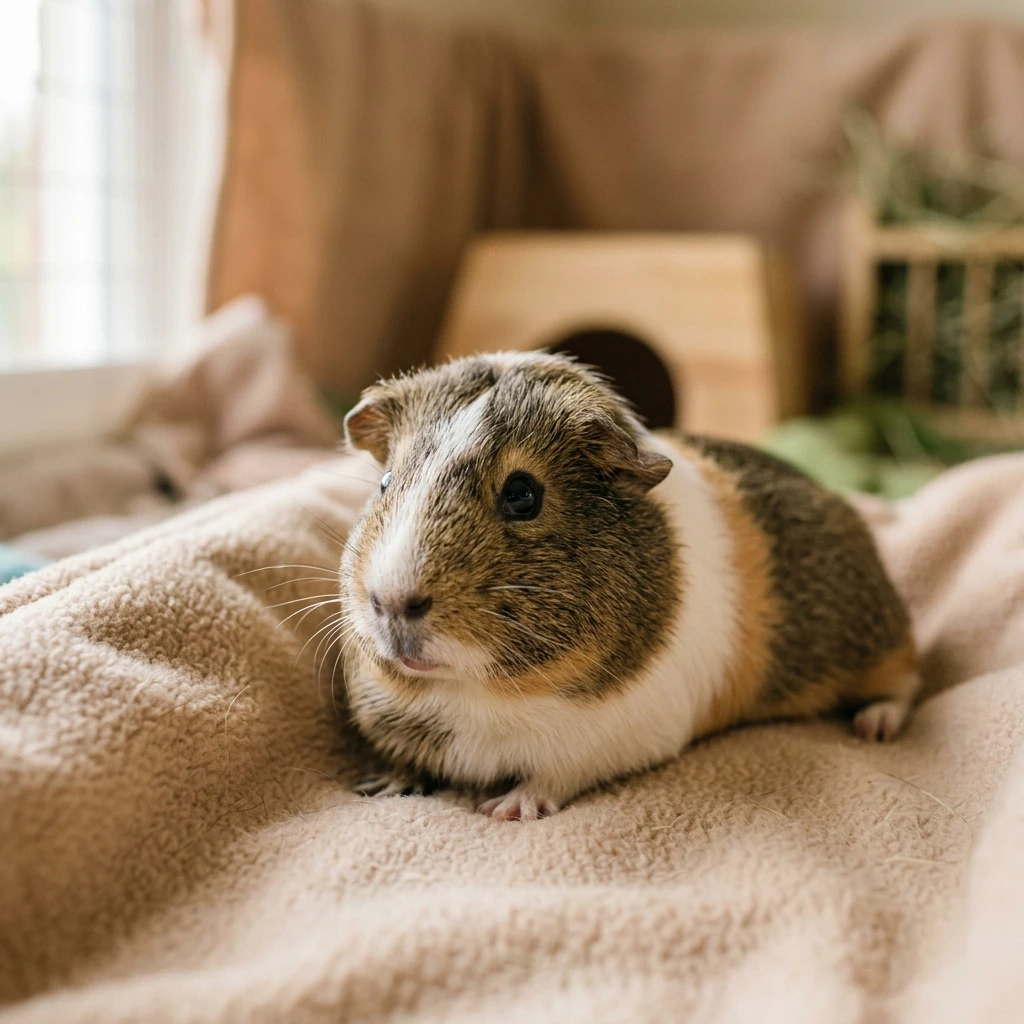
How Long Do Guinea Pigs Live?
The average guinea pig lives between 5 and 8 years with good care, though individual lifespan varies by genetics, diet, and how quickly any health issues are caught and treated.
Lifespan by Breed and Coat Type
Some longer-haired breeds such as the silky-coated Peruvian have been reported to live 12 to 14 years in some cases, well above the typical range, while hairless breeds such as the Skinny Pig tend to run shorter, often in the 3 to 5 year range, due to the extra care their skin and temperature regulation require.
What Influences How Long a Guinea Pig Lives
- A hay-based diet with adequate vitamin C, since guinea pigs cannot produce their own vitamin C the way many other animals can
- Regular vet checkups that catch dental disease, respiratory illness, or tumors early rather than after they progress
- A clean, appropriately sized enclosure that reduces stress and the risk of infection
- Genetics and breed, which can meaningfully shift the upper end of a guinea pig's expected lifespan
How to Tell a Guinea Pig's Age If You Don't Know It
Rescue and shelter guinea pigs often arrive without a documented birthdate, so vets and experienced owners rely on a combination of physical signs to estimate age rather than any single definitive marker.
Teeth Condition
Small, bright white teeth generally suggest a young guinea pig, teeth that look duller and more worn point toward roughly the 5 year mark, and teeth that appear brittle or show cracking suggest an older guinea pig, often 7 years or beyond. Overgrown or misaligned teeth can produce similar-looking wear at any age, so a vet should rule that out separately before treating tooth appearance as a reliable age marker on its own.
Nail Appearance
Clear or thin nails are typically seen in guinea pigs under a year old, while nails that have turned yellow or cream colored and grown noticeably thicker usually indicate an older guinea pig.
Coat and Mobility
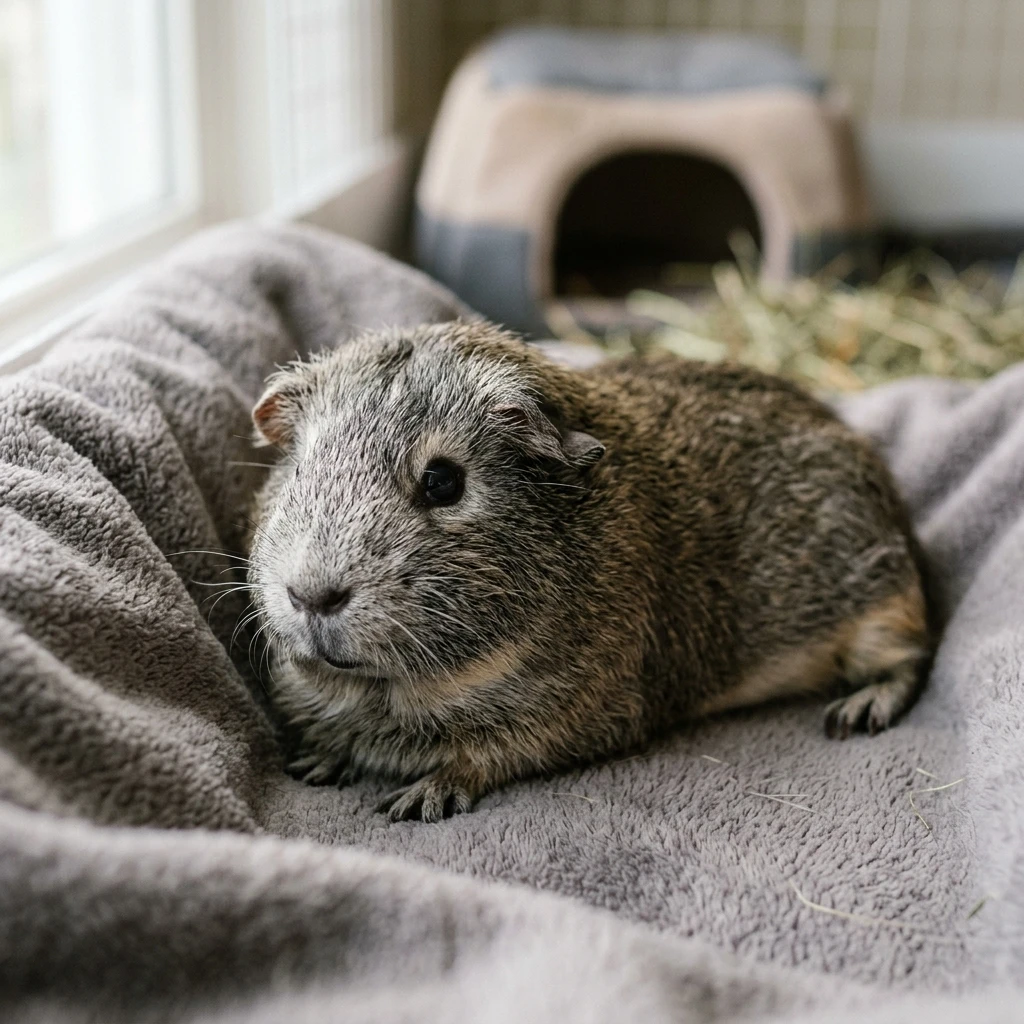
Graying fur, especially around the mouth and nose, is often one of the earliest visible signs of aging. A guinea pig that has noticeably slowed down, moves stiffly, or has stopped using ramps she once used easily is also more likely to be in her senior years.
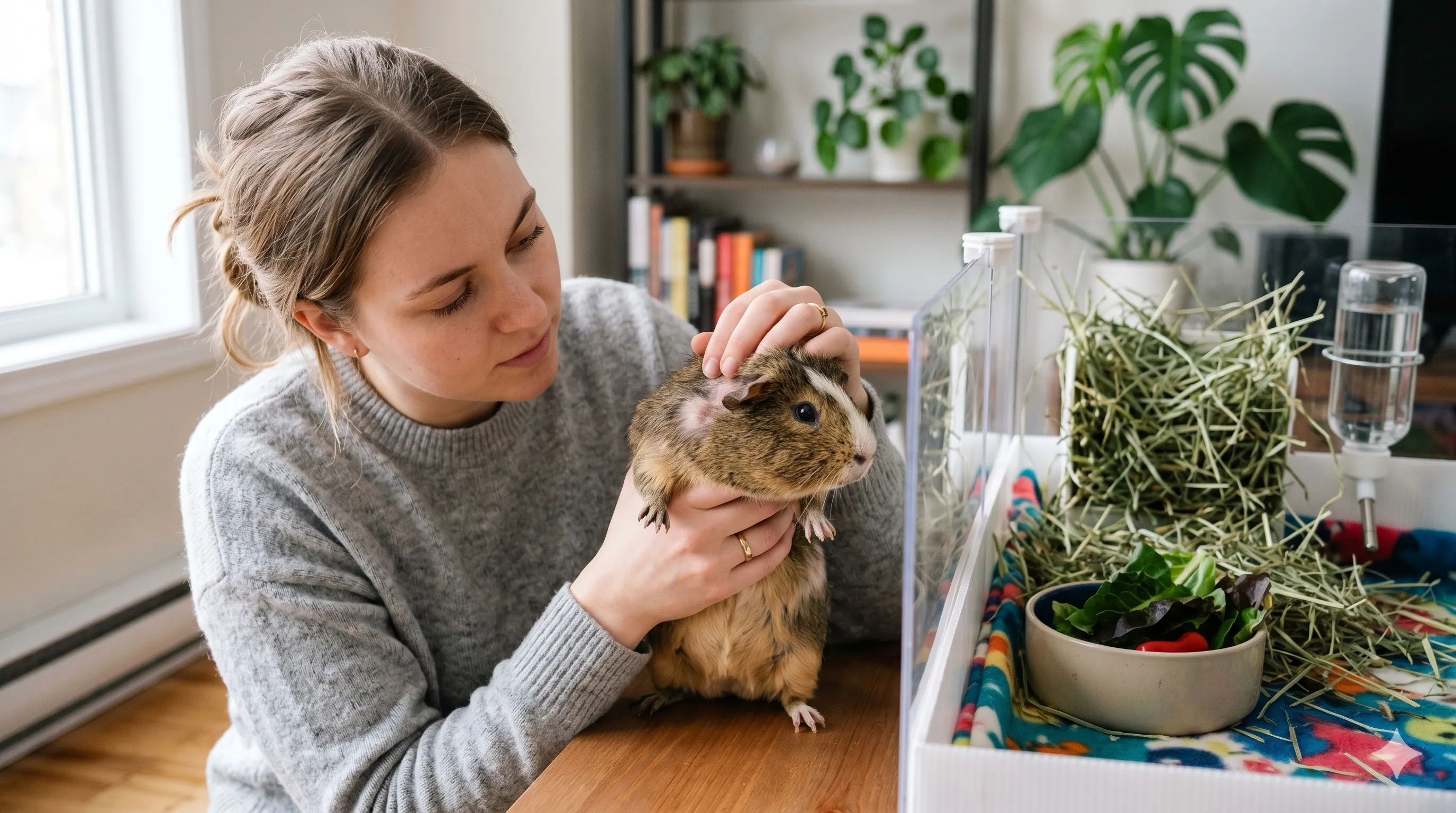
None of these signs alone can pinpoint an exact age, and this becomes especially true once a guinea pig reaches full adult size, since it is very difficult to gauge a fully grown adult guinea pig's precise age from appearance alone. An exotic-animal vet examining teeth, nails, coat, and overall body condition together can usually estimate a general age range even without paperwork.
What a Vet Checks During an Age Estimate
Beyond the visible signs an owner can check at home, a vet doing a wellness exam will typically also assess muscle tone along the spine and hindquarters, feel for any joint stiffness while gently moving each leg through its normal range of motion, and check paw pads for the thickening that tends to develop over years of normal wear. Combining these hands-on findings with teeth, nail, and coat observations gives a far more reliable estimate than any single check performed alone, which is exactly why a first vet visit is worth prioritizing for any guinea pig adopted without history.
Signs Your Guinea Pig Is Entering Her Senior Years
Aging in guinea pigs tends to show up gradually across several small changes rather than one obvious moment, which is part of why regular observation matters more as a guinea pig gets older.
- Graying fur around the mouth and nose, often one of the first visible signs
- Slower movement and fewer popcorns starting around 4 to 5 years old
- Curling toenails, often starting with the outer toe, that can become thick and twisted over time
- Gradual loss of muscle tone and weight alongside reduced overall activity
- Sleeping more during the day than she used to
- Joint stiffness that can point toward arthritis, especially when getting up or moving around the enclosure
- Vision changes such as cloudiness in the eyes or increased hesitation in low light, which can point toward cataracts
Caring for a Senior Guinea Pig
A guinea pig's care routine benefits from a few adjustments once she reaches her senior years, since her body is less able to compensate for small problems than it was in her younger years.
More Frequent Vet Checkups
Many vets recommend increasing wellness checkups from once a year to roughly twice a year once a guinea pig reaches her senior stage, since this makes it far more likely that dental disease, tumors, or organ changes are caught early rather than after they have already progressed.
Diet Adjustments
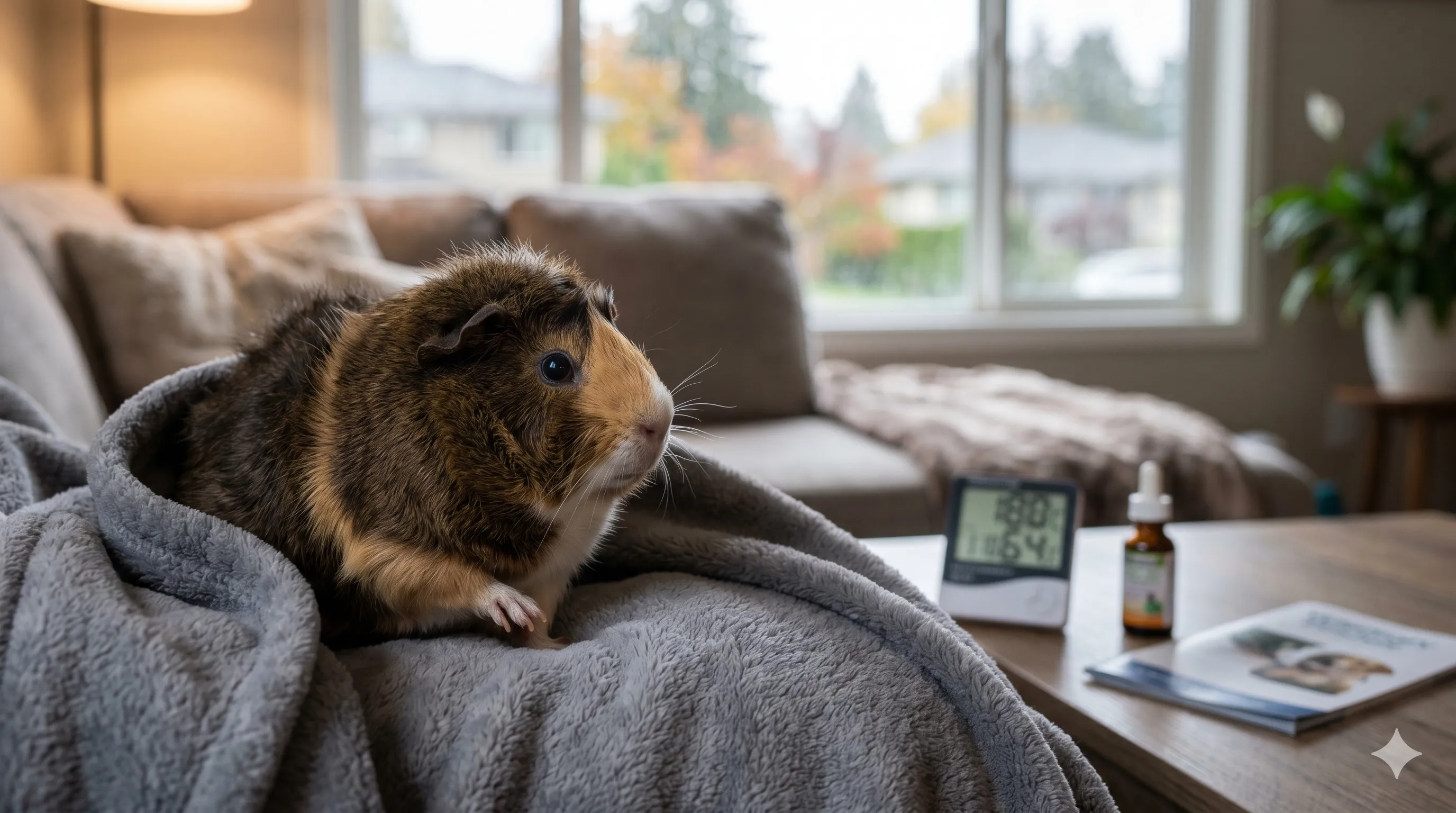
A senior-appropriate diet that stays rich in vitamin C, keeps calcium in check, and continues to center on quality grass hay supports both bone and urinary health as a guinea pig ages. Feeding the right amount of hay remains just as important in the senior years as it was earlier in life, since appetite and hay intake often shift gradually as a guinea pig grows older.
Comfort and Accessibility
Choosing a cage setup with low, easy-to-reach entry points and soft bedding such as fleece liners reduces strain on aging joints and makes daily movement easier for a guinea pig who has slowed down or developed arthritis.
Expert Tips for Tracking Guinea Pig Age and Health
- Keep a simple record of adoption date, estimated age at adoption, and any vet-estimated age range so future changes have a reference point.
- Watch for the combination of signs rather than a single one, since teeth, nails, coat, and mobility together give a far more reliable picture than any single marker alone.
- Increase observation frequency, not just vet visits, once a guinea pig passes the 4 year mark, since subtle day to day changes are often the earliest clue something is developing.
- Remember that breed and coat type shift the expected lifespan meaningfully, so a Peruvian or Skinny Pig's timeline can look quite different from an American or Abyssinian's.
Common Mistakes to Avoid
- Treating the human years chart as a precise scientific conversion instead of the rough approximation it actually is
- Assuming a rescue guinea pig's age is unknowable rather than getting a vet's physical-sign-based estimate
- Waiting until obvious symptoms appear before increasing vet checkup frequency around the 4 year senior milestone
- Overlooking early signs like graying fur or curling nails simply because a guinea pig still seems energetic overall
- Housing an unaltered mixed-sex pair without accounting for sexual maturity arriving as early as 2 to 3 months old
Final Thoughts
A guinea pig years to human years chart is a fun, rough way to picture age, but the real value comes from understanding her actual life stage, from the fast-growing baby and juvenile months through the senior years that typically begin around 4 years old. Watching for physical signs like graying fur, teeth and nail changes, and shifts in mobility gives a far more accurate read on where a guinea pig stands than any single number, especially for a rescue guinea pig without a documented birthdate.
For more on the everyday habits that support a guinea pig at every life stage, this complete guinea pig care guide covers the fundamentals every owner should have in place.
The most useful habit at any age is watching for gradual physical changes rather than relying on a birthdate or a single chart to judge how a guinea pig is really doing.
This guide is for general education and is not a substitute for veterinary care. Any guinea pig showing sudden changes in mobility, appetite, or behavior, regardless of estimated age, should be seen by an exotic-animal veterinarian.
Medical Disclaimer
This content is provided for informational and educational purposes only and should not be considered veterinary, medical, behavioral, or training advice. While we strive for accuracy, we make no guarantees regarding completeness or results. Always consult a licensed veterinarian or qualified pet care professional before making decisions about your pet’s health, diet, or behavior.
AI Illustration Notice
Some images in this article may have been generated or enhanced using artificial intelligence for illustrative purposes.
Frequently Asked Questions
A common approximation treats 1 guinea pig year as roughly equal to 50 human years based on typical lifespans. This is a rough gauge rather than a scientifically precise conversion since the two species age along very different timelines.
Using the commonly cited ratio a 1 year old guinea pig is roughly equivalent to a 50 year old human. Growth and maturity happen very quickly in the first year of a guinea pig's life.
Using the commonly cited ratio a 5 year old guinea pig works out to roughly 140 in human years. By this age a guinea pig is generally considered a senior and often benefits from more frequent vet checkups.
Most guinea pigs live between 5 and 8 years with good care. Some longer haired breeds have been reported to live 12 to 14 years while hairless breeds often live closer to 3 to 5 years.
Many vets consider a guinea pig to be entering her senior years starting around 4 years old. This is generally when increased vet checkups and diet adjustments start to matter more.
Vets and experienced owners look at teeth condition nail color and thickness coat graying and mobility together to estimate a general age range. No single sign can pinpoint an exact age especially once a guinea pig reaches full adult size.
Guinea pigs can reach sexual maturity as early as 2 to 3 months old. This surprises many new owners and matters a great deal for households with mixed sex groups.
Graying fur around the mouth and nose is often one of the earliest visible signs. Slower movement and fewer popcorns typically follow starting around 4 to 5 years old.
Yes. Silky coated breeds like the Peruvian have been reported living 12 to 14 years in some cases while hairless breeds such as the Skinny Pig often live a shorter 3 to 5 years due to the extra skin and temperature care they require.
Many vets recommend increasing checkups from once a year to roughly twice a year once a guinea pig reaches her senior stage. This makes it far more likely that dental or organ issues are caught early.
Yes. Clear or thin nails are typically seen in guinea pigs under a year old while nails that turn yellow or cream colored and grow thicker usually point toward an older guinea pig.
No. It uses a simple straight line ratio that becomes less biologically meaningful the further it stretches past a guinea pig's typical lifespan. It works best as a fun rough gauge rather than an exact conversion.
Normal vs. Concerning Symptoms
A general guide to help you tell everyday variation apart from something worth a vet visit. This is educational context, not a diagnosis.
| Symptom | What's Normal | When to Be Concerned |
|---|---|---|
| Coat | Even coat color with no unusual graying | Noticeable graying around the mouth and nose, especially before age 4 |
| Movement | Active with regular popcorning and normal use of ramps | Slower movement, fewer popcorns, or avoiding ramps she once used |
| Nails | Clear or thin nails typical of a younger guinea pig | Thick, yellow or cream colored nails typical of an older guinea pig |
| Teeth | Small bright white teeth typical of a young guinea pig | Dull teeth around 5 years or brittle cracking teeth around 7 years and beyond |
| Vision | Clear eyes and confident movement in low light | Cloudy eyes or increased hesitation and bumping into things in dim light |
What Should I Do Next?
A general decision guide — always use your own judgement and contact a veterinarian for anything beyond routine care.
- Check teeth condition Small white teeth suggest a younger guinea pig while dull or brittle cracking teeth suggest an older one.
- Check nail color and thickness Clear thin nails point toward under a year old while thick yellow or cream nails point toward an older guinea pig.
- Look for coat graying and mobility changes Graying around the mouth and nose along with slower movement are common early aging signs.
- Combine all the signs rather than relying on one No single physical sign is definitive, so teeth, nails, coat, and mobility together give the most reliable estimate.
- Ask a vet to confirm a general age range An exotic-animal vet examining body condition alongside these signs can usually narrow down an approximate age even without paperwork.
Common Mistakes
- Treating the human years chart as a precise scientific conversion instead of the rough approximation it actually is
- Assuming a rescue guinea pig's age is unknowable rather than getting a vet's physical-sign-based estimate
- Waiting until obvious symptoms appear before increasing vet checkup frequency around the 4 year senior milestone
- Overlooking early signs like graying fur or curling nails simply because a guinea pig still seems energetic overall
- Housing an unaltered mixed-sex pair without realizing sexual maturity can arrive as early as 2 to 3 months old
Prevention Tips
- Schedule twice-yearly vet checkups once a guinea pig reaches around 4 years old
- Watch for graying fur, curling nails, and mobility changes as early rather than late warning signs
- Keep a hay-rich, vitamin C adequate diet consistent across every life stage
- Track weight weekly, since a stable trend is one of the clearest signs aging is going smoothly
- Provide low-entry housing and soft bedding once mobility starts to slow down
- Separate mixed-sex guinea pigs well before 2 to 3 months old if breeding isn't intended
Illustrative Example
Consider a shelter that takes in a guinea pig surrendered without any adoption paperwork or known birthdate. The vet on staff checks her teeth and finds them dull rather than bright white, notices her nails have turned a yellowish color and grown noticeably thick, and sees light graying around her nose. Taken together, these signs point toward a guinea pig in the range of 5 to 6 years old rather than a young adult. That estimate lets the new adopter start twice-yearly vet checkups and a senior-appropriate diet right away instead of waiting until more obvious symptoms appeared months or years later.
Practical Checklist
- Check teeth color and condition for a rough age clue
- Check nail color and thickness for a rough age clue
- Look for graying fur around the mouth and nose
- Watch mobility and activity level for signs of slowing down
- Increase vet checkups to twice yearly around age 4
- Adjust diet and housing for comfort once senior signs appear
Editorial Note
This article is part of PetNurture's educational library.
Topics draw on publicly available educational resources, recognised veterinary organisations, academic publications and established animal welfare references where appropriate.
The specific sources this article draws on are listed in its References section. If you spot an error, please let us know.
References
The information in this article has been reviewed and supported using the following sources.
PetMD
How Long Do Guinea Pigs Live? Average Lifespan
Confirms average guinea pig lifespan, breed-related lifespan variation, and key factors that influence longevity; supports the Lifespan and What Influences Lifespan sections.
Accessed Aug 20, 2026
Merck Veterinary Manual
Disorders and Diseases of Guinea Pigs
Confirms age-related health considerations and the importance of regular veterinary monitoring in guinea pigs; supports the Senior Care and vet-checkup guidance in this article.
Accessed Aug 20, 2026
Oxbow Animal Health
Guinea Pig Lifespan and Life Stages
Confirms general life-stage progression and senior-age onset used to structure the Life Stages and Senior Signs sections.
Accessed Aug 20, 2026
Pet Emergency Guidance
Every pet is unique. If your pet exhibits severe symptoms, sudden behavioral changes, or a medical emergency, do not rely on online guides — contact a licensed veterinarian or emergency clinic immediately.
About PetNurture
PetNurture is an educational library of pet care guides, interactive tools and practical resources for pet parents. We work continuously to keep our content accurate and up to date. Reader feedback helps us maintain content quality.
Related Articles
Popular Guinea Pig Guides
Guinea Pig
Guinea Pig Feeding Calculator
Calculate daily food portions for your guinea pig by weight.
Guinea Pig
Guinea Pig Cage Size Calculator
Find the minimum recommended cage size for your guinea pigs.