How to Take Care of a Guinea Pig (Complete Beginner's Guide)
- Why Proper Care Matters
- Choosing Your Guinea Pig
- Housing Requirements
- Bedding
- Cage Setup and Enrichment
- Diet Essentials
- Hay
- Vegetables and Vitamin C
- Pellets and Water
- Foods and Treats to Avoid
- Daily, Weekly, and Monthly Care Routine
- Social Needs
- Handling and Building Trust
- Grooming
- Health Monitoring
- Expert Tips for New Owners
- Common Beginner Mistakes
- Final Thoughts
Note: This article is for informational purposes only and does not replace professional veterinary advice.
Guinea pigs are friendly, social, and relatively low-maintenance compared with many small pets, which makes them a popular choice for first-time owners and families. But "low-maintenance" doesn't mean "no maintenance" — guinea pigs have specific needs around housing, diet, and daily attention that are easy to get wrong if you're new to them. Get the basics right and a guinea pig can be an affectionate, expressive companion for years. This guide walks through everything a beginner needs to know: choosing a guinea pig, setting up their home, feeding them properly, and recognizing when something needs a vet's attention. Their needs also shift as they get older, and our guide to guinea pig age in human years puts a guinea pig's life stages into human-year terms.
Why Proper Care Matters
Guinea pigs are prey animals by instinct, which means they tend to hide signs of stress or illness rather than show them openly. That makes consistent, informed care more important than it might seem — small oversights in diet or housing can turn into real health problems before they're obvious. The good news is that most guinea pig care comes down to a short list of well-established essentials, covered in full below. Weighing your guinea pig regularly is one simple way to catch problems early, and our free guinea pig weight checker shows typical ranges by age and sex.
Choosing Your Guinea Pig
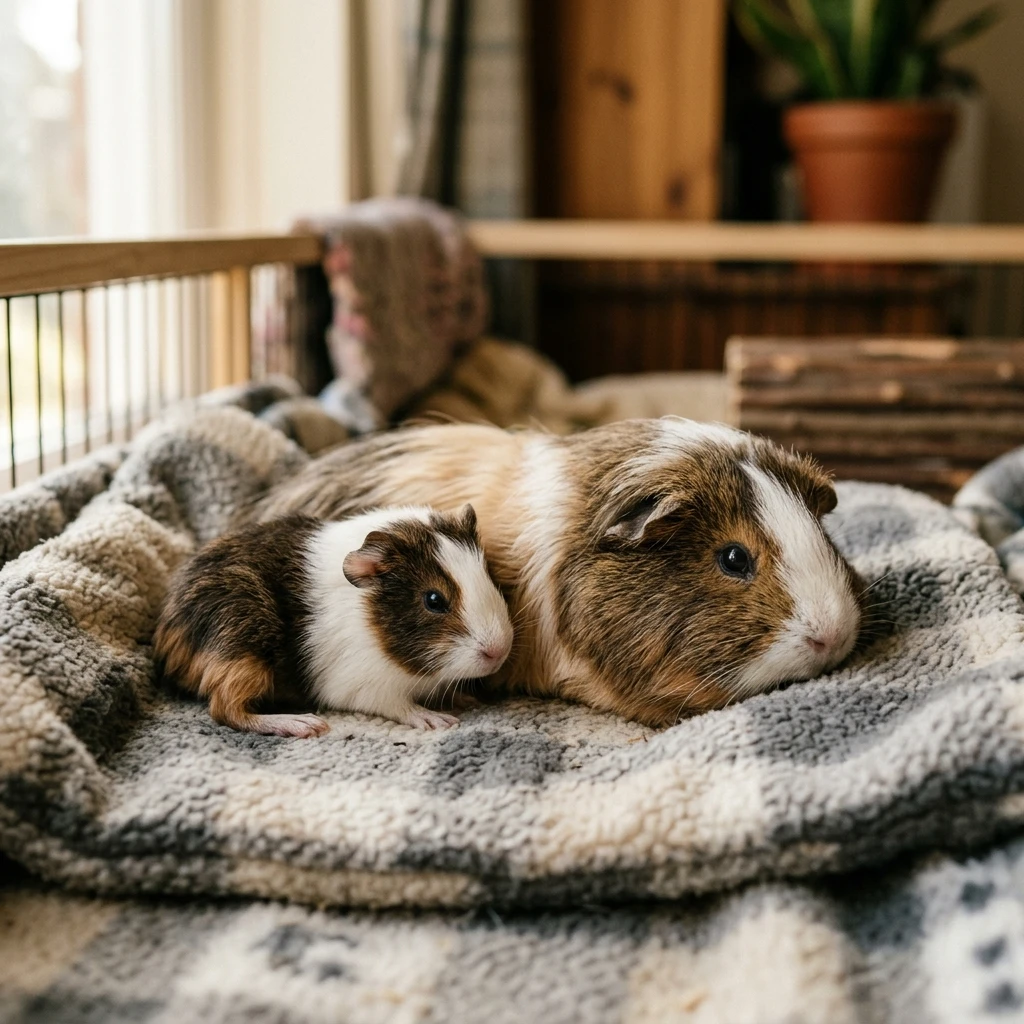
Guinea pigs are highly social and typically do best living with at least one other compatible guinea pig rather than alone. If you're adopting for the first time, consider bringing home a same-sex pair or asking a shelter about already-bonded guinea pigs. Breed matters less for beginners than temperament and coat type — short-haired breeds are considerably easier to groom than long-haired ones, which is worth factoring in if this is your first small pet. If you're still deciding, our roundup of best guinea pig breeds for beginners breaks down temperament and coat differences breed by breed.
Housing Requirements
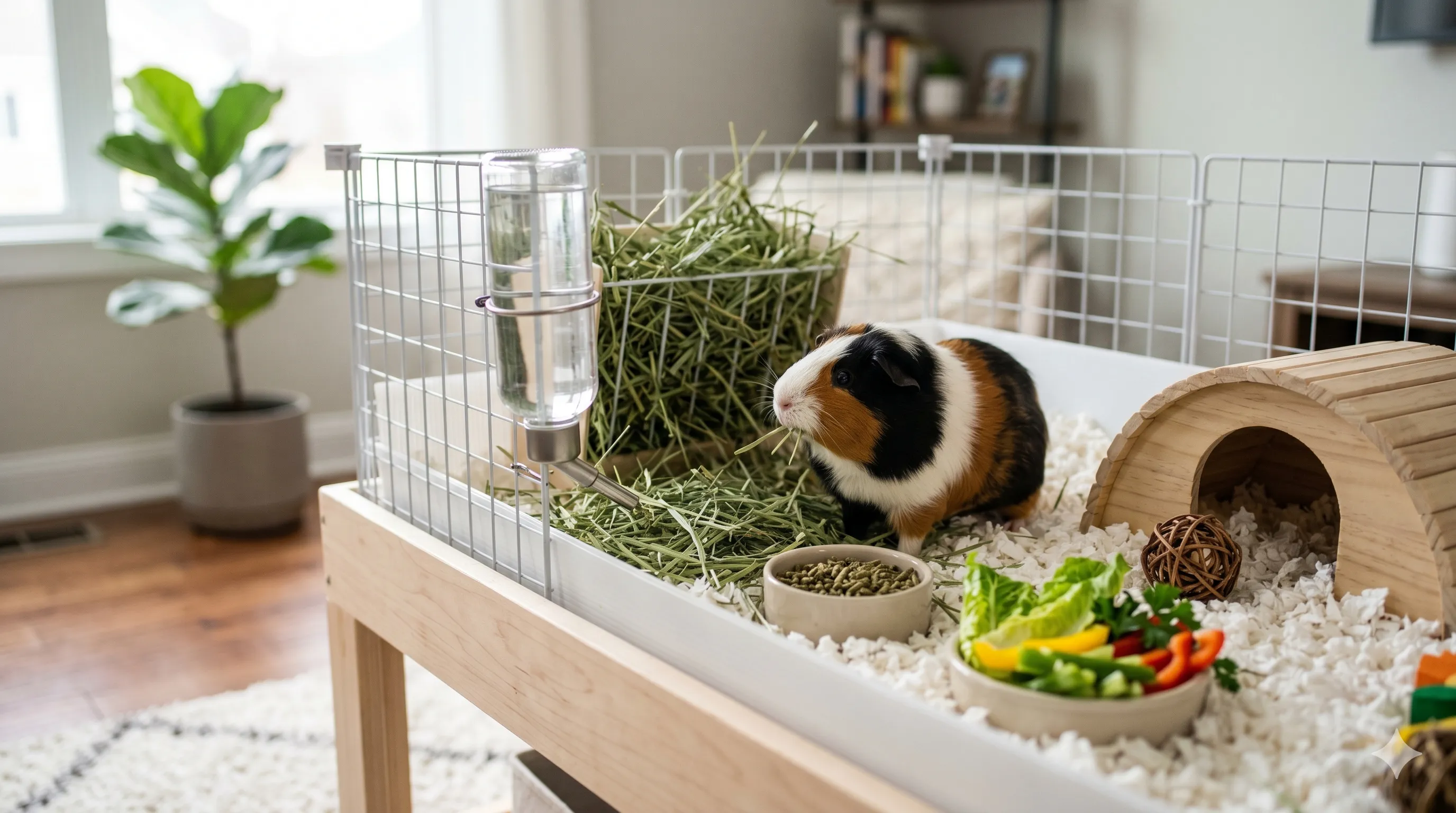
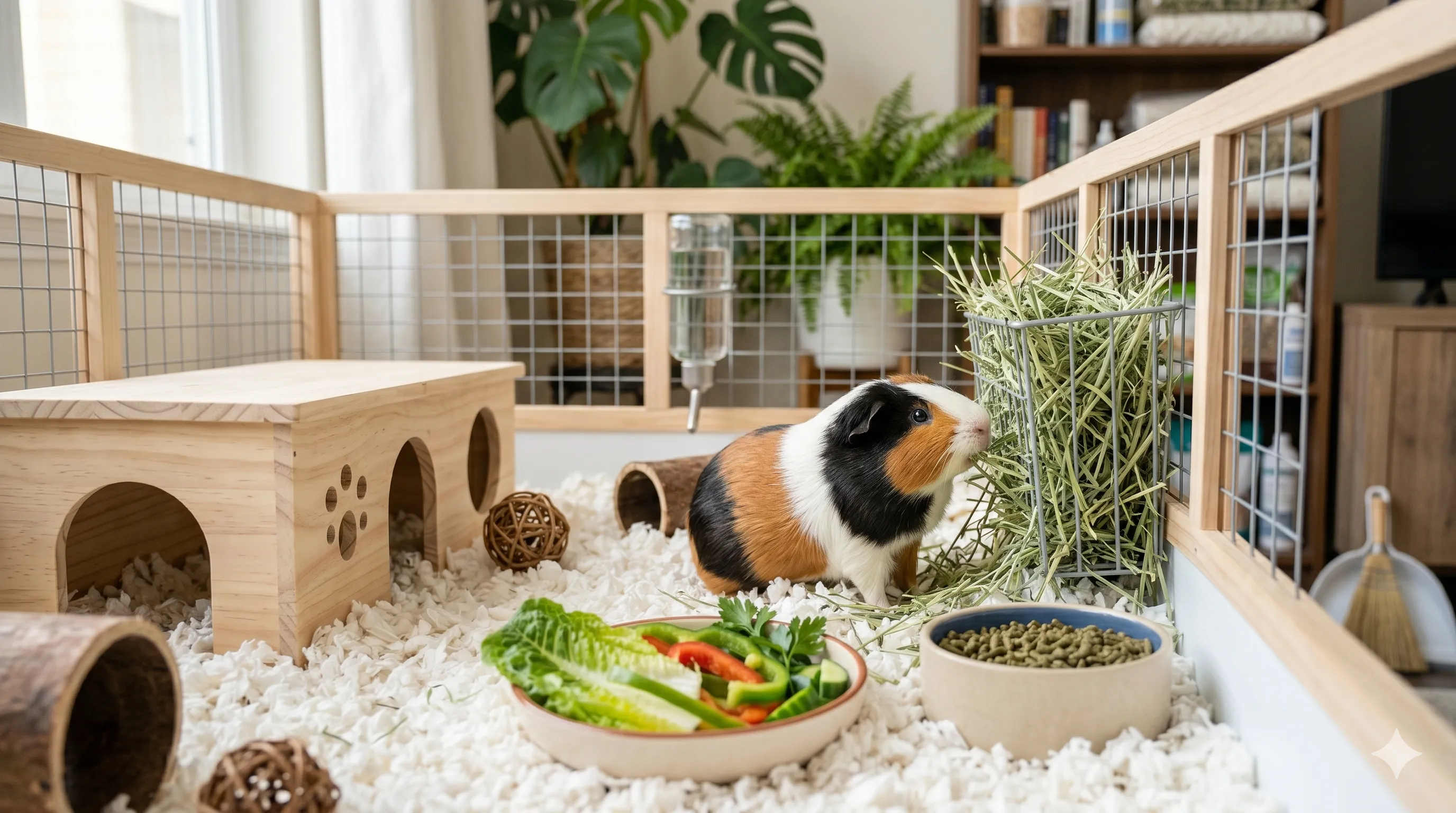
A guinea pig's cage is where it spends nearly all of its time, so size and setup matter more than almost anything else in this guide. A single guinea pig needs a minimum of roughly 7.5 square feet of floor space, with more added for each additional guinea pig housed together — bigger is generally better, and cramped housing is one of the most common beginner mistakes. Wire-mesh flooring should be avoided since it can injure a guinea pig's feet; a solid, smooth-bottomed enclosure lined with bedding is safer. For help picking dimensions that fit your space, see our guide to choosing the right guinea pig cage size.
Bedding
Use a low-dust, absorbent bedding such as paper-based bedding or fleece liners. Softwood shavings like pine or cedar release aromatic oils that can irritate a guinea pig's respiratory system and are best avoided. Spot-clean soiled bedding daily and do a full bedding change on a regular schedule to keep ammonia from building up. Not sure what to buy? Our comparison of best bedding options for guinea pigs breaks down the safest choices.
Cage Setup and Enrichment
Guinea pigs feel safest with places to hide, so include at least one hideout per guinea pig to prevent competition over shelter. Add tunnels, chew-safe toys, and open floor space for exercise, since guinea pigs don't climb or jump the way some small pets do and rely on ground-level enrichment instead.
Diet Essentials
Hay
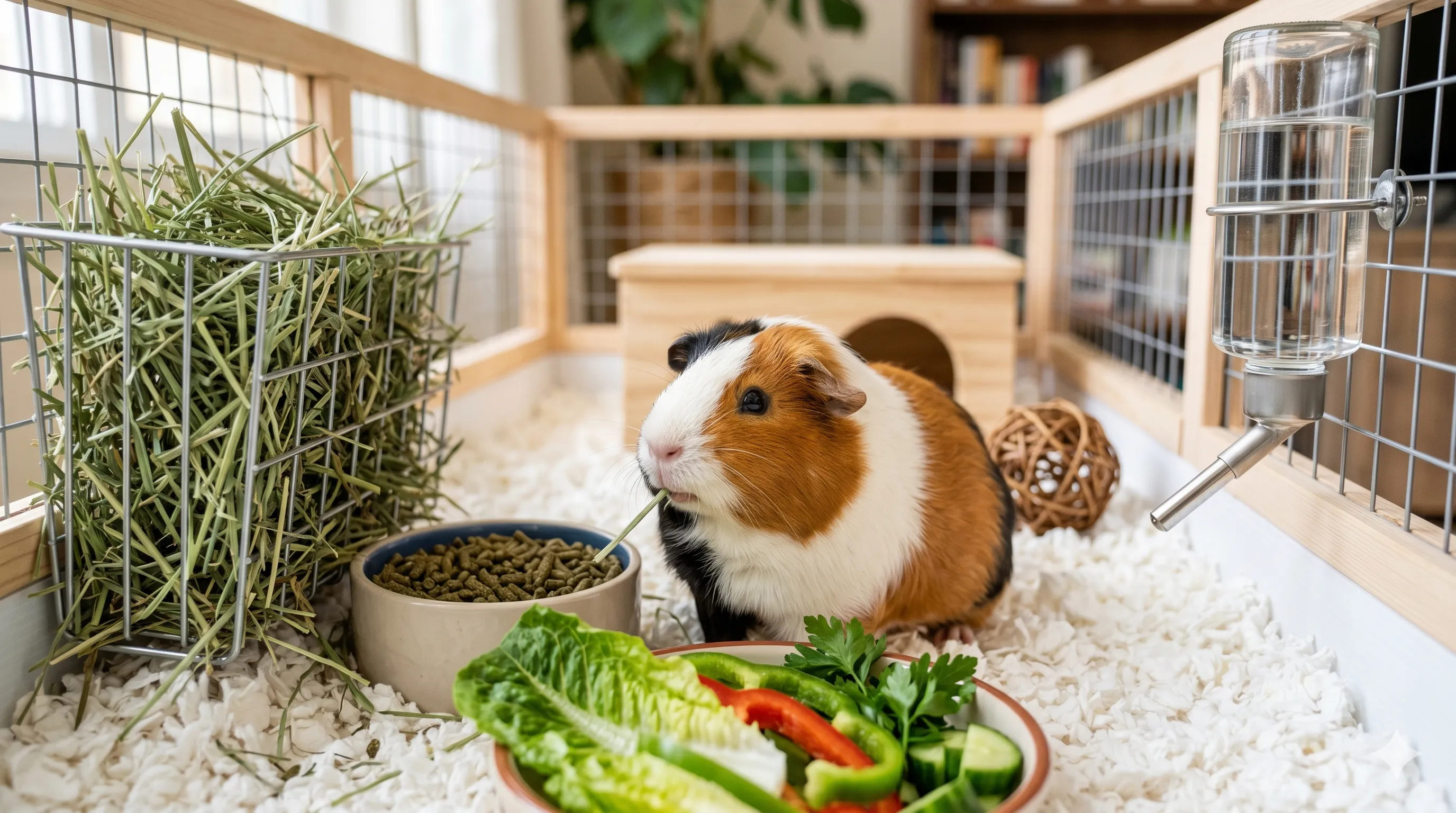
Unlimited grass hay, such as timothy hay, should make up the majority of a guinea pig's daily diet. Constant access to hay isn't optional — guinea pigs' teeth grow continuously, and chewing hay is what wears them down naturally, so a hay-light diet contributes directly to painful dental problems. If you're unsure how much to offer, our breakdown of how much hay a guinea pig should eat covers portion sizes by age and weight.
Vegetables and Vitamin C
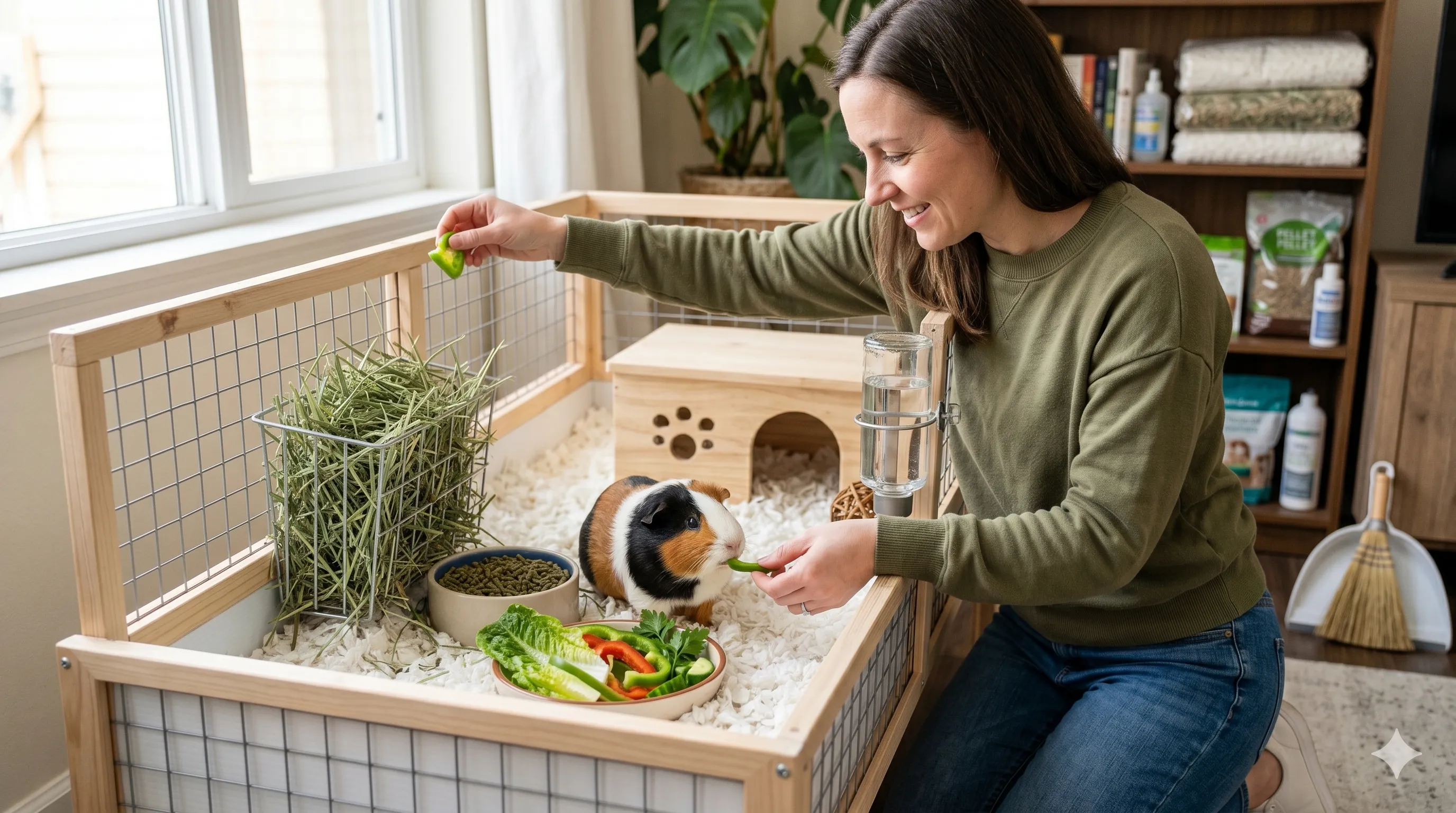
Guinea pigs cannot produce their own vitamin C and need a reliable daily source, whether from vitamin-C-rich vegetables like bell peppers, or from a vitamin C supplement given directly rather than added to water, since the vitamin degrades quickly once dissolved. Leafy greens and vitamin-C-rich vegetables should make up a meaningful daily portion of the diet, introduced gradually to avoid digestive upset.
Pellets and Water
A modest daily portion of high-quality, timothy-hay-based pellets rounds out the diet — pellets should supplement hay, not replace it. Fresh water should be available at all times, ideally from a sipper bottle checked daily to make sure it hasn't clogged. For an estimate based on weight and age, try our free guinea pig feeding calculator.
Foods and Treats to Avoid
Iceberg lettuce offers little nutritional value and can cause digestive upset, so leafier greens are a better everyday choice. Avoid sugary treats, dairy products, and anything from the onion or garlic family, all of which are poorly tolerated by a guinea pig's digestive system. Chocolate and any human junk food should never be offered, and fruit is best kept to a small occasional portion rather than a daily habit because of its natural sugar content.
Daily, Weekly, and Monthly Care Routine
- Daily: refresh water, top up hay, spot-clean the cage, offer vegetables, and observe eating and behavior
- Weekly: full bedding change, wipe down food dishes and accessories, and check nails
- Monthly: deep-clean the enclosure and accessories, and give long-haired guinea pigs a closer grooming check
Social Needs
Guinea pigs are herd animals in the wild and most individuals are happiest with guinea pig companionship, not just human attention. A lone guinea pig can still bond closely with its owner, but pairing compatible guinea pigs together generally leads to a less stressed, more active pet. Daily handling and gentle interaction help any guinea pig become more confident over time, whether or not it has a cage mate.
Handling and Building Trust
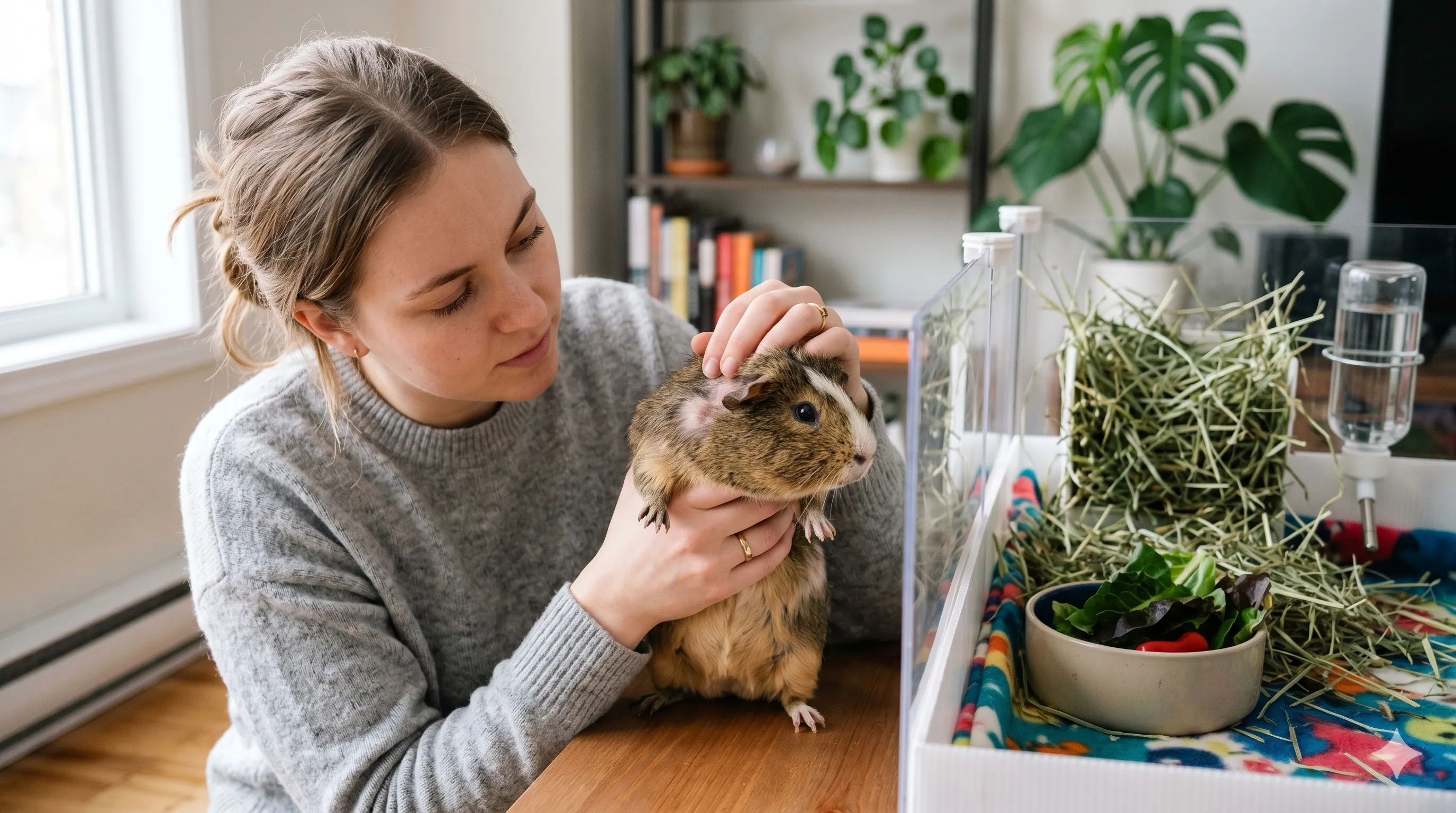
Guinea pigs startle easily, so let a new guinea pig get used to your voice and scent for the first few days before picking it up. Approach from the front rather than reaching down from above, since an overhead approach can trigger a prey-animal flight response. When you do pick your guinea pig up, use both hands — one under the chest and one supporting the hindquarters — and keep the guinea pig close to your body rather than held out at arm's length, where a sudden wriggle could lead to a fall.
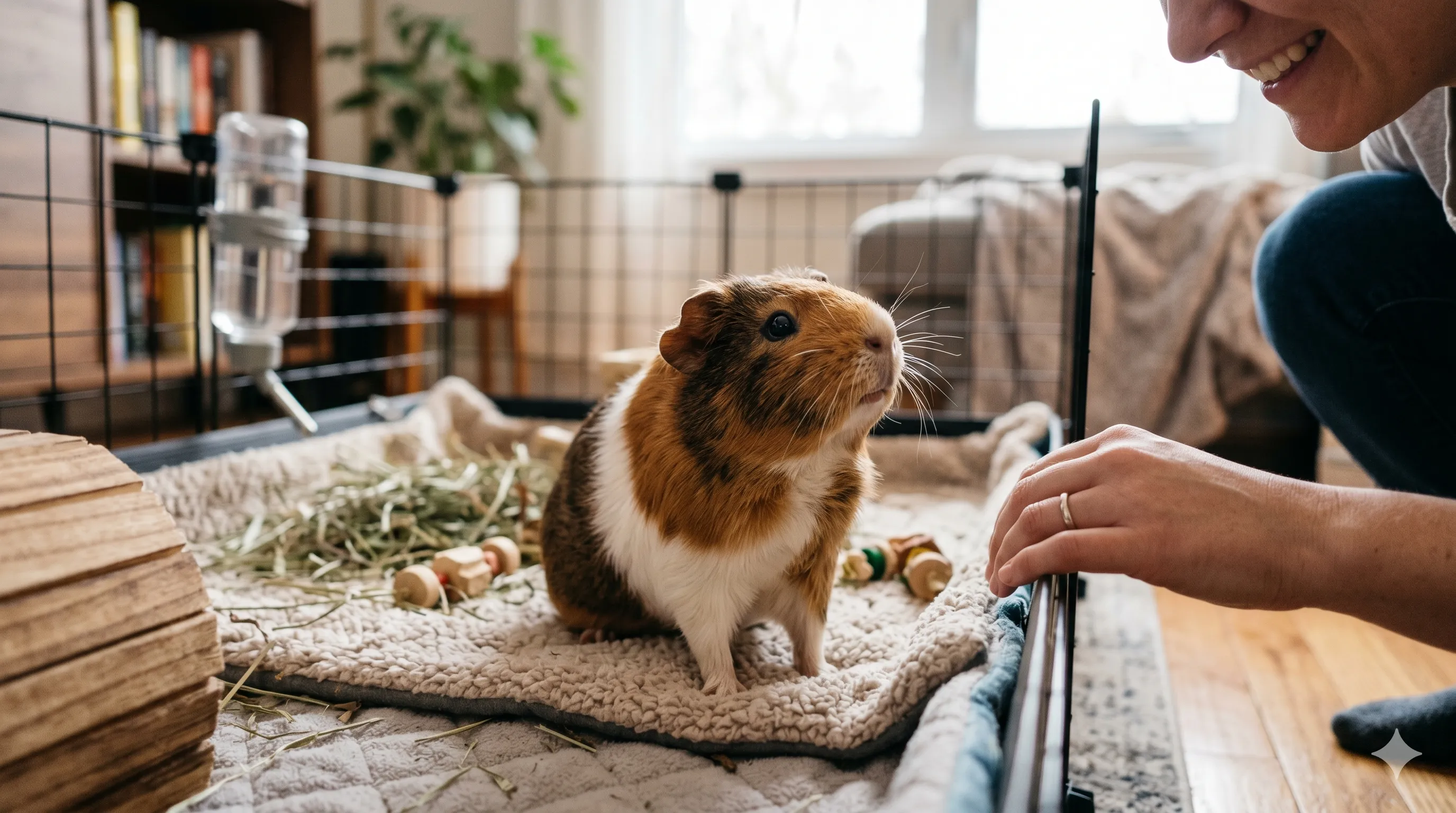
Trust builds fastest through short, low-pressure sessions rather than long ones. Sitting near the cage and offering a small piece of vegetable by hand, even before attempting to pick your guinea pig up, helps it associate you with something good. Most guinea pigs warm up within a few weeks of consistent, gentle handling, though some individuals take longer and a few never fully enjoy being held — both are normal.
Grooming
- Brush long-haired breeds several times a week to prevent mats; short-haired breeds need far less brushing
- Check and trim nails roughly every few weeks, or ask a vet or groomer to show you how
- Monitor coat condition and skin for flaking, bald patches, or parasites
- Keep the area around the guinea pig's rear clean, since long-haired breeds in particular can get soiled bedding stuck in their coat
Health Monitoring
Because guinea pigs hide illness well, the most useful habit a beginner can build is simply paying attention to baseline behavior so changes stand out quickly. Watch for:
- Reduced or absent appetite, or a sudden stop in eating
- Sneezing, nasal or eye discharge, or labored breathing
- Diarrhea or a noticeable change in droppings
- Weight loss or a hunched, lethargic posture
- Overgrown teeth or drooling
- Unusual hiding or reduced activity
A guinea pig that stops eating even for a single day should be taken seriously, since digestive complications can develop quickly — our guide to signs your guinea pig is not eating walks through what to check first. Repeated sneezing or breathing changes deserve the same level of attention, and our article on what causes guinea pig sneezing covers the difference between harmless dust irritation and a respiratory infection that needs a vet. If anything on this list appears, or you're simply unsure whether a change is normal, a veterinarian experienced with guinea pigs is always the right call — this guide can help you notice a problem, but it isn't a substitute for a professional exam.
Expert Tips for New Owners
- Weigh your guinea pig weekly during the first few months to learn its normal range, making later weight changes easier to catch
- Introduce new foods one at a time and in small amounts to avoid digestive upset
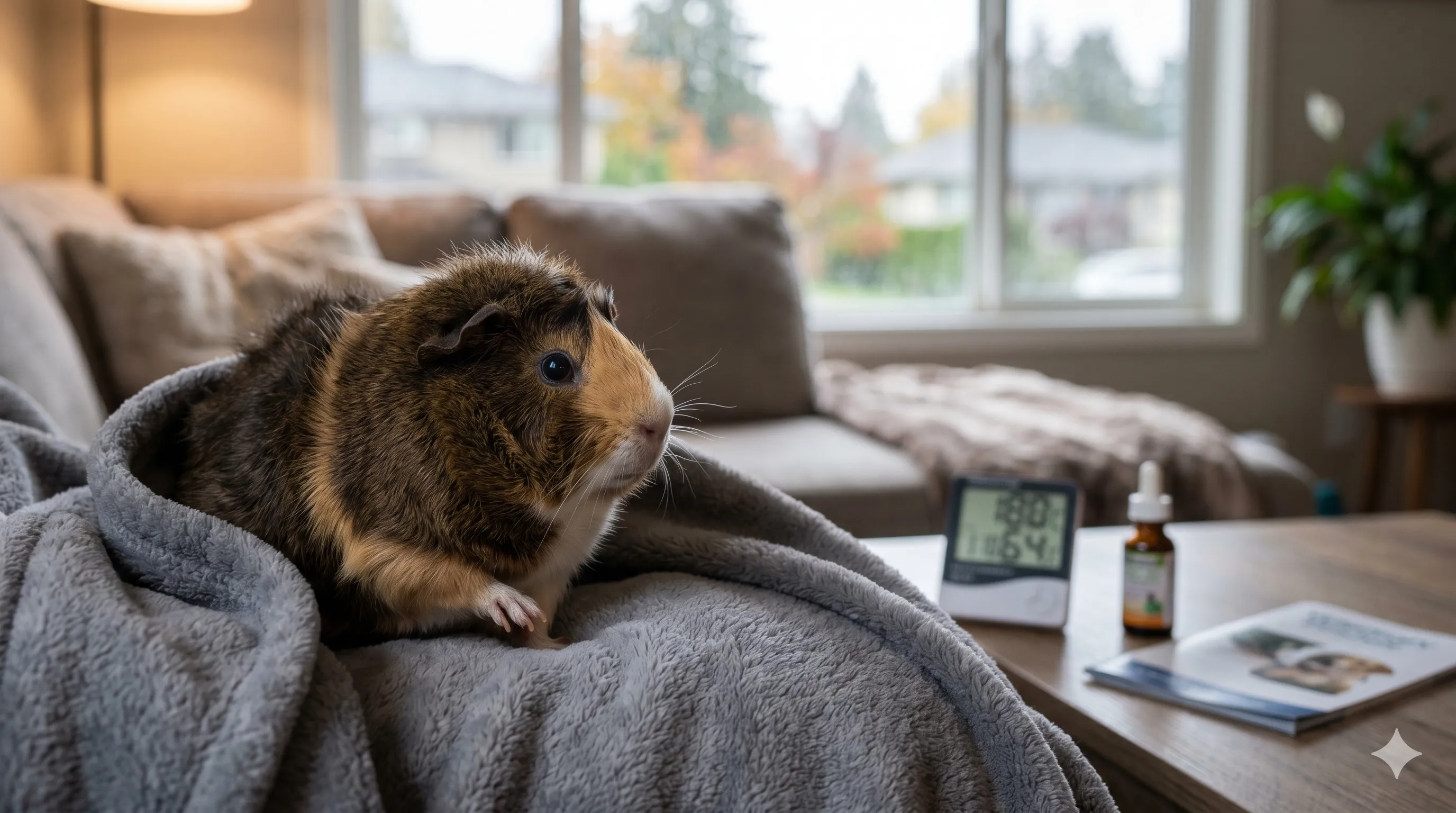
- Keep the cage out of direct sun and away from drafts — guinea pigs are sensitive to temperature extremes
- Build a simple first-aid kit with guinea-pig-safe nail clippers and contact info for an exotic-experienced vet before you need either
Common Beginner Mistakes
- Choosing a cage that's too small, or treating the store-bought "starter" cage size as sufficient long-term
- Underestimating how much hay a guinea pig actually needs each day
- Forgetting that guinea pigs need a reliable vitamin C source since they can't produce their own
- Keeping a single guinea pig without considering whether it would do better with a companion
- Waiting to see a vet after noticing appetite loss, sneezing, or other warning signs
- Using scented or softwood bedding that irritates the respiratory system
Final Thoughts
Guinea pigs reward attentive owners with a lot of personality — wheeking at feeding time, popcorning around their enclosure, and settling into predictable, food-motivated routines. Most of what it takes to keep one healthy comes down to a spacious clean cage, unlimited hay, a reliable vitamin C source, and paying attention when something seems off.
Curious how many U.S. households keep a guinea pig, and where most owners get theirs? See U.S. guinea pig ownership statistics for the full picture.
The takeaway: get housing hay and vitamin C right and most guinea pig care problems never happen in the first place.
This guide is meant to give new owners a solid foundation — for anything health-related, a veterinarian familiar with guinea pigs is always the best source of guidance for your individual pet.
Medical Disclaimer
This content is provided for informational and educational purposes only and should not be considered veterinary, medical, behavioral, or training advice. While we strive for accuracy, we make no guarantees regarding completeness or results. Always consult a licensed veterinarian or qualified pet care professional before making decisions about your pet’s health, diet, or behavior.
AI Illustration Notice
Some images in this article may have been generated or enhanced using artificial intelligence for illustrative purposes.
Frequently Asked Questions
Yes, guinea pigs are often considered excellent beginner pets because they are gentle and relatively easy to handle. They still need daily care around hay diet and cage cleaning so they aren't entirely hands-off. Most new owners find the routine manageable within the first week or two.
Every guinea pig needs unlimited hay fresh water a portion of vitamin-C-rich vegetables and time to interact with its owner or cage mate. Daily spot-cleaning of the cage also keeps ammonia and odor from building up. Skipping any of these for more than a day can affect health.
Most guinea pigs are happiest living with at least one other compatible guinea pig since they are naturally social herd animals. A single guinea pig can still live well with plenty of owner attention. Same-sex pairs or already-bonded pairs from a shelter are usually the easiest introductions.
Spot-clean soiled bedding and droppings daily and do a full bedding change on a regular weekly schedule. Cages that house more than one guinea pig may need cleaning more often since waste builds up faster. A consistent schedule prevents ammonia odor and reduces sneezing and irritation.
Unlimited grass hay is the single most important part of the diet since it supports digestion and wears down continuously growing teeth. Vegetables and a small amount of pellets round out the rest. Skipping hay is one of the most common and most harmful beginner mistakes.
Yes, guinea pigs cannot produce their own vitamin C so they need a reliable daily source. Vitamin-C-rich vegetables cover this for many guinea pigs but a supplement suggested by your veterinarian can help if diet alone isn't consistent. Vitamin C added to water loses potency quickly so direct dosing works better.
Many guinea pigs live between five and eight years when given proper housing diet and veterinary care. This is a longer commitment than many first-time owners expect from a small pet. Choosing a guinea pig is worth treating as a multi-year decision rather than a short-term one.
Approach from the front rather than from above and support the chest with one hand and the hindquarters with the other. Keep your guinea pig close to your body rather than held out away from you. Short frequent handling sessions build trust faster than long infrequent ones.
A single guinea pig needs a minimum of roughly seven and a half square feet of floor space with more added for each additional guinea pig. Bigger is generally better since guinea pigs need room to move and explore. A cramped cage is one of the most common beginner setup mistakes.
Editorial Note
This article is part of PetNurture's educational library.
Topics draw on publicly available educational resources, recognised veterinary organisations, academic publications and established animal welfare references where appropriate.
The specific sources this article draws on are listed in its References section. If you spot an error, please let us know.
References
The information in this article has been reviewed and supported using the following sources.
Humane Society
Guinea Pig Housing Requirements and Bedding Options
The Humane Society recommends a minimum of 7.5 square feet of cage space for one guinea pig, with 10.5 square feet preferred, plus 2 to 3 inches of paper-based bedding for proper absorption.
Accessed Aug 6, 2026
VCA Animal Hospitals
VCA Animal Hospitals notes that guinea pigs are highly social animals that thrive in pairs or groups and, like humans, cannot produce their own vitamin C, making vitamin-C-rich vegetables or supplements a dietary requirement.
Accessed Aug 6, 2026
Merck Veterinary Manual
Housing and Nutrition of Guinea Pigs
Confirms guinea pigs require a diet that is roughly 75 percent grass hay by volume plus a daily dietary source of vitamin C since they cannot synthesize it themselves, and recommends dosing vitamin C directly rather than through drinking water because it degrades quickly once dissolved; supports the Diet Essentials section of this article.
Accessed Aug 13, 2026
Pet Emergency Guidance
Every pet is unique. If your pet exhibits severe symptoms, sudden behavioral changes, or a medical emergency, do not rely on online guides — contact a licensed veterinarian or emergency clinic immediately.
About PetNurture
PetNurture is an educational library of pet care guides, interactive tools and practical resources for pet parents. We work continuously to keep our content accurate and up to date. Reader feedback helps us maintain content quality.
Related Articles
Popular Guinea Pig Guides
Guinea Pig
Guinea Pig Feeding Calculator
Calculate daily food portions for your guinea pig by weight.
Guinea Pig
Guinea Pig Age Calculator
Convert your guinea pig's age to human years and discover their life stage.
Guinea Pig
Guinea Pig Cage Size Calculator
Find the minimum recommended cage size for your guinea pigs.