Can Guinea Pigs Eat Celery? Safe Feeding Guide for Beginners
- Can Guinea Pigs Eat Celery? (Quick Answer)
- Is Celery Safe for Guinea Pigs?
- Nutritional Benefits of Celery for Guinea Pigs
- High Water Content
- Dietary Fiber
- Low Sugar Content
- Crunchy Texture
- Useful Nutrients
- What Is the Biggest Risk of Feeding Celery?
- How to Prepare Celery Safely for Guinea Pigs
- Step 1: Wash Thoroughly
- Step 2: Inspect the Stalk
- Step 3: Chop Into Small Pieces
- Step 4: Serve Raw
- Can Guinea Pigs Eat Celery Leaves?
- How Much Celery Can Guinea Pigs Eat?
- How Often Can Guinea Pigs Eat Celery?
- Can Baby Guinea Pigs Eat Celery?
- Can Celery Cause Digestive Problems?
- Best Vegetables to Feed Alongside Celery
- What Should Guinea Pigs Eat Every Day?
- Signs Your Guinea Pig Enjoys Celery
- Common Myths About Feeding Celery to Guinea Pigs
- Myth: Celery Is Dangerous
- Myth: Celery Strings Don't Matter
- Myth: Celery Can Replace Water
- Myth: Celery Is Better Than Hay
- Final Thoughts
Note: This article is for informational purposes only and does not replace professional veterinary advice.
Celery is a common vegetable found in many kitchens, and because it's low in calories and packed with water, many guinea pig owners wonder whether it's a healthy choice for their pets. If you're asking can guinea pigs eat celery, the answer is yes. Guinea pigs can safely eat celery when it's prepared properly and offered as part of a balanced diet.
Celery provides hydration, fiber, and variety while remaining relatively low in sugar compared to many fruits and some vegetables. However, celery has one unique characteristic that owners need to understand before feeding it: the long stringy fibers running through the stalk.
These tough fibers aren't dangerous when handled correctly, but they can create chewing and choking concerns if celery is served in large uncut pieces.
In this guide, you'll learn whether celery is good for guinea pigs, the benefits and risks of feeding it, how much is safe, whether guinea pigs can eat celery leaves, and how to prepare celery properly for maximum safety.
Can Guinea Pigs Eat Celery? (Quick Answer)
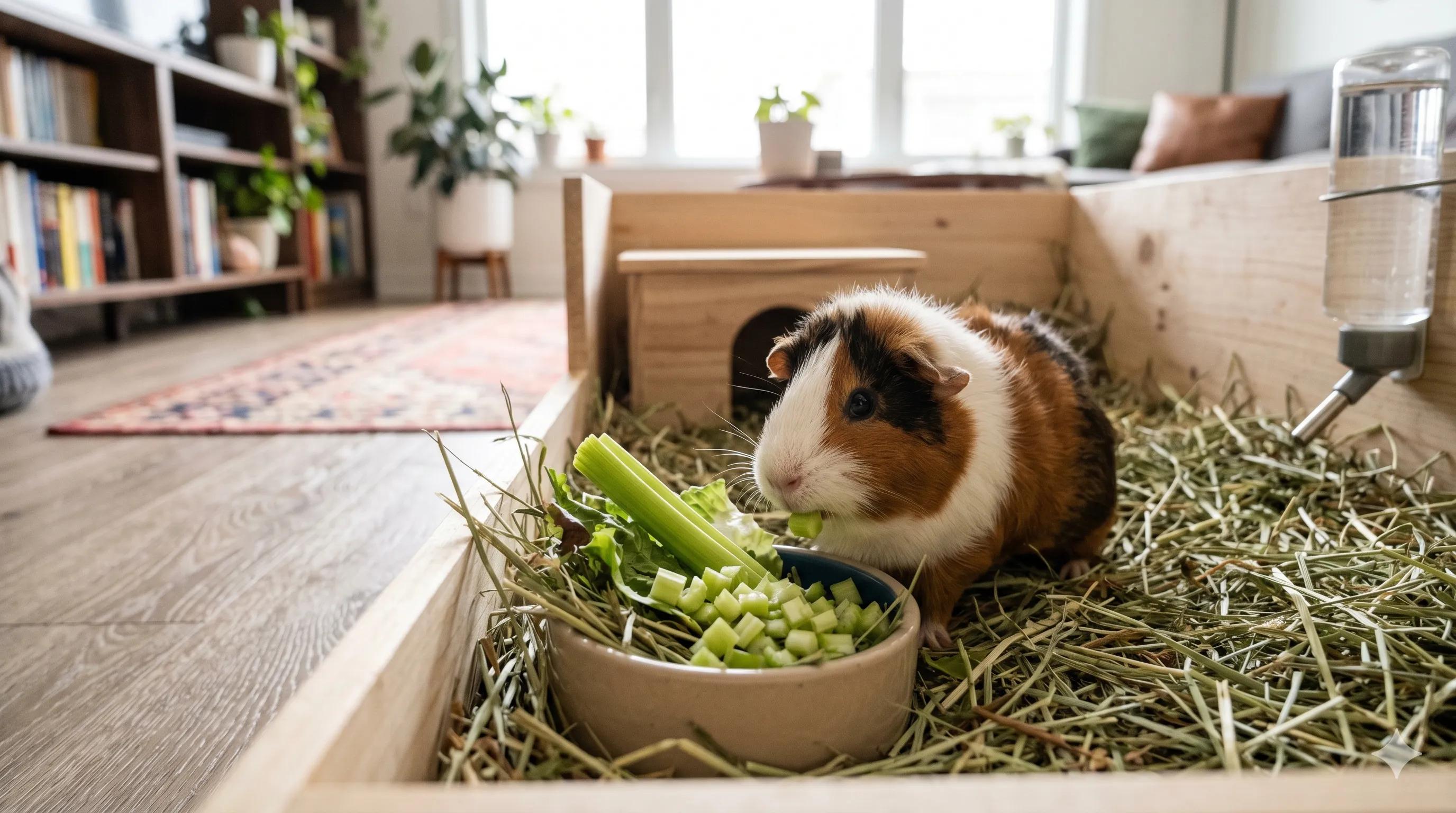
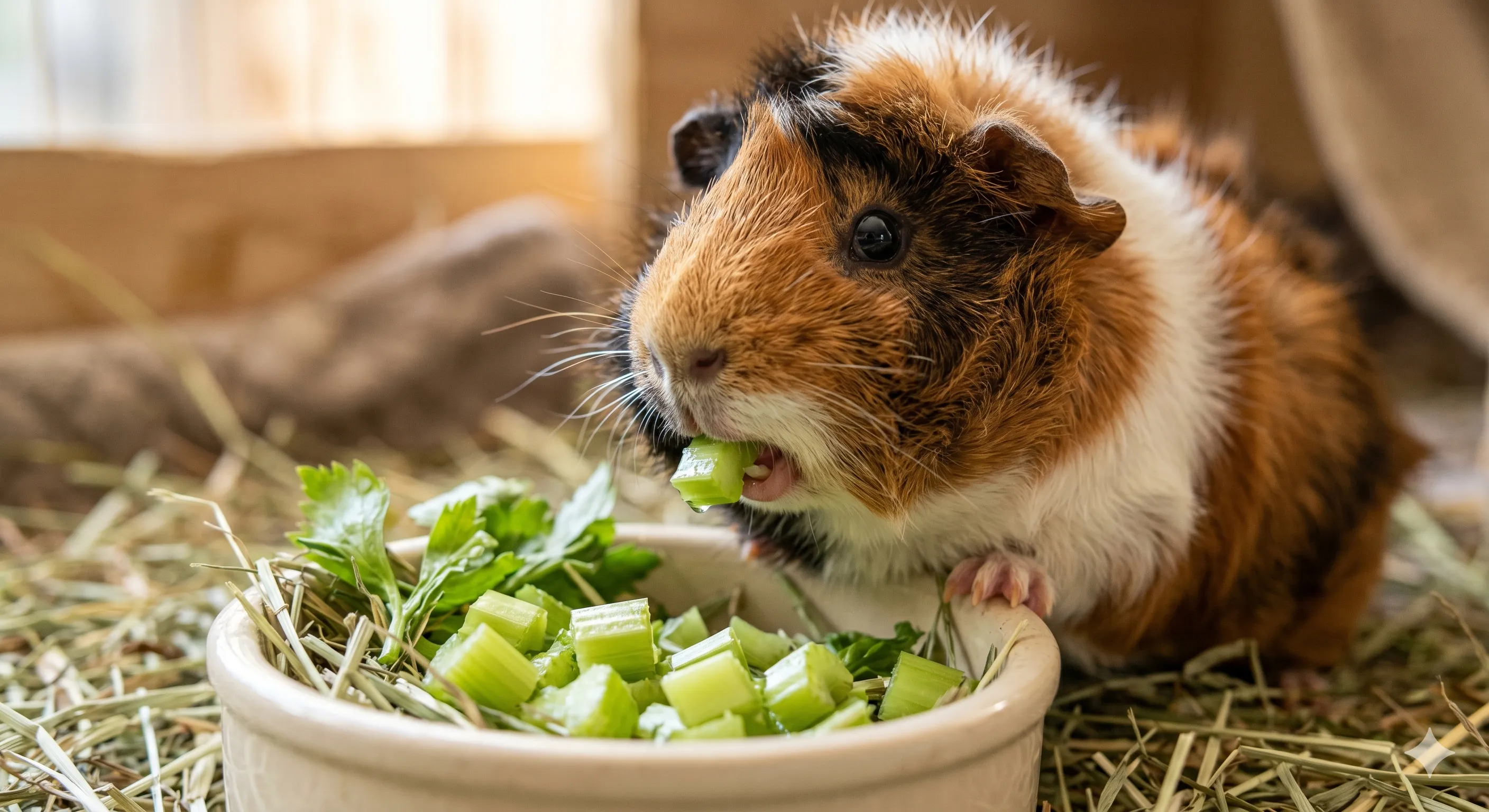
Yes, guinea pigs can safely eat celery in moderation. Celery contains water, fiber, and beneficial nutrients while remaining relatively low in calories and sugar. However, celery should always be chopped into small bite-sized pieces because the long fibrous strings can be difficult for guinea pigs to chew and swallow safely.
Is Celery Safe for Guinea Pigs?
Fresh raw celery is generally safe for healthy guinea pigs.
When served properly, celery can provide:
- Hydration support
- Dietary variety
- Fiber
- Crunchy enrichment
- Low-calorie snacking
Unlike sugary fruits, celery contains relatively little sugar, making it a better option for regular vegetable rotation.
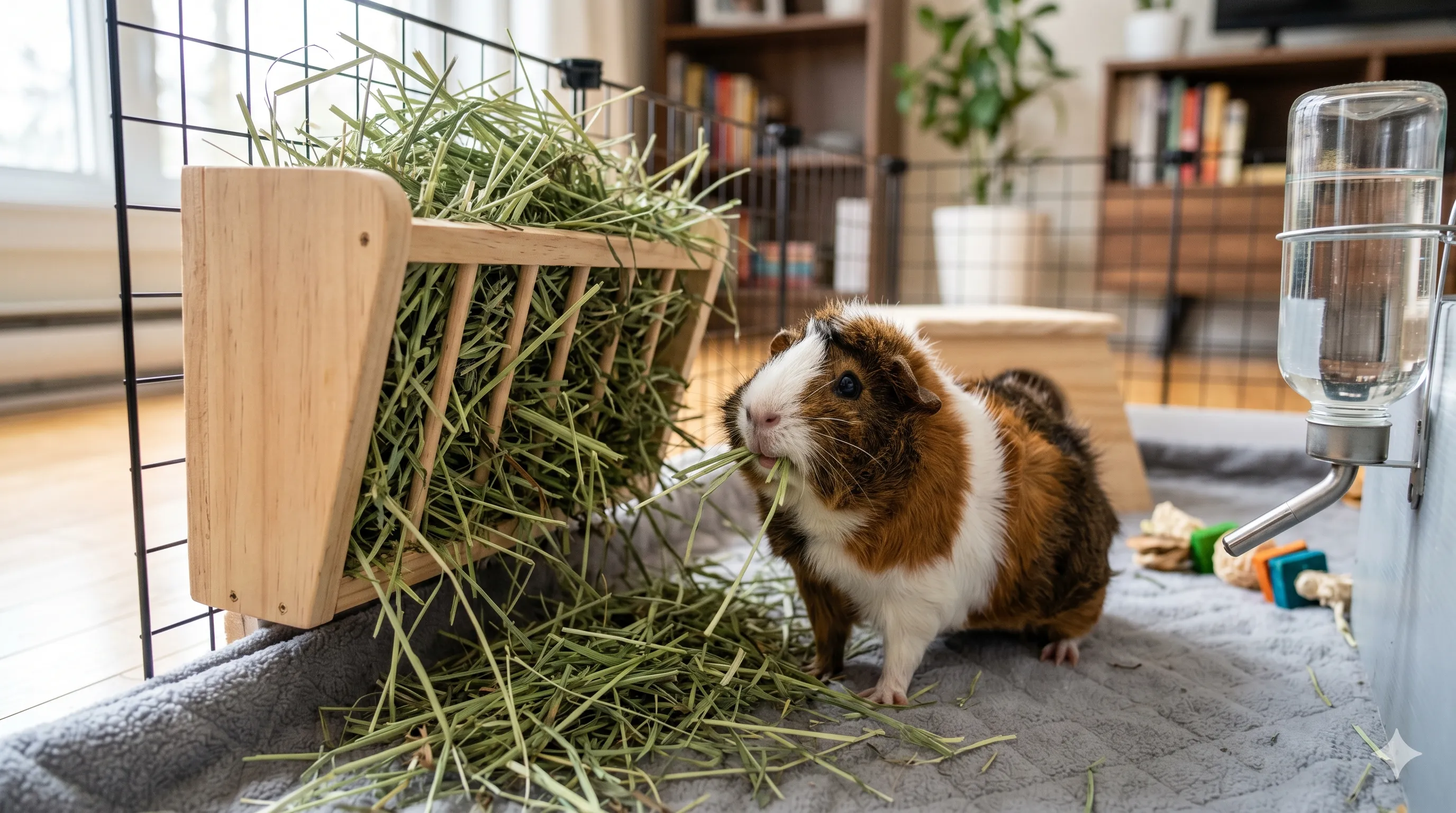
However, it should never replace hay, which remains the most important part of a guinea pig's diet.
Nutritional Benefits of Celery for Guinea Pigs
High Water Content
Celery is made up mostly of water.
This makes it one of the more hydrating vegetables that guinea pigs can enjoy.
Foods with high water content may help supplement hydration, particularly during warmer weather.
Dietary Fiber
Celery contains fiber that supports normal digestion.
While the amount of fiber isn't nearly as important as the fiber found in hay, it still contributes to overall dietary variety.
Low Sugar Content
Compared to fruits such as apples and strawberries, celery contains very little natural sugar.
This makes celery a healthier everyday vegetable option than many sweet treats.
cucumber feeding guide for guinea pigsCrunchy Texture
Many guinea pigs enjoy chewing crunchy vegetables.
The crisp texture of celery provides:
- Mental stimulation
- Environmental enrichment
- Variety during feeding
- Natural chewing activity
Useful Nutrients
Celery contains small amounts of vitamins and minerals that contribute to a varied and balanced diet.
Although it should not be relied upon as a primary nutrient source, it can complement other vegetables effectively.
What Is the Biggest Risk of Feeding Celery?
The biggest concern isn't sugar, calories, or toxicity.
It's the stringy fibers running through celery stalks.
These fibrous strands can:
- Become tangled around teeth
- Be difficult to chew
- Create swallowing difficulties
- Increase choking risk if fed in long pieces
This doesn't mean celery is unsafe.
It simply means preparation matters.
How to Prepare Celery Safely for Guinea Pigs
Proper preparation dramatically reduces potential risks.
Step 1: Wash Thoroughly
Rinse celery under running water to remove dirt, debris, and potential pesticide residue.
Step 2: Inspect the Stalk
Look for particularly thick or tough strings.
If necessary, peel away some of the larger fibrous strands.
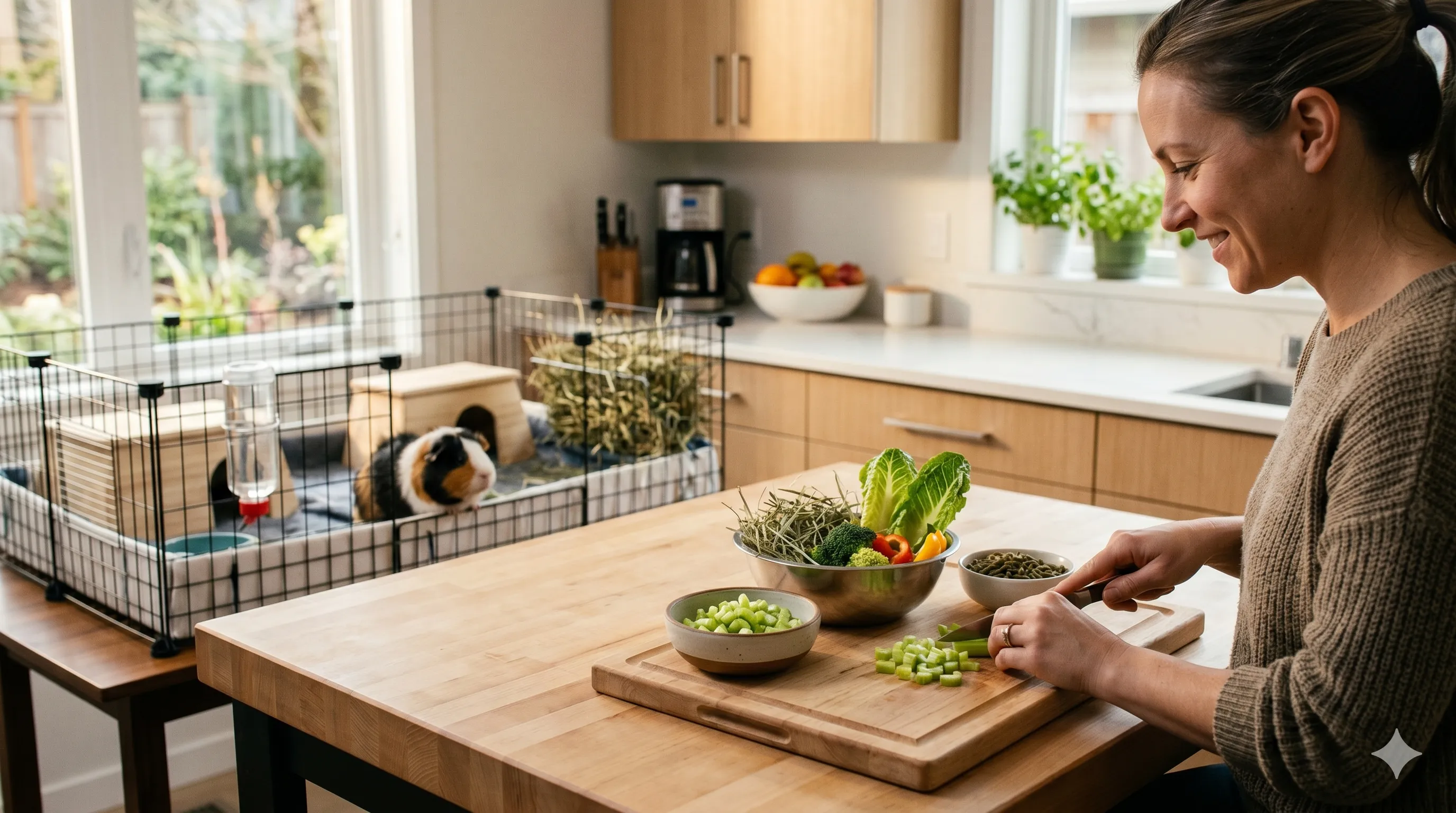
Step 3: Chop Into Small Pieces
This is the most important step.
Cut celery into small bite-sized sections rather than feeding long stalks.
Step 4: Serve Raw
Fresh raw celery is the safest option.
Avoid:
- Cooked celery
- Soup vegetables
- Seasoned celery
- Processed foods
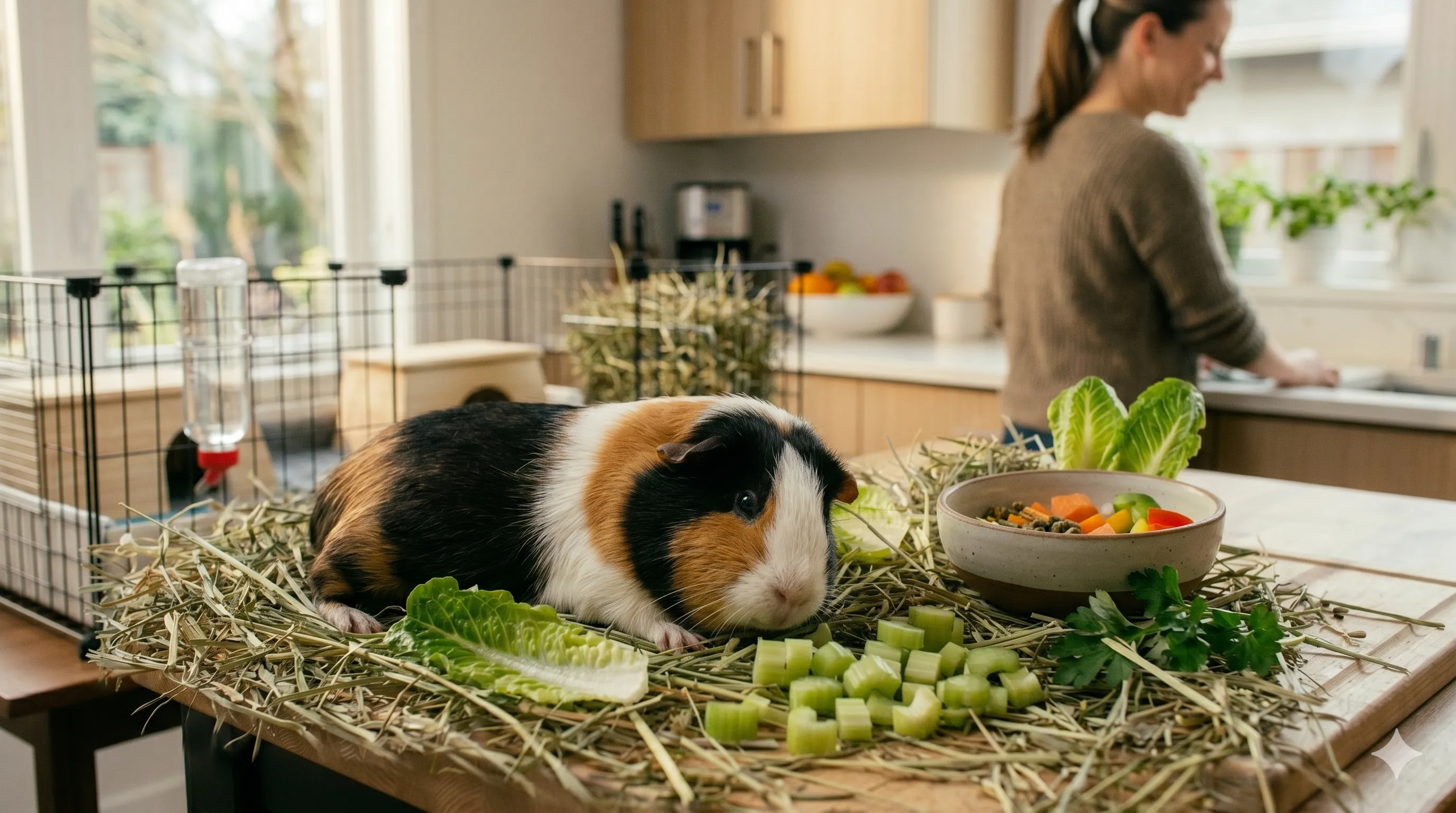
Can Guinea Pigs Eat Celery Leaves?
Yes, celery leaves are generally safe for guinea pigs.
Many guinea pigs actually enjoy the leaves as much as the stalks.
Celery leaves provide:
- Leafy variety
- Fiber
- Natural enrichment
- Additional texture
As with the stalk, celery leaves should be washed thoroughly before feeding.
best lettuce options for guinea pigsHow Much Celery Can Guinea Pigs Eat?
For most healthy guinea pigs, a suitable serving size is:
- One small celery stalk chopped into pieces
- A handful of bite-sized celery pieces
- A mixture of celery and other vegetables
Celery should be part of a varied vegetable selection rather than the only vegetable offered.
How Often Can Guinea Pigs Eat Celery?
Because celery is relatively low in sugar, many guinea pigs can enjoy it several times per week.
A reasonable feeding schedule may include:
- Two to four times weekly
- As part of a mixed vegetable salad
- Rotated with other vegetables
Variety is generally more beneficial than feeding the same vegetable every day.
Can Baby Guinea Pigs Eat Celery?
Young guinea pigs can eat small amounts of celery once they are accustomed to eating vegetables.
However, their diet should primarily focus on:
- Unlimited hay
- Fresh water
- Quality pellets
- Appropriate vegetables
Introduce celery gradually and monitor digestion carefully.
can guinea pigs eat carrots every dayCan Celery Cause Digestive Problems?
Most guinea pigs tolerate celery well.
However, feeding excessive amounts of any vegetable can sometimes contribute to:
- Soft stools
- Bloating
- Digestive upset
- Changes in appetite
This is why new foods should always be introduced slowly.
Best Vegetables to Feed Alongside Celery
Celery works well as part of a varied vegetable rotation.
Popular options include:
- Bell peppers
- Romaine lettuce
- Cucumber
- Cilantro
- Zucchini
- Small amounts of carrot
Offering multiple vegetables helps create a more balanced nutritional profile.
What Should Guinea Pigs Eat Every Day?
Many owners focus heavily on vegetables while forgetting the most important food item.
A healthy guinea pig diet should consist primarily of:
- Unlimited grass hay
- Fresh clean water
- Quality guinea pig pellets
- Fresh vegetables
Hay supports healthy digestion, proper dental wear, and overall health.
apple treats for guinea pigs explainedSigns Your Guinea Pig Enjoys Celery
Many guinea pigs respond positively to celery.
Common signs include:
- Immediate interest
- Excited vocalizations
- Quick consumption
- Actively searching for more
Of course, every guinea pig has individual preferences, and some may prefer other vegetables.
Common Myths About Feeding Celery to Guinea Pigs
Myth: Celery Is Dangerous
Celery is generally safe when prepared correctly.
Myth: Celery Strings Don't Matter
The fibrous strings should be taken seriously and managed through proper chopping.
Myth: Celery Can Replace Water
Hydrating vegetables help support hydration but should never replace fresh drinking water.
Myth: Celery Is Better Than Hay
Hay remains far more important than any vegetable in a guinea pig's diet.
Final Thoughts
Guinea pigs can safely eat celery as part of a balanced and varied diet. Celery offers hydration, fiber, crunch, and low-sugar enrichment that many guinea pigs enjoy.
The most important consideration is preparation. Chopping celery into small bite-sized pieces helps reduce potential issues associated with the vegetable's long stringy fibers.
When combined with unlimited hay, fresh water, quality pellets, and a variety of vegetables, celery can be a healthy addition to your guinea pig's weekly feeding routine.
This article is intended for educational purposes only and should not replace professional veterinary advice. If your guinea pig develops digestive issues, appetite loss, or unusual symptoms after eating new foods, consult a qualified exotic animal veterinarian.
Medical Disclaimer
This content is provided for informational and educational purposes only and should not be considered veterinary, medical, behavioral, or training advice. While we strive for accuracy, we make no guarantees regarding completeness or results. Always consult a licensed veterinarian or qualified pet care professional before making decisions about your pet’s health, diet, or behavior.
AI Illustration Notice
Some images in this article may have been generated or enhanced using artificial intelligence for illustrative purposes.
Frequently Asked Questions
Yes, guinea pigs can safely eat celery when it is washed properly and cut into small bite sized pieces.
Celery contains long fibrous strings that can be difficult to chew and may increase choking risk if fed in large pieces.
Yes, celery leaves are generally safe and many guinea pigs enjoy eating them.
Most guinea pigs can eat one small chopped celery stalk or several bite sized pieces at a time.
Too much celery may contribute to soft stools or digestive upset in sensitive guinea pigs.
Baby guinea pigs can eat small amounts of celery once they are accustomed to vegetables and have stable digestion.
Guinea pigs should eat unlimited hay fresh water quality pellets and a variety of fresh vegetables every day.
Most guinea pigs can enjoy celery several times per week as part of a varied vegetable rotation.
Editorial Note
This article is part of PetNurture's educational library.
Topics draw on publicly available educational resources, recognised veterinary organisations, academic publications and established animal welfare references where appropriate.
The specific sources this article draws on are listed in its References section. If you spot an error, please let us know.
References
The information in this article has been reviewed and supported using the following sources.
RSPCA
RSPCA guidance lists celery among the fresh vegetables that can be offered daily as a vitamin C source.
Accessed Aug 6, 2026
PDSA
PDSA recommends offering a variety of at least five to six different vegetable types each day rather than relying on a single vegetable.
Accessed Aug 6, 2026
Pet Emergency Guidance
Every pet is unique. If your pet exhibits severe symptoms, sudden behavioral changes, or a medical emergency, do not rely on online guides — contact a licensed veterinarian or emergency clinic immediately.
About PetNurture
PetNurture is an educational library of pet care guides, interactive tools and practical resources for pet parents. We work continuously to keep our content accurate and up to date. Reader feedback helps us maintain content quality.
Related Articles
Popular Guinea Pig Guides

Guinea Pig
Guinea Pig Feeding Calculator
Calculate daily food portions for your guinea pig by weight.