How Much Hay Should a Guinea Pig Eat Daily? (Complete Feeding Guide)
- Why Hay Matters So Much
- How Much Hay to Feed Daily
- The General Rule of Thumb
- Signs You're Offering Enough
- Never Restrict or Ration Hay
- Timothy Hay vs Alfalfa Hay
- Why Timothy Is the Everyday Choice for Adults
- When Alfalfa Makes Sense
- How to Judge Hay Quality
- Color, Smell and Texture
- Storage Tips to Keep Hay Fresh
- Building a Full Daily Diet Around Hay
- Expert Tips for Feeding Hay
- Common Mistakes to Avoid
- Final Thoughts
Note: This article is for informational purposes only and does not replace professional veterinary advice.
Hay isn't just filler in a guinea pig's diet, it's the single most important thing they eat every day. Getting the amount right, understanding the difference between hay types, and learning to judge whether a batch is actually fresh all matter more for a guinea pig's daily wellbeing than almost any other feeding decision an owner makes. This guide covers exactly how much hay to offer, when timothy hay makes more sense than alfalfa, how to spot good quality hay at a glance, and how the rest of a daily diet fits around it. For the full basics of guinea pig care beyond feeding, our complete guinea pig care guide covers everything this guide doesn't.
Why Hay Matters So Much
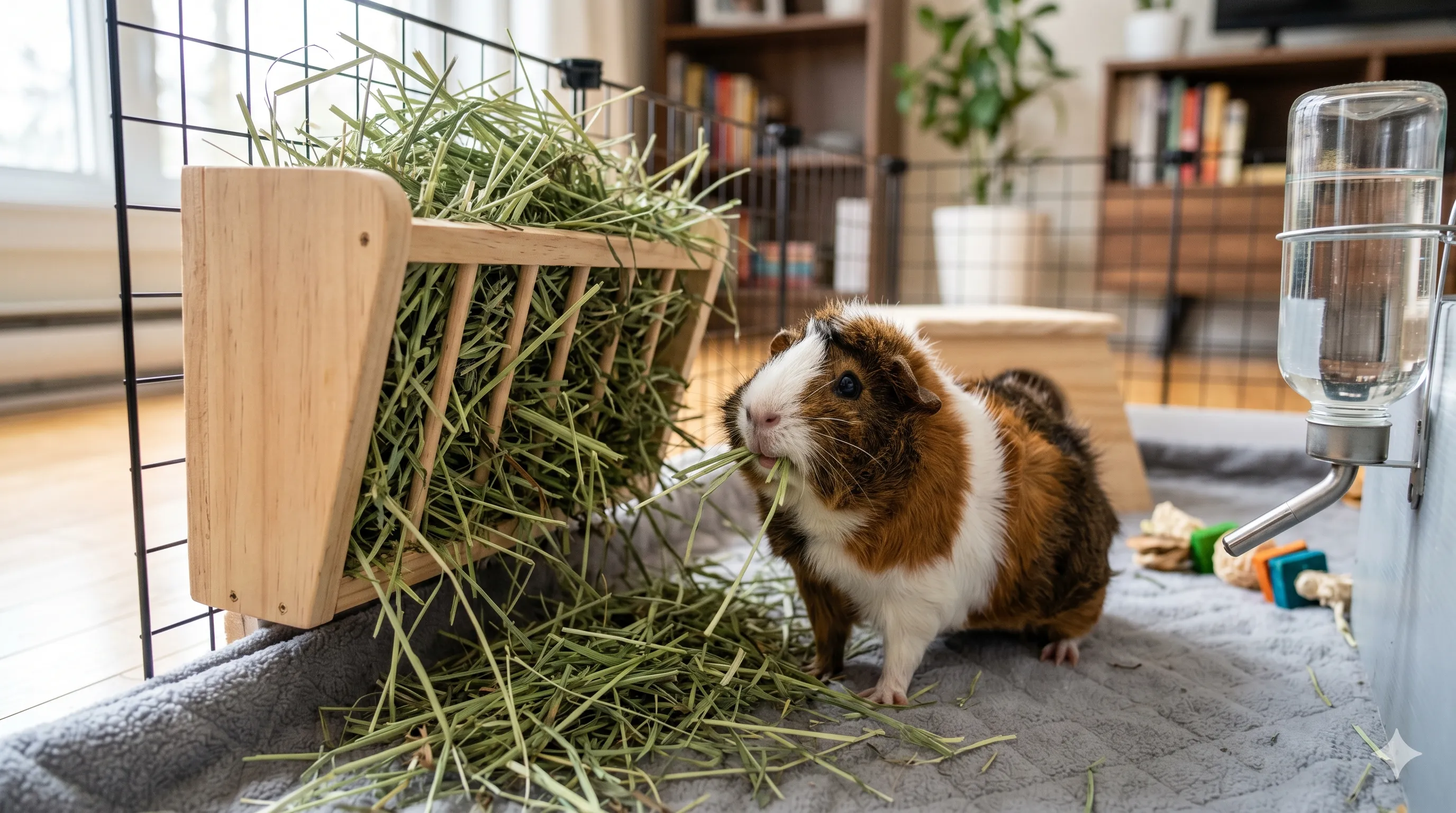
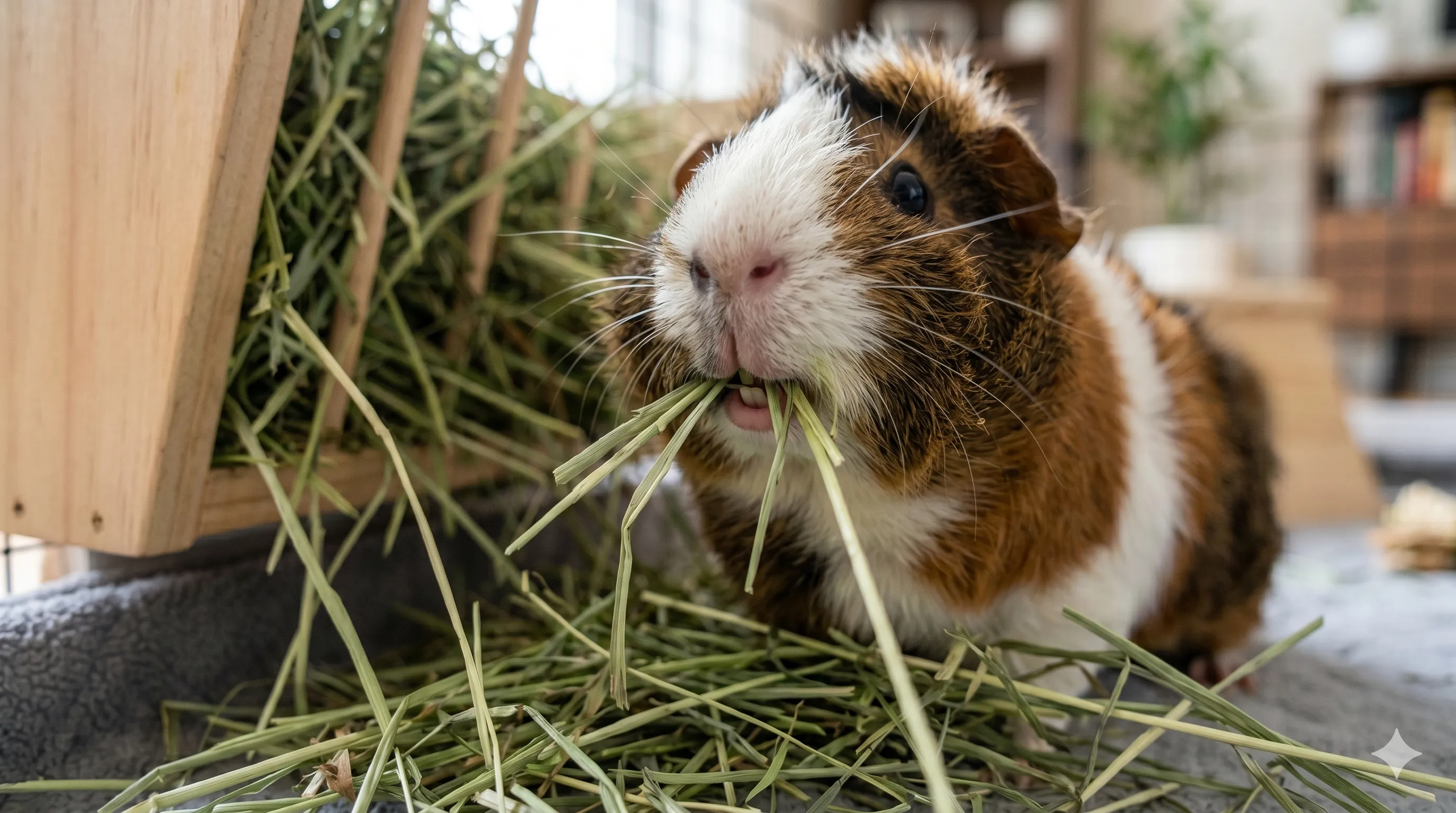
Constant access to hay keeps a guinea pig's continuously growing teeth worn down through the natural motion of chewing, and guinea pig teeth problems is worth a read if you want the fuller picture of what healthy versus problem teeth actually look like. Hay's fiber content also supports normal, healthy digestion, which is a big part of why it should make up the bulk of a guinea pig's diet rather than being an afterthought next to pellets and vegetables.
Hay also gives guinea pigs something to do throughout the day beyond simply eating. Foraging through a loose pile, pulling strands out of a hanging rack, and settling in to rest on top of it all double as mental enrichment for an animal that spends a large part of its natural day grazing. A guinea pig with generous hay access tends to stay busier and calmer than one working through a small, quickly-finished portion.
How Much Hay to Feed Daily
The General Rule of Thumb
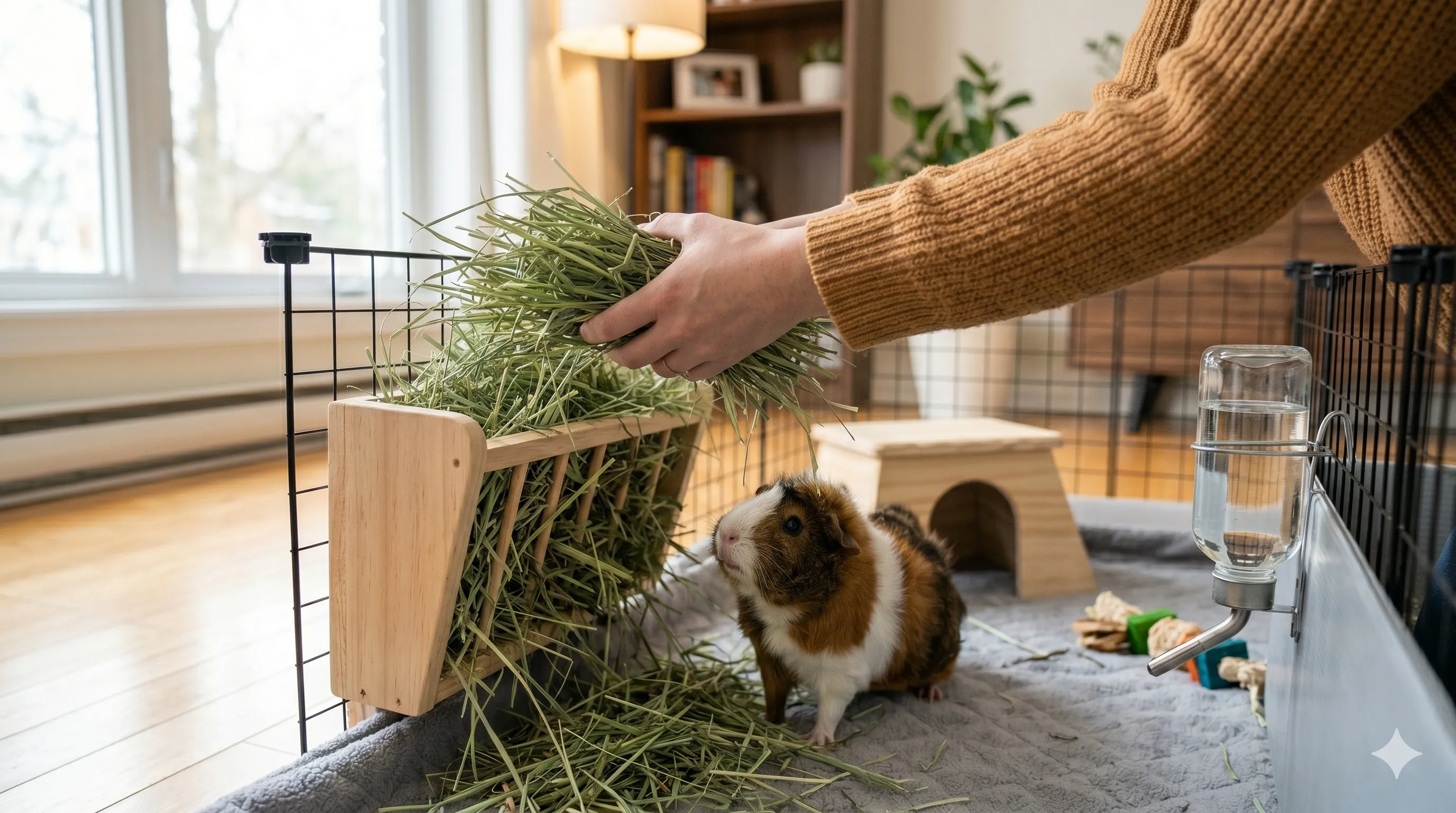
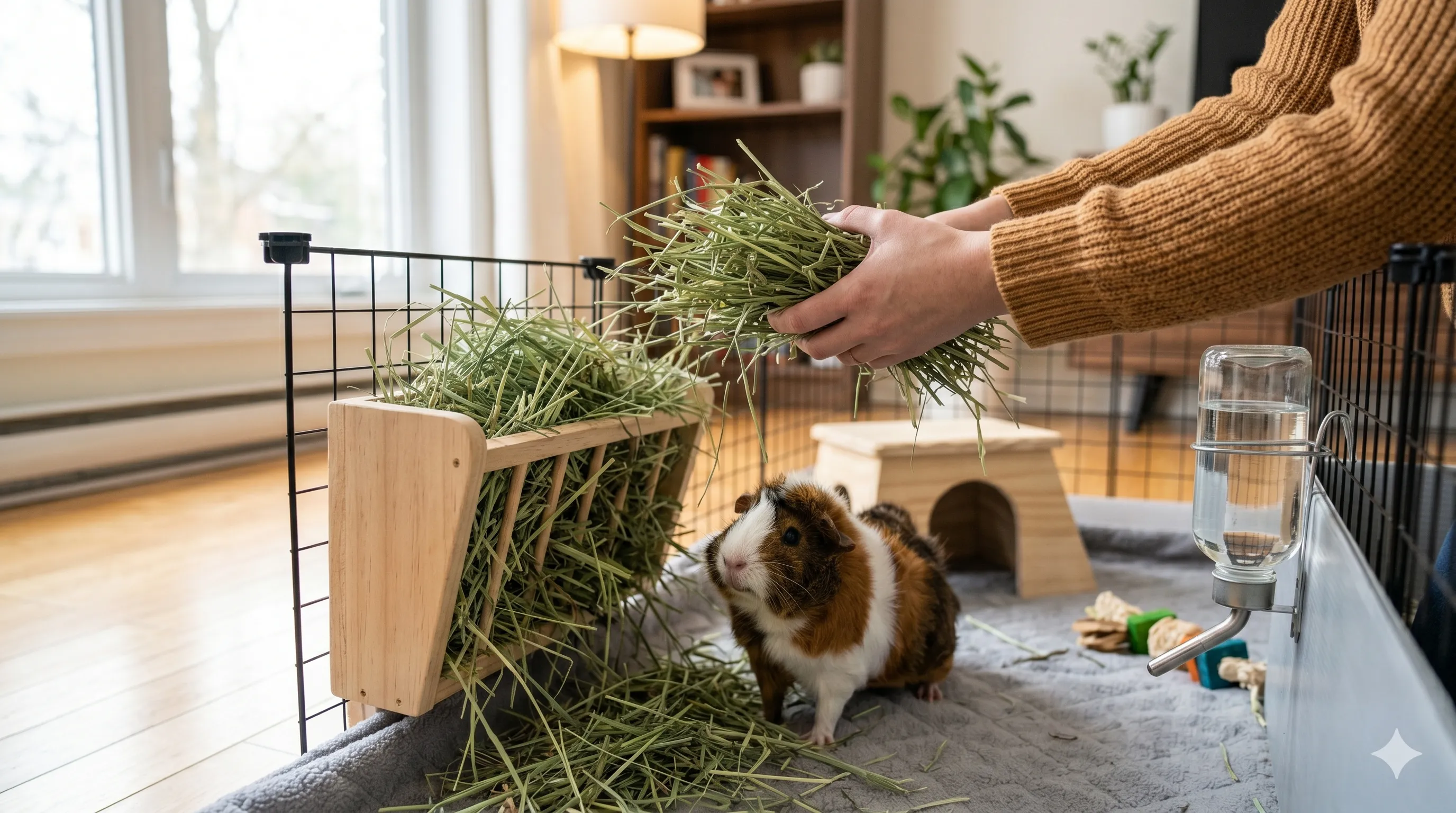
A commonly used guideline is a pile of hay roughly the same size as the guinea pig itself, refreshed throughout the day as it gets eaten down or soiled. In practical terms this works out to hay making up around 80 percent of a guinea pig's total daily diet, with pellets and fresh vegetables filling in the rest. A cage housing two or three guinea pigs simply needs that same generous pile multiplied out per pig rather than one shared portion stretched thin across all of them. Our free guinea pig feeding calculator turns this into a daily hay, pellet, and vegetable estimate by weight and age.
Signs You're Offering Enough
A guinea pig getting enough hay will usually have some left over between top-ups rather than finishing every last strand right before the next refill. Steady, regular droppings and a guinea pig that returns to the hay pile throughout the day rather than only at set mealtimes are both good signs the supply is genuinely unlimited rather than just generous.
Never Restrict or Ration Hay
Unlike pellets or vegetables, hay should never be portioned out or limited — guinea pigs need essentially unlimited access to it throughout the day. If you notice the hay rack or pile running low well before the next top-up, that's a sign to refill it sooner rather than waiting, and a guinea pig that suddenly seems uninterested in hay it normally eats eagerly is worth watching, since reduced appetite sometimes shows up alongside other early warning signs. Running out of hay for even part of the day isn't like running low on a treat, it's closer to skipping a meal entirely, so err on the side of refilling earlier rather than later.
Timothy Hay vs Alfalfa Hay
Why Timothy Is the Everyday Choice for Adults
Timothy hay has a balanced ratio of protein, fat and fiber and stays naturally low in calcium, which is one reason it's typically recommended as the everyday staple for adult guinea pigs rather than alfalfa. Orchard grass and similar grass hays work as reasonable alternatives or additions to timothy for owners who want some variety, and mixing in a second grass hay is a simple way to keep meals interesting without changing the overall nutritional balance much.
Some guinea pigs are simply picky about texture or smell between different cuttings and batches of timothy, so it's worth trying more than one supplier or harvest if a guinea pig seems unusually uninterested in an otherwise good-quality hay.
When Alfalfa Makes Sense
Alfalfa is naturally higher in protein, fat and calcium, which actually suits young guinea pigs under about six months old, along with pregnant or nursing guinea pigs who have higher nutritional demands during those stages. For a healthy, non-pregnant adult, alfalfa is best kept as an occasional treat in small amounts rather than a regular part of the daily hay pile.
How to Judge Hay Quality
Color, Smell and Texture
Good hay is pale gold to green, with a fresh, sweet, grassy smell rather than anything musty or damp. It should feel flexible and not too heavy, since overly heavy or damp-feeling hay is often a sign of trapped moisture. Any hay that's gone brown, feels musty, or shows visible mold should be thrown out entirely rather than fed, since moldy hay can make a guinea pig seriously ill. Excessive dust is worth checking for too, since a dusty batch can bother a guinea pig's airway in the same way dusty bedding can, even when the hay itself hasn't gone bad.
Storage Tips to Keep Hay Fresh
Store hay somewhere cool and dry with decent airflow rather than a damp basement or a spot near a bathroom, since trapped humidity is what turns good hay moldy in storage. Keeping hay in its original breathable packaging, or a container designed to let air move through, helps it stay fresh for longer between top-ups.
Building a Full Daily Diet Around Hay
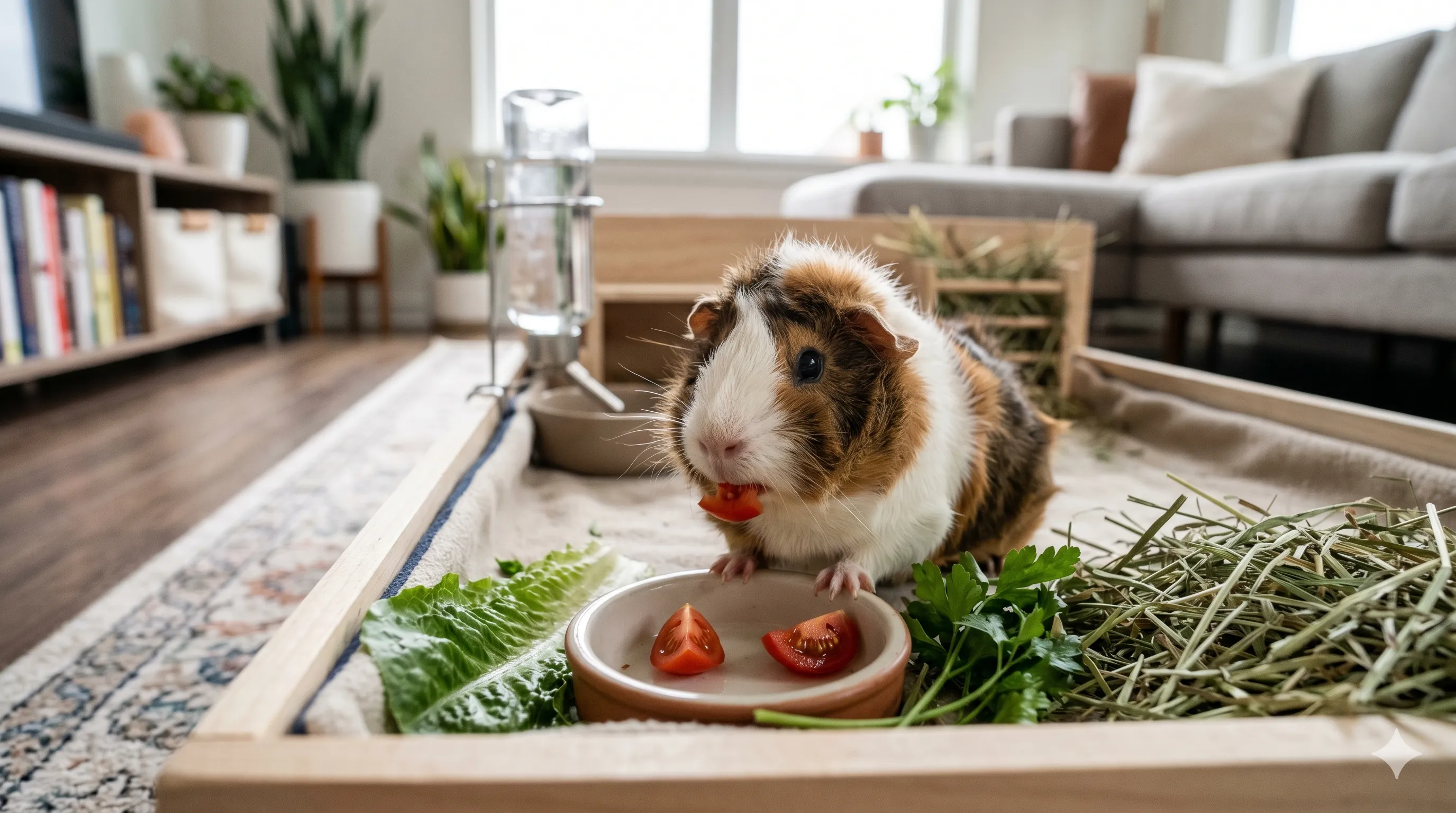
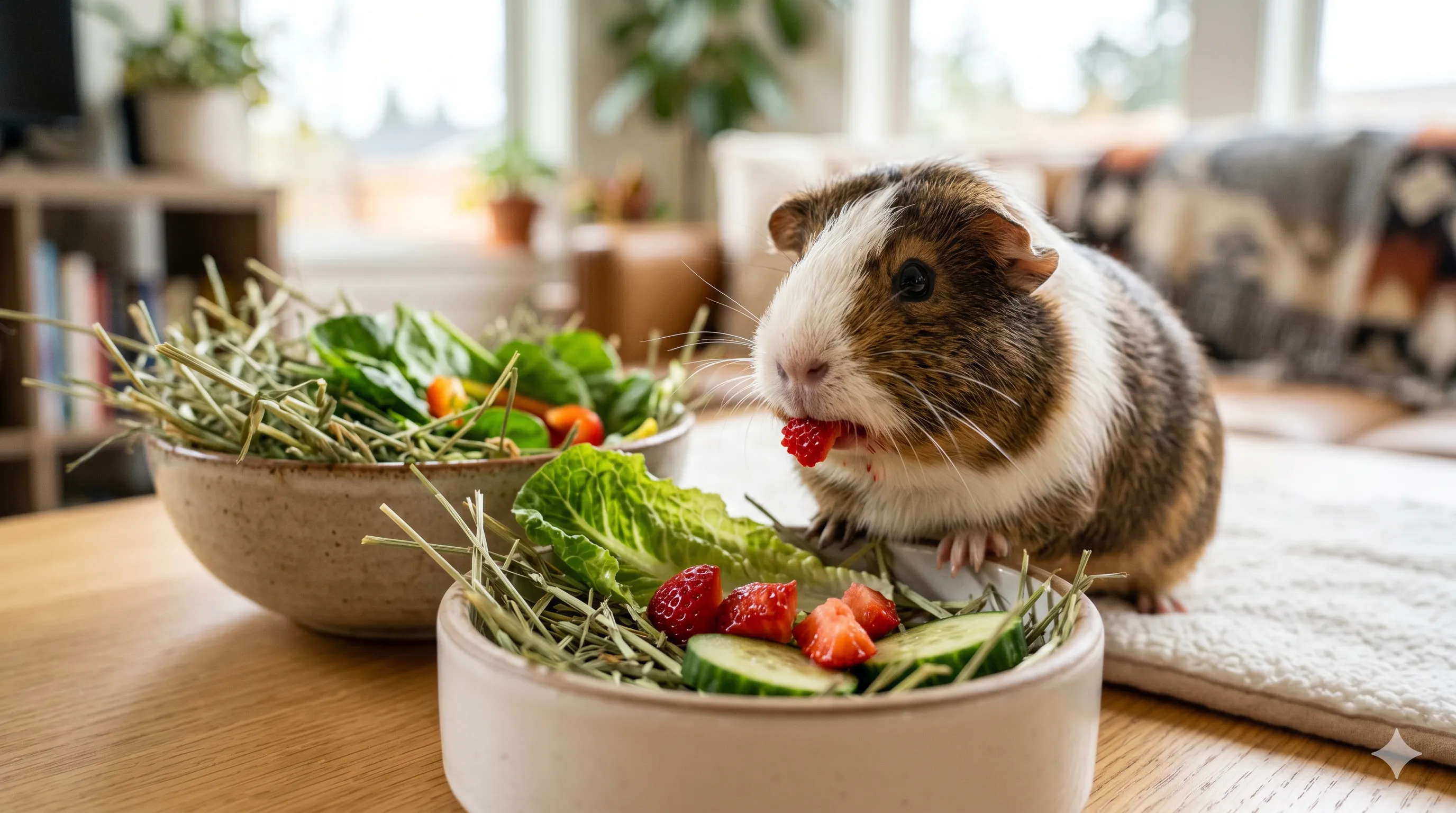
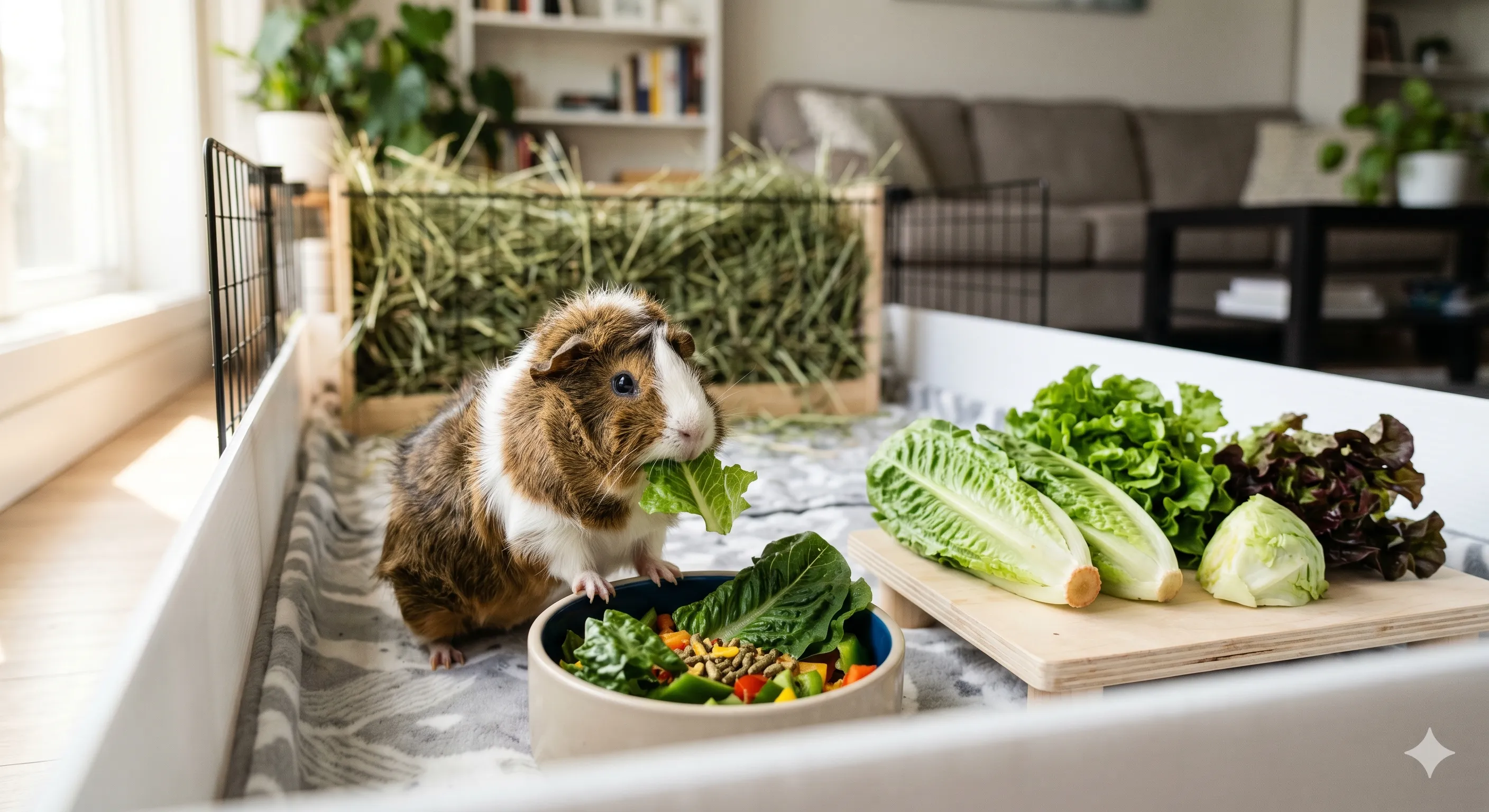
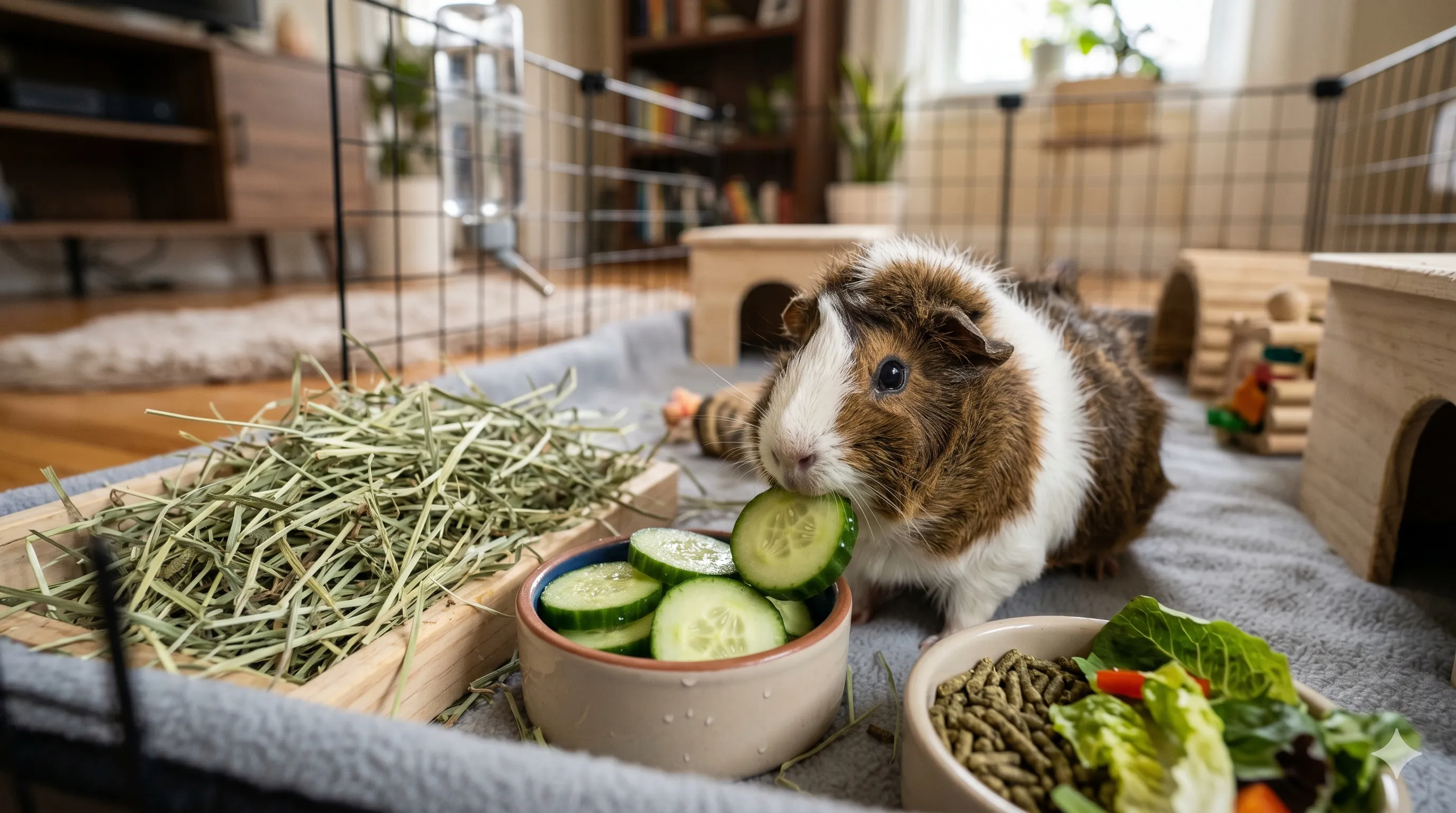
With hay covering roughly 80 percent of the diet, the rest typically comes from about an eighth of a cup of guinea pig pellets and somewhere between a handful and a cup of fresh vegetables each day. Leafy greens and crunchy vegetables both have a place here, and how often guinea pigs can eat carrots and which lettuce is safe for guinea pigs are good starting points if you're still working out which fresh foods to rotate through the week. Pellets and vegetables round out vitamins and variety, but neither one should ever be treated as a substitute for the hay itself since they simply don't offer the same constant chewing and fiber benefits.
Expert Tips for Feeding Hay
- Buy hay in smaller, more frequent batches rather than one huge bulk order if you don't have great long-term storage space available.
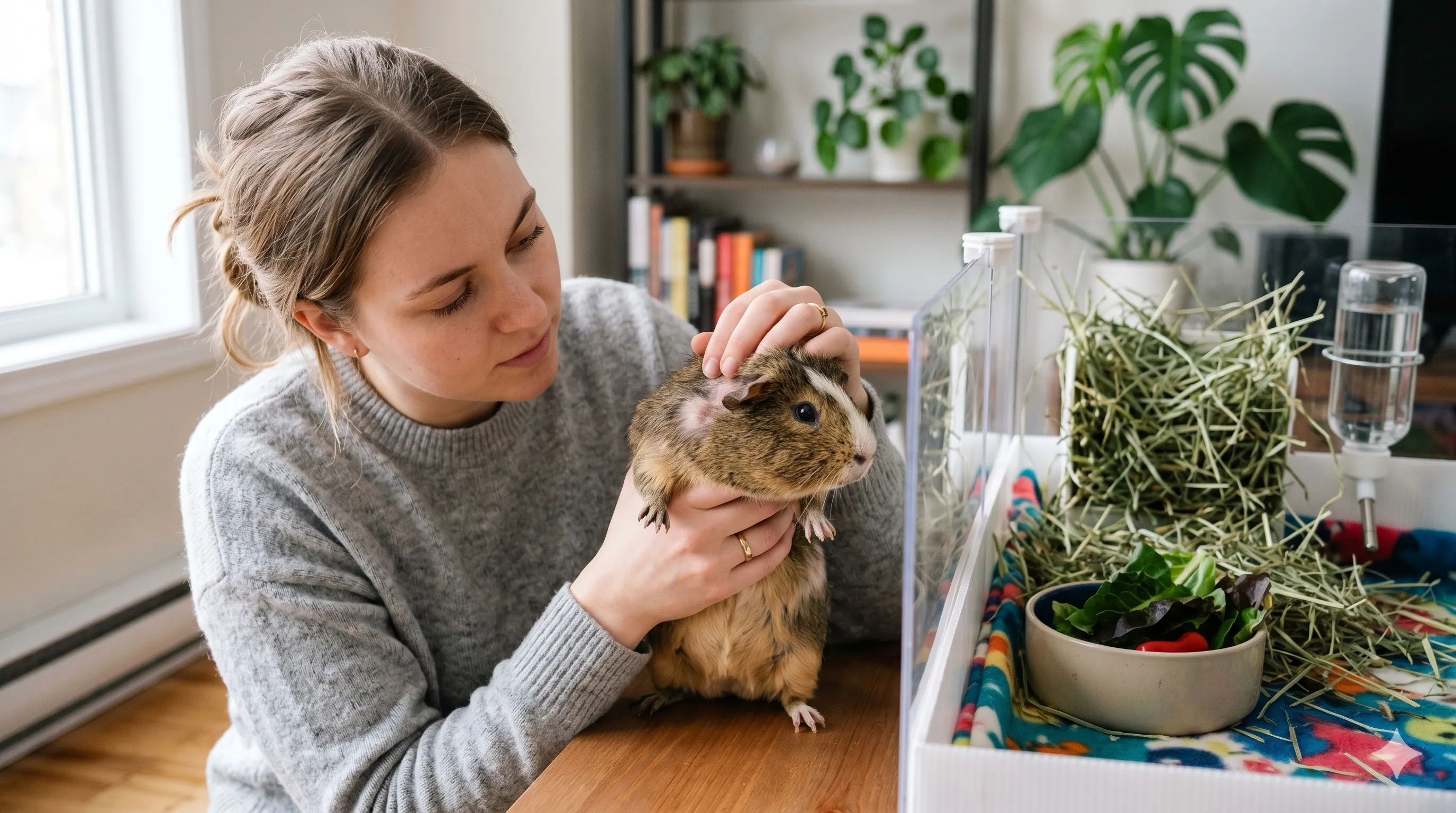
- Offer a hay rack in addition to a floor pile, since some guinea pigs prefer eating from one over the other.
- Rotate in a bit of orchard grass alongside timothy for variety without changing the overall nutritional balance much.
- Keep a small amount of alfalfa on hand strictly as an occasional treat rather than a daily staple for adult guinea pigs.
- Listen for excited chirps and sounds at feeding time — it's one of the clearest signs a guinea pig is happy with what's on offer.
Common Mistakes to Avoid
- Treating hay as an occasional extra rather than the actual foundation of the daily diet.
- Feeding alfalfa as the everyday hay for a healthy adult guinea pig instead of reserving it for young, pregnant or nursing pigs.
- Letting the hay supply run out before topping it up again.
- Storing hay somewhere damp or poorly ventilated, which speeds up mold growth.
- Feeding hay that's gone brown, musty or visibly moldy instead of discarding it.
Final Thoughts
Once unlimited fresh hay becomes the default rather than an afterthought, the rest of a guinea pig's daily diet tends to fall into place easily around it.
Get the amount right, choose timothy as the everyday staple, and learn to judge quality at a glance, and hay stops being just another chore and becomes the easiest part of feeding to get consistently right — listen for excited excited squeaking at feeding time as a sign you're getting it right.
Unlimited, good-quality hay is the single biggest thing you can get right in a guinea pig's diet.
This content is written to provide general educational guidance for guinea pig owners and pet families and is not a substitute for professional veterinary advice.
Medical Disclaimer
This content is provided for informational and educational purposes only and should not be considered veterinary, medical, behavioral, or training advice. While we strive for accuracy, we make no guarantees regarding completeness or results. Always consult a licensed veterinarian or qualified pet care professional before making decisions about your pet’s health, diet, or behavior.
AI Illustration Notice
Some images in this article may have been generated or enhanced using artificial intelligence for illustrative purposes.
Frequently Asked Questions
A useful rule of thumb is a pile of hay roughly the same size as the guinea pig itself refreshed throughout the day. This works out to hay making up around 80 percent of the total daily diet. Pellets and fresh vegetables fill in the rest.
No, hay should never be rationed since guinea pigs need essentially unlimited access to it all day long. Refill the hay pile or rack as soon as it starts running low rather than waiting. Constant access supports both healthy teeth and healthy digestion.
Timothy hay is the better everyday choice for healthy adult guinea pigs since it stays naturally low in calcium. Alfalfa is higher in protein fat and calcium which suits young pregnant or nursing guinea pigs instead. Adults can still have alfalfa occasionally as a treat in small amounts.
Good hay is pale gold to green with a fresh sweet grassy smell rather than anything musty. It should feel flexible and not overly heavy or damp to the touch. Any hay that looks brown feels musty or shows visible mold should be thrown out rather than fed.
Store hay somewhere cool and dry with good airflow rather than a damp basement or a spot near a bathroom. Trapped humidity is usually what turns otherwise good hay moldy during storage. Keeping hay in breathable packaging helps it stay fresh longer between top-ups.
Yes, alfalfa suits young guinea pigs under about six months old since they benefit from its extra protein fat and calcium while still growing. Pregnant and nursing guinea pigs benefit from it for similar reasons. It's adult guinea pigs outside of those situations who generally do better with timothy as their everyday hay.
A typical daily diet includes about an eighth of a cup of guinea pig pellets alongside the hay. Fresh vegetables should make up somewhere between a handful and a cup each day depending on the guinea pig. Rotating a variety of safe vegetables keeps meals interesting alongside the constant hay supply.
A sudden drop in hay interest is worth paying attention to since it's often one of the earlier signs something is off. Stale or musty or low quality hay can also simply put a guinea pig off eating it. If fresh good quality hay is still being ignored for more than a day it's worth checking in with a vet.
Editorial Note
This article is part of PetNurture's educational library.
Topics draw on publicly available educational resources, recognised veterinary organisations, academic publications and established animal welfare references where appropriate.
The specific sources this article draws on are listed in its References section. If you spot an error, please let us know.
References
The information in this article has been reviewed and supported using the following sources.
VCA Animal Hospitals
VCA Animal Hospitals recommends unlimited amounts of timothy or other low-calcium hay as the foundation of a guinea pig's diet, supplemented with smaller amounts of timothy-based pellets.
Accessed Aug 6, 2026
RSPCA
Good-quality hay should make up the majority of a guinea pig's diet and be available at all times, per RSPCA feeding guidance.
Accessed Aug 6, 2026
Pet Emergency Guidance
Every pet is unique. If your pet exhibits severe symptoms, sudden behavioral changes, or a medical emergency, do not rely on online guides — contact a licensed veterinarian or emergency clinic immediately.
About PetNurture
PetNurture is an educational library of pet care guides, interactive tools and practical resources for pet parents. We work continuously to keep our content accurate and up to date. Reader feedback helps us maintain content quality.
Related Articles
Popular Guinea Pig Guides
Guinea Pig
Guinea Pig Feeding Calculator
Calculate daily food portions for your guinea pig by weight.
Guinea Pig
Guinea Pig Cage Size Calculator
Find the minimum recommended cage size for your guinea pigs.