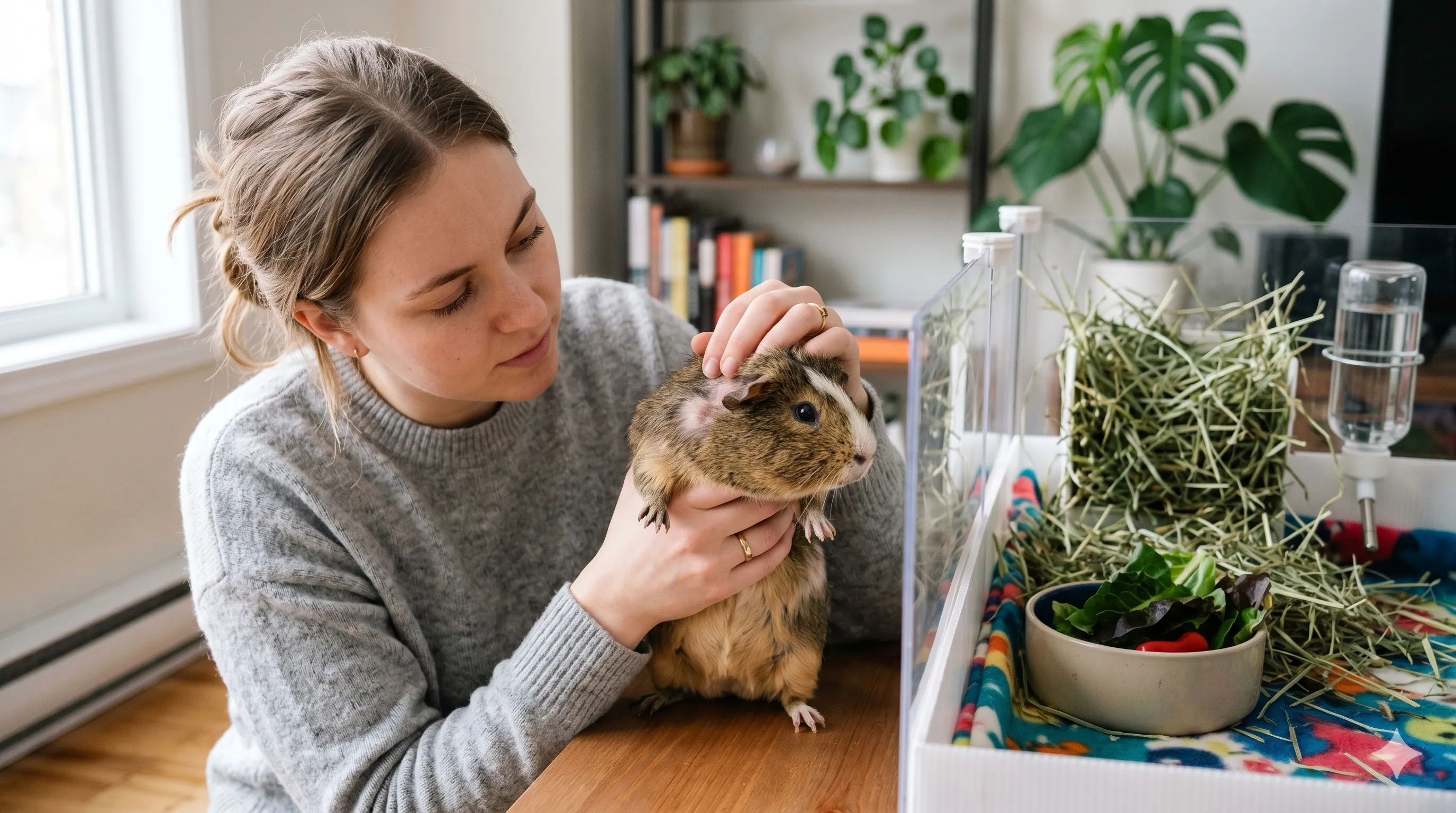
Guinea Pig Weight Chart: Healthy Weight by Age, Sex & Breed
- Why Guinea Pig Weight Matters More Than It Seems
- Guinea Pig Weight Chart by Age
- Growth Slows Once a Guinea Pig Reaches Adulthood
- Weight Gain in the First Weeks of Life
- Healthy Adult Weight by Sex and Breed
- Female Guinea Pigs
- Male Guinea Pigs
- Breed and Individual Variation
- How to Weigh Your Guinea Pig Correctly
- Weighing Tips
- How Often to Weigh
- Is Your Guinea Pig Underweight or Overweight?
- Signs of Being Underweight
- Signs of Being Overweight
- When Weight Loss Is an Emergency
- Common Causes of Weight Loss
- How Much Weight Loss Is Too Much
- Weighing Guinea Pigs in Multi-Pig Households
- Tips for Multi-Pig Weigh-Ins
- Guinea Pig Obesity: Risks and Prevention
- Health Risks of Excess Weight
- Preventing Unhealthy Weight Gain
- Expert Tips for Tracking Guinea Pig Weight
- Common Mistakes to Avoid
- Final Thoughts
Note: This article is for informational purposes only and does not replace professional veterinary advice.
Quick Answer
Adult female guinea pigs typically weigh 700 to 1100 grams while adult males typically weigh 900 to 1500 grams, with breed and build shifting the range slightly. Weigh weekly on a digital kitchen scale and contact an exotic-animal vet for any drop of 50 grams or more in a week or a steady downward trend.
A guinea pig's weight is one of the clearest windows into her overall health, since guinea pigs are prey animals that instinctively hide signs of illness until a problem is already well underway. A healthy adult female typically weighs somewhere between 700 and 1,100 grams while a healthy adult male usually falls between 900 and 1,500 grams, though breed and individual build shift that range in either direction. This guide breaks down what a guinea pig should weigh at every life stage, how to weigh her correctly at home, and the specific warning signs of weight loss or weight gain that are worth a call to an exotic-animal vet rather than a wait-and-see approach.
Why Guinea Pig Weight Matters More Than It Seems
Guinea pigs are a prey species, and in the wild a visibly weak animal attracts predators, so they keep eating, moving, and grooming as normally as they can for as long as they can. By the time a pig looks unwell, she has often been losing weight for days, which is why the scale picks up trouble before behavior does.
Regular weighing turns a vague sense that something seems different into an actual data point, which is exactly why weekly weigh-ins are considered standard practice among exotic-animal vets rather than an optional extra step.
A weight log also gives your vet a baseline to compare against. Because an adult guinea pig weighs only around a kilogram, a loss of 30 to 50 grams is a meaningful share of her body, and it shows up on a kitchen scale well before it is visible to the eye. Catching a downward trend in the first week or two, rather than the first month, makes a real difference to how quickly a cause is found.
Guinea Pig Weight Chart by Age
Growth happens quickly in the first few months of life and then levels off as a guinea pig reaches maturity. The ranges below reflect general growth patterns reported across guinea pig care resources and should be read as a normal window rather than an exact target.
- At birth: roughly 85 to 100 grams (about 3 to 3.5 ounces)
- 2 months old: roughly 180 to 240 grams
- 3 months old: roughly 240 to 360 grams
- 6 months old: roughly 500 to 900 grams depending on sex and build
- 12 to 14 months old (adult): growth typically plateaus around this age
Growth Slows Once a Guinea Pig Reaches Adulthood
Most guinea pigs reach their adult size at around 12 to 14 months, although weight can keep drifting afterward with diet, activity, and age. Once growth has levelled off, her weigh-ins should sit within a few percent of one another, so a sudden shift in either direction stands out.
Weight Gain in the First Weeks of Life
The fastest growth happens in the first eight weeks, which is also the window where a daily or every-other-day weigh-in matters more than the weekly schedule used for adults.
- Day 1: roughly 85 to 100 grams at birth, with pups from larger litters typically starting nearer the lower end
- 1 week old: a small but steady gain most days is expected, and a pup that isn't gaining at all in the first week is worth mentioning to a vet
- 3 to 4 weeks old: usually well past 200 grams, and this is also the general window many breeders use for weaning
- 6 to 8 weeks old: approaching or within the 2-month range noted above as growth continues at a steady pace
A newborn who loses weight in the first 48 hours rather than holding steady or gaining, or who feels notably lighter than her littermates, is worth a same-day call to an exotic-animal vet rather than a wait-and-see approach.
Healthy Adult Weight by Sex and Breed
Sex is the biggest single factor separating one healthy adult weight from another, with build and breed adding some additional variation on top of that baseline.
Female Guinea Pigs
Most sources place a healthy adult female's weight between 700 and 1,100 grams, or roughly 1.5 to 2.5 pounds. A female who has been pregnant may temporarily weigh more during and shortly after that time before settling back toward her usual range.
Male Guinea Pigs
Adult males generally run larger, typically falling between 900 and 1,500 grams or about 2 to 3.5 pounds. The wider range reflects how much build and breed can influence a male's healthy weight compared to females.
Breed and Individual Variation
A guinea pig's healthy weight isn't a single fixed number even within the same sex, since breed, bone structure, and individual build all play a role. A guinea pig who sits slightly above or below the typical range but has consistently stayed there, eats normally, and has a visible waist is usually not a cause for concern on weight alone.
How to Weigh Your Guinea Pig Correctly
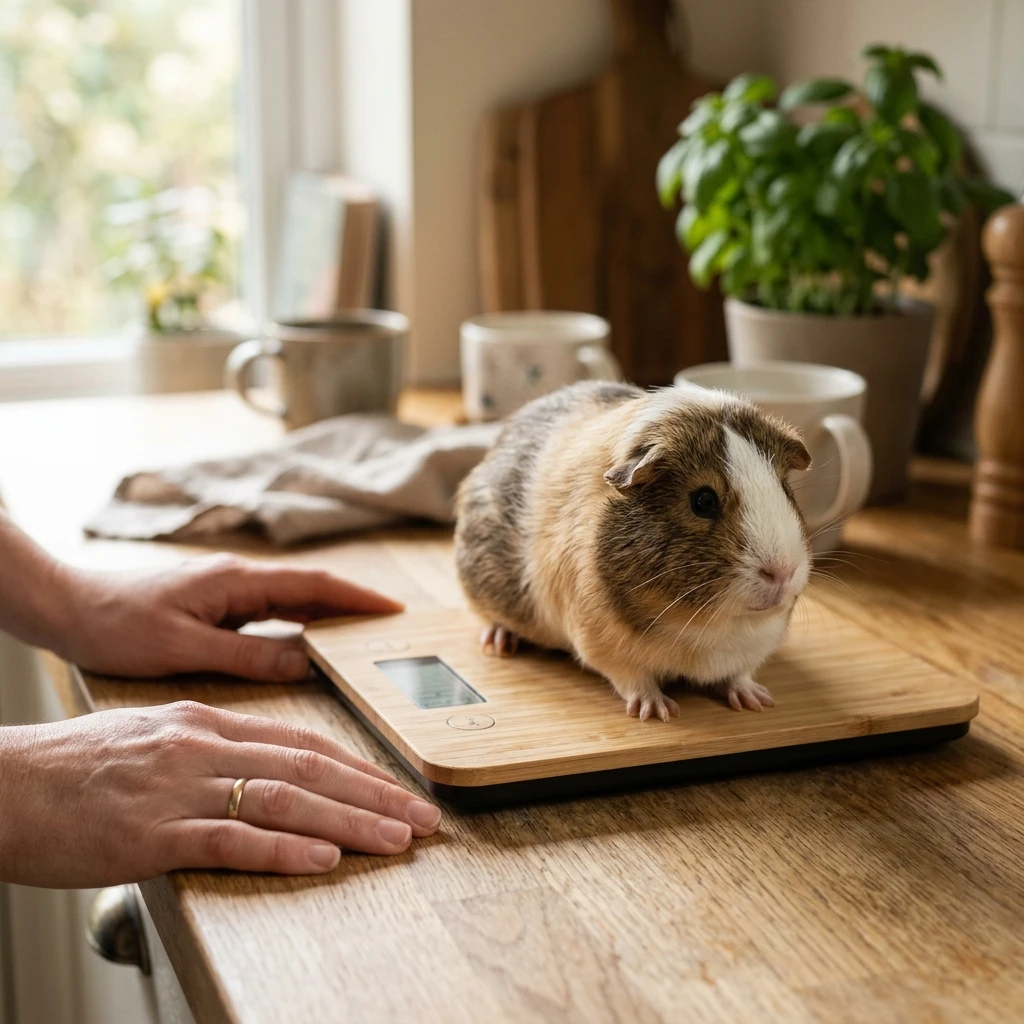
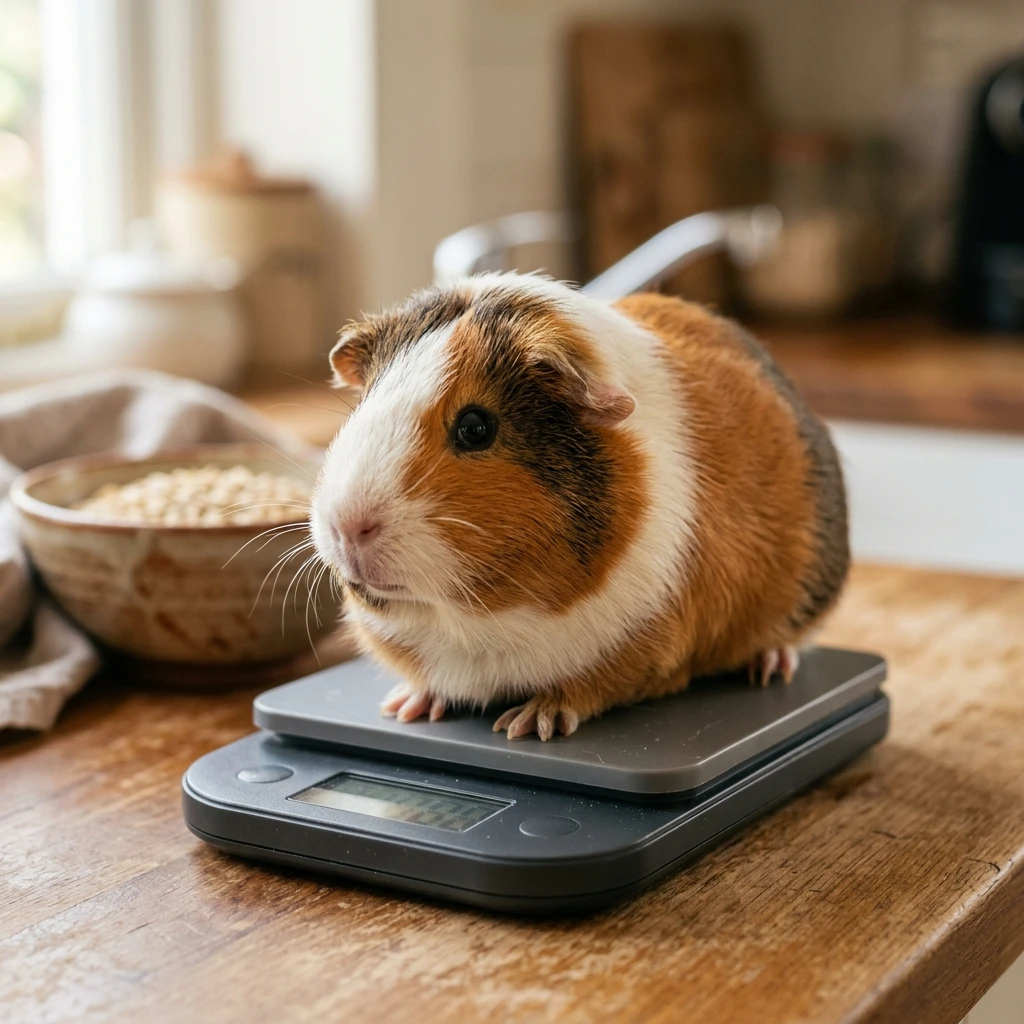
A digital kitchen food scale accurate to a few grams works far better than a bathroom scale, which isn't sensitive enough to catch meaningful changes in an animal this small.
Weighing Tips
- Place a small bowl or container on the scale and zero it out before adding the guinea pig
- Weigh on the same day and at about the same time each week, because a pig that has just eaten a large meal or been drinking can read a little heavier than one weighed at a different time of day
- Keep her still for a few seconds by offering a small piece of vegetable while the scale settles
- Record the number in grams straight away, along with the date, so you are comparing like with like from week to week
How Often to Weigh
Most exotic-animal vets suggest a weekly weigh-in for a healthy adult, on the same day and ideally at the same time. Pups, pregnant sows, and any pig recovering from illness are better weighed every day or two. One number on its own says little; what matters is how this week compares with the last several.
Is Your Guinea Pig Underweight or Overweight?
The scale is only half of the picture, because two guinea pigs of the same weight can be built very differently. A long, large-framed boar and a compact sow may both be healthy at weights that would be too high or too low for the other, so judge weight together with how she looks and feels.
Signs of Being Underweight
- Ribs, spine, or hip bones that feel sharp and prominent rather than lightly padded
- A visible dip or hollow around the hips and lower back
- Reduced energy or a noticeable drop in normal activity
- A steady downward trend across multiple weekly weigh-ins
Signs of Being Overweight
- No visible waist when viewed from above
- Ribs that are difficult to feel under a thick layer of fat
- Fat rolls or pads around the neck, shoulders, or hindquarters
- Difficulty reaching the belly or hindquarters during normal grooming
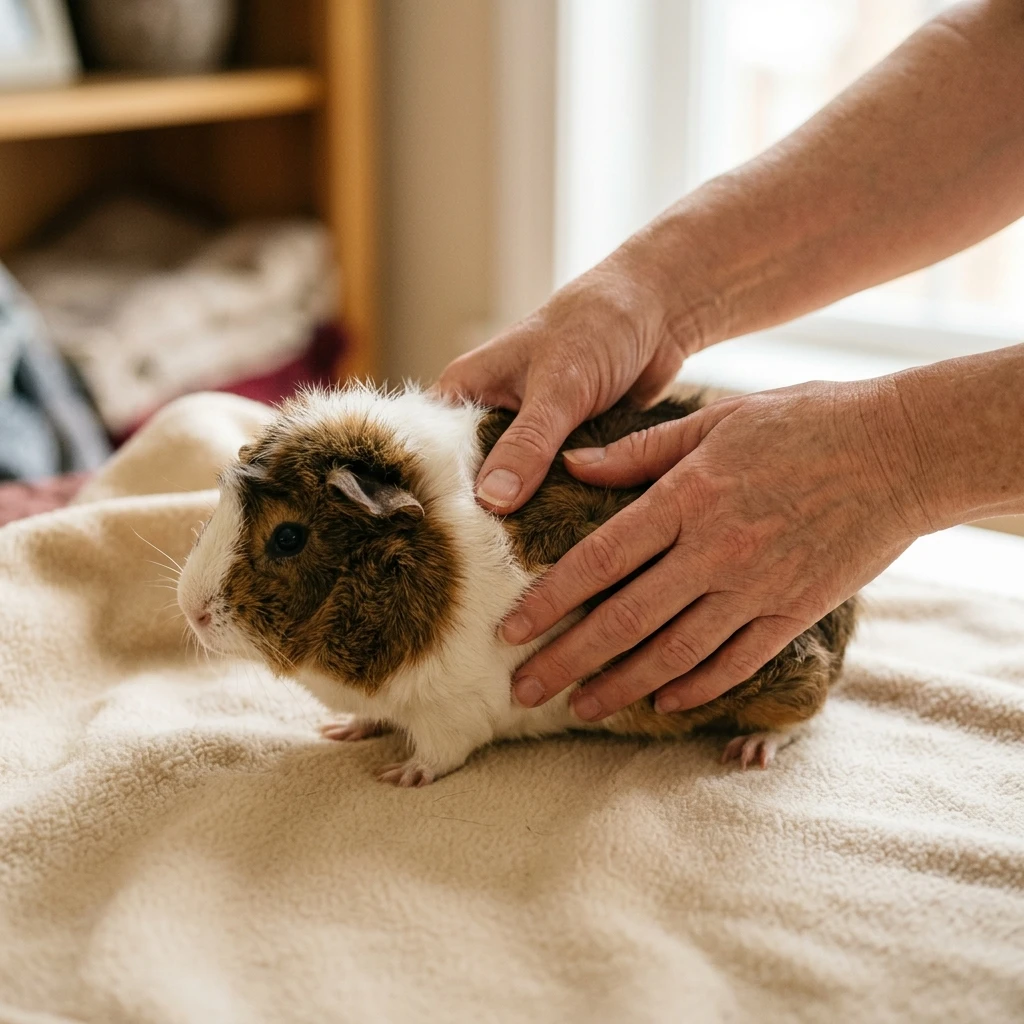
While she is on the scale, run a hand lightly along her back and sides. A healthy pig feels firm and rounded, with ribs you can find under a thin cushion of padding; a pig whose spine feels like a ridge is too thin, and one whose ribs you cannot find is too heavy.
When Weight Loss Is an Emergency
A guinea pig that is losing weight is rarely just thin. Her gut depends on a steady stream of fiber, so even a short stretch of poor eating can slow digestion further and make her eat less still. That is why weight loss in this species is treated as urgent rather than something to monitor for a month.
Common Causes of Weight Loss
dental disease causing painful chewing is one of the most common underlying causes, since overgrown or misaligned teeth make chewing painful enough that a guinea pig quietly eats less without any other obvious sign. Reduced appetite from stress, digestive upset, parasites, infection, or organ disease can all drive weight loss as well, and more than one cause can be at play at the same time.
- Dental disease: guinea pig teeth grow continuously, so overgrown or misaligned molars and incisors make hay painful to chew and eating slows gradually
- Vitamin C deficiency: guinea pigs cannot make their own vitamin C, and a shortage leads to scurvy, which shows up as lethargy, poor appetite, weight loss, a rough coat, and sore joints
- Gastrointestinal stasis: slowed gut movement, usually seen as small or absent droppings together with refusing food, and it can become life-threatening within a day or two
- Respiratory infection: often paired with sneezing, noisy breathing, or discharge from the eyes or nose alongside a drop in appetite and weight
- Mites and other parasites: heavy mite burdens cause intense itching and scratching, and the stress and discomfort can pull body condition down over weeks
- Bladder stones or urinary disease: common in guinea pigs and often accompanied by straining, squeaking when urinating, or blood in the urine
- Social or environmental stress: a new cagemate, a move, or a loud room can suppress appetite temporarily in an otherwise healthy pig
How Much Weight Loss Is Too Much
For an animal that weighs around a kilogram, a loss of 50 grams is about 5 percent of her body weight in a single week. Call an exotic-animal vet if a pig has lost weight across two weigh-ins in a row, and the same day if the drop comes with eating less, smaller droppings, hunching, or drooling. a sudden drop in appetite alongside a drop in weight is an especially strong signal that something needs veterinary attention soon, since the two together often point to the same underlying cause.
Weighing Guinea Pigs in Multi-Pig Households
Guinea pigs are herd animals and generally do better with a companion, but a shared enclosure makes it hard to see which pig is eating less. A bonded pair can look equally well fed from the doorway while one of them is slowly losing ground.
Tips for Multi-Pig Weigh-Ins
- Weigh every pig on the same day and keep a separate log for each, because an unchanged average can hide one pig declining while another gains
- Offer more than one hay rack and food bowl, placed apart, so a dominant pig cannot guard the only supply
- Watch for a pig that eats only when her cagemate is out of the way, since that is often an early sign that she is not getting her share
- If one pig starts to slip, feed her separately for a few days and see whether her weight recovers, which helps tell competition apart from illness
- Weigh pups and their mother separately, since a nursing sow can lose weight while her litter gains
Guinea Pig Obesity: Risks and Prevention
Guinea pigs gain weight gradually, which makes it easy to miss until the extra weight is already causing problems. Unlimited pellets, a daily helping of sweet vegetables and fruit, and little room to run are the usual combination.
Health Risks of Excess Weight
Extra weight presses on the soles of the feet, which raises the risk of bumblefoot (pododermatitis), a painful sore that is hard to treat. It also strains the heart and joints and makes it harder for a pig to reach and clean her rear end. Overweight sows are also more prone to pregnancy toxemia, a serious condition late in pregnancy, so breeding or accidental pregnancy in an obese sow is a particular concern.
Preventing Unhealthy Weight Gain
Unlimited grass hay should make up most of her diet, with a measured portion of plain pellets and a modest helping of vegetables rather than free-fed pellets or a bowl of fruit. Treats high in sugar, such as carrots, apple, and dried fruit, are best kept occasional. Daily time outside the cage matters too, and daily supervised floor time gives her room to move around and stay active rather than sitting in one spot most of the day.
Expert Tips for Tracking Guinea Pig Weight
- Use grams rather than ounces, since a change of 20 or 30 grams is easy to see in grams and easy to round away in ounces.
- Take a photo of her from above every month so changes in shape are easier to compare than they are from memory.
- Keep the scale and a small box or bowl in the same place so weighing becomes a calm routine instead of a chase.
- Bring the log to every vet visit, since a documented trend helps narrow down a cause much faster than a single weigh-in.
- Expect a sow's weight to rise during pregnancy and fall after birth, and a pig's weight to dip slightly while she moults, rather than assuming every change is a problem.
Common Mistakes to Avoid
- Weighing only when something already seems wrong, which leaves no baseline to compare against
- Assuming a thin pig is just built that way without checking that her weight has actually been stable
- Free-feeding pellets and sweet treats, which fills her up and displaces the hay her teeth and gut need
- Judging her against an online average instead of her own steady weight
- Waiting to see whether a weight drop corrects itself before calling a vet
Final Thoughts
A healthy guinea pig weight is less a universal number than a stable personal baseline, generally somewhere between 700 and 1,100 grams for adult females and 900 and 1,500 grams for adult males. A weekly weigh-in together with a quick feel along her back turns a vague worry into real information, and treating a sudden drop or a steady decline as a same-day call to the vet gives her the best chance if something is wrong.
For the everyday habits that keep her weight steady beyond the scale, this complete guinea pig care guide covers housing, diet, and health checks in one place.
Weigh your guinea pig weekly in grams and compare each reading with her own recent numbers, not with an average.
This guide is for general education and is not a substitute for veterinary care. Any guinea pig showing sudden weight loss, a steady downward trend, or signs of obesity-related discomfort should be seen by an exotic-animal veterinarian.
Medical Disclaimer
This content is provided for informational and educational purposes only and should not be considered veterinary, medical, behavioral, or training advice. While we strive for accuracy, we make no guarantees regarding completeness or results. Always consult a licensed veterinarian or qualified pet care professional before making decisions about your pet’s health, diet, or behavior.
AI Illustration Notice
Some images in this article may have been generated or enhanced using artificial intelligence for illustrative purposes.
Frequently Asked Questions
Adult females typically weigh between 700 and 1100 grams while adult males usually fall between 900 and 1500 grams. Breed and individual build can shift these ranges slightly in either direction.
Males generally have a larger overall frame and tend to carry more muscle mass than females. This is a normal sex difference rather than a sign of health problems in either direction.
A newborn guinea pig usually weighs around 85 to 100 grams at birth. Weight increases quickly over the following weeks and growth typically levels off around 12 to 14 months old.
Weekly weigh-ins are standard for healthy adult guinea pigs. Young growing pigs and any guinea pig recovering from illness often benefit from being weighed every few days instead.
Dental disease is one of the most common causes since painful overgrown teeth make eating uncomfortable. Digestive upset stress parasites infection and organ disease can also drive weight loss and more than one cause can overlap.
A drop of 50 grams or more within a single week or any steady downward trend across several weigh-ins is generally considered a reason to call an exotic-animal vet. Guinea pigs can decline quickly once an underlying problem takes hold so this isn't something to wait out.
Ribs spine or hip bones that feel sharp rather than lightly padded are a common sign. A visible hollow around the hips combined with a downward weight trend across a few weigh-ins is worth a vet visit.
Look for no visible waist when viewed from above and ribs that are hard to feel under a thick layer of fat. Fat rolls around the neck or hindquarters and trouble reaching the belly to groom are also common signs.
Excess weight puts strain on the joints and heart and raises the risk of insulin resistance. It can also contribute to gastrointestinal stasis and make it harder for a guinea pig to groom her own hindquarters.
A digital kitchen food scale accurate to a few grams works best. A bathroom scale isn't sensitive enough to catch meaningful changes in an animal this small.
Yes. Breed along with bone structure and individual build all influence what a healthy weight looks like for a specific guinea pig. A pig who sits slightly outside the typical range but stays consistent there and eats normally usually isn't a concern on weight alone.
Yes. A female often weighs more during and shortly after pregnancy before gradually settling back toward her usual range. This temporary shift is normal and expected rather than a health concern on its own.
Normal vs. Concerning Symptoms
A general guide to help you tell everyday variation apart from something worth a vet visit. This is educational context, not a diagnosis.
| Symptom | What's Normal | When to Be Concerned |
|---|---|---|
| Weekly weight trend | Stable or only slight change from one week to the next | A drop of 50 grams or more in a single week or a steady decline |
| Body shape | A visible waist with ribs easy to feel under a thin layer of fat | No visible waist and ribs that are hard to feel or hip bones that feel sharp |
| Appetite | Steady eating and drinking at the usual pace | Reduced interest in hay pellets or usual treats |
| Activity level | Normal moving popcorning and exploring the enclosure | Reduced movement or reluctance to move around |
| Grooming and breathing | Easy breathing and able to reach and groom the whole body | Labored breathing or visible trouble reaching the hindquarters |
What Should I Do Next?
A general decision guide — always use your own judgement and contact a veterinarian for anything beyond routine care.
- Weigh her again to confirm the trend Use the same scale and roughly the same time of day and compare the number against last week's log.
- Check appetite hay intake and droppings Reduced eating or noticeably fewer or smaller droppings often point to the same underlying problem as the weight change.
- Call an exotic-animal vet for a significant drop or trend A 50 gram or greater weekly drop or several weeks of steady decline warrants a same-week call rather than a wait-and-see approach.
- Bring the weight log to the appointment A written trend helps a vet narrow down potential causes faster than a single weigh-in on its own.
- Follow the vet's feeding and monitoring plan Adjust portions or supplements only as directed rather than changing the diet on your own before a diagnosis.
Common Mistakes
- Weighing only occasionally instead of on a consistent weekly schedule that actually reveals a trend
- Assuming a thinner or heavier guinea pig is just her natural build without confirming the trend is stable
- Free-feeding unlimited pellets and treats without noticing the slow steady weight gain it can cause
- Comparing a guinea pig's weight to a generic online average instead of tracking her own personal baseline
- Waiting to see if a sudden weight drop corrects itself before calling a vet
Prevention Tips
- Weigh on the same kitchen scale at roughly the same time each week and log the number
- Offer unlimited grass hay as the base of the diet rather than filling up mostly on pellets
- Provide daily supervised floor time so she can move around and stay active
- Check for a visible waist and easily felt ribs as a quick at-home body condition check
- Measure pellet and treat portions instead of free-feeding without limits
- Call a vet promptly for any unexplained weight change rather than waiting to see if it passes
Illustrative Example
Consider an owner who weighs their guinea pig every Sunday and logs the number in a notes app. Two weeks in a row the scale shows a drop of around 40 grams each time, though the guinea pig still seems to be eating and acting mostly normal. Rather than dismissing it as a fluke the owner checks her teeth area for drooling and notices slightly less hay disappearing from the rack than usual. Because the weekly log made the trend obvious well before any dramatic change in behavior appeared, a same-week vet visit catches early dental discomfort before it progresses into a much larger drop in weight and appetite.
Practical Checklist
- Use a digital kitchen food scale accurate to a few grams
- Weigh at roughly the same time of day each week for consistency
- Log each week's number rather than relying on memory
- Check for a visible waist and easily felt ribs as part of the weigh-in
- Note any change in appetite or droppings alongside the weight
- Call an exotic-animal vet for a 50 gram or greater weekly drop
Editorial Note
This article is part of PetNurture's educational library.
Topics draw on publicly available educational resources, recognised veterinary organisations, academic publications and established animal welfare references where appropriate.
The specific sources this article draws on are listed in its References section. If you spot an error, please let us know.
References
The information in this article has been reviewed and supported using the following sources.
Merck Veterinary Manual
Disorders and Diseases of Guinea Pigs
Confirms weight loss as an early clinical indicator in guinea pigs and common underlying causes including dental disease and gastrointestinal issues; supports the Weight Loss and Common Causes sections of this article.
Accessed Aug 19, 2026
PDSA
Confirms weekly weighing as recommended routine care and prompt veterinary attention for weight change; supports the How Often to Weigh and When Weight Loss Is an Emergency sections.
Accessed Aug 19, 2026
Guinea Lynx
Confirms the weekly weighing practice and the approximate weight-drop threshold used as a general guideline for when a change warrants concern; supports the Weighing Tips and Weight Loss sections.
Accessed Aug 19, 2026
Pet Emergency Guidance
Every pet is unique. If your pet exhibits severe symptoms, sudden behavioral changes, or a medical emergency, do not rely on online guides — contact a licensed veterinarian or emergency clinic immediately.
About PetNurture
PetNurture is an educational library of pet care guides, interactive tools and practical resources for pet parents. We work continuously to keep our content accurate and up to date. Reader feedback helps us maintain content quality.
Related Articles


Popular Guinea Pig Guides

Guinea Pig
Guinea Pig Feeding Calculator
Calculate daily food portions for your guinea pig by weight.
Guinea Pig
Guinea Pig Cage Size Calculator
Find the minimum recommended cage size for your guinea pigs.