Why Is My Guinea Pig Not Eating? Causes & Emergency Signs
- Why Is My Guinea Pig Not Eating? (Quick Answer)
- Common Causes
- 1. Dental Problems
- 2. Gastrointestinal Stasis
- 3. Respiratory Infection
- 4. Pain or Injury
- 5. Stress or Environmental Change
- Emergency Warning Signs
- When to See a Vet
- What to Do While You Arrange Veterinary Care
- What a Normal Eating Pattern Looks Like
- Treatment Options
- Prevention Tips
- Expert Tips
- Common Mistakes
- Final Thoughts
Note: This article is for informational purposes only and does not replace professional veterinary advice.
If your guinea pig suddenly stops eating, it should always be taken seriously. Guinea pigs have sensitive digestive systems that rely on constant food intake and even a short pause in eating can quickly turn into a medical emergency. Many exotic-pet veterinarians treat guinea pig appetite loss as an urgent symptom rather than something to watch and wait on, because the digestive slowdown that follows can become dangerous within hours rather than days. If the guinea pig is pregnant, appetite loss is an especially important warning sign, and our guinea pig pregnancy guide explains what to watch for.
Why Is My Guinea Pig Not Eating? (Quick Answer)
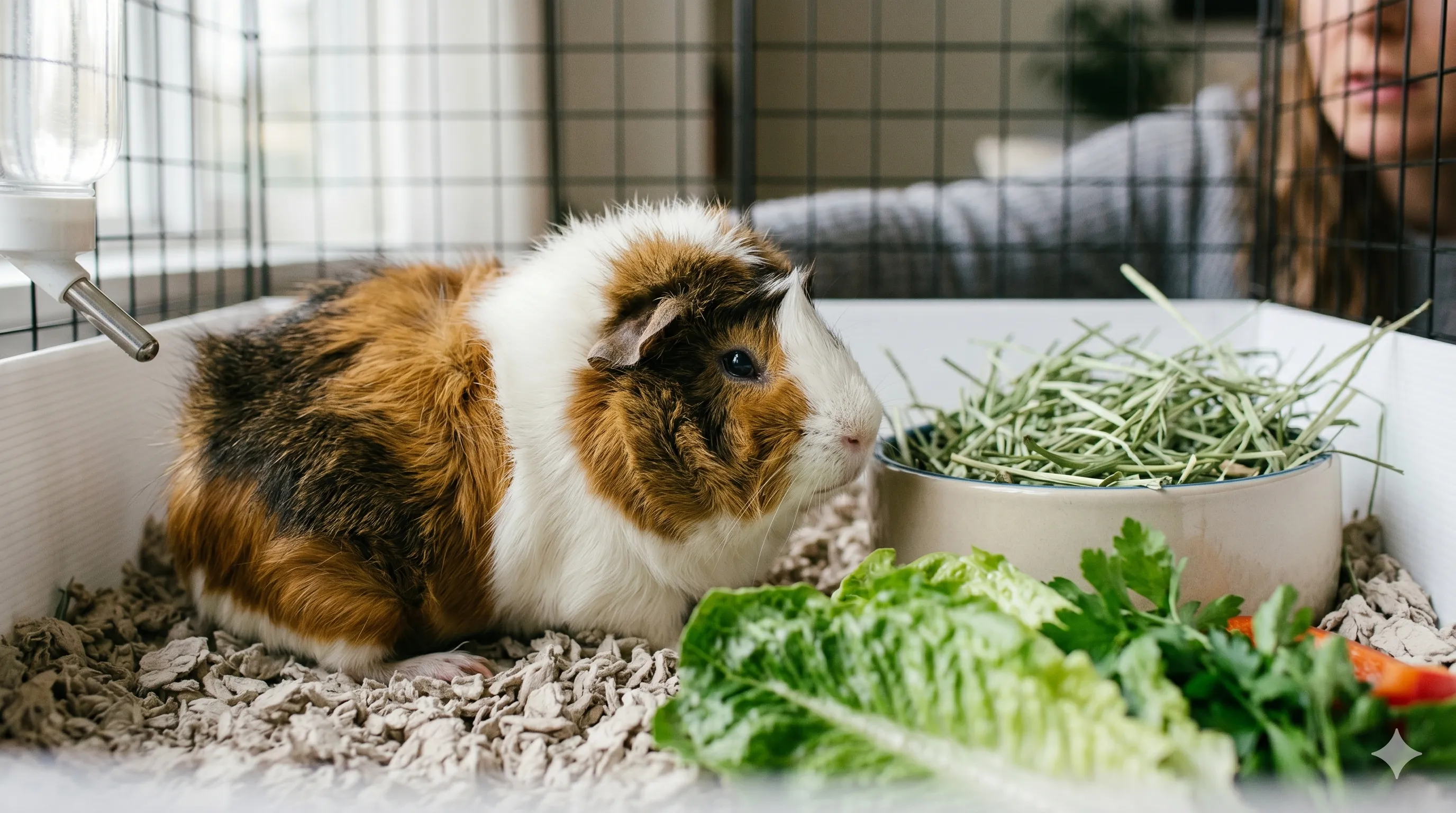
Guinea pigs may stop eating due to dental problems, digestive issues, stress, pain, illness, respiratory infections, poor diet, or gastrointestinal stasis. Many guinea pig care resources treat 6 to 8 hours without eating as an early warning sign and appetite loss that continues beyond 12 hours as a stronger signal that gut motility may already be slowing down. Because of this a guinea pig that refuses food for more than a few hours should be seen by a vet rather than monitored at home.
Common Causes
1. Dental Problems
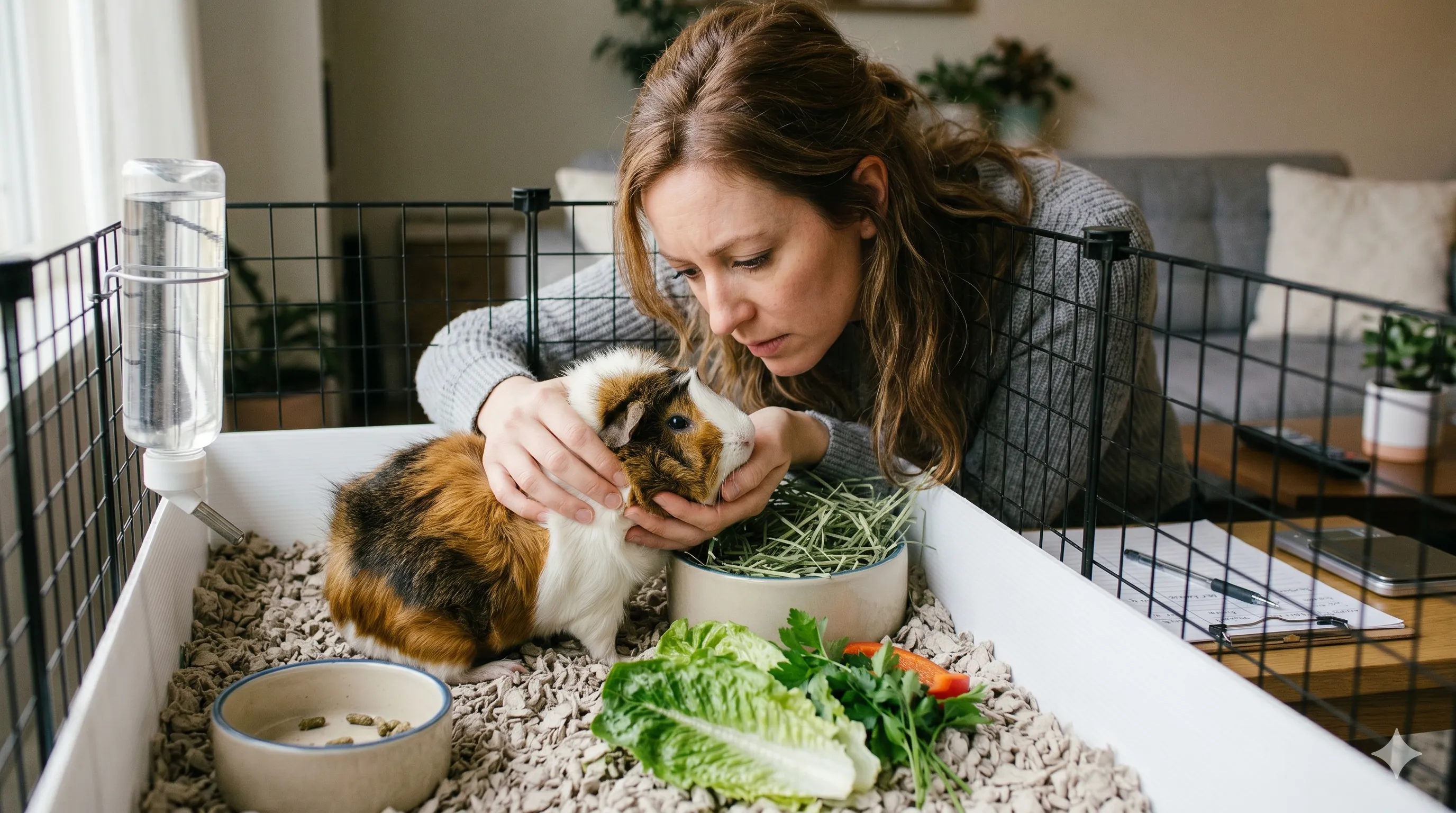
Guinea pig teeth grow continuously throughout life and overgrown teeth or sharp spurs on the back molars can make chewing painful. Drooling combined with a reduced appetite is a common sign of dental pain and it usually means an exotic vet needs to check the mouth for spurs or misalignment.
2. Gastrointestinal Stasis
Gastrointestinal (GI) stasis is a slowdown or stoppage of the digestive system and it is one of the most serious causes of appetite loss in guinea pigs. A firm or swollen-feeling abdomen along with reduced or absent droppings often goes along with it. Left untreated GI stasis can become life-threatening within a day or two so prompt veterinary care matters more than trying home remedies first. Tracking your guinea pig's weight on a regular schedule helps you catch a loss early, and our guinea pig weight chart shows what to compare against.
3. Respiratory Infection
Guinea pigs with a respiratory infection often lose interest in food before other symptoms become obvious. Watch for noisy or labored breathing, sneezing, or discharge from the eyes or nose alongside the appetite change.
guinea pig sneezing and respiratory signs4. Pain or Injury
Pain from an injury, bladder or urinary issues, or another underlying illness can reduce appetite even when there is no obvious wound. A guinea pig that is hunched, reluctant to move, or unusually quiet alongside not eating should be examined by a vet.
5. Stress or Environmental Change
A new cage, a new cage-mate, a recent move, or a loud or disruptive environment can all cause a short-term drop in appetite. This kind of stress-related appetite dip is usually brief but it should still be watched closely since it can look identical to the early stages of a medical problem.
common guinea pig teeth problems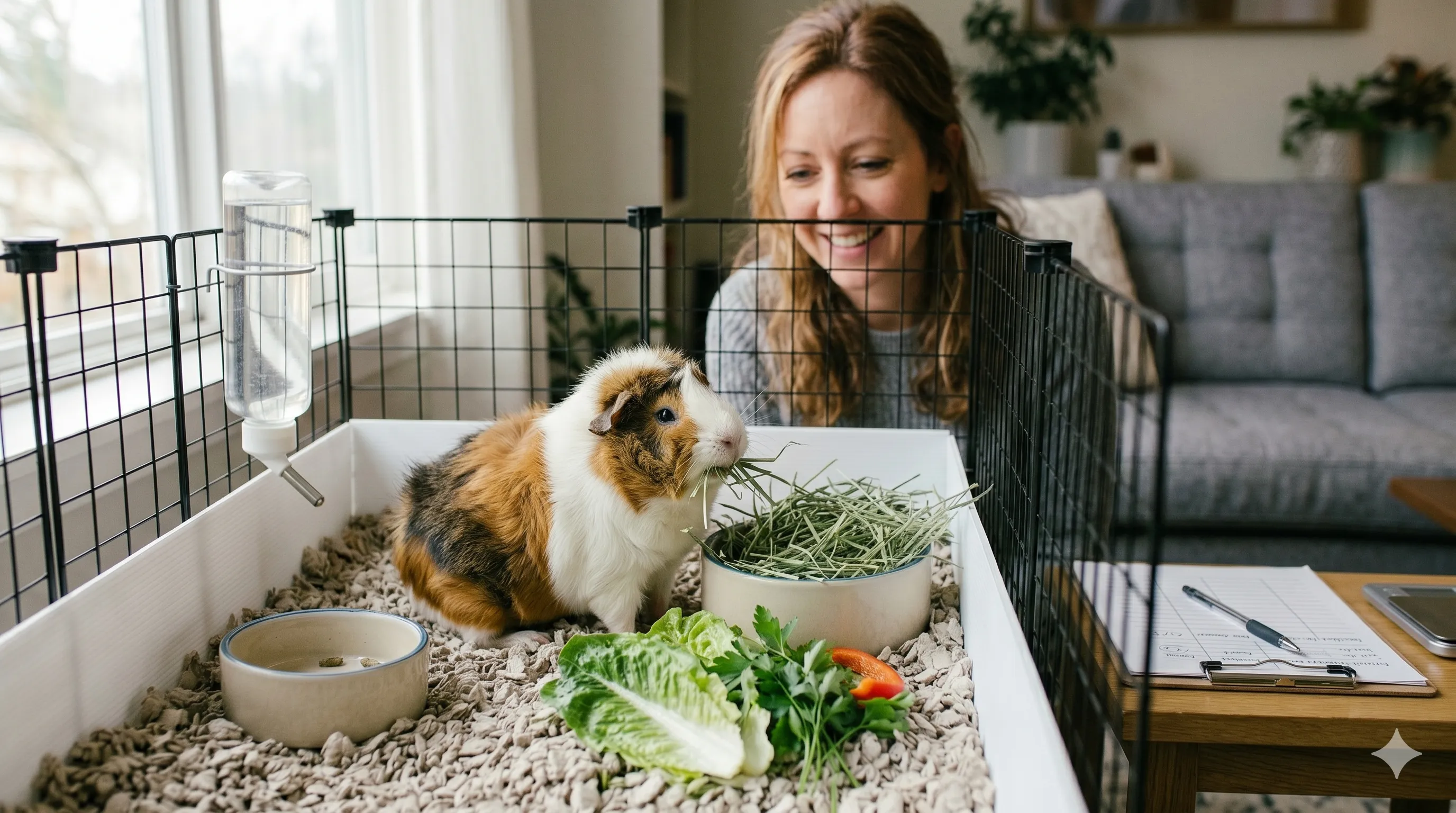
Emergency Warning Signs
The signs below suggest the situation may already be an emergency rather than a passing dip in appetite.
- No eating for six or more hours
- No poop production or noticeably smaller/fewer droppings
- Drooling or difficulty chewing
- Lethargy or unusual quietness
- Weight loss
- A firm or swollen-feeling abdomen
- Difficulty breathing or noisy breathing
- Bloating
When to See a Vet
If your guinea pig refuses food for more than a few hours, especially alongside lethargy, reduced droppings, or a swollen abdomen, treat it as an emergency and contact an exotic-animal vet right away. Guinea pigs cannot safely go without food the way some other pets can, so it is always better to call too early than to wait too long.
guinea pig poop meaning and health chartWhat to Do While You Arrange Veterinary Care
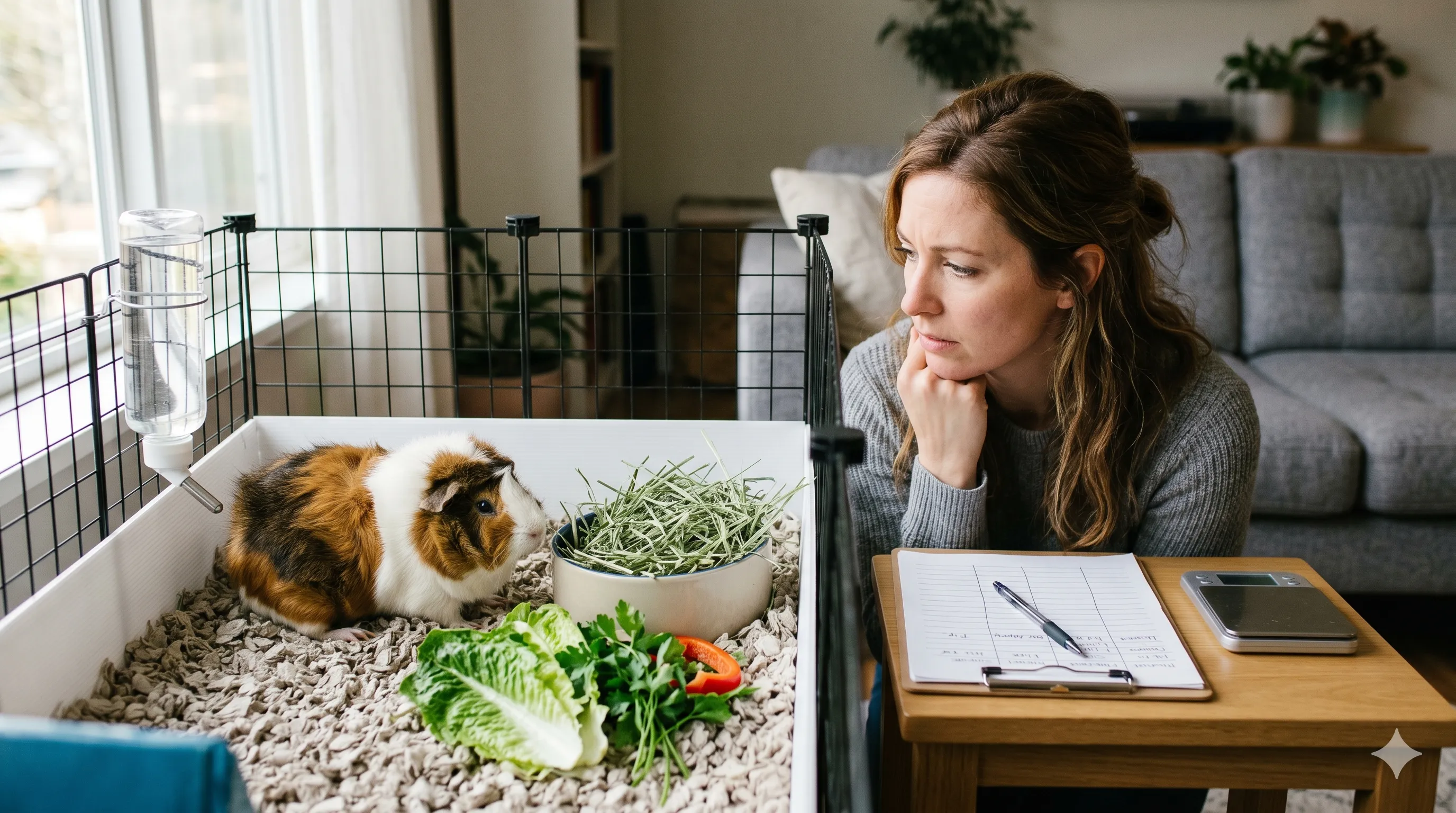
Calling an exotic-animal vet or an emergency clinic that treats guinea pigs should be the first step, not the last. While you wait for an appointment, a few simple actions can help you and the vet understand what is happening.
- Describe the timeline when you call. Tell the clinic when your guinea pig last ate and how many droppings she has passed since, because both details affect how urgently she needs to be seen.
- Keep her warm, calm, and quiet. A draft-free, low-stress spot helps, and moving her away from noisy cage-mates or other pets reduces additional stress.
- Offer her normal foods. Fresh hay, her usual pellets, and a favorite leafy vegetable show you whether any interest in food remains, which is useful information for the vet.
- Check that water is available. Make sure the bottle is not clogged and that she can reach it without effort.
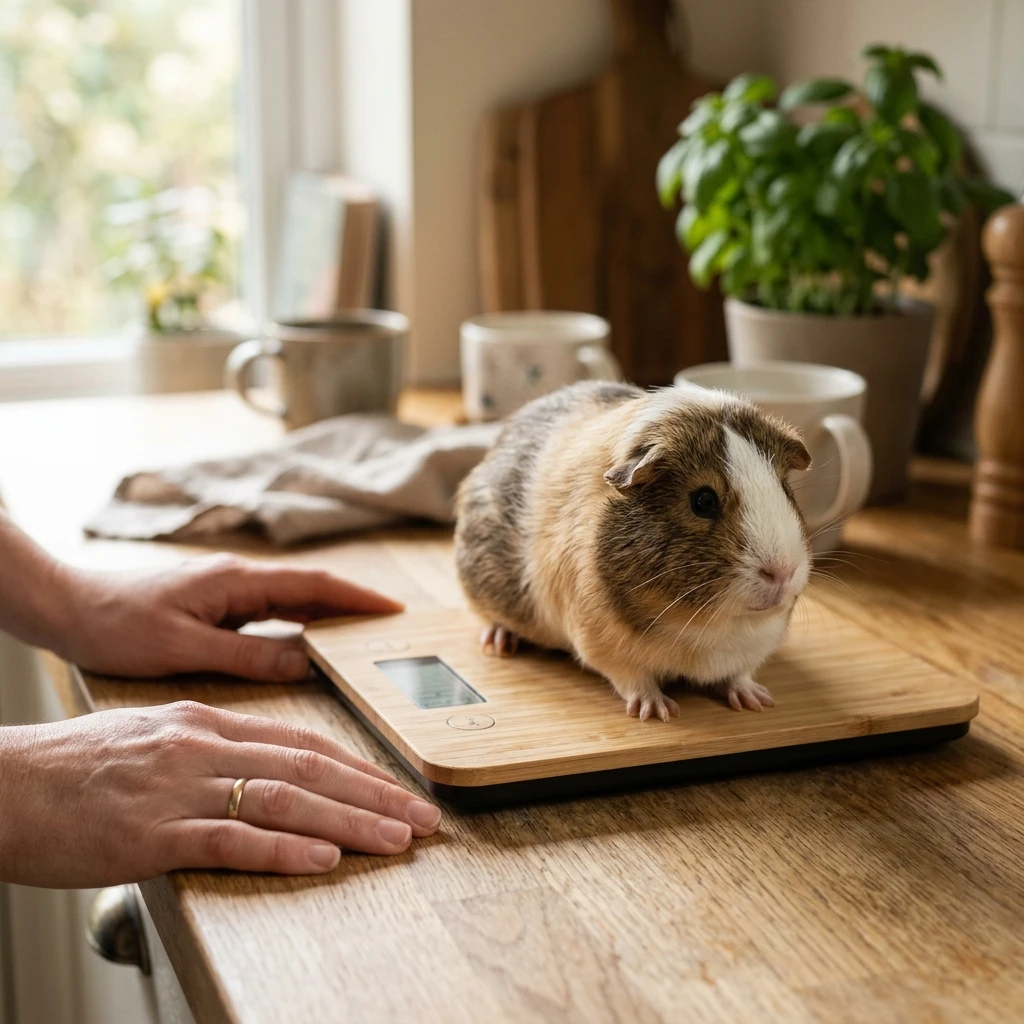
- Weigh her and write it down. A kitchen scale reading, together with the time and a rough count of droppings, gives your vet a baseline to compare against.
- Do not force-feed unless a vet has shown you how. Syringe-feeding the wrong food, or feeding too fast, can cause choking or inhaled food, so wait for professional instructions.
- Avoid human medicines and home remedies. Products made for people or other pets can be harmful to guinea pigs, and they can hide symptoms the vet needs to see.
What a Normal Eating Pattern Looks Like
Knowing your guinea pig's usual routine is what makes a change obvious. A healthy guinea pig tends to graze on hay throughout the day and night rather than eating one large meal, passes plenty of firm droppings, and usually shows excitement when fresh food arrives. A pig that sits hunched near the food bowl, nibbles and drops food, or ignores a favorite treat has changed her pattern, even if she is still drinking.
Because the change can be gradual, a quick daily check helps: confirm the hay pile is shrinking, count the droppings in the cage, and see whether she takes a small piece of vegetable from your hand. If any of these is clearly off, treat it as the early warning described above rather than waiting for a second sign.
Treatment Options
- Veterinary examination, including a dental check and an abdominal exam
- Dental correction for overgrown teeth or spurs
- Fluid therapy for dehydration
- Critical care feeding, which usually means syringe-feeding a recovery formula supplied by a veterinarian several times a day until normal eating resumes
- Treatment of the underlying illness, infection, or pain source
Prevention Tips
- Provide unlimited grass hay as the base of the diet
- Monitor weight regularly so a drop is caught early
- Schedule routine health and dental checks
- Feed a balanced diet with fresh vegetables and a guinea-pig-safe pellet
- Introduce cage, diet, or housemate changes gradually to reduce stress-related appetite dips
Expert Tips
Keep a simple daily note of how much hay and food your guinea pig eats so a change in appetite is obvious right away rather than something you only notice once it has gone on for a while. Offering a favorite fresh vegetable can help you tell the difference between not hungry for pellets and not eating at all, which is useful information to share with your vet. Always let a licensed veterinarian guide any treatment or feeding plan since the right approach depends on the underlying cause.
Common Mistakes
Owners often wait to see if their guinea pig just skipped a meal, but with such a fast digestive system that wait can allow a treatable problem to become a genuine emergency. Assuming a picky eater is the same as an appetite problem is another common mistake, since true illness usually comes with other changes like reduced droppings or quietness. Trying home remedies before calling a vet, and skipping regular weight checks so weight loss goes unnoticed, are two more habits worth avoiding.
Final Thoughts
A guinea pig that is not eating should never be ignored. Early veterinary treatment can be lifesaving and greatly improves recovery chances, so when in doubt, call your exotic vet rather than waiting to see what happens. For broader day-to-day care that helps prevent appetite problems before they start, our complete guinea pig care guide covers feeding, housing, and health monitoring in one place.
Medical Disclaimer
This content is provided for informational and educational purposes only and should not be considered veterinary, medical, behavioral, or training advice. While we strive for accuracy, we make no guarantees regarding completeness or results. Always consult a licensed veterinarian or qualified pet care professional before making decisions about your pet’s health, diet, or behavior.
AI Illustration Notice
Some images in this article may have been generated or enhanced using artificial intelligence for illustrative purposes.
Frequently Asked Questions
Common causes include dental problems and illness. Pain and digestive issues can also reduce appetite and so can stress.
Very little time. Appetite loss can quickly become dangerous.
Yes, especially if it comes with lethargy or a lack of poop production.
A serious slowdown of the digestive system that requires prompt treatment.
Yes, dental issues are a common cause.
Contact an experienced exotic veterinarian immediately.
Many do recover when treatment is started early.
Editorial Note
This article is part of PetNurture's educational library.
Topics draw on publicly available educational resources, recognised veterinary organisations, academic publications and established animal welfare references where appropriate.
The specific sources this article draws on are listed in its References section. If you spot an error, please let us know.
References
The information in this article has been reviewed and supported using the following sources.
VCA Animal Hospitals
Health Problems in Guinea Pigs
Confirms GI stasis clinical signs (anorexia, depression, dehydration, weight loss, diarrhea, low body temperature) and that it requires immediate veterinary attention; supports the 'Gastrointestinal Stasis' and 'Emergency Warning Signs' sections of this article.
Accessed Aug 6, 2026
VCA Animal Hospitals
Confirms hay is critical for both dental wear and healthy gut bacteria, tying poor hay intake to both the dental and digestive causes of appetite loss described in this article.
Accessed Aug 6, 2026
Pet Emergency Guidance
Every pet is unique. If your pet exhibits severe symptoms, sudden behavioral changes, or a medical emergency, do not rely on online guides — contact a licensed veterinarian or emergency clinic immediately.
About PetNurture
PetNurture is an educational library of pet care guides, interactive tools and practical resources for pet parents. We work continuously to keep our content accurate and up to date. Reader feedback helps us maintain content quality.
Related Articles
Popular Guinea Pig Guides
Guinea Pig
Guinea Pig Feeding Calculator
Calculate daily food portions for your guinea pig by weight.
Guinea Pig
Guinea Pig Cage Size Calculator
Find the minimum recommended cage size for your guinea pigs.