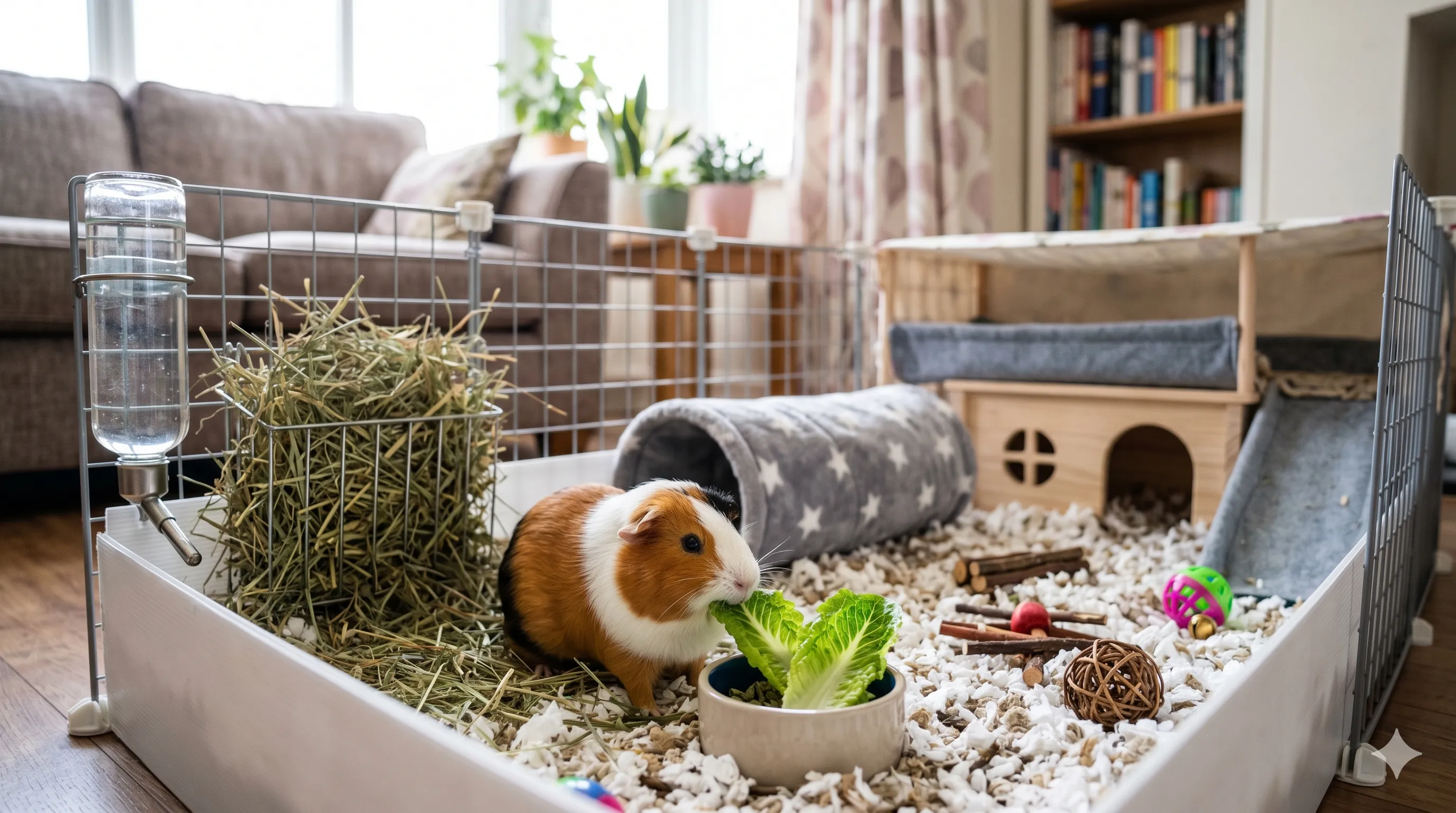
Best Bedding for Guinea Pigs (Safe & Comfortable Options)
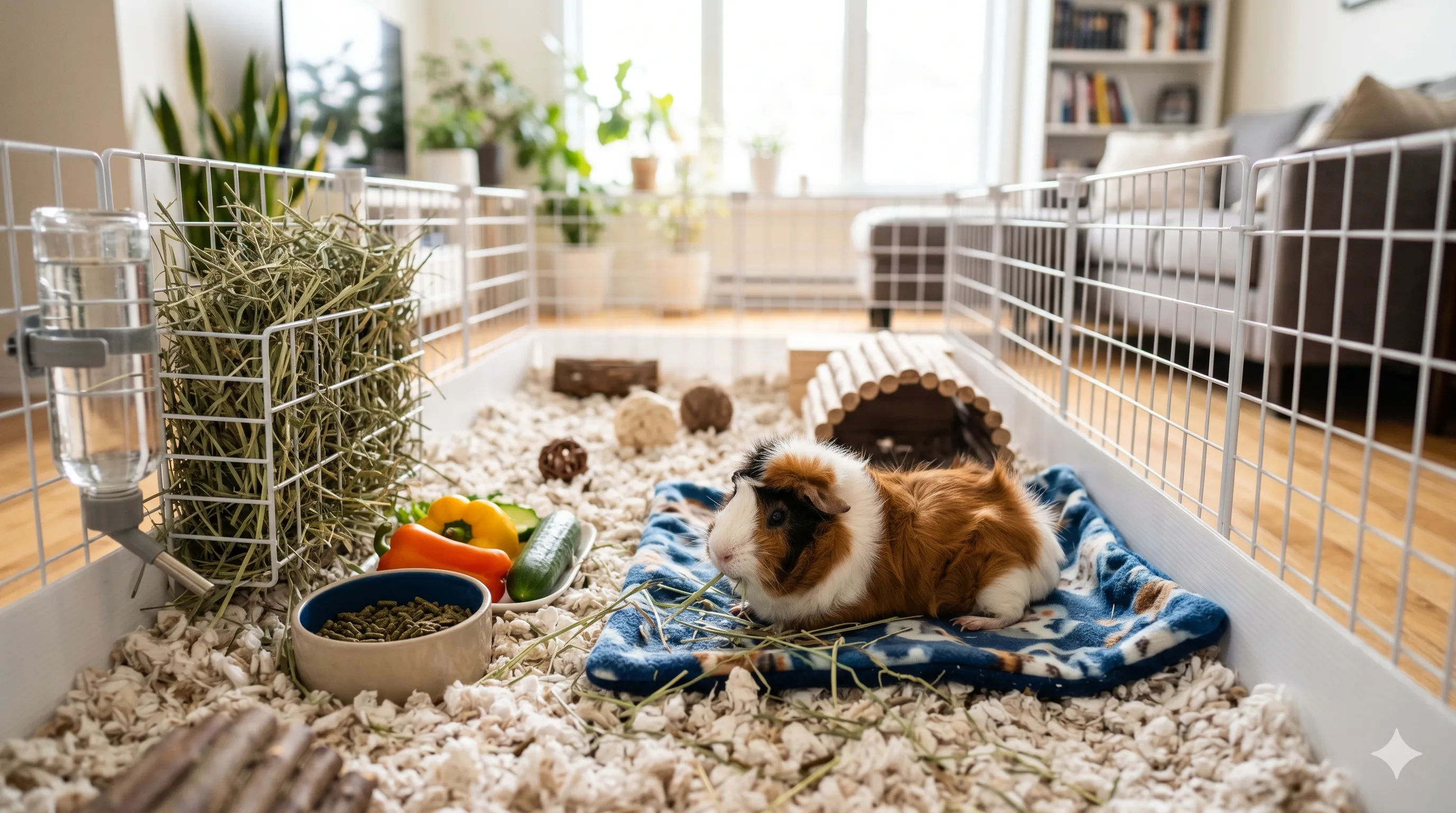
- What Makes Bedding Safe and Comfortable
- Comparing the Main Bedding Types
- Fleece Bedding
- Paper-Based Bedding
- Aspen Wood Shavings
- Bedding to Avoid
- How Much Bedding to Use
- Hay as a Bedding Layer
- Fleece vs Disposable — Which Fits Your Routine
- Expert Tips for Choosing Bedding
- Common Mistakes to Avoid
- Final Thoughts
Note: This article is for informational purposes only and does not replace professional veterinary advice.
The bedding lining a guinea pig's cage does a lot more than just look tidy. It absorbs urine, controls odor, cushions sensitive feet, and directly affects respiratory health depending on how dusty or scented it is. With fleece, paper-based bedding and wood shavings all marketed as guinea pig-safe, it's worth understanding what actually separates a genuinely good choice from one that just looks fine on a store shelf. This guide compares the main bedding types, covers what to avoid entirely, and explains how much bedding an average cage actually needs. For the full picture of setting up an indoor home beyond just bedding, our complete guinea pig care guide covers everything else that goes into it.
What Makes Bedding Safe and Comfortable
Good guinea pig bedding needs to be dust-free, since airborne dust and fragrance particles can irritate a guinea pig's sensitive respiratory system. It should also be reasonably absorbent, soft enough underfoot that it doesn't cause irritation over time, and easy to fully replace on a regular schedule rather than something that gets top-dressed indefinitely. Scented bedding of any material should be avoided outright, since added fragrance offers no real benefit and only adds another source of respiratory irritation.
It's also worth choosing something safe to nibble, since guinea pigs will occasionally chew at whatever's under their feet out of curiosity. None of the materials covered below pose a real risk in small amounts, but it's one more reason scented or chemically treated bedding has no place in a guinea pig cage.
Comparing the Main Bedding Types
Fleece Bedding
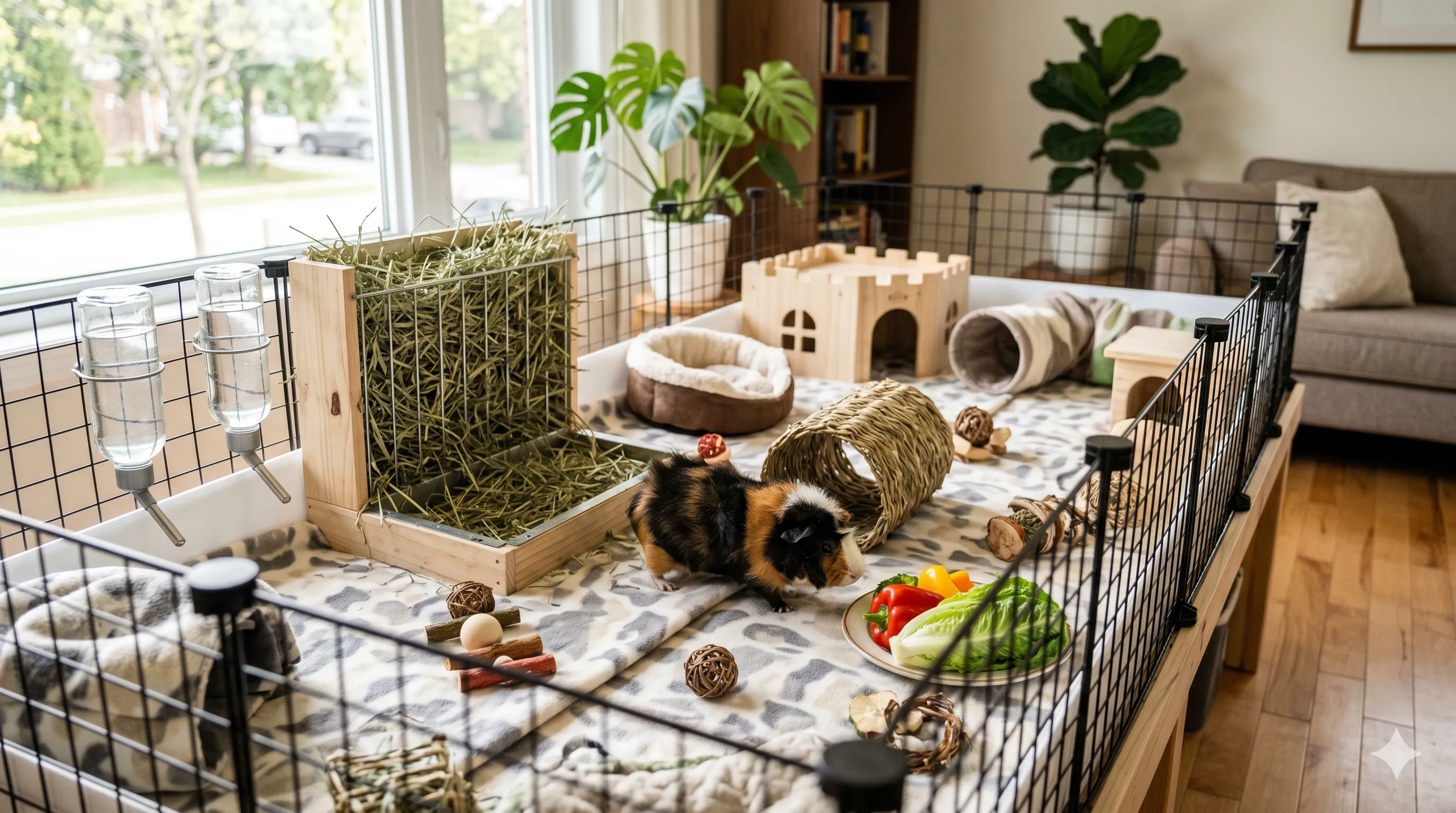
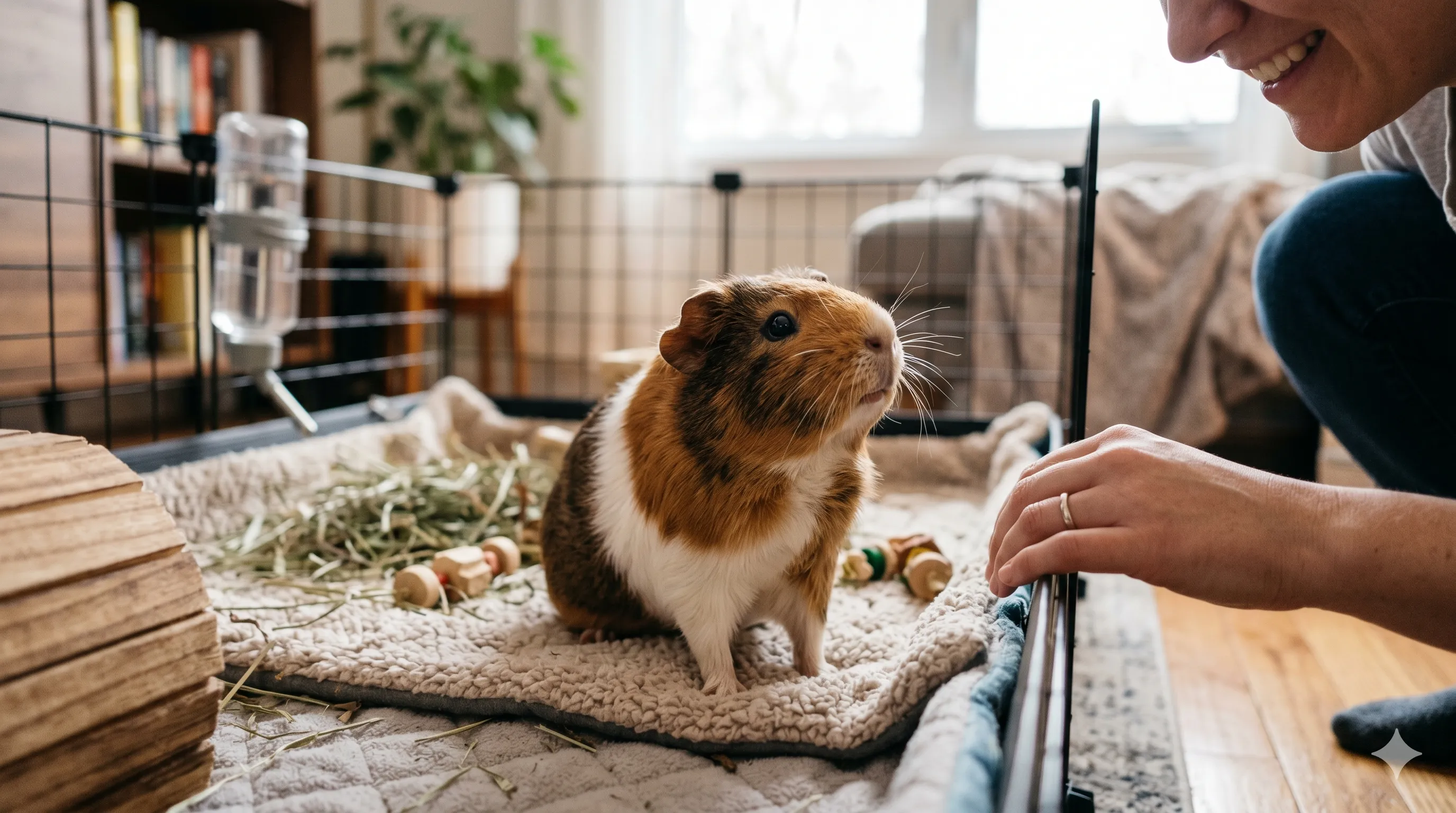
Fleece liners are soft, durable and machine washable, which makes them a genuinely reusable option over the long run rather than something you keep buying more of. The tradeoff is absorbency: fleece alone doesn't absorb urine especially well, so it typically needs daily spot cleaning and a full wash roughly every two to four days depending on cage size and how many guinea pigs are using it.
Paper-Based Bedding
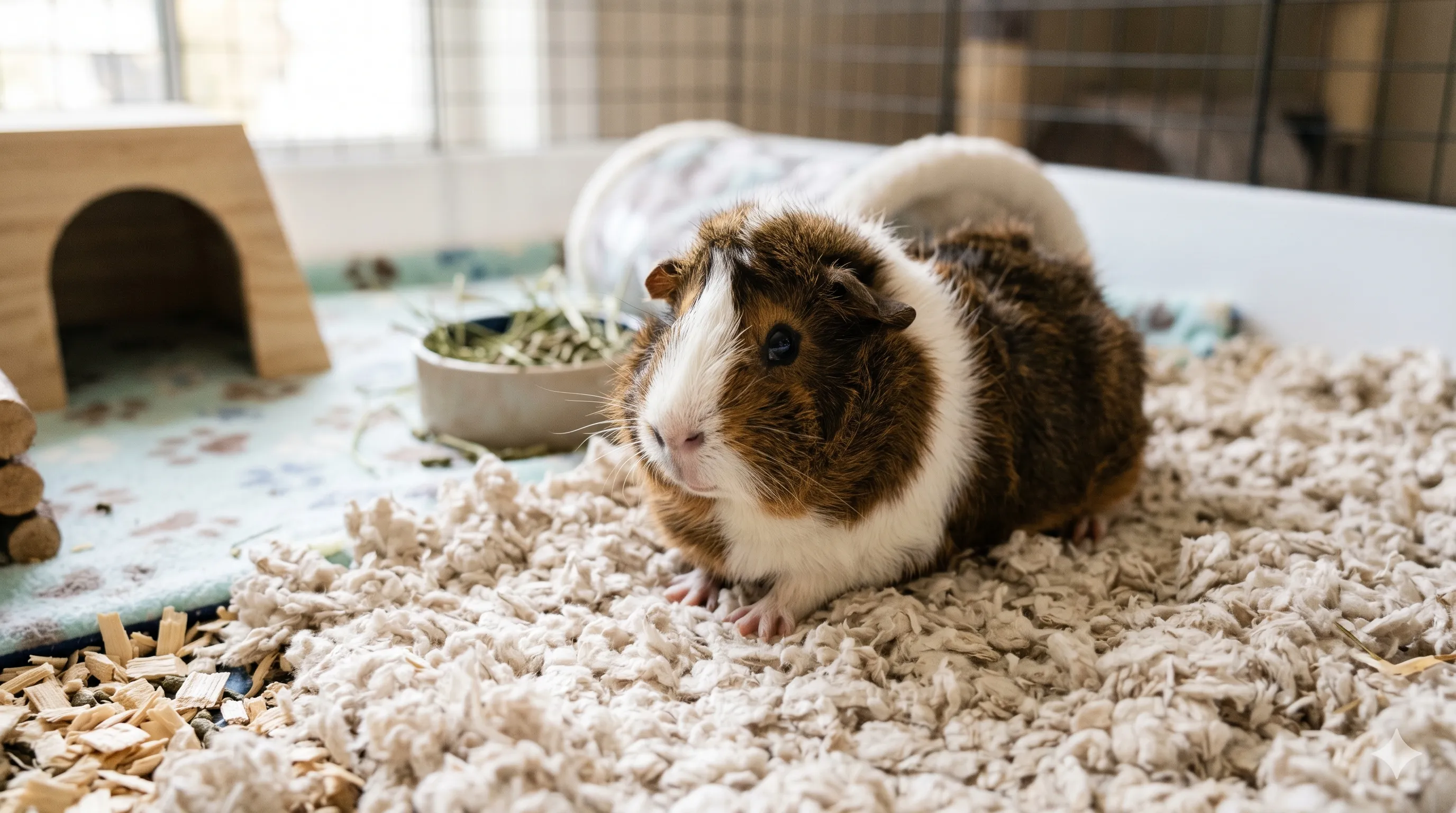
Paper-based bedding is usually the softest and most absorbent option available, and better brands are made without added inks or dyes. Some paper bedding is advertised as absorbing several times its own weight in liquid, which helps explain why odor control tends to be noticeably stronger with paper bedding than with fleece alone. This combination makes it a popular default choice for owners who want lower day-to-day maintenance without sacrificing comfort.
Aspen Wood Shavings
Aspen is the one wood shaving genuinely considered safe for guinea pigs, since it doesn't contain the aromatic phenols found in cedar or pine. It tends to be less absorbent than paper-based bedding, so it's often used alongside a more absorbent layer underneath rather than entirely on its own.
Bedding to Avoid
Cedar shavings and non-kiln-dried pine shavings should never be used, since both release natural phenols that irritate a guinea pig's airway and increase the risk of respiratory problems over time. Both are also naturally dustier than aspen or paper bedding, which compounds the irritation risk. A guinea pig that starts sneezing more than usual shortly after a bedding change is worth a closer look, since dusty or scented bedding is a common and easily fixable cause. Dust and fine particles from lower-quality bedding can also settle around the eyes during normal digging and burrowing, and crusty or irritated eyes is worth reading if that ever seems to be happening.
How Much Bedding to Use
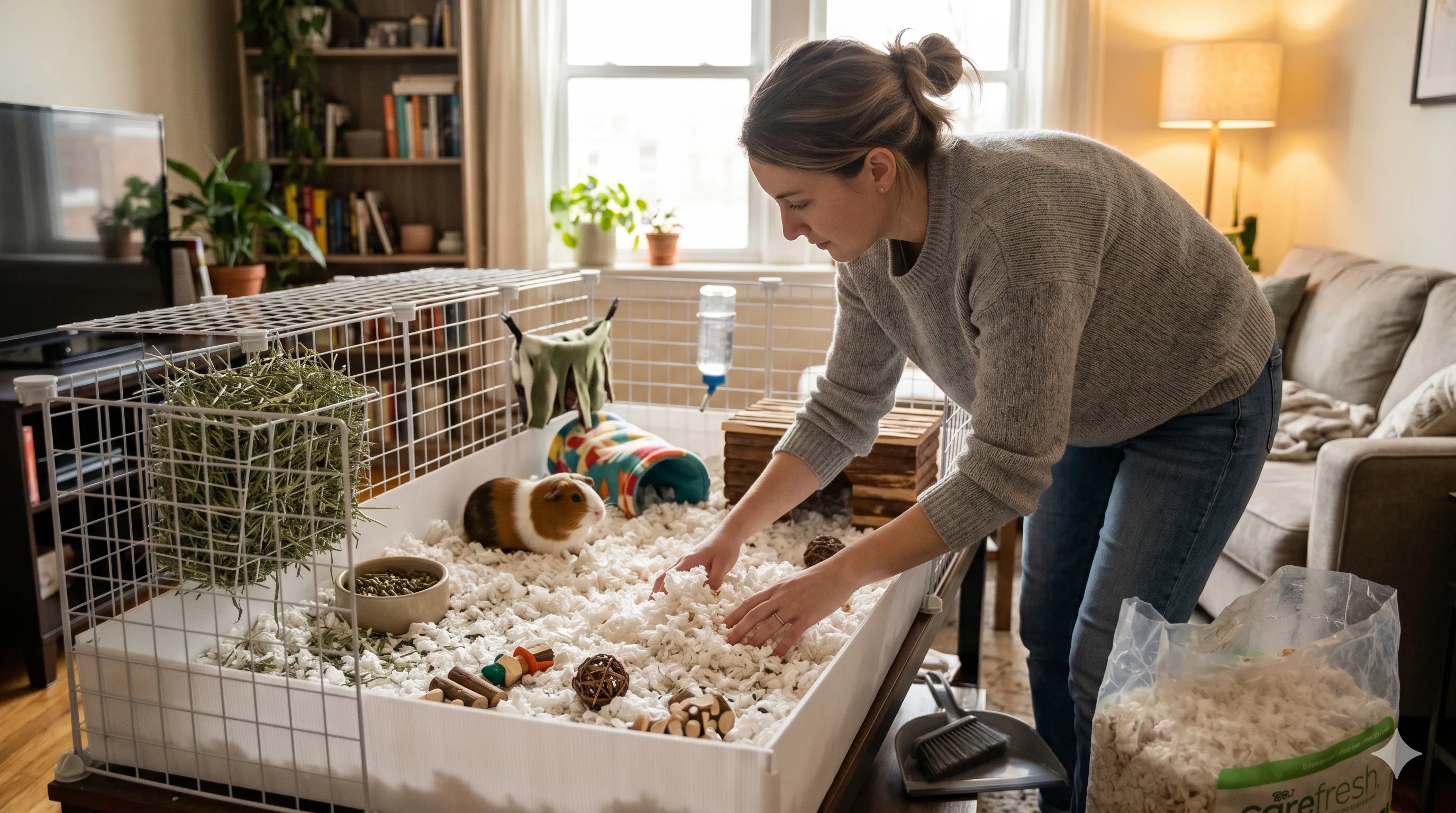
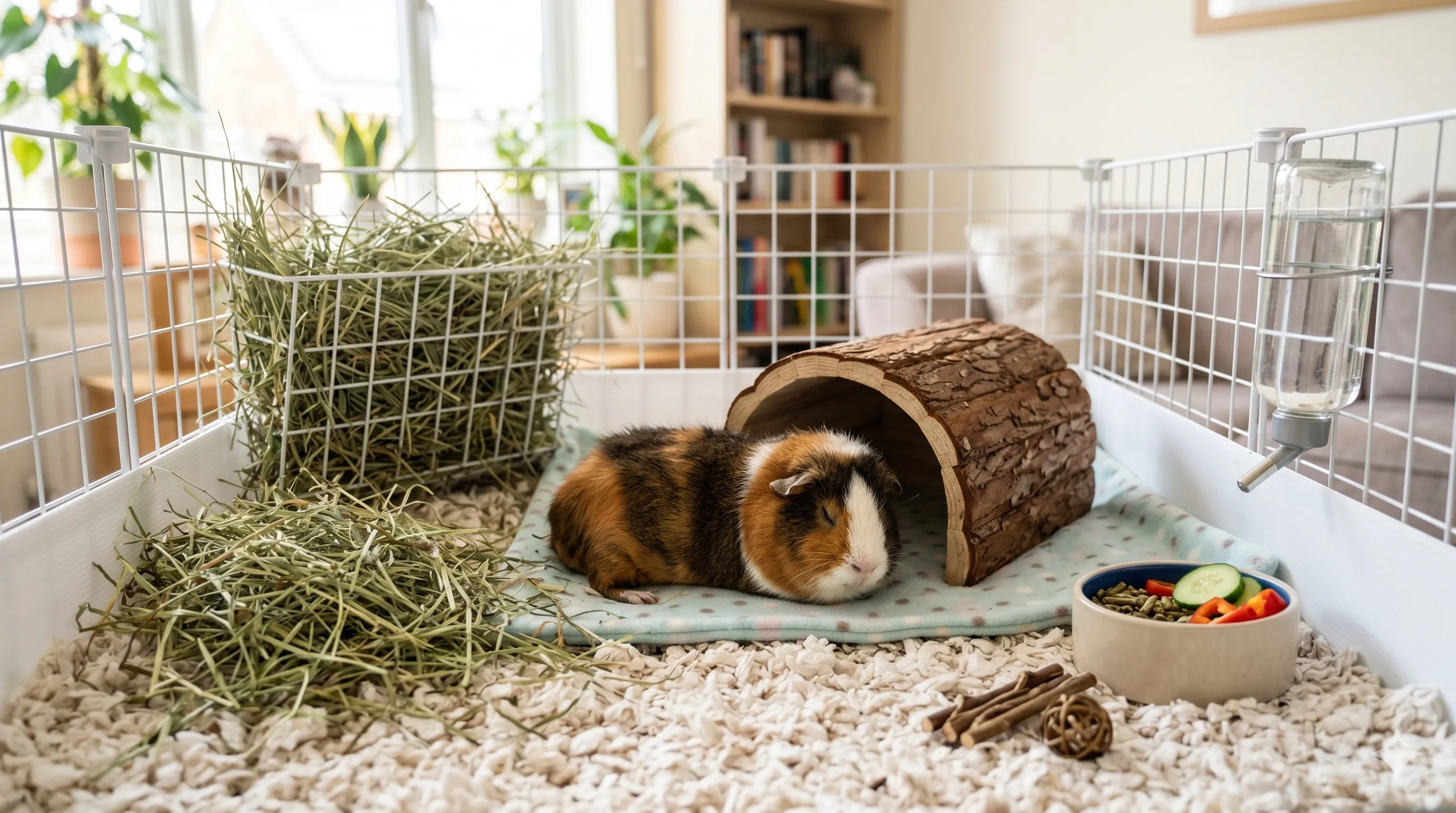
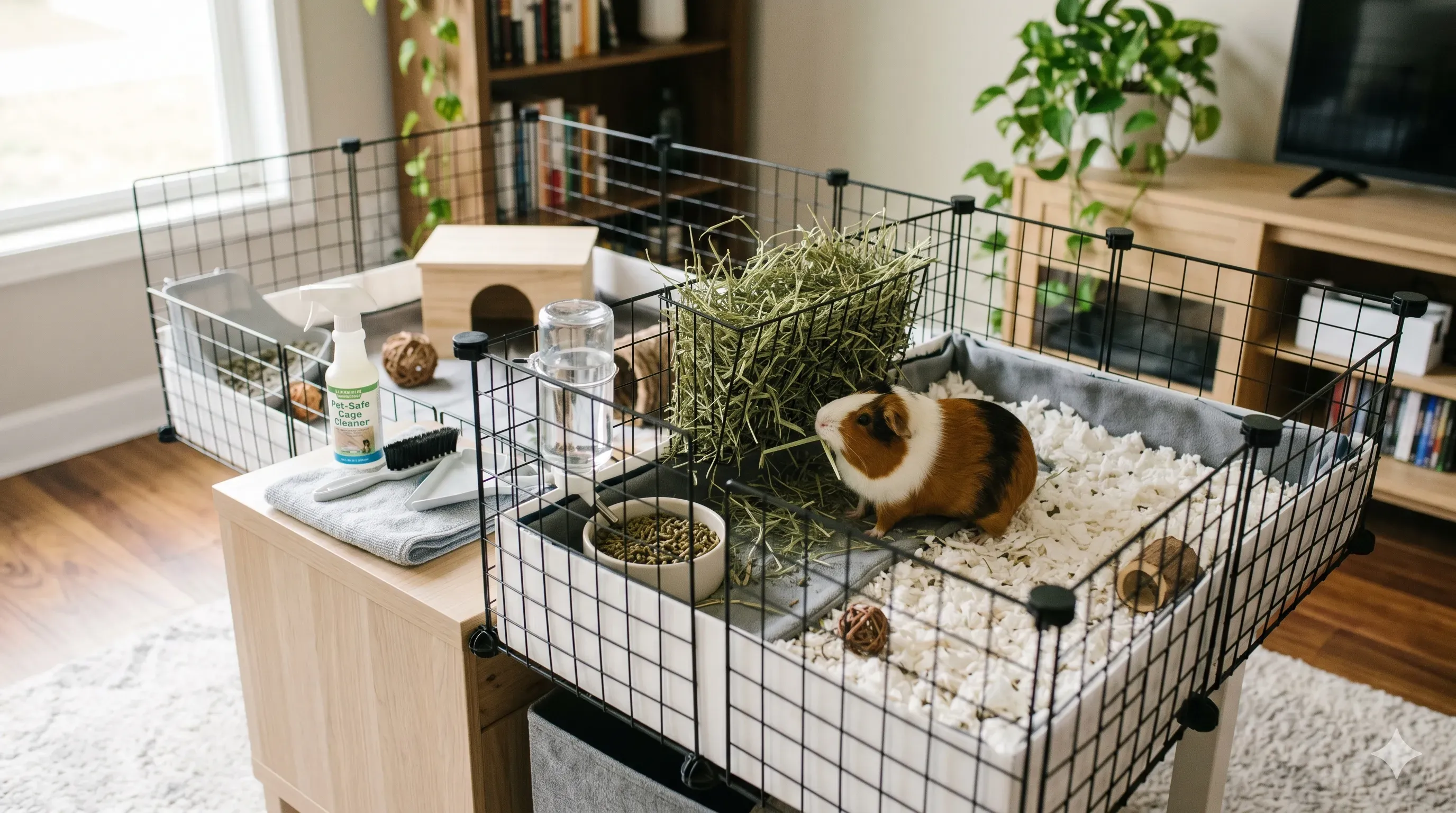
Most guinea pig cages do best with bedding roughly one to three inches deep, enough to properly absorb urine and cushion the feet without feeling unstable underfoot. Bedding that's too thin tends to leave feet sitting on a damp or hard surface for longer between changes, which can lead to sore or irritated feet over time, while bedding that's too thick just gets replaced more often without adding much real benefit. Bedding left damp for too long can also make a cage feel noticeably colder than it actually is, and a guinea pig shaking or trembling in a cage with soggy bedding often just needs a faster change schedule rather than anything more serious. Checking the litter corner regularly as part of your bedding routine also doubles as an easy way to keep an eye on droppings, and our guide to guinea pig poop is a handy reference if anything there ever looks different than usual.
Hay as a Bedding Layer
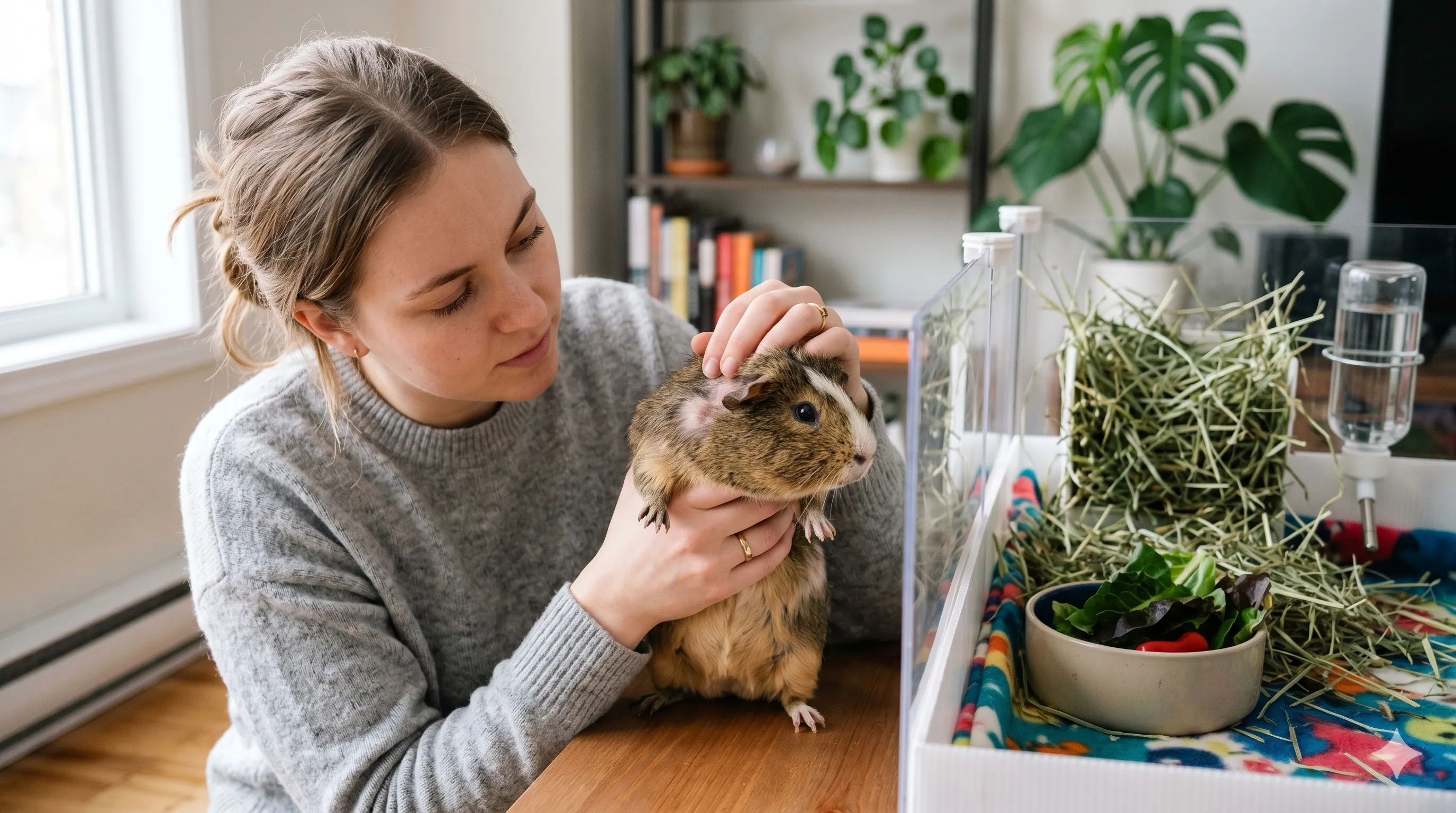
Many owners line the base of the cage with a layer of newspaper or paper bedding and then top it with a generous amount of hay, since guinea pigs enjoy resting, burrowing and grazing in the same material. This works especially well inside a dedicated dining or hay corner, where fresh hay gets replenished daily anyway as part of normal feeding, though hay alone across the entire cage floor tends to get soiled and need replacing faster than paper bedding or fleece would on its own. Treating hay as an accent inside one zone rather than the sole bedding for the whole cage tends to get the benefits of both without the extra cleaning burden.
Fleece vs Disposable — Which Fits Your Routine
Fleece costs more upfront but pays for itself over time through reuse, and it produces far less ongoing waste than any disposable bedding. Paper-based or aspen bedding requires less upfront setup and no laundry routine, which tends to suit first-time owners who want a simpler system while they're still learning their guinea pig's habits. Over the course of a year, a reusable fleece system typically works out cheaper than continually repurchasing disposable bedding, though it does trade that savings for a regular laundry routine that not every owner wants to take on. Neither option is objectively better across the board — the right choice usually comes down to how much laundry you're willing to do versus how much bedding you're willing to keep buying.
Expert Tips for Choosing Bedding
- Introduce a new bedding type gradually alongside the old one rather than switching everything at once, in case your guinea pig reacts differently to the new material.
- Keep an unscented backup bedding on hand so you're never tempted to reach for a scented option in a pinch.
- Pair aspen shavings with a more absorbent layer underneath rather than relying on aspen alone.
- Spot clean daily regardless of which bedding type you choose, since this matters more for odor control than the bedding material itself.
- Watch how your guinea pig settles onto fresh bedding after a full change — confident digging and normal exploring are good signs the new bedding feels comfortable.
Common Mistakes to Avoid
- Choosing scented bedding of any material for the smell rather than for what's actually best for respiratory health.
- Using cedar or non-kiln-dried pine shavings instead of the safer aspen alternative.
- Letting bedding get too thin between changes, leaving feet on a damp or hard surface for too long.
- Switching bedding types abruptly instead of introducing a new one gradually.
- Assuming fleece needs no maintenance simply because it isn't thrown away after each use.
Final Thoughts
There's no single bedding type that's right for every owner, but there is a clear line between what's genuinely safe and what only looks safe on a store shelf: dust-free, unscented, and changed on a consistent schedule, whether that's fleece, paper-based bedding or aspen shavings.
Get the basics right and the rest becomes a matter of personal routine and budget rather than guesswork, and you'll see it in your guinea pig too — confident digging and the occasional happy squeaking are good signs the new bedding feels comfortable.
Dust-free, unscented and consistently changed beats any specific brand or material every time.
This content is written to provide general educational guidance for guinea pig owners and pet families and is not a substitute for professional veterinary advice.
Medical Disclaimer
This content is provided for informational and educational purposes only and should not be considered veterinary, medical, behavioral, or training advice. While we strive for accuracy, we make no guarantees regarding completeness or results. Always consult a licensed veterinarian or qualified pet care professional before making decisions about your pet’s health, diet, or behavior.
AI Illustration Notice
Some images in this article may have been generated or enhanced using artificial intelligence for illustrative purposes.
Frequently Asked Questions
Fleece liners and paper-based bedding and aspen wood shavings are all considered safe options as long as they stay dust-free and unscented. Each one has different tradeoffs around absorbency and maintenance rather than one being universally best. The safest choice ultimately comes down to picking a dust-free unscented option and replacing it on a consistent schedule.
Yes, fleece is soft durable and machine washable which makes it reusable over the long run. It isn't very absorbent on its own though so it typically needs daily spot cleaning and a full wash every few days. Many owners pair it with an absorbent layer underneath to help with odor control.
No, cedar and non-kiln-dried pine shavings should be avoided entirely. Both release natural phenols that irritate a guinea pig's airway and increase the risk of respiratory problems. Aspen is the safer wood shaving option since it doesn't contain those same aromatic oils.
Most cages do well with bedding roughly one to three inches deep. That depth is enough to absorb urine and cushion the feet without feeling unstable to walk on. Bedding that's too thin can leave feet sitting on a damp surface for too long between changes.
Yes, many owners layer hay over paper bedding or newspaper since guinea pigs like to rest and burrow in it. This works especially well in a dedicated hay corner rather than across the entire cage floor. Hay alone tends to need replacing faster than paper bedding or fleece.
Fleece typically needs daily spot cleaning and a full wash every two to four days depending on cage size and guinea pig count. Paper-based bedding and aspen usually get a full change on a similar weekly-ish schedule with daily spot cleaning in between. The right frequency depends more on cage size and number of guinea pigs than on the bedding type itself.
No, scented bedding should be avoided regardless of the base material. Added fragrance offers no real benefit and adds another source of respiratory irritation. An unscented option is always the safer choice even if it seems less appealing on a store shelf.
It's a good habit to introduce a new bedding type alongside the old one rather than switching everything at once. This gives you a chance to notice if your guinea pig reacts differently to the new material. A gradual switch also tends to be less disruptive to an already-established routine.
Editorial Note
This article is part of PetNurture's educational library.
Topics draw on publicly available educational resources, recognised veterinary organisations, academic publications and established animal welfare references where appropriate.
The specific sources this article draws on are listed in its References section. If you spot an error, please let us know.
References
The information in this article has been reviewed and supported using the following sources.
Humane Society
Guinea Pig Housing Requirements and Bedding Options
The Humane Society advises against cedar and pine shavings due to the chemicals they contain, recommending paper-based bedding at a depth of 2 to 3 inches for proper absorption instead.
Accessed Aug 6, 2026
VCA Animal Hospitals
VCA Animal Hospitals warns that wood shavings can be irritating to a guinea pig's respiratory tract and recommends solid flooring over wire mesh to prevent foot injuries.
Accessed Aug 6, 2026
Pet Emergency Guidance
Every pet is unique. If your pet exhibits severe symptoms, sudden behavioral changes, or a medical emergency, do not rely on online guides — contact a licensed veterinarian or emergency clinic immediately.
About PetNurture
PetNurture is an educational library of pet care guides, interactive tools and practical resources for pet parents. We work continuously to keep our content accurate and up to date. Reader feedback helps us maintain content quality.
Related Articles
Popular Guinea Pig Guides
Guinea Pig
Guinea Pig Feeding Calculator
Calculate daily food portions for your guinea pig by weight.
Guinea Pig
Guinea Pig Cage Size Calculator
Find the minimum recommended cage size for your guinea pigs.