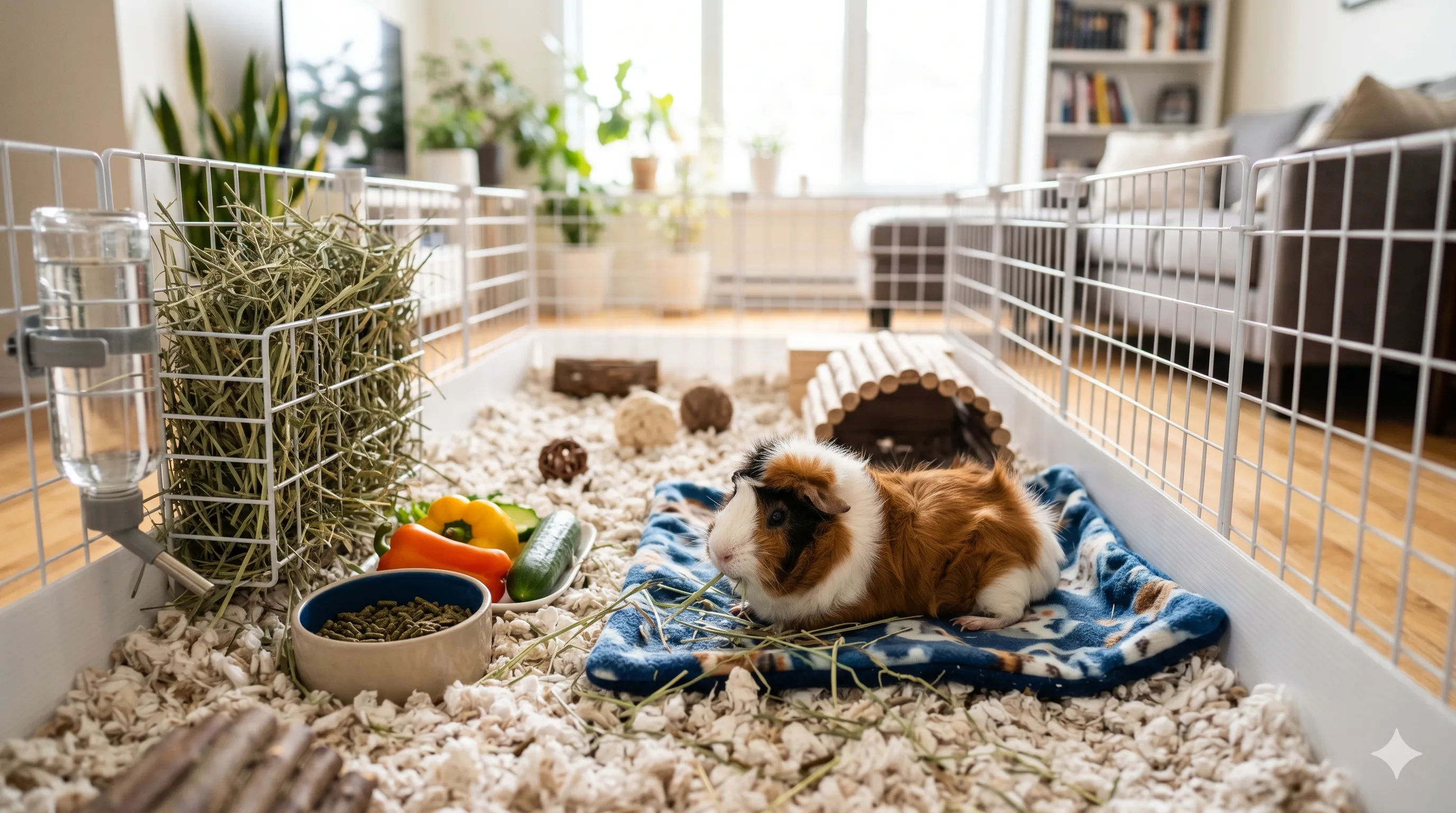
Indoor Guinea Pig Care Guide (Everything First-Time Owners Need)
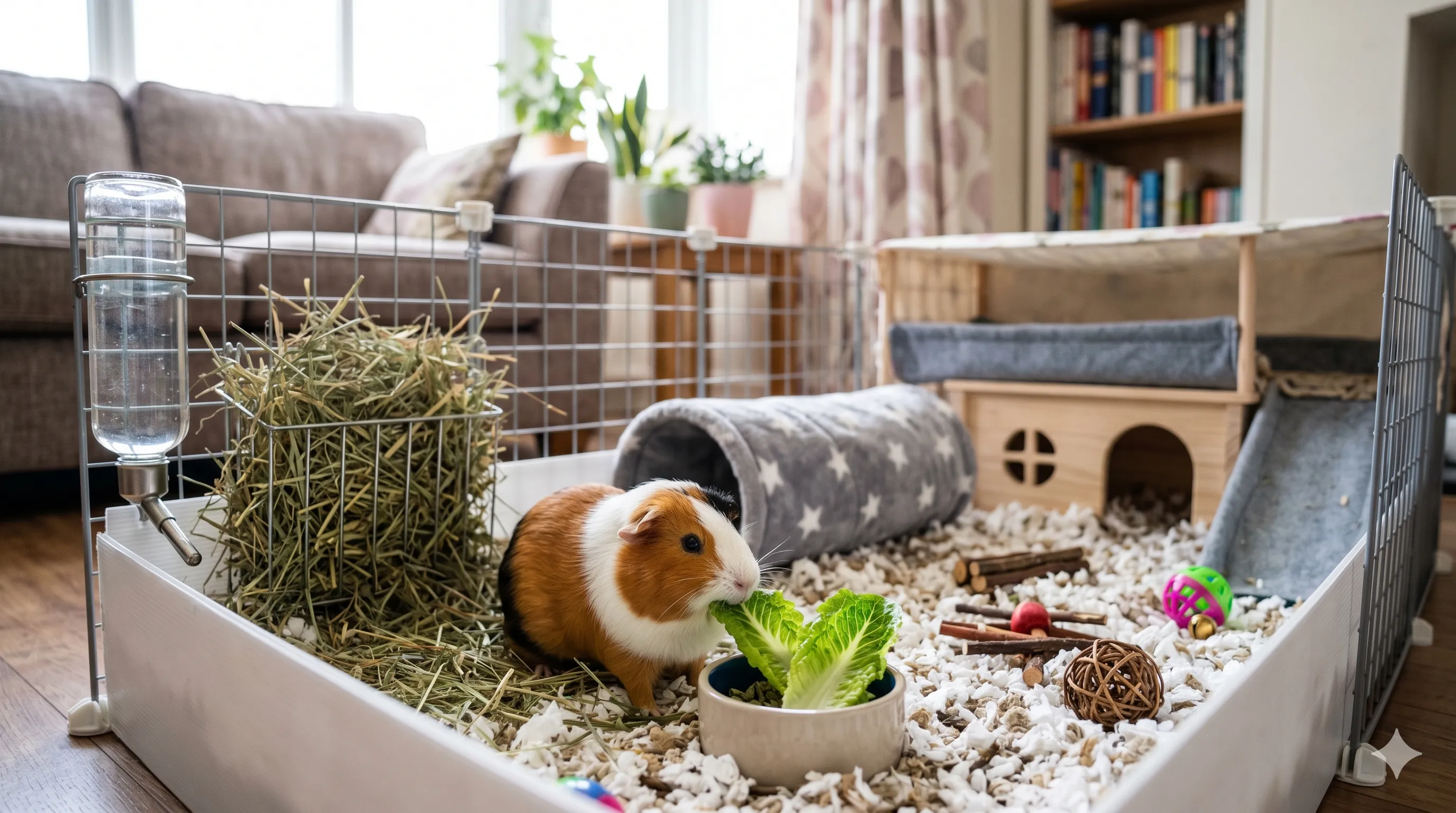
- Why Getting the Indoor Setup Right Matters
- Choosing the Right Spot and Controlling Temperature
- Picking a Safe Location
- Keeping the Temperature Right
- Humidity and Everyday Air Quality
- Cage Size and Bedding Basics
- Minimum Space Guinea Pigs Actually Need
- Choosing Safe Bedding
- A Quick Cleaning Routine Overview
- Cage Accessories Every Indoor Setup Needs
- Guinea Pig-Proofing Your Home
- Hazards to Remove Before Floor Time
- Toxic Plants and Foods to Keep Out of Reach
- Introducing Other Household Pets Safely
- Daily Floor Time and Safe Play
- Setting Up a Safe Play Area
- Supervision and Reading Comfort
- Companionship and Everyday Comfort
- Housing Guinea Pigs in Pairs
- Signs Your Guinea Pig Feels at Home
- What to Expect in the First Week Indoors
- Typical First-Day Behavior
- When Adjustment Takes Longer Than Expected
- Expert Tips for a Safer Indoor Setup
- Common Mistakes First-Time Owners Make
- Final Thoughts
Note: This article is for informational purposes only and does not replace professional veterinary advice.
Bringing a guinea pig into your home is exciting but these small sensitive animals depend entirely on the space you set up for them. Guinea pigs cannot regulate their own body temperature well they have no defense against everyday household hazards and they rely on hiding spots and routine to feel secure. A safe indoor setup is not just about picking a cage. It covers where you place that cage what temperature the room stays at which everyday household items need to be removed and how much supervised time outside the cage your guinea pig gets each day. This guide walks first-time owners through every part of building a genuinely safe comfortable indoor home from the first day your guinea pig arrives to the daily routine that keeps them healthy and relaxed. For the full picture of feeding grooming and general care beyond housing our complete guinea pig care guide covers the basics this guide doesn't.
Why Getting the Indoor Setup Right Matters
Guinea pigs are prey animals with very specific environmental needs and getting the basics right early prevents most of the stress, illness, and accidental injury that new owners run into. Unlike a dog or cat, a guinea pig can't tell you when its cage is too small, too cold, or sitting somewhere unsafe — the only signals you get are behavioral, like reduced appetite, excessive hiding, or unusual vocalizing. Keeping guinea pigs indoors also removes a whole category of risk that outdoor housing carries: predators, sudden weather swings, and parasites are all far easier to manage inside the home.
A poorly set-up environment tends to show up over weeks and months rather than immediately, through slow weight changes, a guinea pig that seems permanently on edge, or repeated minor respiratory irritation from dusty bedding or a drafty spot. None of that is complicated to prevent, but it does need to be deliberate rather than assumed from day one.
Choosing the Right Spot and Controlling Temperature
Picking a Safe Location
Look for a spot that stays free of drafts, out of direct sunlight, and away from radiators, vents, or other heat sources. A quiet corner away from loud television speakers, blaring music, or a boisterous dog helps a naturally skittish animal settle in faster. Interior walls tend to hold a steadier temperature than walls that face outside, which makes them a better long-term spot for a cage.
Keeping the Temperature Right
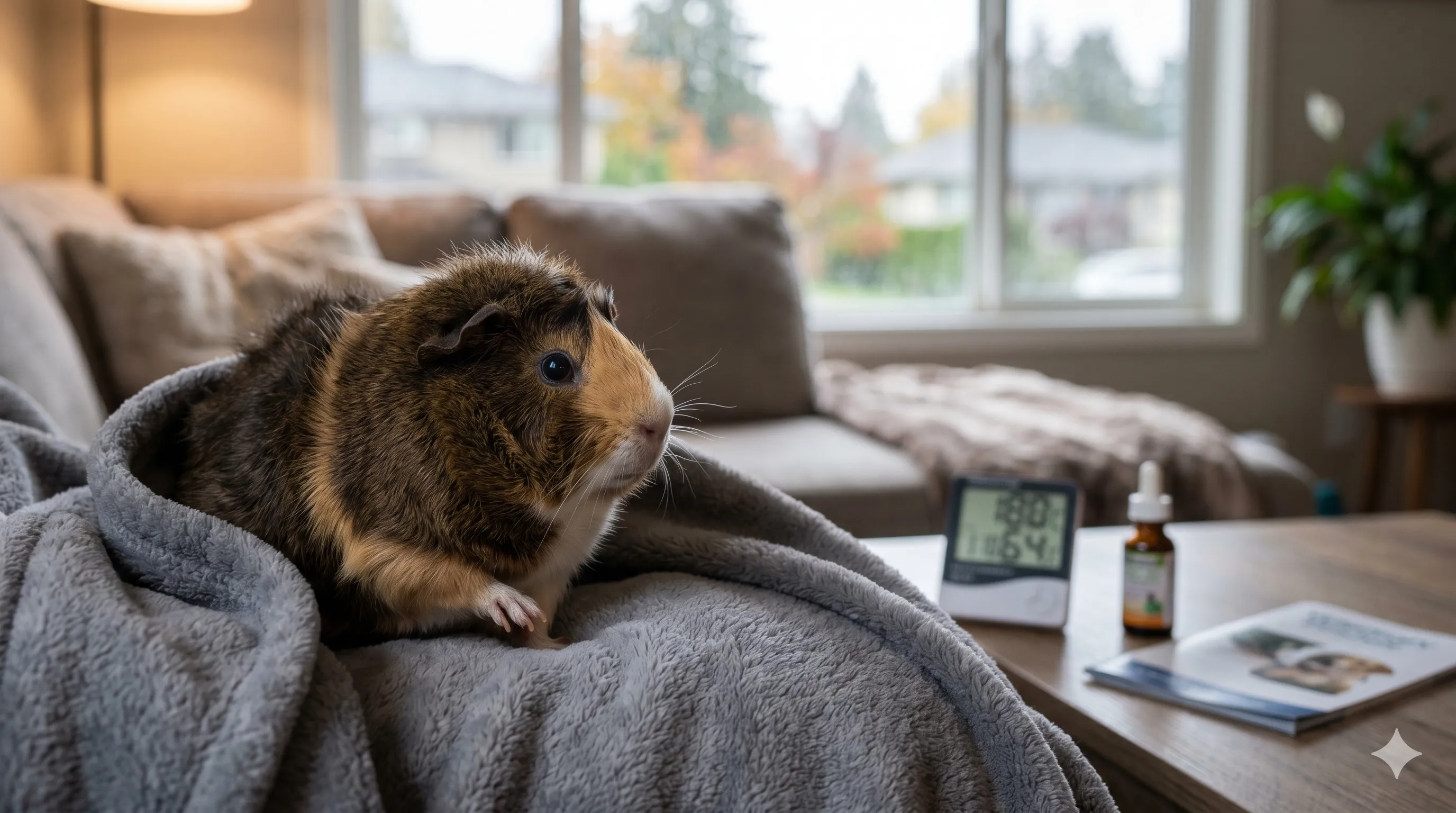
Most guinea pigs are comfortable in a range of roughly 65 to 75 degrees Fahrenheit. Temperatures below about 59 degrees start to become unsafe, since guinea pigs have no sweat glands and no heavy coat to help them cope with either extreme. A guinea pig that suddenly starts shaking or trembling in a room that's gotten noticeably colder is often just reacting to the temperature, though persistent shivering is still worth mentioning to a vet rather than assuming it will pass on its own.
Humidity and Everyday Air Quality
Aim for a room that stays reasonably dry rather than damp, since excess humidity combined with soiled bedding makes it easier for odor and bacteria to build up. Keep the space ventilated but still draft-free, and skip scented candles, air fresheners, or heavy cleaning sprays anywhere near the cage since guinea pigs have sensitive respiratory systems.
Cage Size and Bedding Basics
Minimum Space Guinea Pigs Actually Need
A single guinea pig needs a minimum of roughly 7.5 square feet of solid floor space, and a bonded pair needs closer to 10.5 square feet. Bigger is always better, and a solid floor beats a wire-bottomed one every time — wire flooring can injure sensitive feet over time. Guinea pigs are ground-dwelling animals, so floor area matters far more to them than cage height.
Choosing Safe Bedding
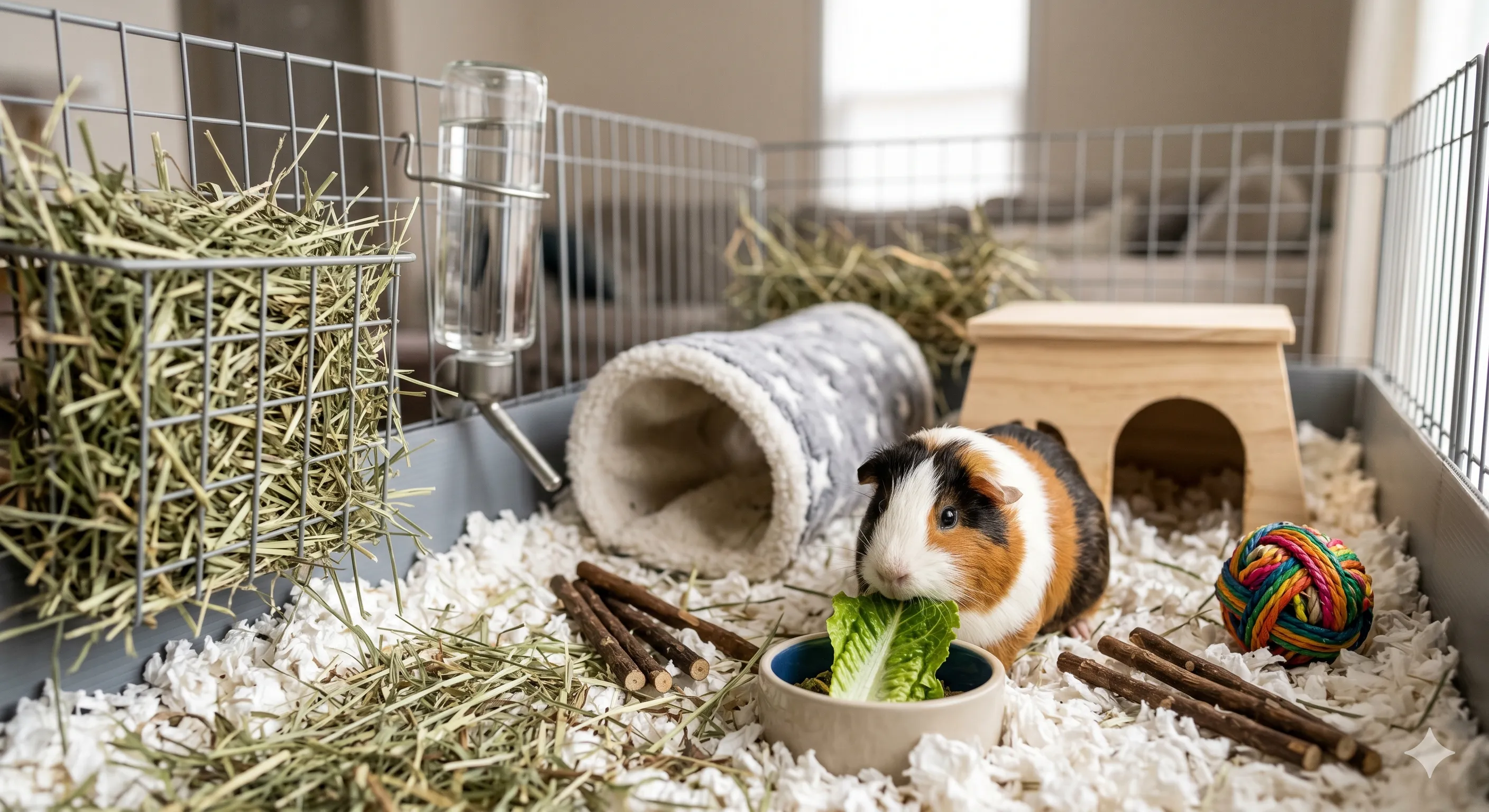
Paper-based bedding and fleece liners are two of the safest and most widely recommended choices for a guinea pig cage. Avoid cedar shavings and non-kiln-dried pine, since both release natural phenols that can irritate a guinea pig's sensitive airway. Whatever bedding you pick, it should stay reasonably dry underfoot and get changed on a consistent schedule rather than only when it looks obviously dirty.
A Quick Cleaning Routine Overview
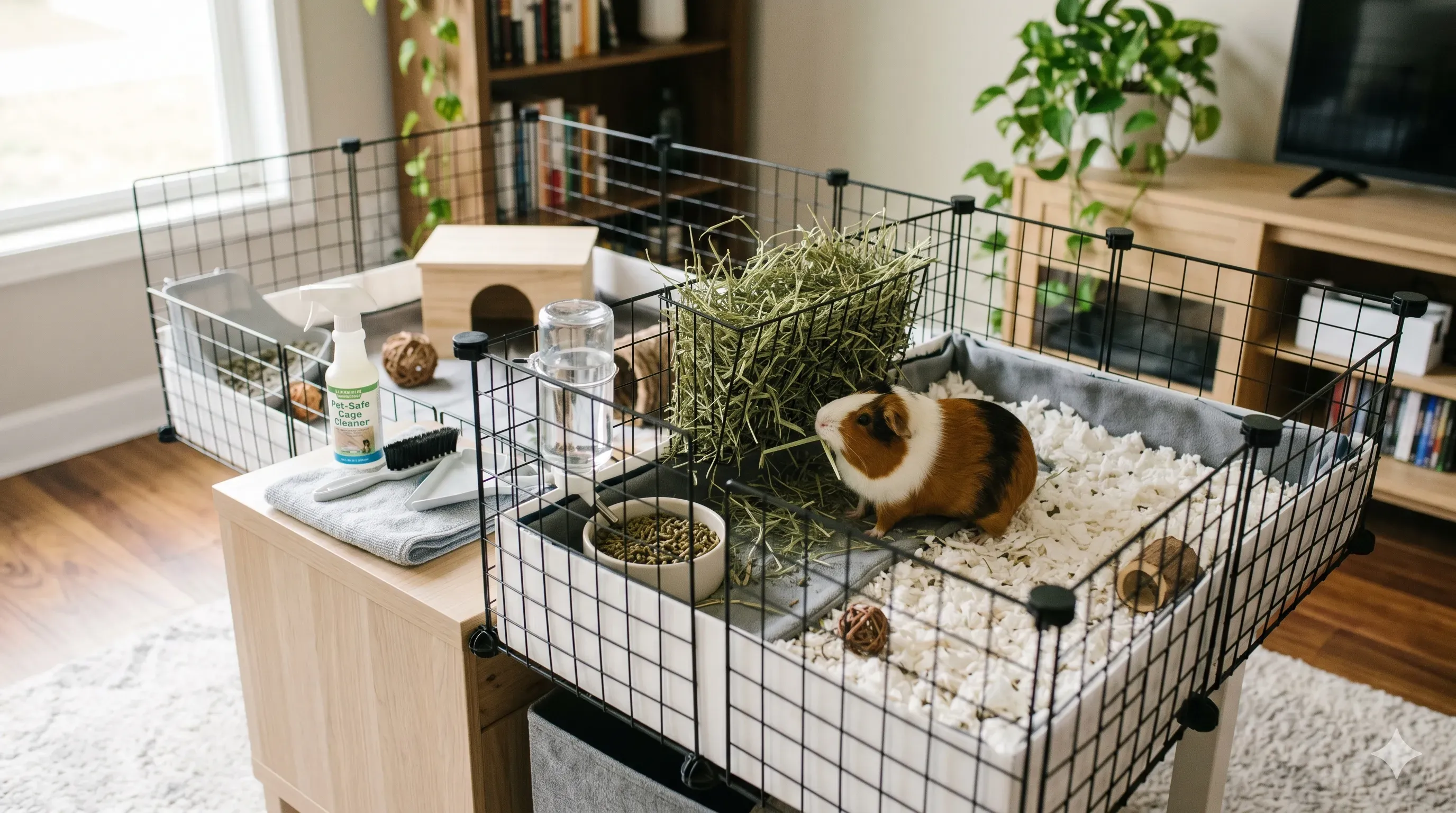
A quick daily spot clean, removing obviously soiled bedding and droppings, keeps odor and bacteria from building up between full changes. Most cages need a complete bedding change roughly once a week, though a larger group of guinea pigs or a smaller cage may need it more often. Wipe down hard surfaces like a hideout or food bowl with a pet-safe cleaner during the full change rather than just replacing the bedding on top of a dirty base.
Cage Accessories Every Indoor Setup Needs
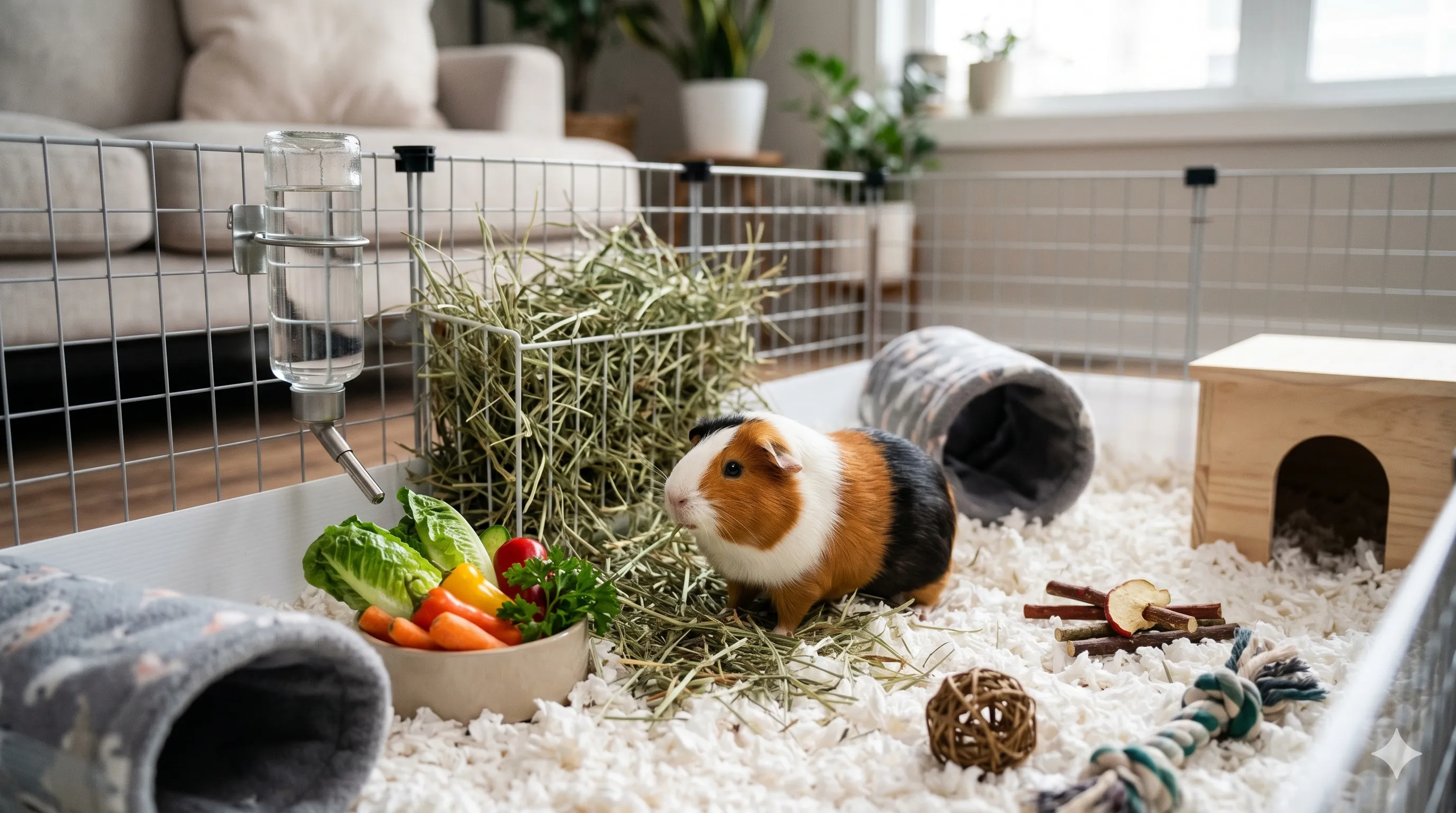
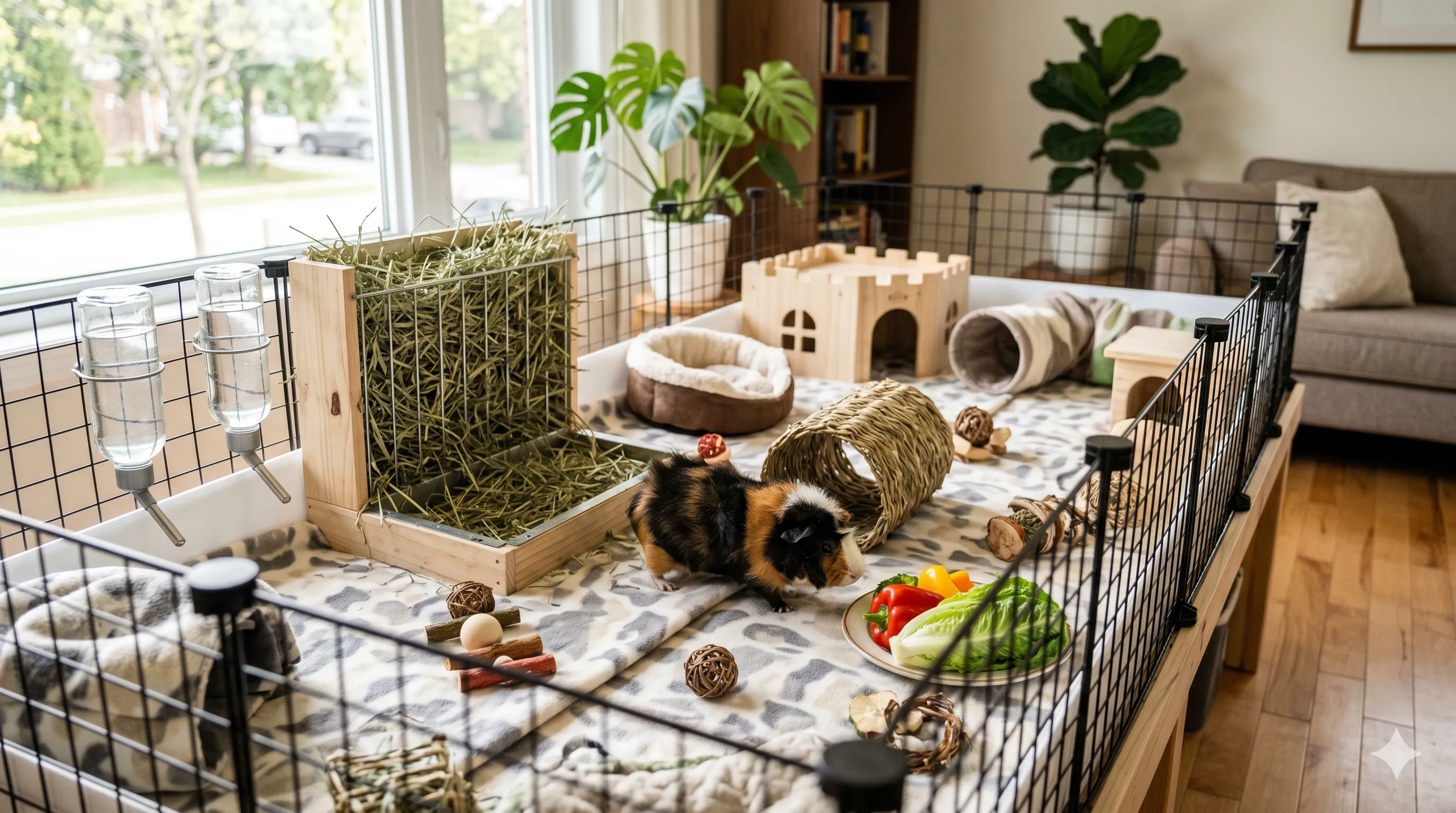
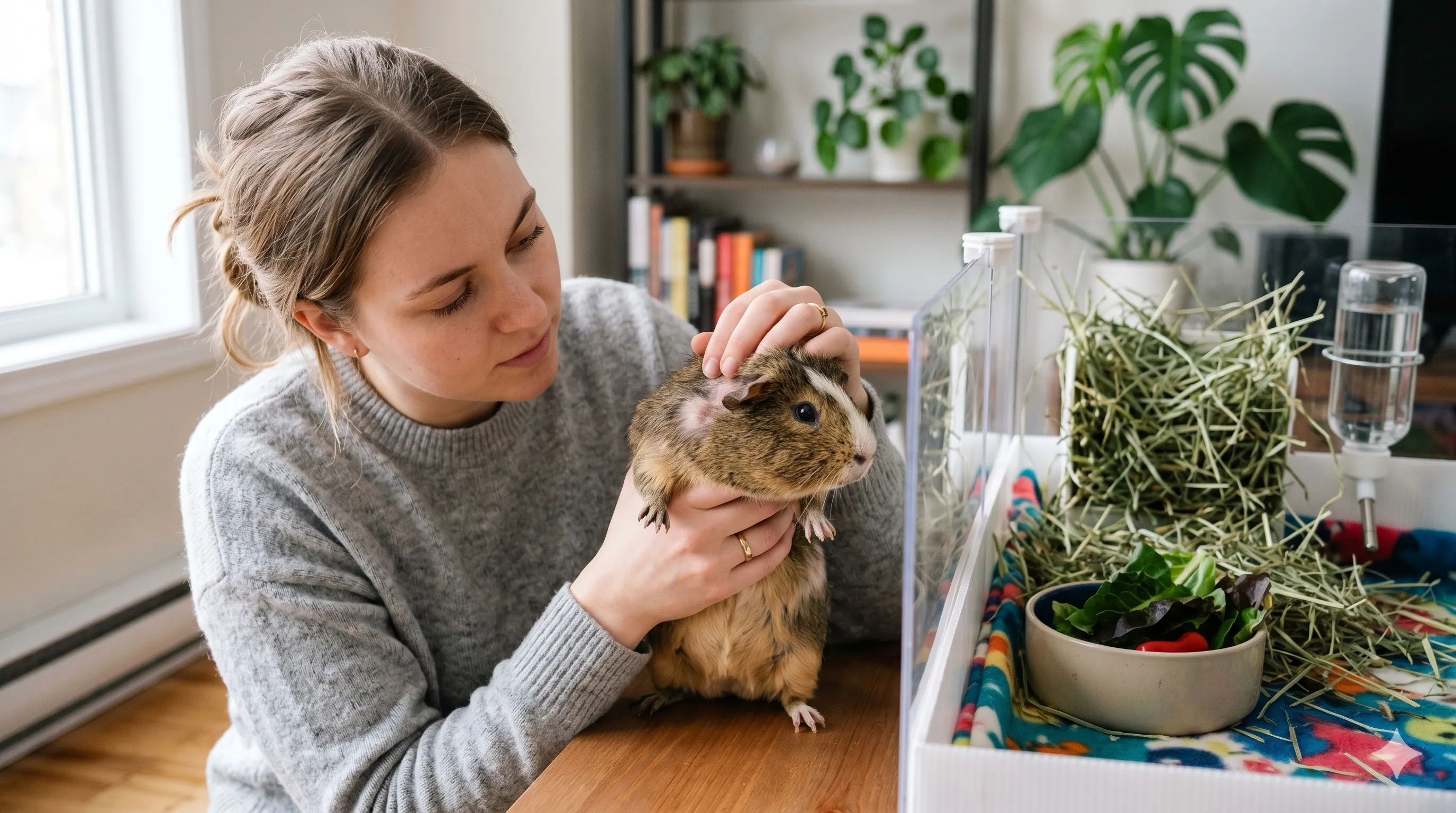
A hay rack keeps hay off the cage floor and away from bedding, which helps it stay clean enough to encourage the constant grazing guinea pigs need. A water bottle or heavy, tip-resistant bowl should sit away from the sleeping area so a leak or spill doesn't soak the bedding underneath. At least one enclosed hideout gives a naturally cautious animal somewhere to retreat, and safe chew toys help manage the constant tooth growth that comes with being a guinea pig.
Guinea Pig-Proofing Your Home
Hazards to Remove Before Floor Time
Electrical cords are one of the most common hazards in any room a guinea pig explores, so cover them or route them out of reach before letting your guinea pig roam. Household chemicals, cleaning products, and small objects that could be chewed or swallowed all need to be cleared out of the play area first. Slippery floors like tile or hardwood can also cause injury, since guinea pigs struggle to grip smooth surfaces — a rug, mat, or piece of fleece solves this easily.
Toxic Plants and Foods to Keep Out of Reach
Several common houseplants, including pothos, lilies, ivy, and philodendron, are toxic if a guinea pig chews on them, so it's worth checking any plants in or near the play area before the first floor-time session. A guinea pig exploring an unfamiliar or newly proofed space can also go off its food from stress alone, so a sudden drop in appetite is worth investigating the same way you'd investigate any other change in routine.
Introducing Other Household Pets Safely
Dogs and cats can seriously injure a guinea pig even during what looks like harmless curiosity, so any introduction needs to happen slowly, on the guinea pig's terms, and always under close supervision. Many owners choose to keep floor-time sessions completely separate from other pets at first rather than risking an unpredictable first meeting. A guinea pig should always have an escape route or hideout available whenever another animal is in the same room.
Daily Floor Time and Safe Play
Setting Up a Safe Play Area
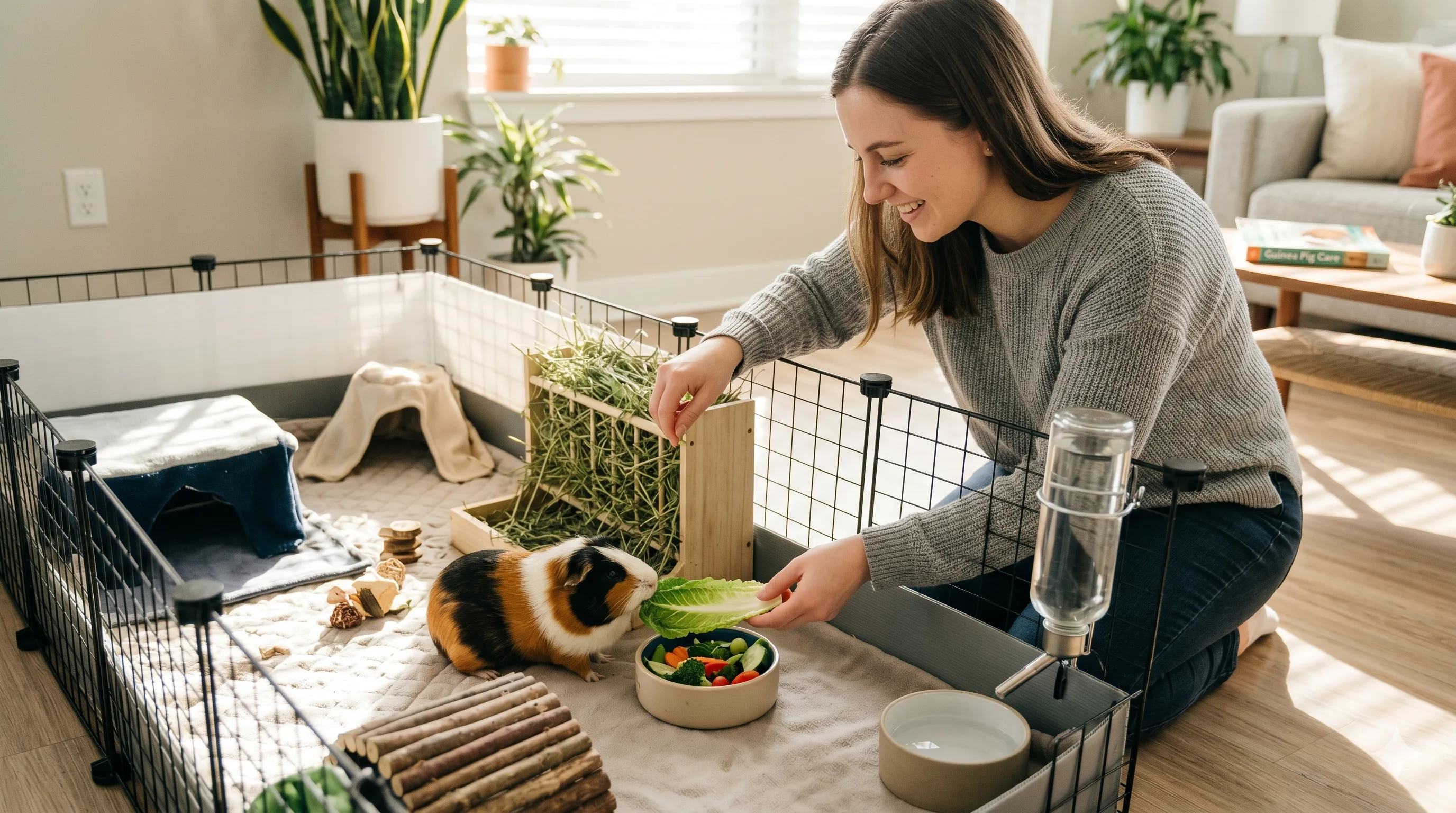
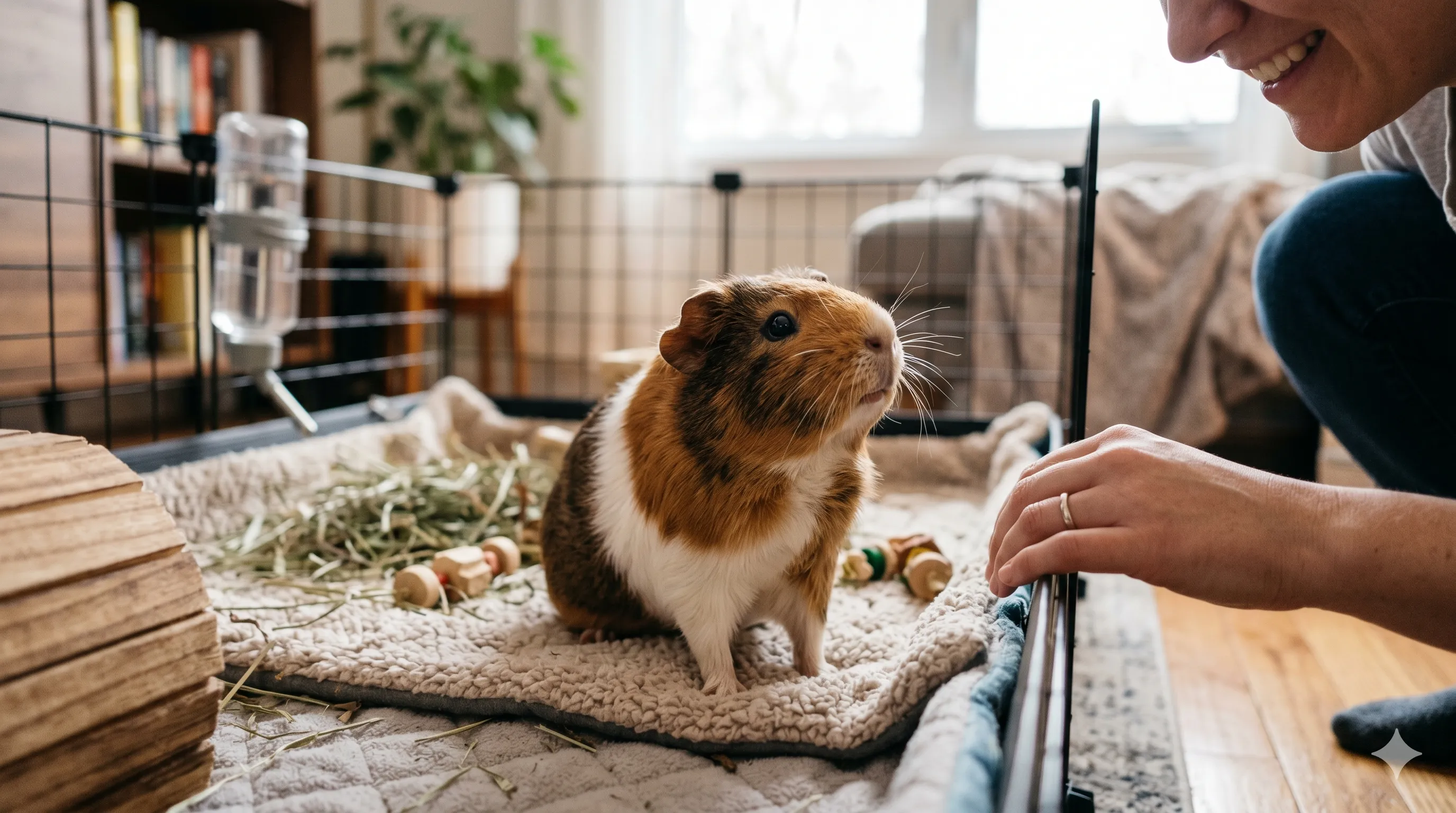
A playpen or a blocked-off section of a room both work well for daily floor time. Add at least one hideout or tunnel, since guinea pigs burrow and tuck themselves away rather than jump the way rabbits do. Most owners aim for a scheduled block of time each day rather than leaving a guinea pig to free-roam the whole house unsupervised.
Supervision and Reading Comfort
Always stay in the room during floor time, since accidents and close calls can happen in seconds. A guinea pig that stays tucked in its hideout the entire session rather than gradually venturing out may just need more time to adjust, and our deeper look at guinea pig hiding behavior covers when that caution is normal versus when it's worth a closer look.
Companionship and Everyday Comfort
Housing Guinea Pigs in Pairs
Guinea pigs are social animals, and most do better emotionally when housed with a compatible companion rather than kept entirely alone. Introductions should happen slowly and on neutral territory rather than dropping a new guinea pig straight into an established cage. A single guinea pig can still live a full and content life as long as it gets consistent daily attention from its owner.
Signs Your Guinea Pig Feels at Home
A guinea pig that's settled in tends to move around confidently, eat normally, and show off the small hopping motions known as popcorning. Those happy little jumps are one of the clearest signs that the indoor environment you've built actually feels safe. It typically takes a few days to a couple of weeks for a new guinea pig to reach that comfort level, so patience matters as much as the physical setup itself.
What to Expect in the First Week Indoors
Typical First-Day Behavior
A guinea pig arriving in a brand new indoor space will often eat less, hide more, and stay unusually still for the first day or two. This is a normal adjustment response rather than a sign that anything is wrong, and it tends to ease once the guinea pig learns where the food, water, and hideout are. Talking softly nearby and offering a small amount of fresh vegetables by hand can help speed up that first bit of trust-building without forcing interaction.
When Adjustment Takes Longer Than Expected
Most guinea pigs settle into a predictable indoor routine within one to two weeks. If eating stays noticeably reduced, hiding never lets up, or a guinea pig seems unusually lethargic well past that window, it's worth checking in with a vet rather than assuming it's still just settling in. Keeping the rest of the environment stable during this period, meaning no rearranging the cage or introducing a new companion right away, gives a new guinea pig the best chance to adjust on its own timeline.
Expert Tips for a Safer Indoor Setup
- Keep a small thermometer near the cage rather than relying on how the room feels to you, since guinea pigs react to temperature swings well before a person would notice them.
- Position the cage against an interior wall rather than beside a window or an exterior wall to avoid the biggest temperature swings.
- Do a "hands and knees" check of any play area at guinea pig height before every floor-time session, since hazards are easy to miss from standing height.
- Keep hay and water positioned away from the sleeping area so bedding underneath stays dry and comfortable.
- Introduce a new cage layout gradually rather than rearranging everything at once, since sudden changes can unsettle an already-cautious animal.
- Keep a simple daily routine for feeding, floor time, and cage cleaning, since guinea pigs settle in faster when the day follows a predictable pattern.
Common Mistakes First-Time Owners Make
- Choosing a cage that meets a store's minimum size rather than the space a guinea pig actually needs to move comfortably.
- Using a wire-bottomed cage instead of a solid floor.
- Placing the cage next to a window, exterior wall, or radiator without checking how much the temperature swings there.
- Skipping guinea pig-proofing because a floor-time session seems too short for anything to go wrong.
- Forgetting to include a hideout in the play area, leaving a naturally cautious animal with nowhere to retreat.
- Housing a guinea pig alone without considering whether it would settle in faster with a compatible companion.
- Letting a dog or cat approach a guinea pig during floor time without direct supervision.
Final Thoughts
Getting the indoor setup right does more for a guinea pig's wellbeing than almost anything else a new owner does, and most of it comes down to a handful of consistent habits: the right temperature, safe bedding, a genuinely proofed space, and daily supervised time to explore.
Once the environment is right, you'll start noticing the small signals that show your guinea pig feels secure, from confident munching at mealtime to those first hopeful squeaks and chirps when you walk into the room.
A safe, well-thought-out indoor setup is the single biggest thing you can get right before your guinea pig ever comes home.
This content is written to provide general educational guidance for guinea pig owners and pet families and is not a substitute for professional veterinary advice.
Medical Disclaimer
This content is provided for informational and educational purposes only and should not be considered veterinary, medical, behavioral, or training advice. While we strive for accuracy, we make no guarantees regarding completeness or results. Always consult a licensed veterinarian or qualified pet care professional before making decisions about your pet’s health, diet, or behavior.
AI Illustration Notice
Some images in this article may have been generated or enhanced using artificial intelligence for illustrative purposes.
Frequently Asked Questions
Most guinea pigs do best living indoors year round since it protects them from predators and weather extremes and parasites. An indoor spot also lets owners keep a closer eye on eating and drinking and behavior every day. Outdoor housing can work in mild climates but it removes a lot of the safety margin that indoor housing provides.
A comfortable range for most guinea pigs is around 65 to 75 degrees Fahrenheit. Temperatures below about 59 degrees can become unsafe since guinea pigs have no sweat glands and no heavy coat to protect them from either extreme. Keep the cage away from drafts and direct sun and check on your guinea pig if the room temperature swings suddenly.
A single guinea pig needs a minimum of about 7.5 square feet of solid floor space. A bonded pair needs closer to 10.5 square feet since guinea pigs do best with room to move rather than a cramped cage. Bigger is always better and a solid floor is safer than a wire-bottomed one.
Paper-based bedding and fleece liners are two of the safest and most commonly recommended choices. Avoid cedar shavings and non-kiln-dried pine since both can release fumes that irritate a guinea pig's airway. Whatever bedding you choose should stay dry and get changed on a regular schedule.
Yes, and daily supervised floor time is a normal and healthy part of indoor guinea pig care. Set up a blocked-off area or playpen with a hideout since guinea pigs like to burrow rather than jump. Always stay in the room while your guinea pig explores since accidents can happen quickly.
Electrical cords and household chemicals and several common houseplants such as pothos and lilies and ivy and philodendron are among the biggest hazards. Slippery floors like tile or hardwood can also cause injury so a rug or fleece mat helps during floor time. Check any room from a guinea pig's eye level before letting them explore it.
Guinea pigs are social animals and most do better emotionally when housed with a compatible companion rather than alone. Pairing works best when introductions are handled slowly in neutral territory. A single guinea pig can still live a full and happy life as long as it gets plenty of daily attention.
A relaxed guinea pig tends to move around confidently and eat normally and make happy little hopping motions known as popcorning. Excessive hiding or a sudden drop in appetite can mean the setup still needs adjusting. Give a new guinea pig a few days to settle in before expecting confident behavior.
Hiding is a normal first response since guinea pigs are prey animals and a new environment feels unfamiliar and possibly unsafe. Most guinea pigs relax and explore more once they learn the space and routine. If hiding continues for more than a week or two along with reduced eating a vet visit is a reasonable next step.
Yes, as long as the room stays within a safe temperature range and doesn't get too loud or too bright at night. Guinea pigs are most active at dawn and dusk so a bedroom can actually suit their natural rhythm well. Just keep the cage away from strong drafts near a window and skip scented plug-ins nearby.
Editorial Note
This article is part of PetNurture's educational library.
Topics draw on publicly available educational resources, recognised veterinary organisations, academic publications and established animal welfare references where appropriate.
The specific sources this article draws on are listed in its References section. If you spot an error, please let us know.
References
The information in this article has been reviewed and supported using the following sources.
VCA Animal Hospitals
VCA Animal Hospitals recommends keeping guinea pigs in an ideal temperature range of roughly 65 to 80 degrees Fahrenheit and warns that wood shavings can irritate their respiratory tract.
Accessed Aug 6, 2026
Humane Society
Guinea Pig Housing Requirements and Bedding Options
The Humane Society specifies a minimum of 7.5 square feet of solid floor space for one guinea pig, since cages with wire floors are not acceptable housing.
Accessed Aug 6, 2026
Pet Emergency Guidance
Every pet is unique. If your pet exhibits severe symptoms, sudden behavioral changes, or a medical emergency, do not rely on online guides — contact a licensed veterinarian or emergency clinic immediately.
About PetNurture
PetNurture is an educational library of pet care guides, interactive tools and practical resources for pet parents. We work continuously to keep our content accurate and up to date. Reader feedback helps us maintain content quality.
Related Articles
Popular Guinea Pig Guides
Guinea Pig
Guinea Pig Feeding Calculator
Calculate daily food portions for your guinea pig by weight.
Guinea Pig
Guinea Pig Cage Size Calculator
Find the minimum recommended cage size for your guinea pigs.