Best Guinea Pig Cage Setup (Size, Layout & Enrichment Ideas)
- Why Cage Layout Matters as Much as Size
- Planning Your Cage Zones
- The Dining Corner
- Litter Corner and Litter Training
- Choosing a Base Layout for One or Multiple Guinea Pigs
- Setting Up for Groups of Three or More
- Single-Level Grid Layouts
- DIY Grid Cages vs Pre-Made Enclosures
- Adding a Multi-Level Loft
- Hideouts and Safe Spaces
- How Many Hideouts and Where to Place Them
- Sizing Hideouts for Pairs vs Solo Pigs
- Ramps and Multi-Level Safety
- Enrichment and Keeping the Layout Fresh
- Expert Tips for a Better Cage Layout
- Common Mistakes to Avoid
- Final Thoughts
Note: This article is for informational purposes only and does not replace professional veterinary advice.
A guinea pig cage that's technically big enough can still feel chaotic and stressful if the layout inside it doesn't make sense. Where the food goes, where the litter area sits, how many hideouts there are and where ramps lead all matter just as much as the square footage itself. This guide walks through building a genuinely functional cage layout from the ground up: dedicated zones for eating and toileting, single-level versus multi-level setups, hideout placement, ramp safety, and how to keep the whole thing enriching instead of stale. For the full basics of feeding, health and general care beyond the cage itself, our complete guinea pig care guide covers everything this guide doesn't.
Why Cage Layout Matters as Much as Size
Two cages of the exact same square footage can work very differently depending on how the space inside is organized. A cluttered or poorly zoned cage makes it harder for a guinea pig to find food, water and a safe hideout quickly, which adds low-level stress even when there's technically enough room. A thoughtful layout also makes daily cleaning faster, since mess tends to stay concentrated in the zones you've designed for it rather than spread across the whole floor.
A well-organized cage also makes it easier for an owner to notice small changes at a glance during a normal daily check: whether the food and hay from the dining corner are actually being eaten, whether the water level in the bottle has dropped normally, and whether the litter corner looks the way it usually does. When every zone has a consistent, expected spot, anything unusual tends to stand out much faster than it would in a cage where everything shifts around from day to day.
Planning Your Cage Zones
The Dining Corner
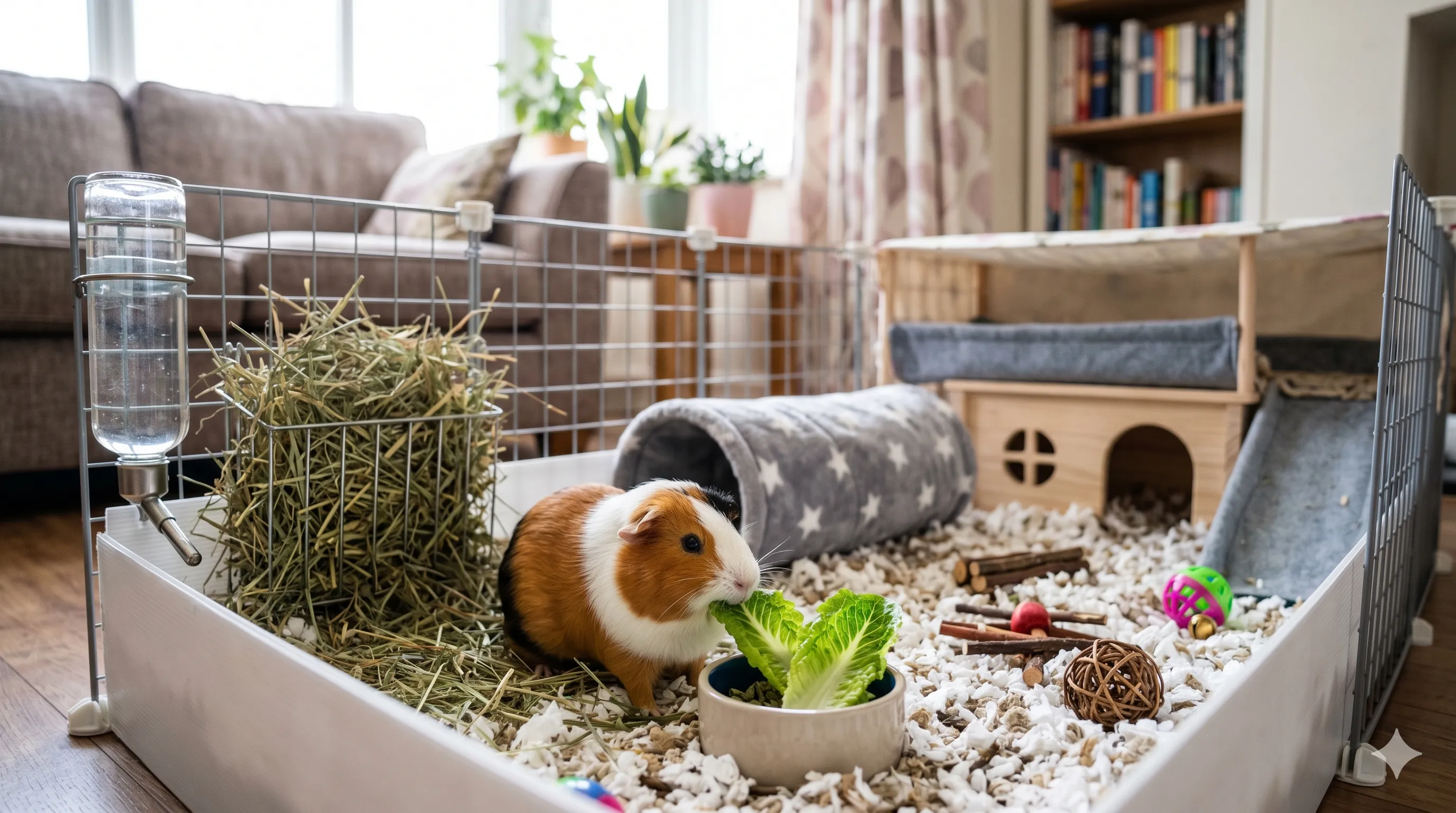
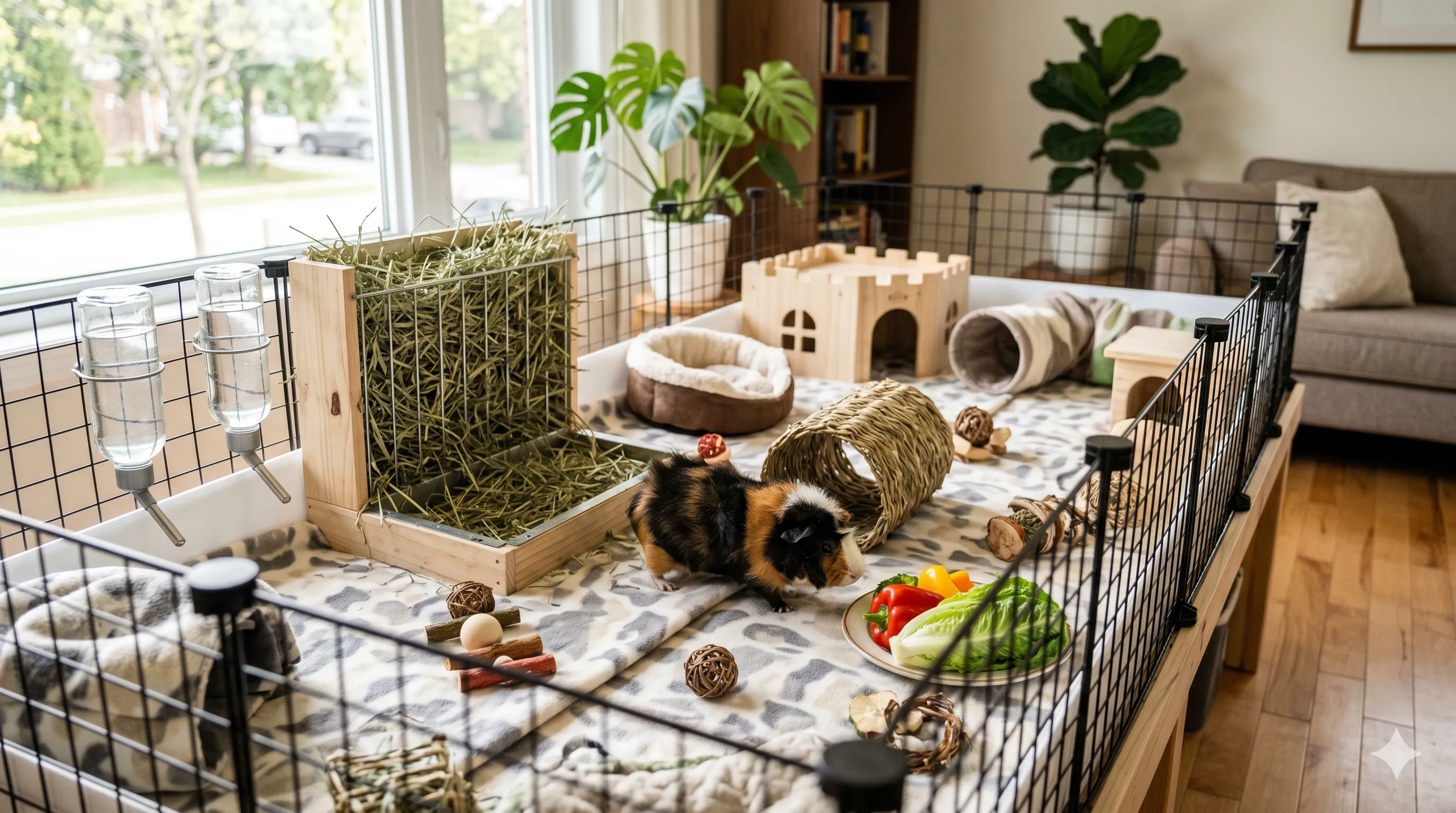
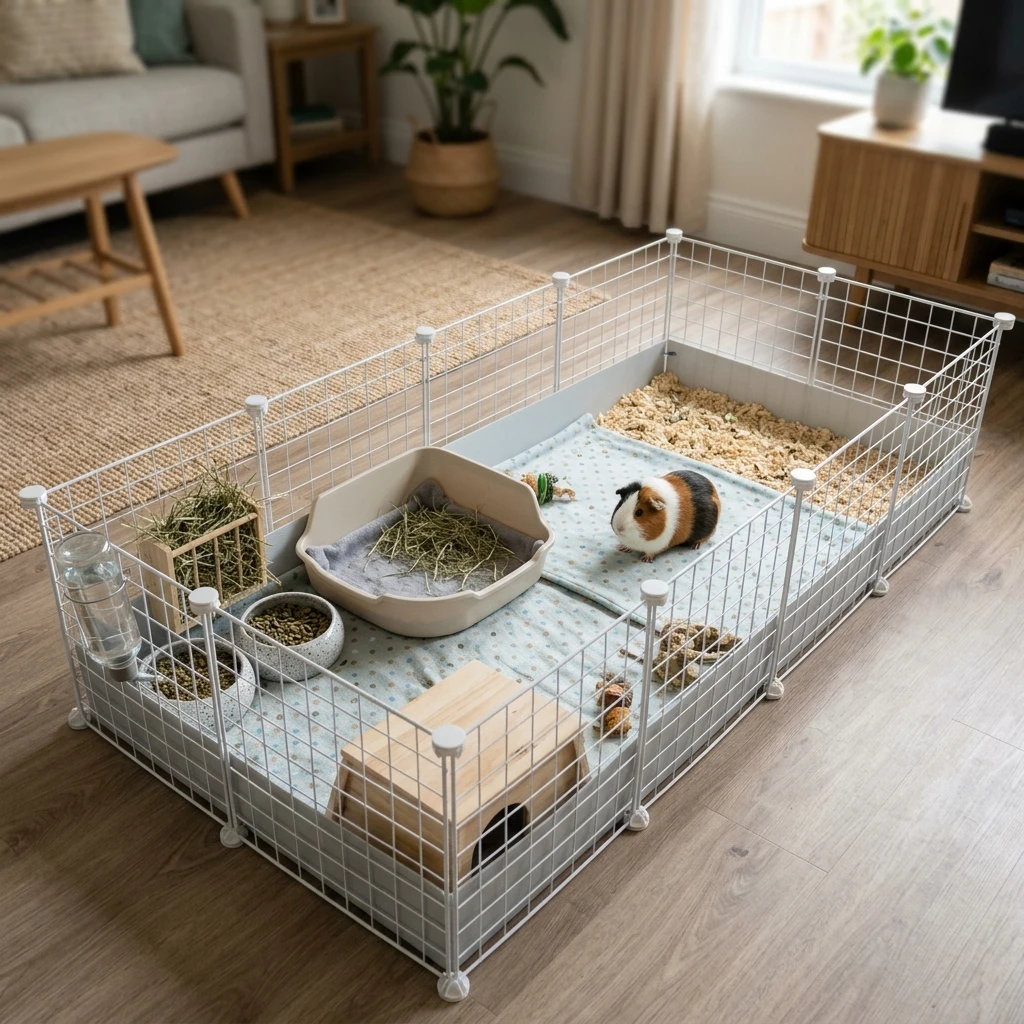
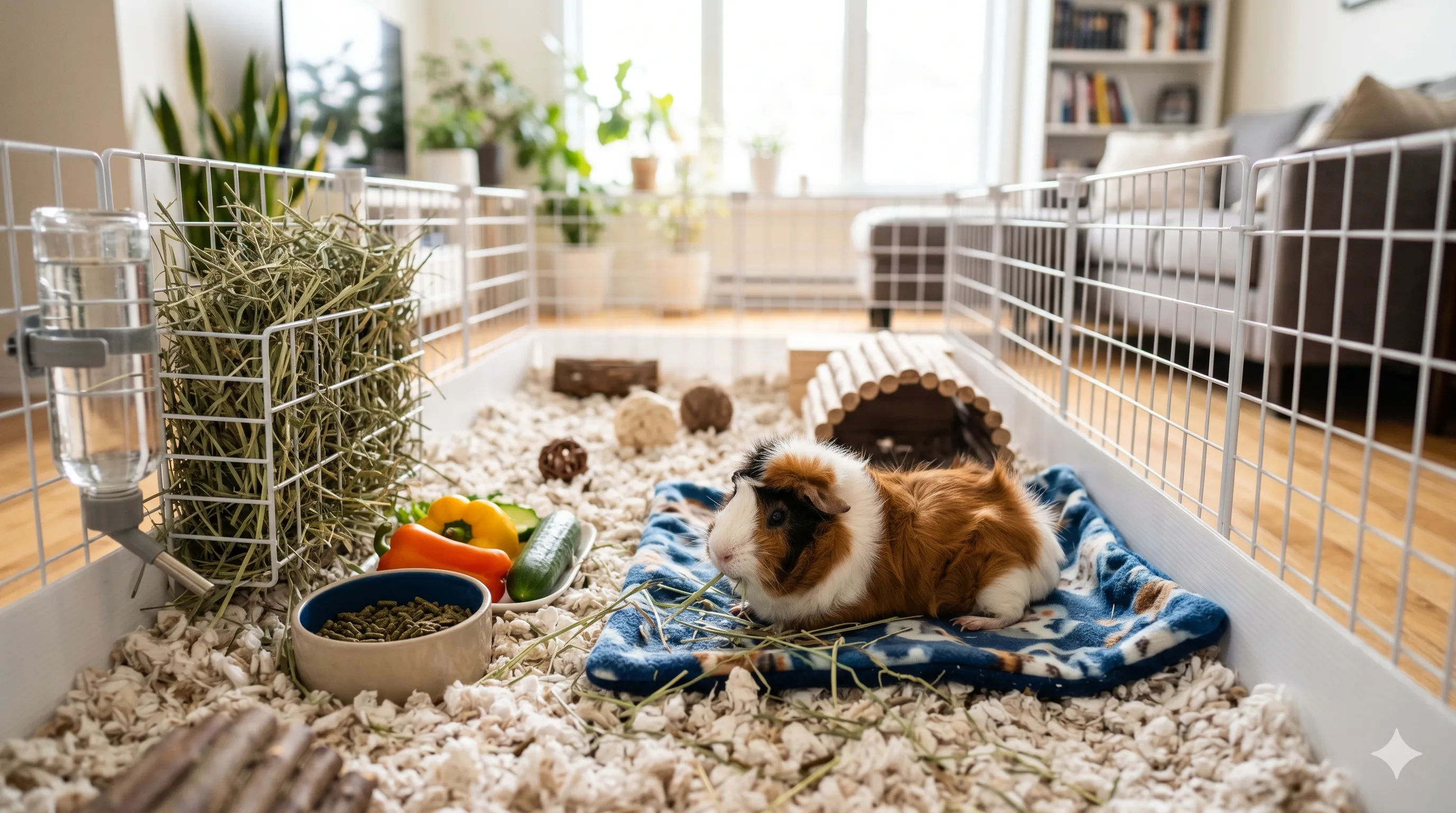
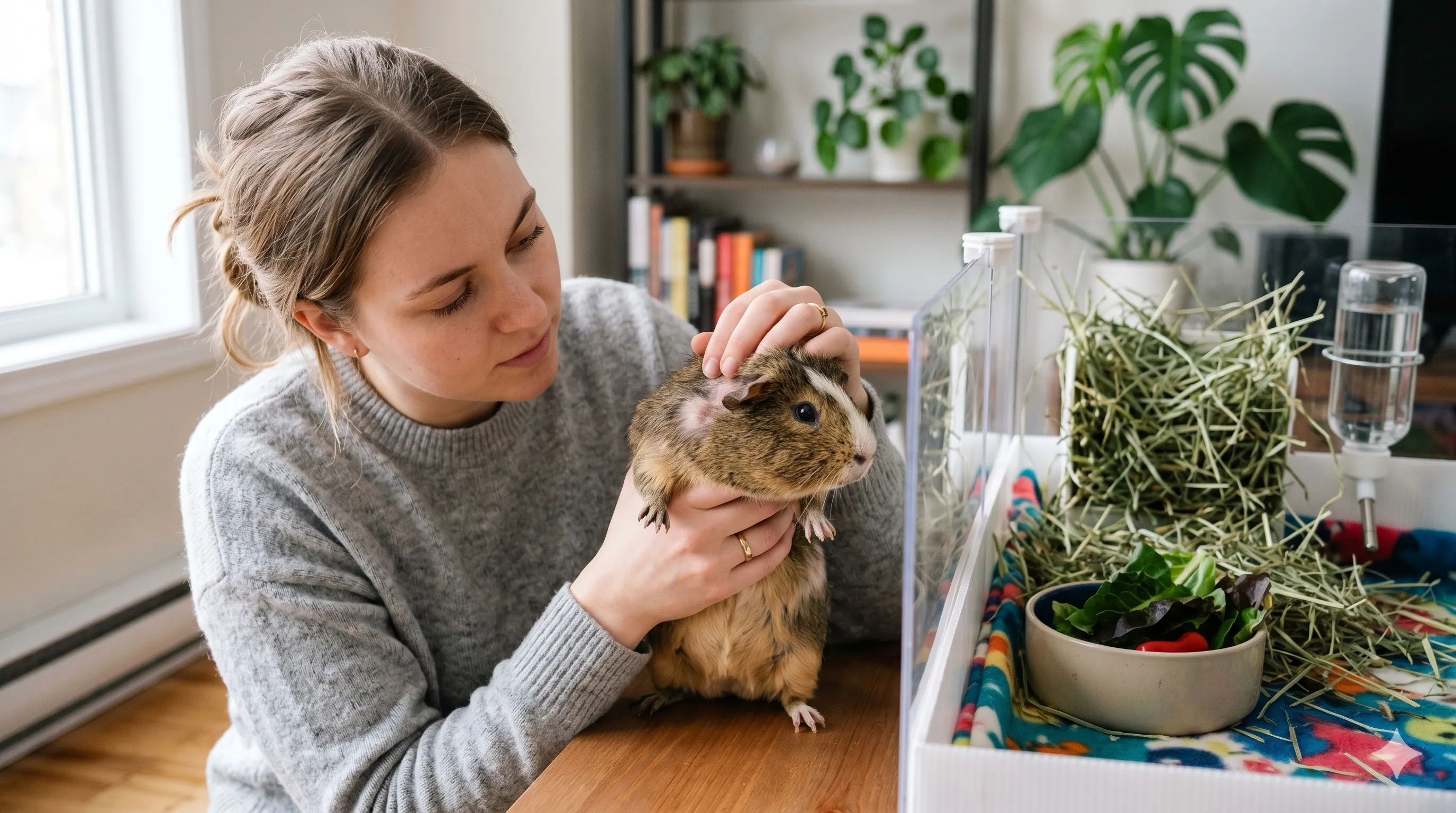
Guinea pigs do best with food and hay concentrated in one dedicated corner rather than scattered around the cage. A heavy ceramic bowl resists tipping better than a lightweight plastic one, and a water bottle mounted on the cage grid at a comfortable drinking height stays far cleaner than an open bowl, which quickly picks up bedding and droppings. A hanging hay feeder that keeps hay off the cage floor, rather than a wire-grid rack a guinea pig has to reach into, tends to keep the dining corner tidier overall. Keeping this corner easy to check also makes reduced appetite easier to notice early, since a guinea pig that suddenly stops visiting its own food corner is worth watching closely.
Litter Corner and Litter Training
Guinea pigs tend to pee where they eat and eat where they pee, so placing a litter pan directly under or right beside the hay feeder actually encourages them to use it consistently. Most guinea pigs will naturally gravitate toward one particular corner of the cage on their own, and a litter pan with absorbent bedding placed in that exact spot, plus a small pile of hay nearby, keeps them coming back to it. Checking that corner regularly also doubles as an easy way to keep an eye on droppings, and our guide to guinea pig poop is a useful reference if anything there ever looks unusual.
Choosing a Base Layout for One or Multiple Guinea Pigs
Setting Up for Groups of Three or More
A larger group benefits from more than one hay station and water source spread around the cage rather than a single dining corner everyone has to share. Spreading resources out reduces competition between guinea pigs and gives lower-ranking members of the group easier access without having to challenge a more confident cagemate for a spot. The core zoning principle stays the same, there's just more of it repeated around a bigger footprint.
Single-Level Grid Layouts
A single-level layout works well for one or two guinea pigs and keeps cleaning simple, since every zone sits at floor level and stays easy to reach. Grid-style cages built from connected panels make it easy to size the base to a specific room or number of guinea pigs, commonly built out as a rectangular grid rather than a square footprint, since guinea pigs use floor length more than floor width. A common starting footprint for two guinea pigs is a grid roughly 2 panels wide by 5 panels long, with larger groups often stepping up to a 2 by 6 footprint or bigger.
DIY Grid Cages vs Pre-Made Enclosures
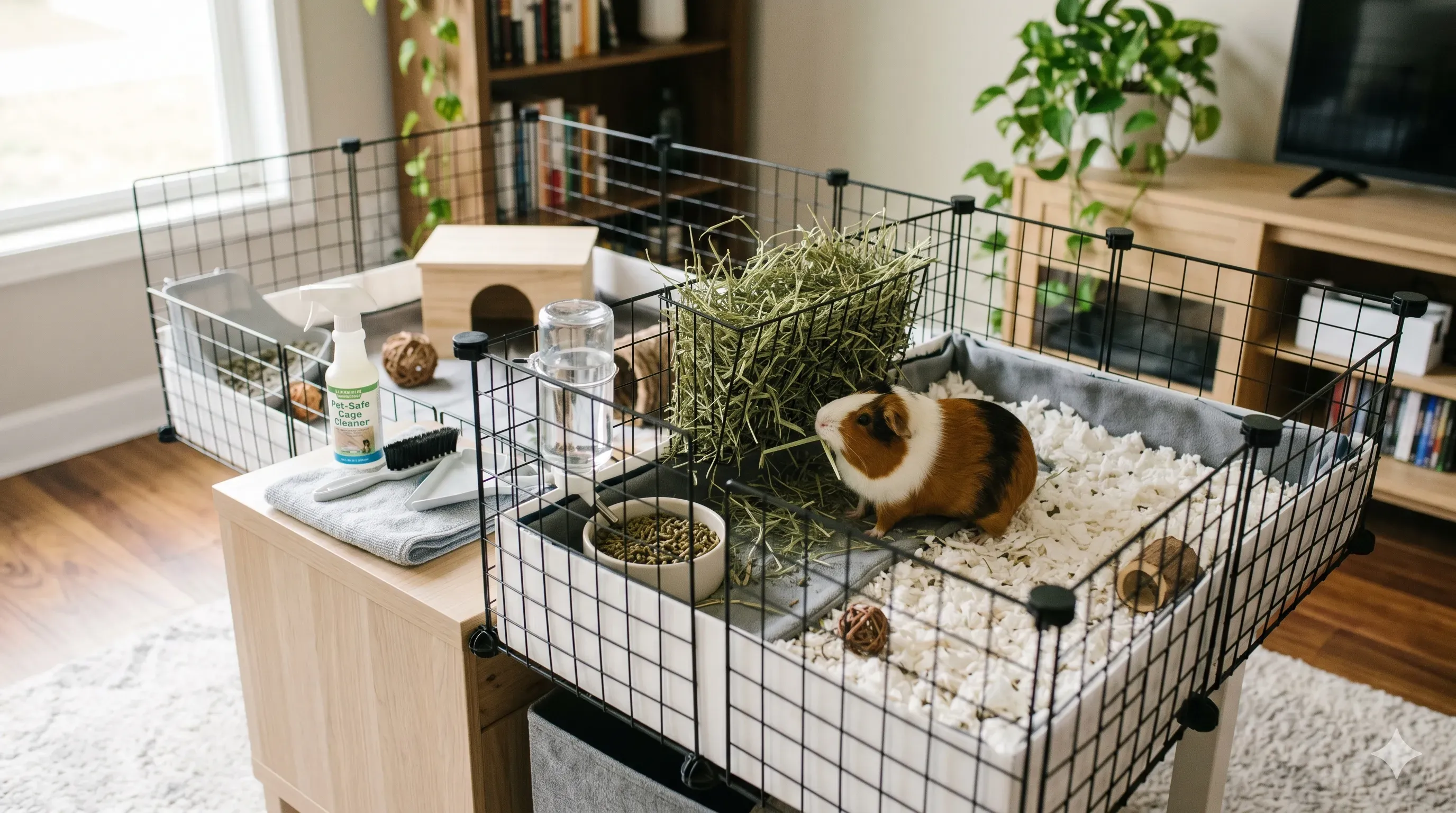
Grid-and-coroplast cages, often called C&C cages, are built from connected wire grid panels sitting on a solid corrugated plastic base, and they let an owner size the footprint exactly rather than settling for whatever a store-bought cage happens to offer. Pre-made commercial cages are simpler to set up straight out of the box and can still work perfectly well, as long as the finished footprint meets the same minimum space guidelines either way. Whichever route you choose, a solid floor throughout beats a wire-bottomed one, since wire flooring can injure sensitive feet over time.
Adding a Multi-Level Loft
For groups of guinea pigs or smaller footprints, a loft level connected by a ramp can add meaningful extra space without expanding the cage's floor print. A loft that covers roughly a third of the total floor area tends to work well as an upper lounging zone, leaving the ground level free for the main dining, litter and open-run zones. Multi-level setups also give more cautious guinea pigs an extra option for getting away from cagemates when they want space.
Hideouts and Safe Spaces
How Many Hideouts and Where to Place Them
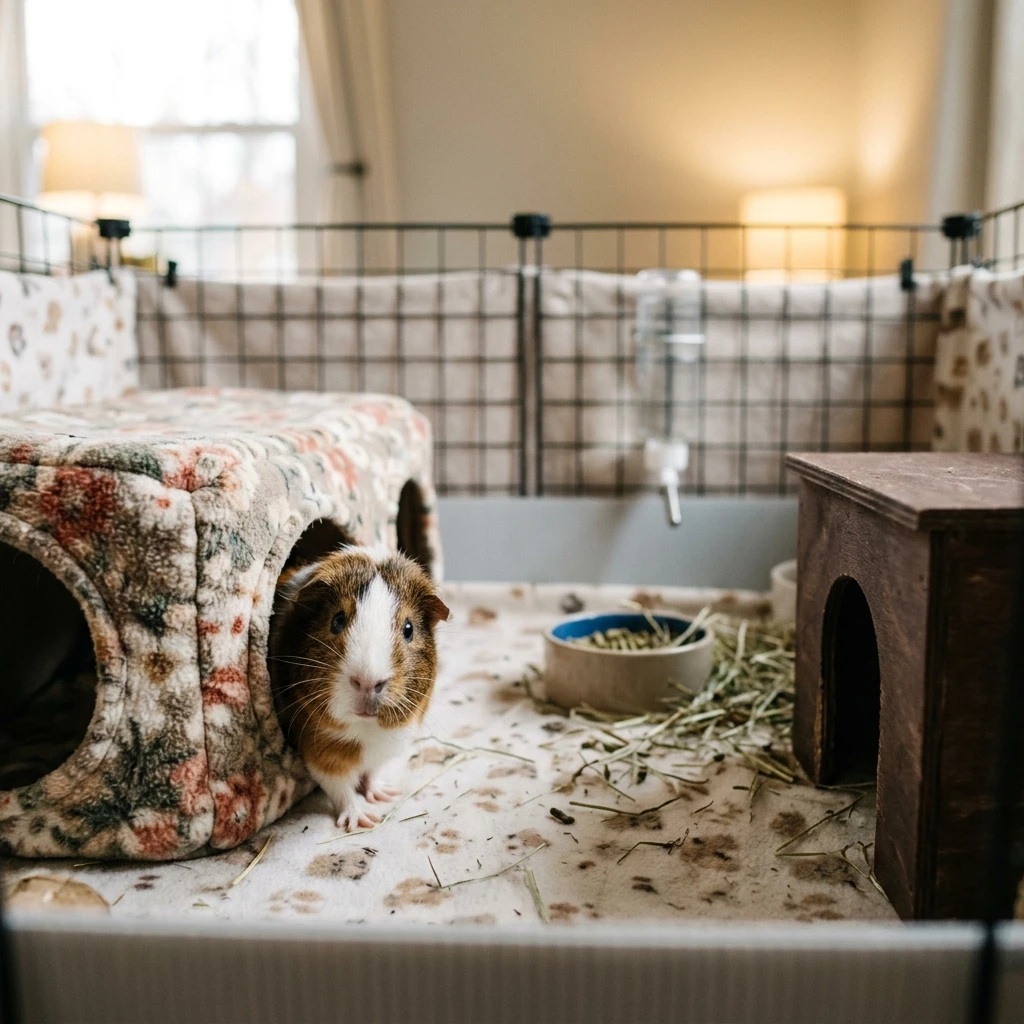
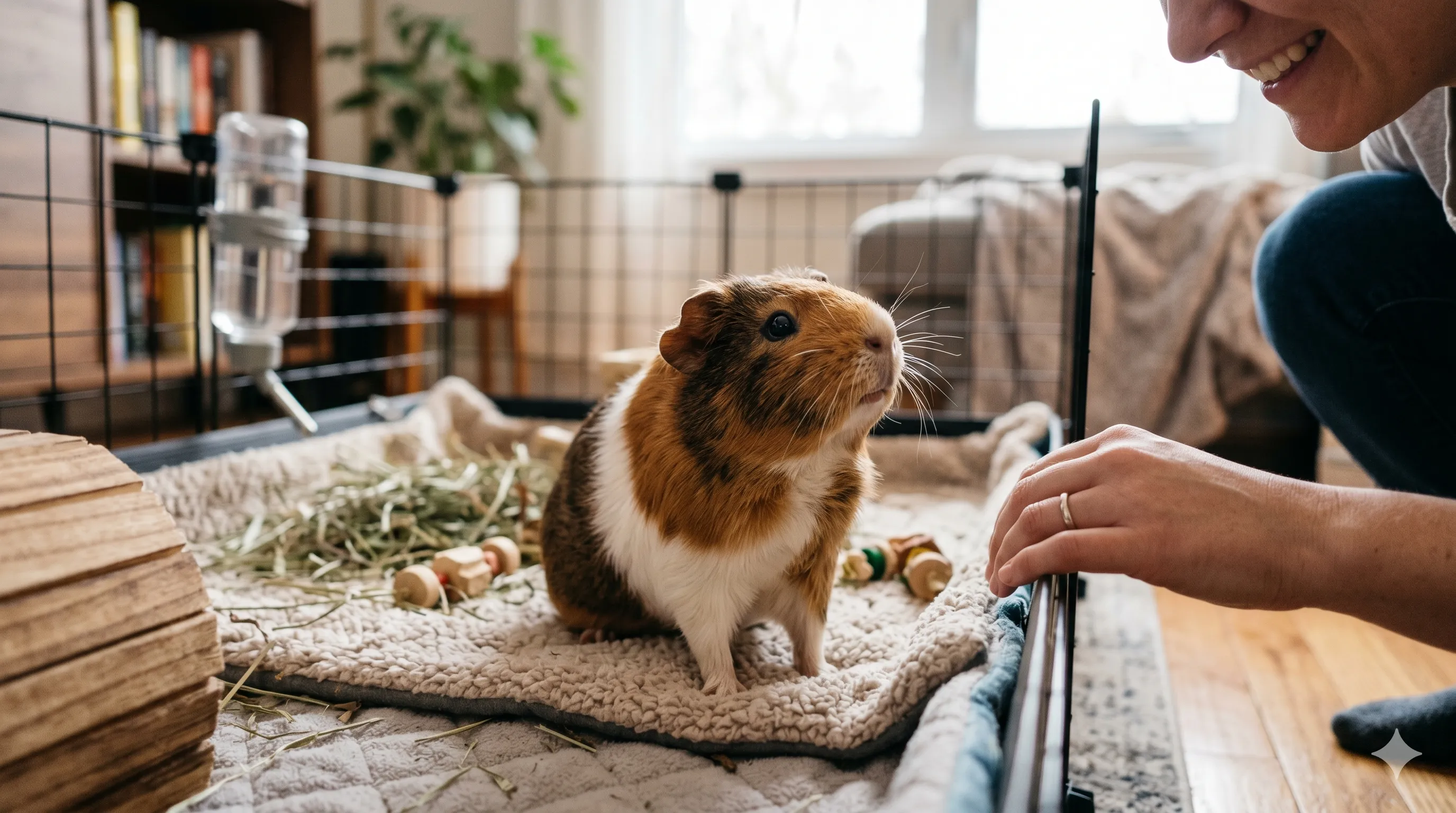
Every guinea pig needs at least one hideout, and a cage with more than one guinea pig should have at least two, positioned at opposite ends of the cage so no pig ever feels cornered by a cagemate. Placing hideouts in a quieter section of the cage, away from the dining corner's foot traffic, gives guinea pigs somewhere genuinely restful to retreat to rather than a spot they're constantly walking past.
Sizing Hideouts for Pairs vs Solo Pigs
A larger shared hideout lets a bonded pair snuggle together, while adding one smaller single-entry hideout gives each pig the option to be alone when they want to be. A guinea pig that spends unusual amounts of time tucked away rather than gradually coming out to explore its cage is worth watching, and guinea pig hiding behavior goes into more detail on when that pattern is simply cautious versus worth a closer look.
Ramps and Multi-Level Safety
Any ramp connecting cage levels should have a gentle slope rather than a steep incline, since guinea pigs aren't natural climbers the way some other small pets are. Enclosed ramps with side walls prevent a guinea pig from slipping off the edge mid-climb, and covering the ramp surface with fleece or another grippy material stops feet from sliding on bare plastic or wire. A ramp that's too steep or too slick tends to go unused entirely, which quietly wastes the extra loft space it was meant to unlock.
Some guinea pigs need a little time to learn a new ramp rather than using it confidently right away. Starting with the gentlest incline available and placing a small treat or a bit of hay near the ramp entrance can encourage a hesitant guinea pig to try it out on their own terms rather than being placed on it directly.
Enrichment and Keeping the Layout Fresh
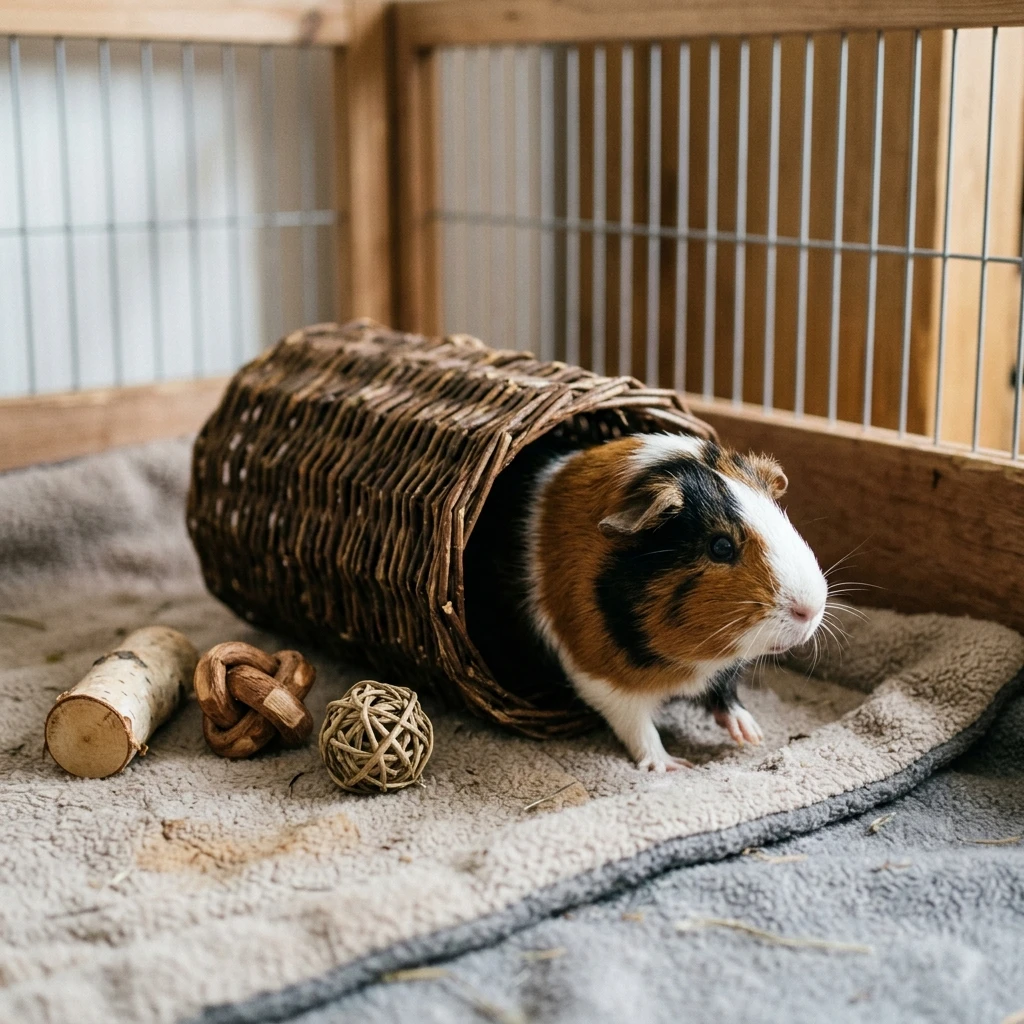
Constant chewing keeps a guinea pig's continuously growing teeth worn down at a healthy length, so safe wooden chews and hay-based toys tucked into the open-run zone do double duty as both enrichment and dental maintenance — guinea pig teeth problems covers what healthy versus problem teeth actually look like if you want the fuller picture. Rotating tunnels, chew toys and small hideouts every couple of weeks keeps the cage feeling new without requiring a full layout overhaul, and even small changes like swapping which corner holds a toy can renew a guinea pig's interest in exploring its own space.
Expert Tips for a Better Cage Layout
- Keep the dining corner, litter corner and open-run zone in three clearly separate areas rather than letting them blend together.
- Choose a rectangular grid footprint over a square one when possible, since guinea pigs use length more than width.
- Add a loft level before assuming you need an entirely bigger cage — it's often a simpler way to add real usable space.
- Place hideouts away from the busiest, highest-traffic corner of the cage rather than right next to it.
- Rotate two or three enrichment items on a schedule instead of buying new ones constantly.
Common Mistakes to Avoid
- Scattering food, hay and water around the cage instead of grouping them into one dedicated dining corner.
- Using an open food or water bowl that quickly fills with bedding and droppings.
- Placing every hideout in the same corner, leaving no separate retreat option for each guinea pig.
- Adding a steep or open-sided ramp that a guinea pig avoids using entirely.
- Never rotating enrichment items, leaving the same toys and tunnels in place for months at a time.
Final Thoughts
A great cage setup isn't just about hitting a minimum square footage — it's about giving a guinea pig clearly defined zones for eating, toileting, hiding and exploring, plus safe ways to move between them.
Get the zones and hideout placement right, add a loft if space allows, and rotate enrichment regularly, and you'll likely start noticing the confident, curious behavior, including the occasional happy popcorning, that shows your guinea pig genuinely enjoys the space you've built.
Zoning and layout matter just as much as raw square footage — get both right and the cage does most of the work for you.
This content is written to provide general educational guidance for guinea pig owners and pet families and is not a substitute for professional veterinary advice.
Medical Disclaimer
This content is provided for informational and educational purposes only and should not be considered veterinary, medical, behavioral, or training advice. While we strive for accuracy, we make no guarantees regarding completeness or results. Always consult a licensed veterinarian or qualified pet care professional before making decisions about your pet’s health, diet, or behavior.
AI Illustration Notice
Some images in this article may have been generated or enhanced using artificial intelligence for illustrative purposes.
Frequently Asked Questions
A single guinea pig needs a minimum of about 7.5 square feet and a bonded pair needs closer to 10.5 square feet. Layout still matters at any size since a poorly zoned cage feels cramped even when the total space is technically enough. Get the zones right first and then look at whether more square footage would help.
Group food and hay and water into one dedicated dining corner rather than spreading them around the cage. Use a heavy ceramic bowl for food since guinea pigs often flip lighter bowls. A water bottle mounted on the grid stays cleaner than an open bowl and should sit at a comfortable drinking height.
Many guinea pigs can learn to use a litter corner though not every guinea pig trains completely. Placing a litter pan under or beside the hay feeder works well since guinea pigs tend to eat and toilet in the same spot. Most pigs also naturally settle on one favorite corner which makes a good spot for the litter pan.
A single guinea pig needs at least one hideout and a cage with more than one guinea pig should have at least two. Placing hideouts at opposite ends of the cage prevents either pig from feeling cornered. A larger shared hideout plus one smaller solo option works well for a bonded pair.
Yes, as long as the ramp has a gentle slope and enclosed sides rather than a steep open edge. Cover the ramp surface with fleece or another grippy material so feet don't slide during climbs. A loft covering roughly a third of the floor area works well as an upper lounging zone.
Safe wooden chews and hay-based toys give guinea pigs something to gnaw on while helping wear down their continuously growing teeth. Tunnels and small hideouts also encourage natural exploring and burrowing behavior. Rotate a few items every couple of weeks instead of leaving the same toys in place for months.
A solid floor is safer than a wire-bottomed one since wire flooring can injure a guinea pig's sensitive feet over time. Add fleece or another soft liner on top of a solid base for comfort and easier cleaning. This applies to loft levels as much as it does to the main cage floor.
The overall zones like the dining corner and litter corner should generally stay in the same place once a guinea pig learns them. Smaller enrichment items such as toys and tunnels can be rotated every couple of weeks to keep things interesting. Avoid rearranging everything at once since sudden big changes can unsettle a guinea pig.
Editorial Note
This article is part of PetNurture's educational library.
Topics draw on publicly available educational resources, recognised veterinary organisations, academic publications and established animal welfare references where appropriate.
The specific sources this article draws on are listed in its References section. If you spot an error, please let us know.
References
The information in this article has been reviewed and supported using the following sources.
RSPCA
Creating a Good Home for Guinea Pigs
RSPCA guidance recommends providing hideouts that exceed the number of guinea pigs by one, so no animal is ever left without a place to retreat.
Accessed Aug 6, 2026
Humane Society
Guinea Pig Housing Requirements and Bedding Options
The Humane Society states that cages with wire floors are not acceptable guinea pig housing, since a solid floor is needed to protect their feet.
Accessed Aug 6, 2026
Pet Emergency Guidance
Every pet is unique. If your pet exhibits severe symptoms, sudden behavioral changes, or a medical emergency, do not rely on online guides — contact a licensed veterinarian or emergency clinic immediately.
About PetNurture
PetNurture is an educational library of pet care guides, interactive tools and practical resources for pet parents. We work continuously to keep our content accurate and up to date. Reader feedback helps us maintain content quality.
Related Articles
Popular Guinea Pig Guides
Guinea Pig
Guinea Pig Feeding Calculator
Calculate daily food portions for your guinea pig by weight.
Guinea Pig
Guinea Pig Cage Size Calculator
Find the minimum recommended cage size for your guinea pigs.