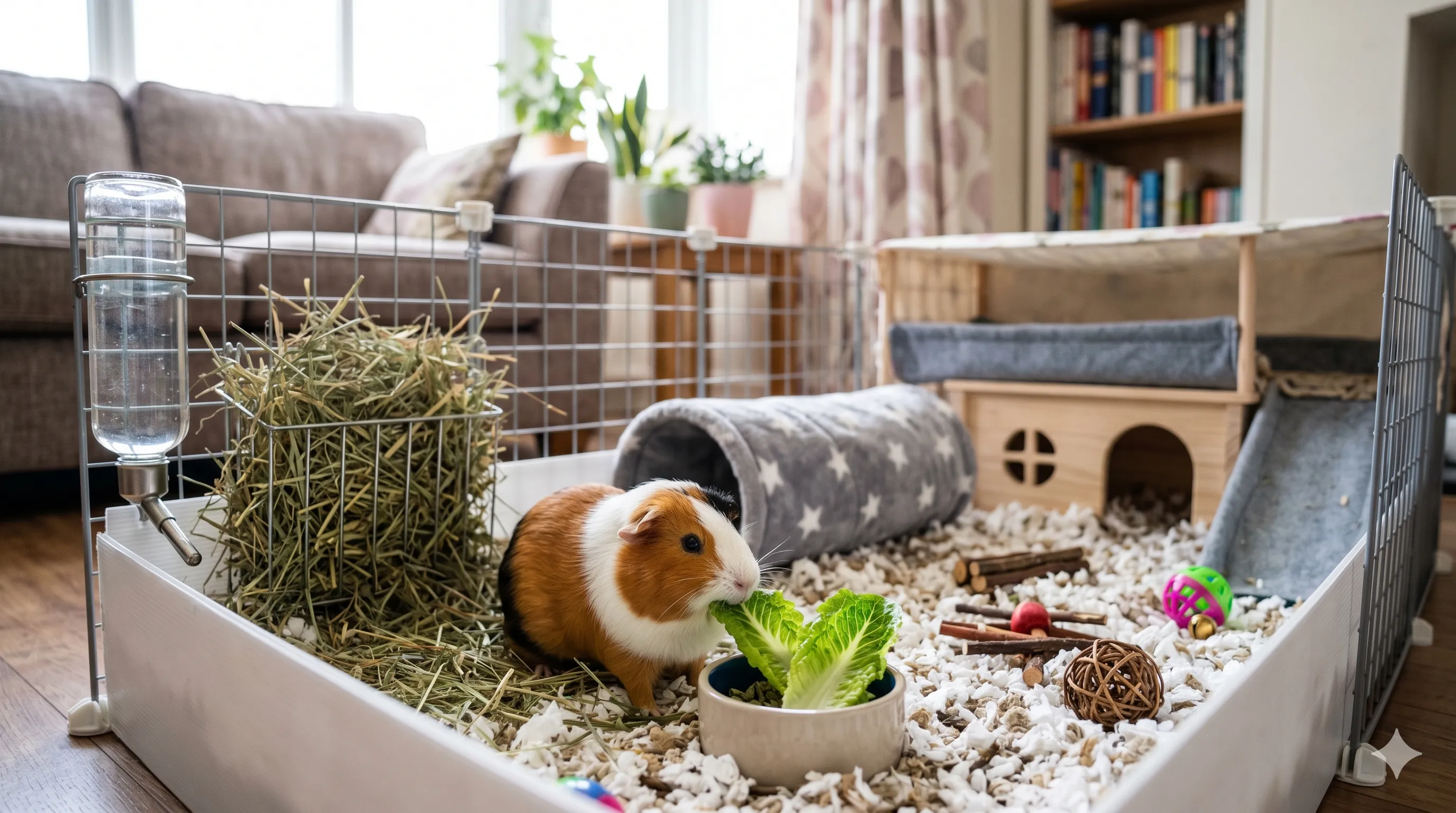
Guinea Pig Playpen Ideas (Safe Indoor Exercise Setup)
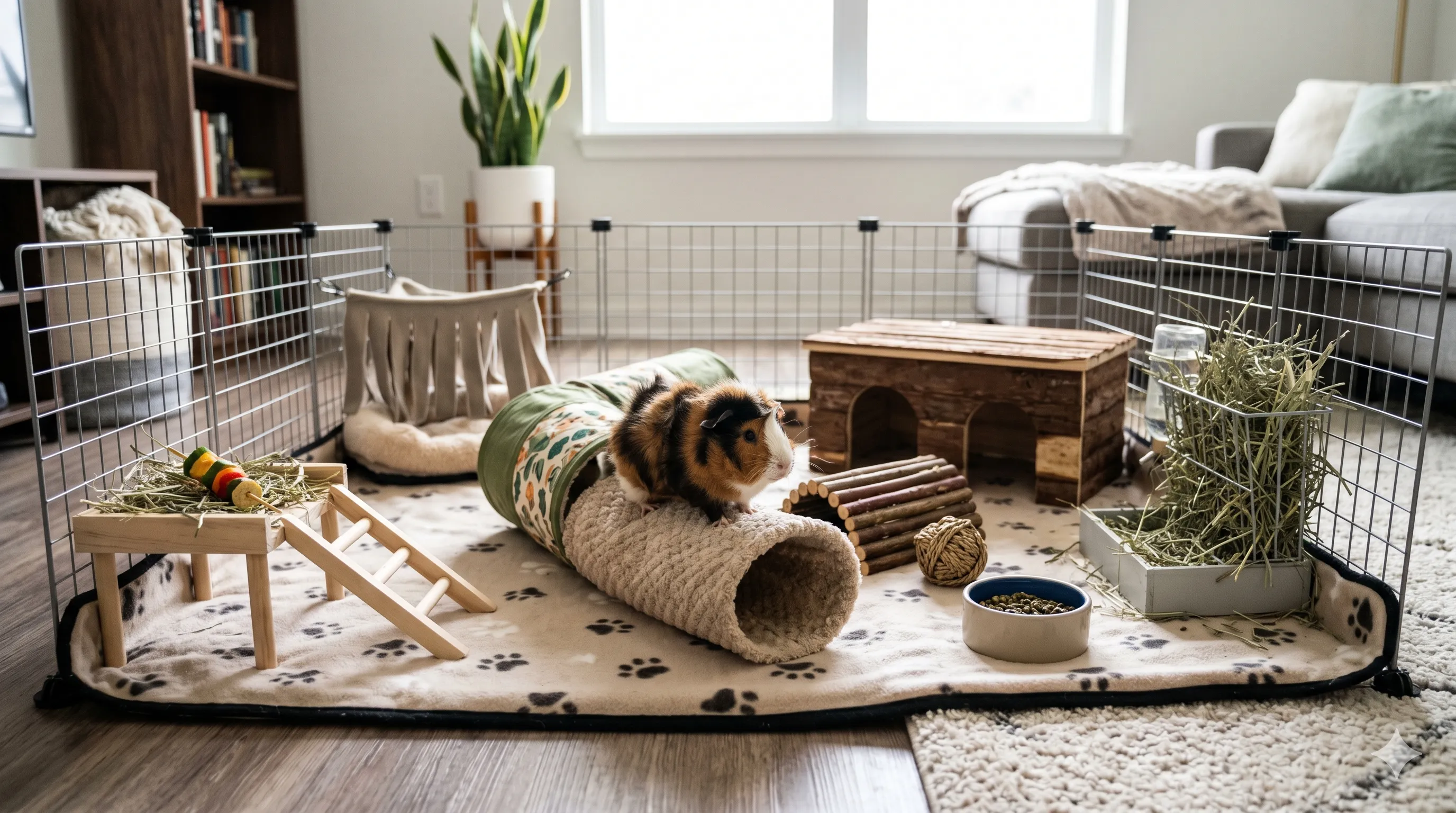
- Why a Dedicated Playpen Helps
- Choosing Playpen Size and Shape
- How Big Should a Playpen Be
- Common Shapes and Configurations
- Portable and Travel-Friendly Options
- Playpen Materials Compared
- Metal Grid Panels
- Waterproof Fabric Pens
- DIY Cardboard Playpens
- Flooring and Protecting Your Floors
- Best Playpen Flooring Options
- What to Avoid
- Playpen Height and Escape-Proofing
- Filling the Playpen: Hideouts, Toys and a Litter Box
- Indoor vs Outdoor Playpen Use
- Expert Tips for a Better Playpen Setup
- Common Mistakes to Avoid
- Final Thoughts
Note: This article is for informational purposes only and does not replace professional veterinary advice.
A playpen gives a guinea pig a dedicated, contained space to run, explore and get real exercise without the risks of roaming an entire room unsupervised. Unlike a quick blocked-off corner, a proper playpen is something you can size, shape and equip on purpose, and it works whether you're setting up daily floor time next to the cage or building a semi-permanent second space. This guide covers choosing a size and shape, comparing the common materials playpens are built from, flooring that protects both your guinea pig and your floors, height and escape-proofing, and what actually belongs inside once it's set up. For everything else about keeping a guinea pig comfortable day to day, our complete guinea pig care guide covers the basics beyond the playpen itself.
Why a Dedicated Playpen Helps
A cage alone, even a generously sized one, rarely gives a guinea pig enough open room to really stretch out and run. A playpen fills that gap with a defined, guinea-pig-proofed space that's easier to supervise than an entire open room, since there's a clear boundary for both the guinea pig and the owner keeping watch. It also makes daily exercise more consistent, since a playpen that's already set up and ready to go gets used far more reliably than a floor-time routine that requires guinea-pig-proofing an entire room from scratch each time.
A larger playpen also gives multiple guinea pigs room to interact naturally away from the tighter confines of a shared cage, which can ease minor territorial tension simply by giving everyone more space to move independently. First-time introductions between guinea pigs are still safest done gradually and under supervision, but an established, bonded group generally benefits from the extra shared room a playpen provides during exercise time.
Choosing Playpen Size and Shape
How Big Should a Playpen Be
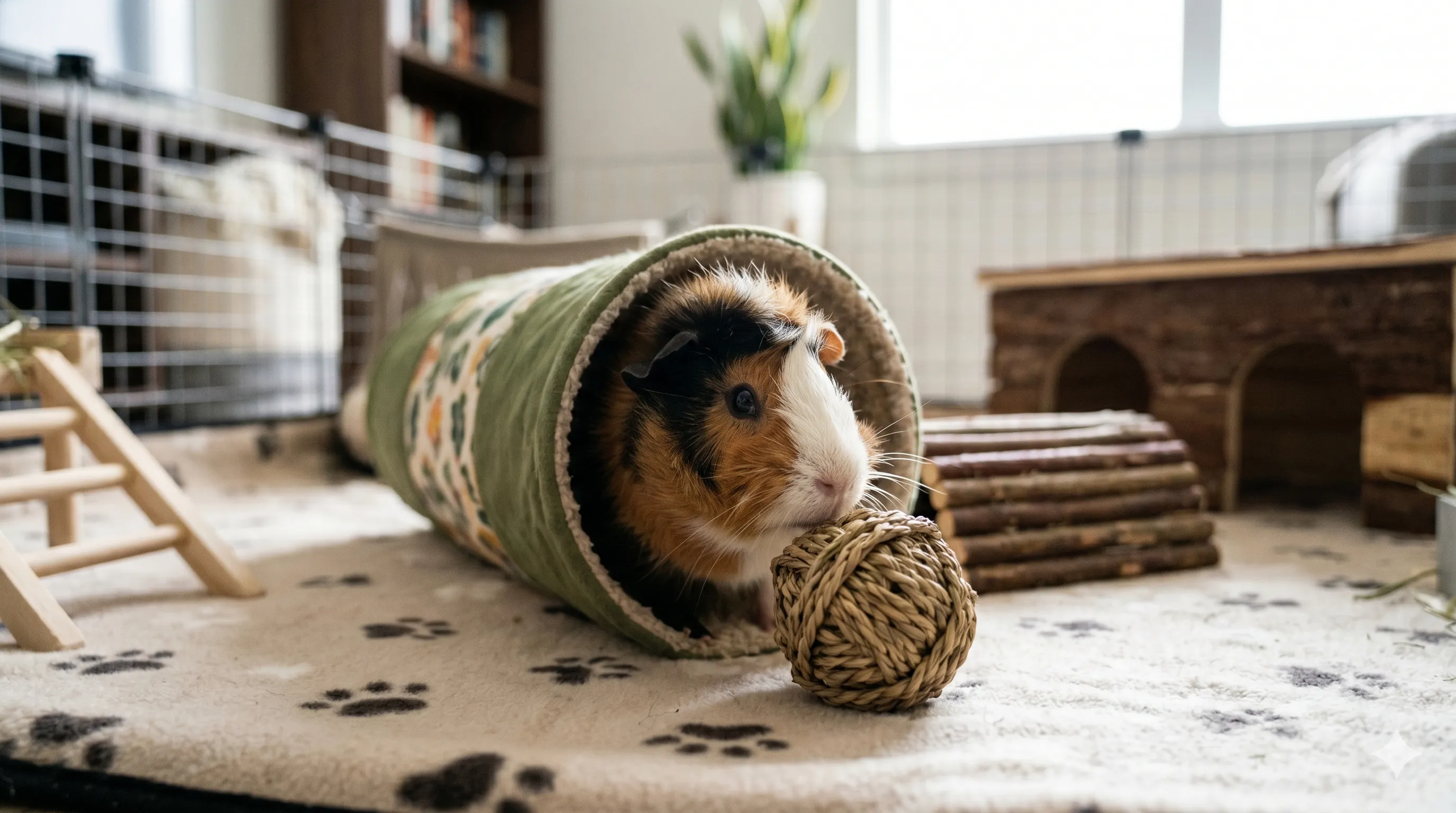
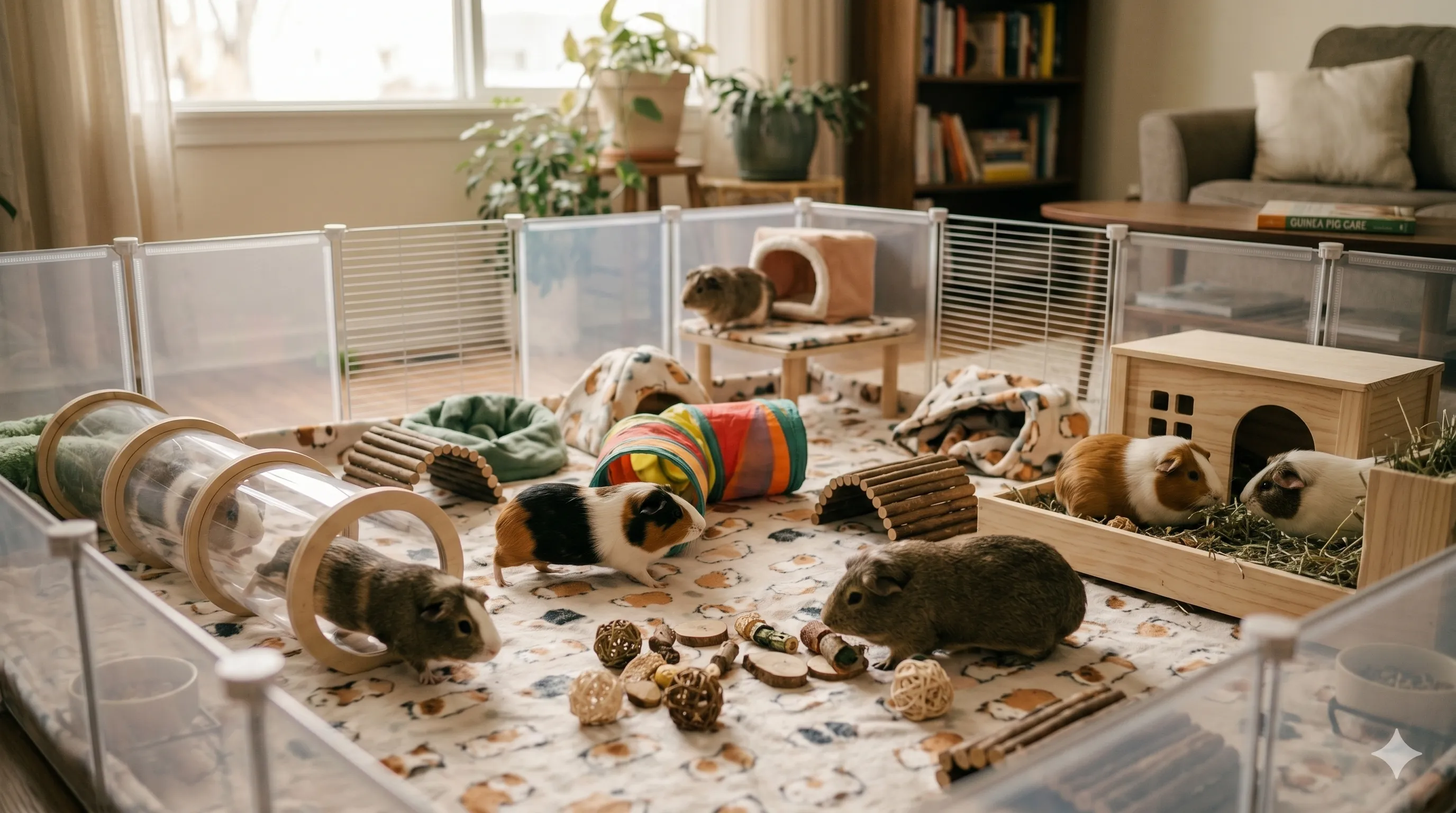
Popular grid-panel playpens are commonly configured as roughly a 4 by 4 foot square or a 2 by 6 foot rectangle, though the right size ultimately depends on how much floor space you can dedicate to it. Bigger is generally better for encouraging actual running and exploring rather than just standing around, especially for more than one guinea pig sharing the space at once.
Common Shapes and Configurations
Connected grid panels can be arranged into shapes beyond a simple rectangle, including an octagon or an L-shape that fits an odd corner of a room. This flexibility makes a grid-panel playpen easier to fit into a specific space than a fixed pre-made pen, and panels can be reconfigured later if you move furniture around or want to change the layout entirely.
Portable and Travel-Friendly Options
Foldable grid panels and soft-sided fabric pens both collapse down small enough to bring along for a vet visit, a trip to a family member's house, or simply moving playtime to a different room for a change of scenery. A portable option is worth having even if your main playpen setup stays in one fixed spot most of the time, since it removes the guesswork of guinea pig-proofing an unfamiliar space on short notice.
Playpen Materials Compared
Metal Grid Panels
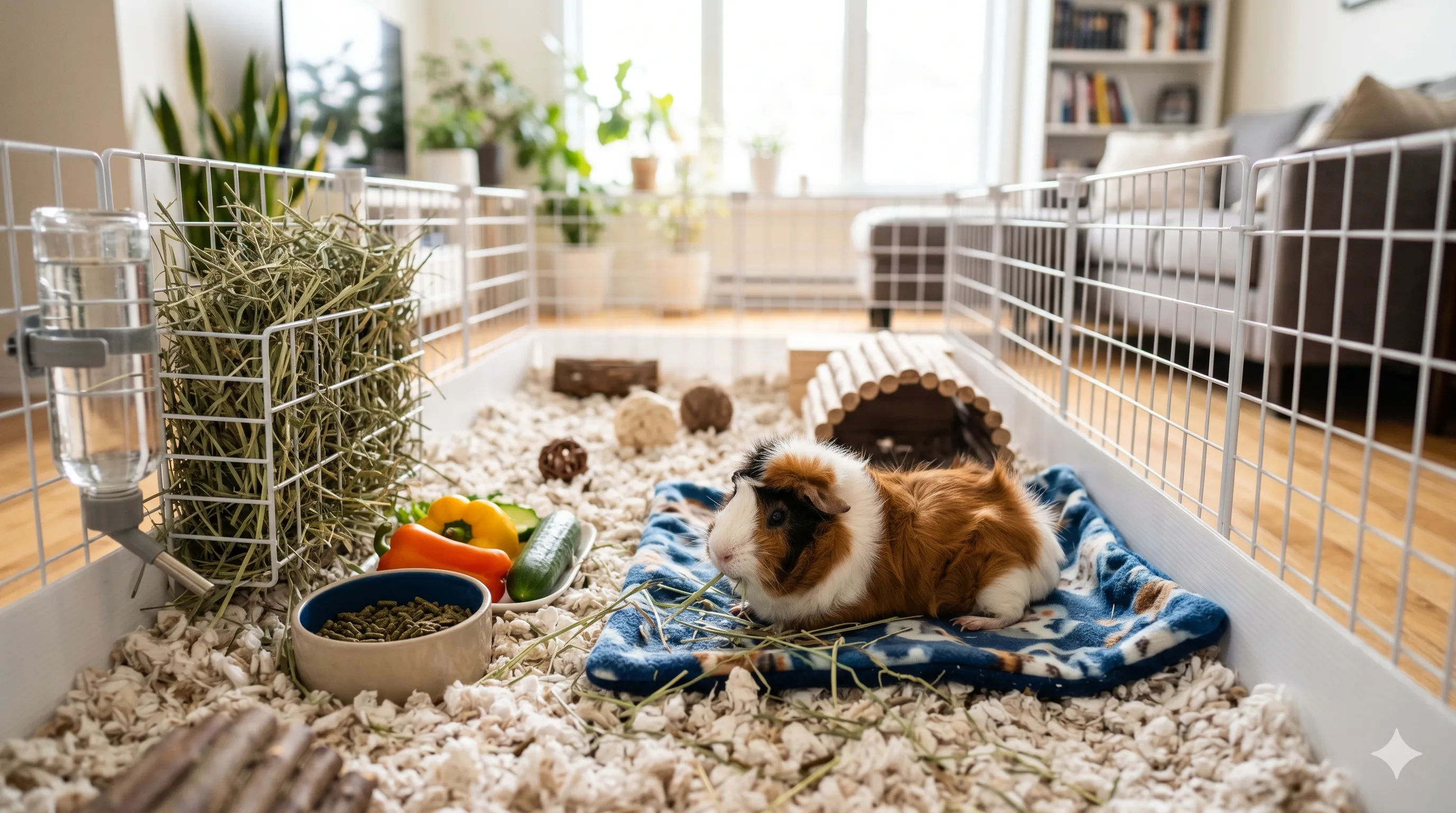
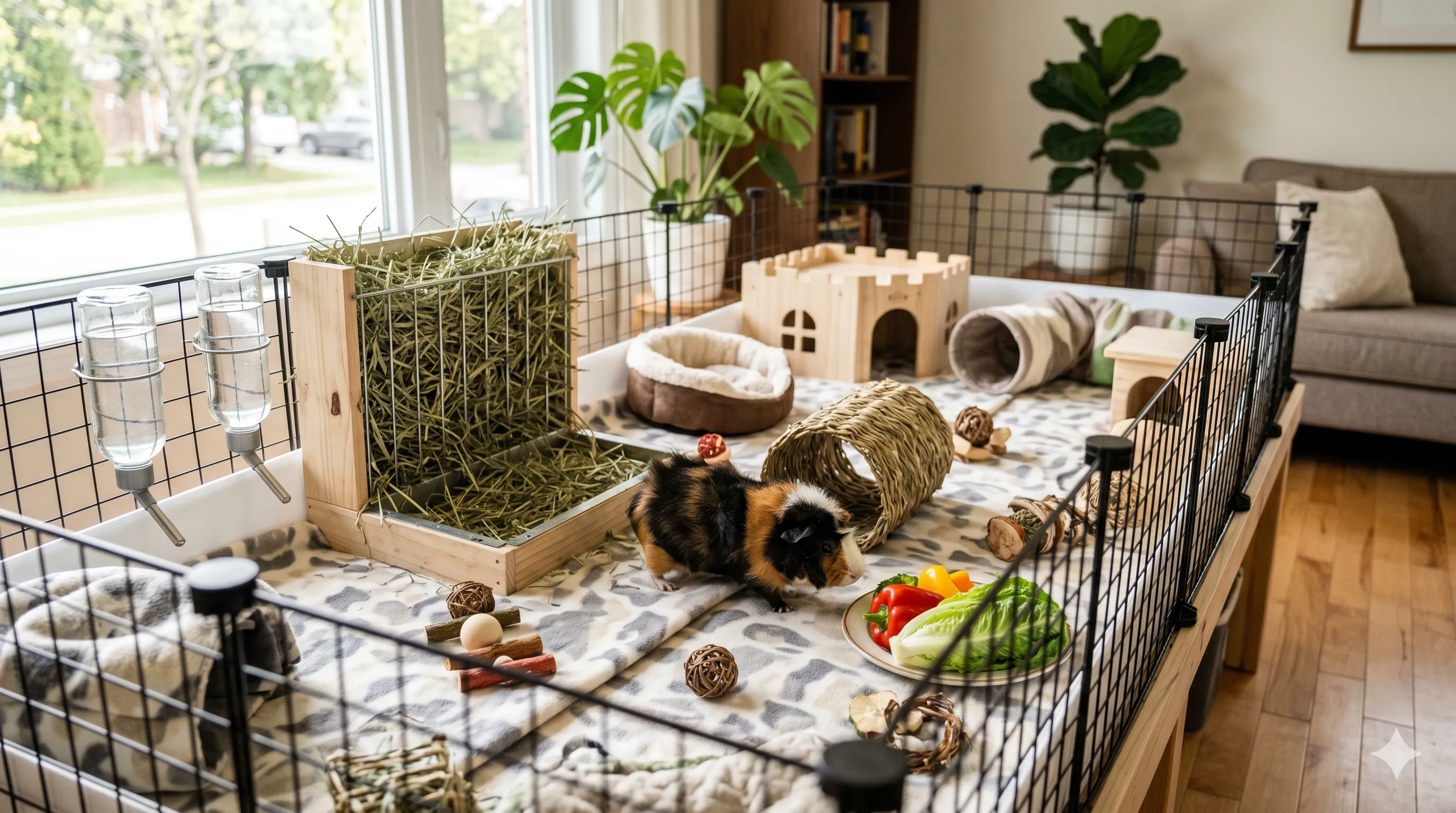
Wire grid panels, zip-tied or clipped together with binder clips, are one of the most popular playpen materials since they fold flat for storage and can be reconfigured into different shapes easily. They pair well with a solid floor liner underneath, since the open grid itself provides no flooring on its own.
Waterproof Fabric Pens
Pre-made waterproof polyester playpens resist urine soaking through and wipe clean easily, making them a low-maintenance option for indoor use. They typically come as a full unit with built-in flooring, which removes a step compared to a grid-panel setup that needs its own separate liner.
DIY Cardboard Playpens
Sturdy cardboard panels taped or glued together make a budget-friendly playpen option, as long as the walls are tall enough that a guinea pig can't climb or push their way out. Cardboard holds up reasonably well for occasional floor-time use but tends to wear out faster than metal or fabric options under daily use.
Flooring and Protecting Your Floors
Best Playpen Flooring Options
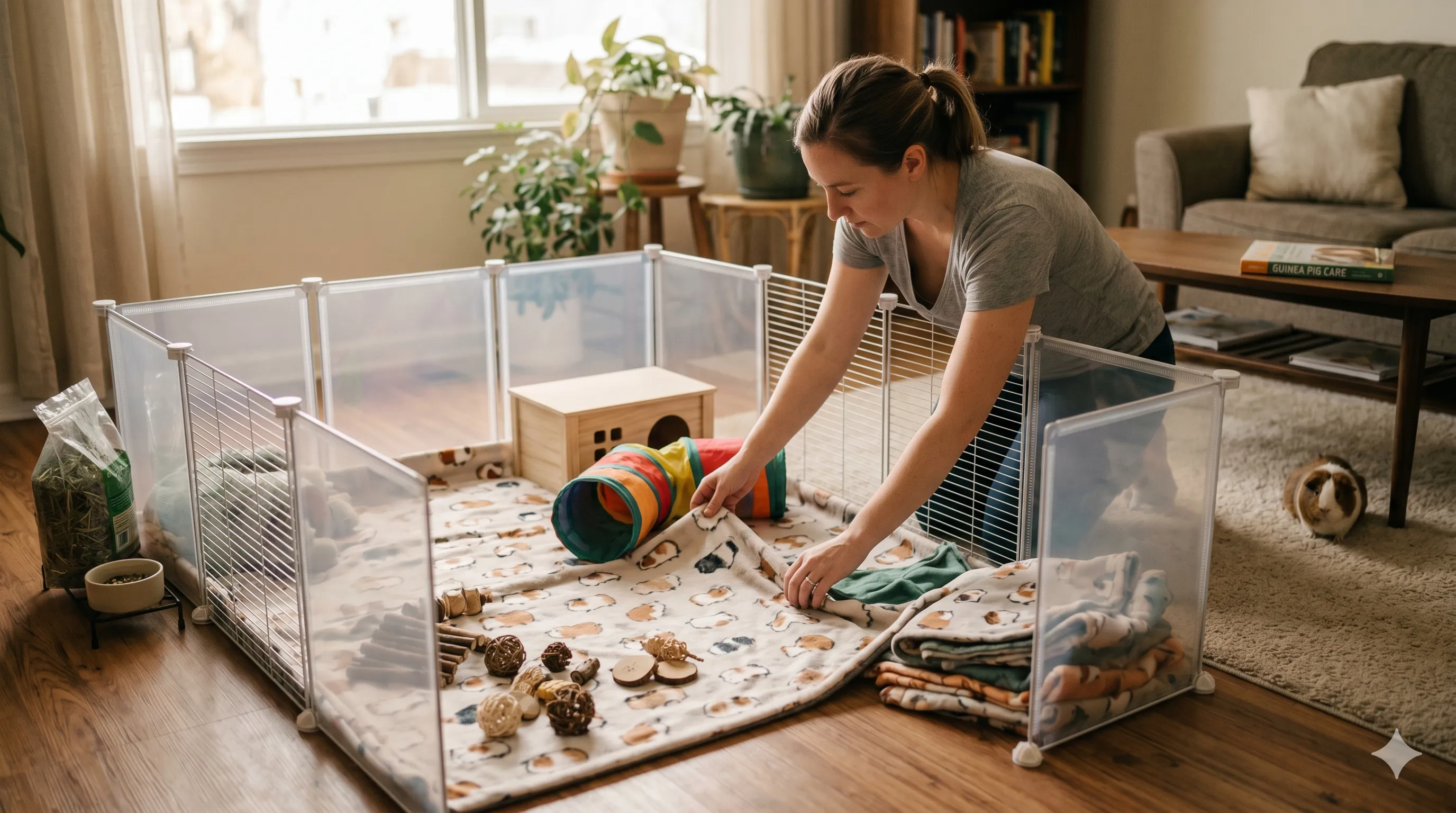
A plastic shower curtain or a waterproof tarp laid down first, topped with fleece or another absorbent liner, protects hardwood or carpet underneath while still giving a guinea pig comfortable footing. Vinyl flooring cut to size works as a similar protective base if you already have some on hand.
What to Avoid
Hard, slippery surfaces like bare tile or hardwood are difficult for guinea pigs to grip and can lead to slips or minor injuries during an excited run across the pen. If the playpen sits directly on a slippery floor, a liner isn't optional — it's the main thing keeping footing safe during actual playtime.
Playpen Height and Escape-Proofing
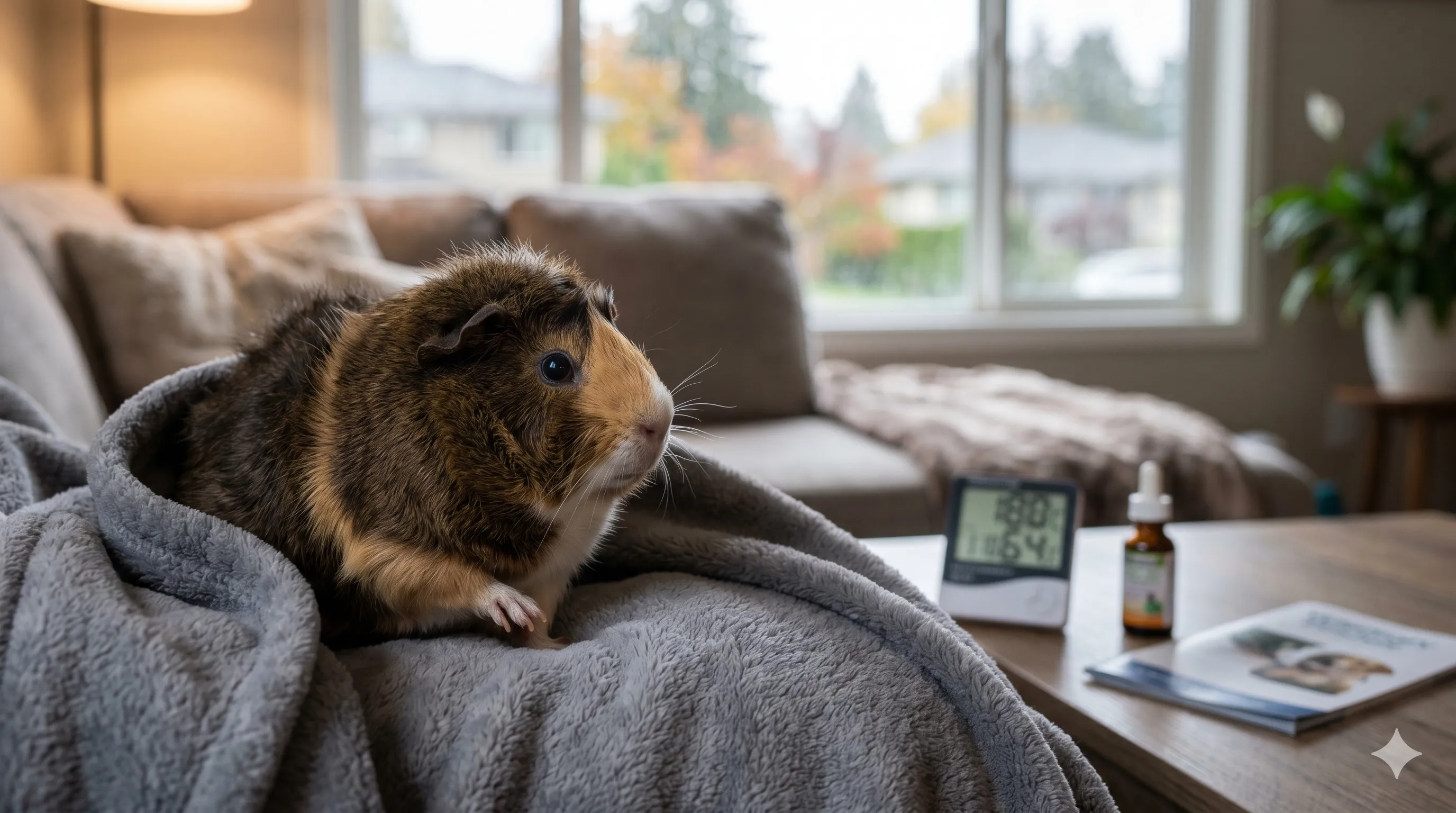
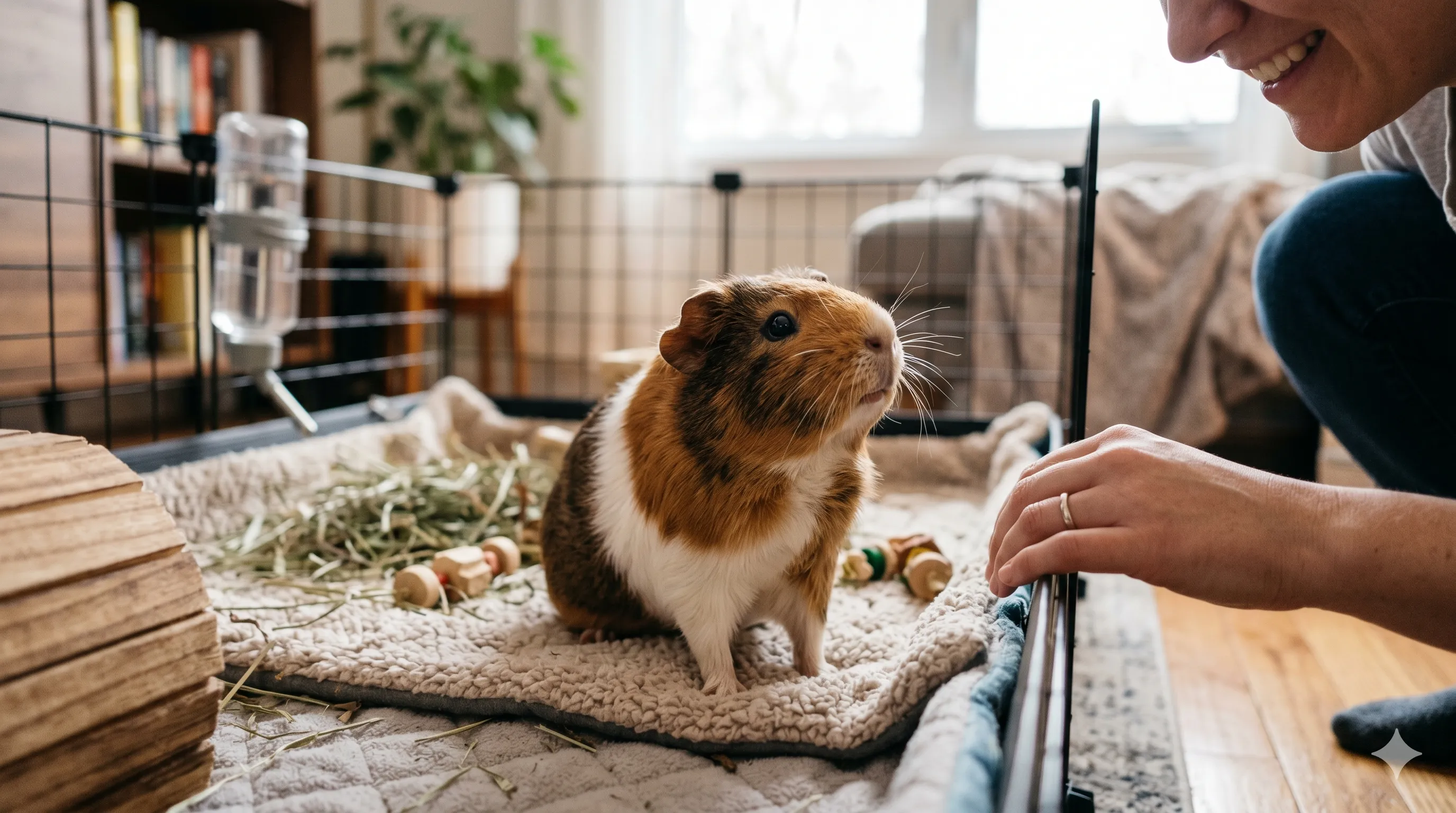
Playpen walls should generally be at least 18 inches tall, since guinea pigs are more capable climbers than they look and are surprisingly good at finding their way out of anything shorter. A boundary that's tall enough removes the need to constantly watch for escape attempts and lets both you and your guinea pig actually relax during floor time. Staying in the room during sessions also means you'll start noticing your guinea pig watching you, since checking in with you periodically during play is a normal part of how guinea pigs interact with a trusted owner. If you're connecting a playpen to a cage or tunnel system, look for panels with a proper connection point rather than improvising a gap that a guinea pig could squeeze through.
Filling the Playpen: Hideouts, Toys and a Litter Box
At least one hideout inside the playpen gives a naturally cautious animal somewhere to retreat if playtime feels overwhelming, and guinea pig hiding behavior is worth a read if a guinea pig seems to spend most of playtime tucked away rather than exploring. Tunnels and a couple of safe chew toys add real enrichment value, and guinea pig teeth problems explains why that chewing matters for more than just entertainment. A small litter box inside the pen helps keep a fleece-lined playpen clean during longer sessions, especially useful if floor time regularly runs long.
Indoor vs Outdoor Playpen Use
An indoor playpen is the safer year-round default, protected from weather swings and predators that an outdoor pen simply can't guard against. A roofless playpen used outdoors is never safe unsupervised, since cats, dogs, birds of prey and other predators can approach faster than most owners expect. If outdoor time does happen, it should be short, fully supervised, and treated as a supplement to indoor exercise rather than a replacement for it.
Expert Tips for a Better Playpen Setup
- Set up the playpen somewhere it can stay assembled rather than building and breaking it down every single day, since a ready-to-go pen gets used more consistently.
- Choose grid panels over a fixed-shape pen if your available floor space is an odd shape or size.
- Keep an eye on your guinea pig's normal exploring and munching during the first few sessions, since a happy little hop known as popcorning is one of the clearest signs the space feels safe.
- Wipe down waterproof fabric pens or replace fleece liners promptly after accidents rather than letting dampness sit.
- Position the playpen away from other pets and loud household activity, at least until your guinea pig is confidently used to it.
Common Mistakes to Avoid
- Choosing playpen walls that are too short, underestimating how well guinea pigs can climb.
- Skipping a floor liner on a grid-panel pen and letting a guinea pig run directly on a hard, slippery floor.
- Leaving a roofless playpen outdoors unsupervised, even for a few minutes.
- Forgetting a hideout, leaving a cautious guinea pig with nowhere to retreat during longer sessions.
- Breaking the playpen down and rebuilding it every day instead of leaving it set up, which usually means it gets used less often overall.
Final Thoughts
A good playpen comes down to a handful of practical choices: a size that actually allows running, a material and floor liner that protects both your guinea pig and your home, walls tall enough to rule out an escape, and enough hideouts and toys inside to make the space genuinely enriching rather than just empty room to pace in.
Once it's set up well, daily floor time tends to become a much easier habit to keep, and that's when you'll start hearing the excited little sounds, including guinea pig chirping, that show the playpen is actually working.
A well-planned playpen turns daily floor time from a chore into the easiest part of a guinea pig's routine.
This content is written to provide general educational guidance for guinea pig owners and pet families and is not a substitute for professional veterinary advice.
Medical Disclaimer
This content is provided for informational and educational purposes only and should not be considered veterinary, medical, behavioral, or training advice. While we strive for accuracy, we make no guarantees regarding completeness or results. Always consult a licensed veterinarian or qualified pet care professional before making decisions about your pet’s health, diet, or behavior.
AI Illustration Notice
Some images in this article may have been generated or enhanced using artificial intelligence for illustrative purposes.
Frequently Asked Questions
A popular grid-panel size is roughly a 4 by 4 foot square or a 2 by 6 foot rectangle depending on available floor space. Bigger is generally better since more room encourages actual running rather than just standing around. Multiple guinea pigs sharing a session benefit from extra space even more than a single guinea pig would.
Aim for at least 18 inches since guinea pigs are better climbers than most owners expect. Shorter walls make escape attempts far more likely during an excited run around the pen. A properly tall boundary lets you relax during floor time instead of constantly watching for an attempted climb-out.
Metal grid panels fold flat for storage and work well paired with a separate floor liner. Waterproof fabric pens come with built-in flooring and wipe clean easily which suits regular indoor use. Cardboard panels work as a budget option as long as the walls stay tall enough and get replaced once they wear down.
Line the base with a plastic shower curtain or waterproof tarp topped with fleece for both grip and easy cleanup. Vinyl flooring cut to size works well too if you already have some available. Avoid letting a guinea pig run directly on bare tile or hardwood since those surfaces are slippery and can cause injury.
A roofless playpen is never safe outdoors without full supervision since predators like cats dogs and birds of prey can approach quickly. Indoor use is the safer year-round default since it also avoids weather swings entirely. Occasional short supervised outdoor sessions can supplement indoor exercise but shouldn't replace it.
Include at least one hideout so a cautious guinea pig has somewhere to retreat during longer sessions. Add tunnels and a couple of safe chew toys for enrichment and mental stimulation. A small litter box inside the pen also helps keep a fleece-lined setup clean during extended floor time.
Yes, many grid-panel systems include a dedicated connection point or tunnel link designed for exactly this. Look for panels built with a proper connector rather than leaving an improvised gap a guinea pig could squeeze through. This setup lets a guinea pig move between cage and playpen on a more flexible schedule.
Many owners aim for a scheduled block of supervised time each day rather than occasional long sessions. A playpen that stays assembled and ready to go tends to get used far more consistently than one that has to be built and broken down every time. Consistency matters more than any single long session.
Editorial Note
This article is part of PetNurture's educational library.
Topics draw on publicly available educational resources, recognised veterinary organisations, academic publications and established animal welfare references where appropriate.
The specific sources this article draws on are listed in its References section. If you spot an error, please let us know.
References
The information in this article has been reviewed and supported using the following sources.
RSPCA
Creating a Good Home for Guinea Pigs
RSPCA guidance notes young guinea pigs need roughly 30cm of vertical space to perform their characteristic 'frisky hop' play behavior, sometimes called popcorning, supporting the need for a properly sized, secure exercise space.
Accessed Aug 6, 2026
Humane Society
Guinea Pig Housing Requirements and Bedding Options
The Humane Society specifies that a guinea pig enclosure needs a floor that is gentle on a guinea pig's delicate feet, a principle that also applies to choosing a safe, non-slip playpen floor liner.
Accessed Aug 6, 2026
Pet Emergency Guidance
Every pet is unique. If your pet exhibits severe symptoms, sudden behavioral changes, or a medical emergency, do not rely on online guides — contact a licensed veterinarian or emergency clinic immediately.
About PetNurture
PetNurture is an educational library of pet care guides, interactive tools and practical resources for pet parents. We work continuously to keep our content accurate and up to date. Reader feedback helps us maintain content quality.
Related Articles
Popular Guinea Pig Guides
Guinea Pig
Guinea Pig Feeding Calculator
Calculate daily food portions for your guinea pig by weight.
Guinea Pig
Guinea Pig Cage Size Calculator
Find the minimum recommended cage size for your guinea pigs.