How Often Should You Clean a Guinea Pig Cage? (Cleaning Guide)
- Why Cleaning Frequency Matters
- Daily Spot Cleaning
- What to Remove Every Day
- Twice a Day Is Even Better
- Weekly Full Cage Cleaning
- What a Full Clean Actually Involves
- When to Clean More Than Once a Week
- Choosing Safe Cleaning Products
- What to Avoid
- A Simple Vinegar Solution
- Signs Your Cage Needs Cleaning More Often
- Expert Tips for an Easier Cleaning Routine
- Common Mistakes to Avoid
- Final Thoughts
Note: This article is for informational purposes only and does not replace professional veterinary advice.
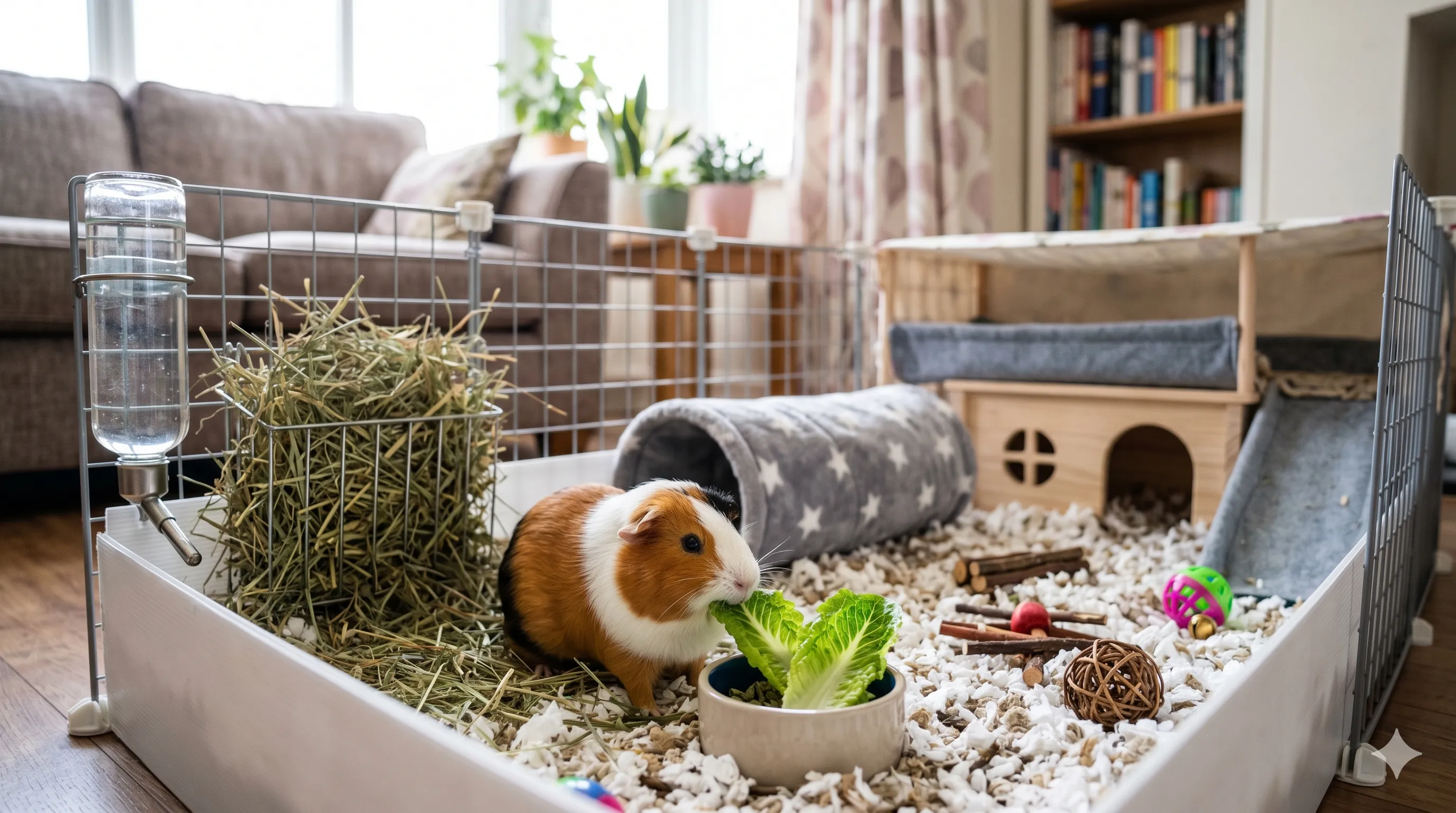
A guinea pig cage can look fine on the surface while still building up odor, dampness and bacteria underneath, which is why cleaning frequency matters just as much as the cleaning itself. Getting the schedule right means striking a balance between daily upkeep and a more thorough weekly reset, without over-cleaning to the point of constantly disrupting your guinea pig's routine. This guide breaks down what daily spot cleaning should actually cover, what a proper weekly deep clean involves, which cleaning products are safe to use, and how to tell if your particular setup needs attention more often than the general guideline suggests. For the full basics of indoor guinea pig care beyond cleaning, our complete guinea pig care guide covers everything else that goes into it.
Why Cleaning Frequency Matters
Urine left sitting in bedding for too long starts breaking down into ammonia, and the smell of ammonia building up is usually a sign the cage has gone too long between cleanings rather than something to just mask with air freshener. Since guinea pigs have sensitive respiratory systems, keeping ammonia from building up in the first place matters more than trying to fix a strong smell after it's already there. A consistent cleaning rhythm also keeps mess more manageable overall, since a cage that's regularly tidied never gets bad enough to need an overwhelming reset.
A predictable schedule also means less guesswork day to day, since you're responding to a routine rather than deciding fresh each time whether the cage looks bad enough yet to bother cleaning. That consistency tends to matter more for a guinea pig's day-to-day comfort than any single especially thorough cleaning session ever could.
Daily Spot Cleaning
What to Remove Every Day
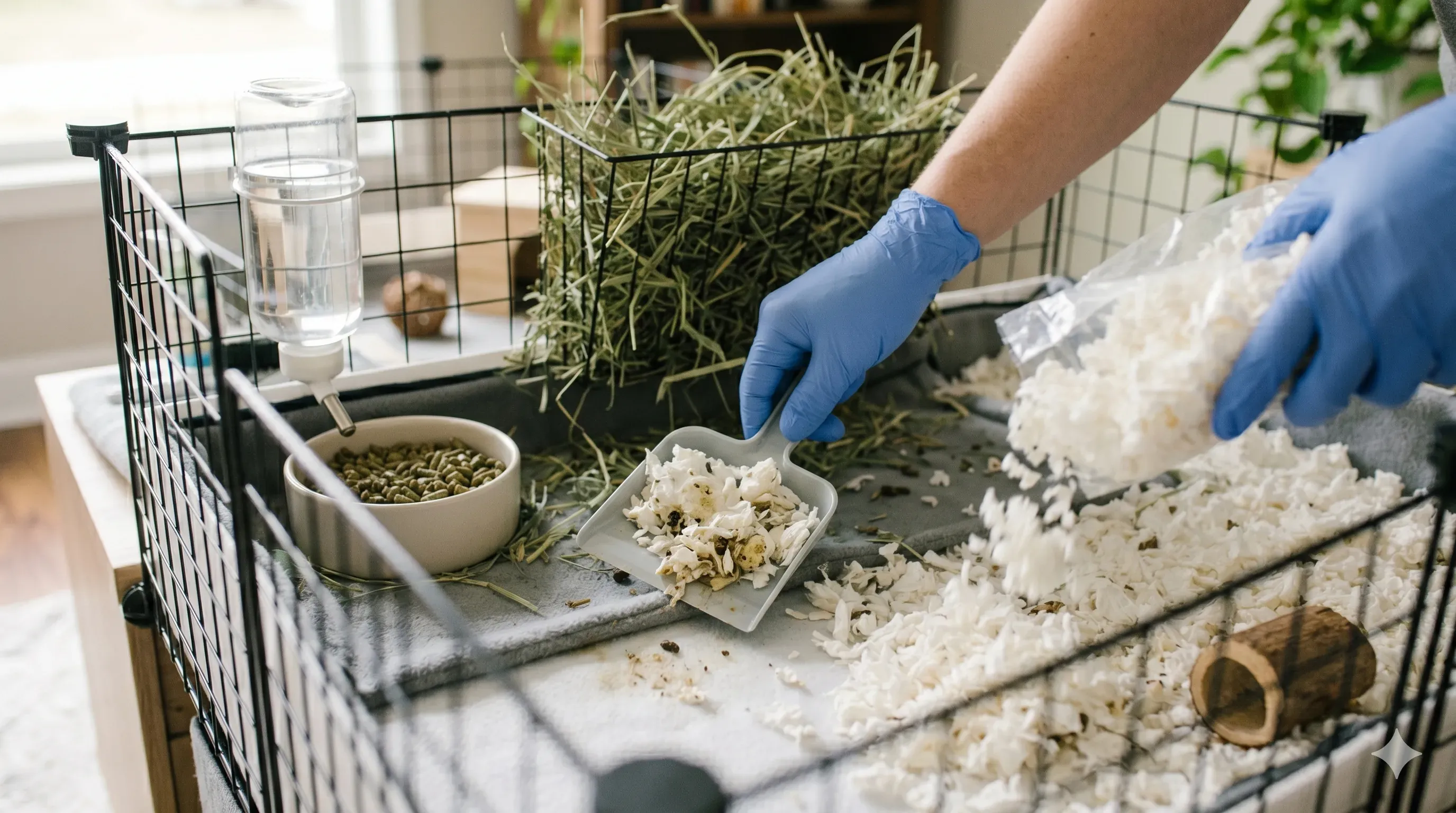
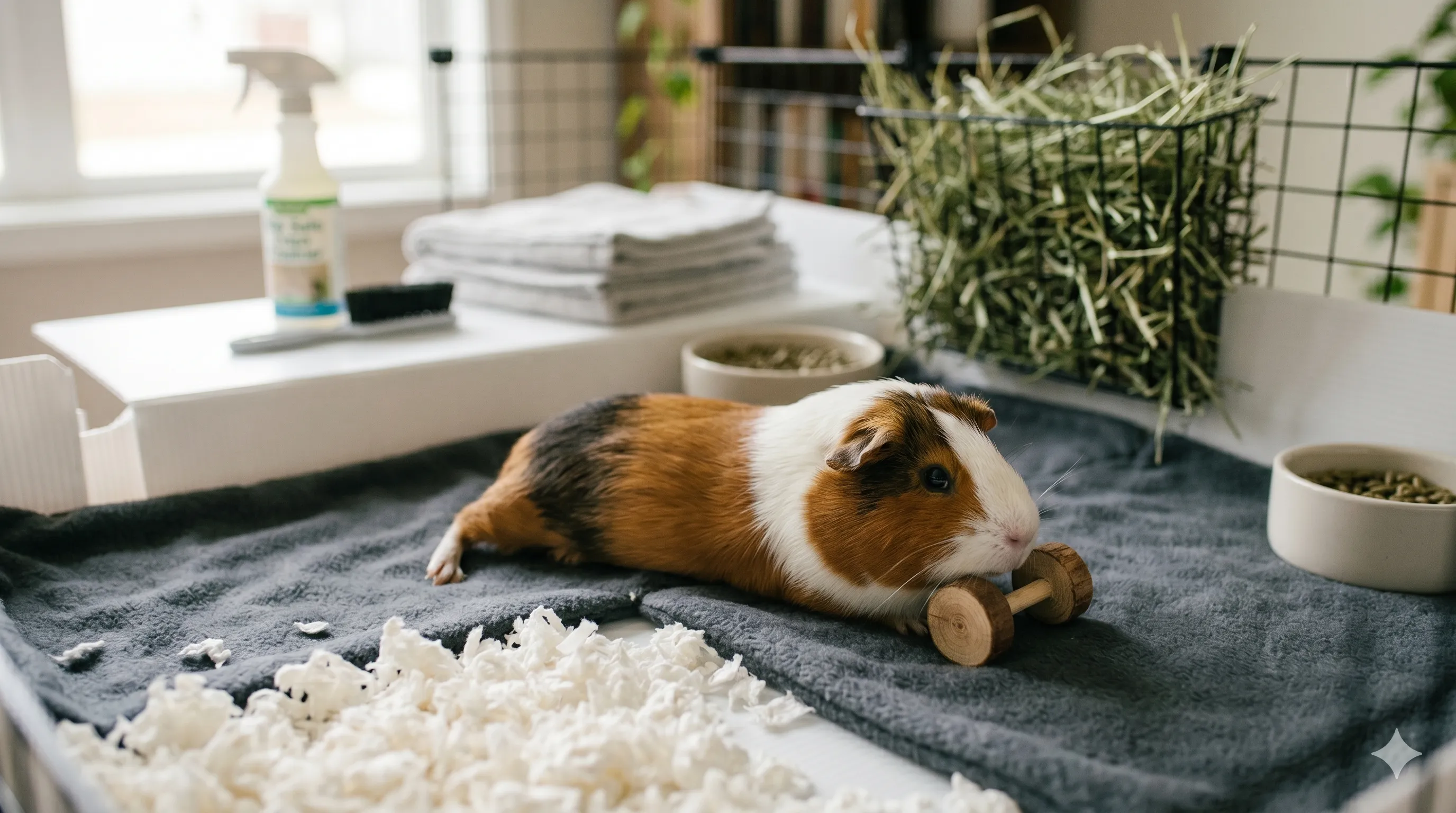
Scoop out droppings, remove any wet or soiled bedding, and clear away uneaten fresh food before it sits long enough to spoil. This is also a natural moment to glance over the litter corner, and our guide to guinea pig poop is a handy reference if anything there ever looks different from usual. A small scoop, dustpan, or dedicated cup makes this quick daily pass fast enough that it never feels like a chore.
Twice a Day Is Even Better
A quick pass in the morning and another in the evening keeps things fresher around the clock than a single daily check, especially in a smaller cage or one housing more than one guinea pig. It doesn't need to take more than a minute or two each time once it's part of the daily routine.
Weekly Full Cage Cleaning
What a Full Clean Actually Involves
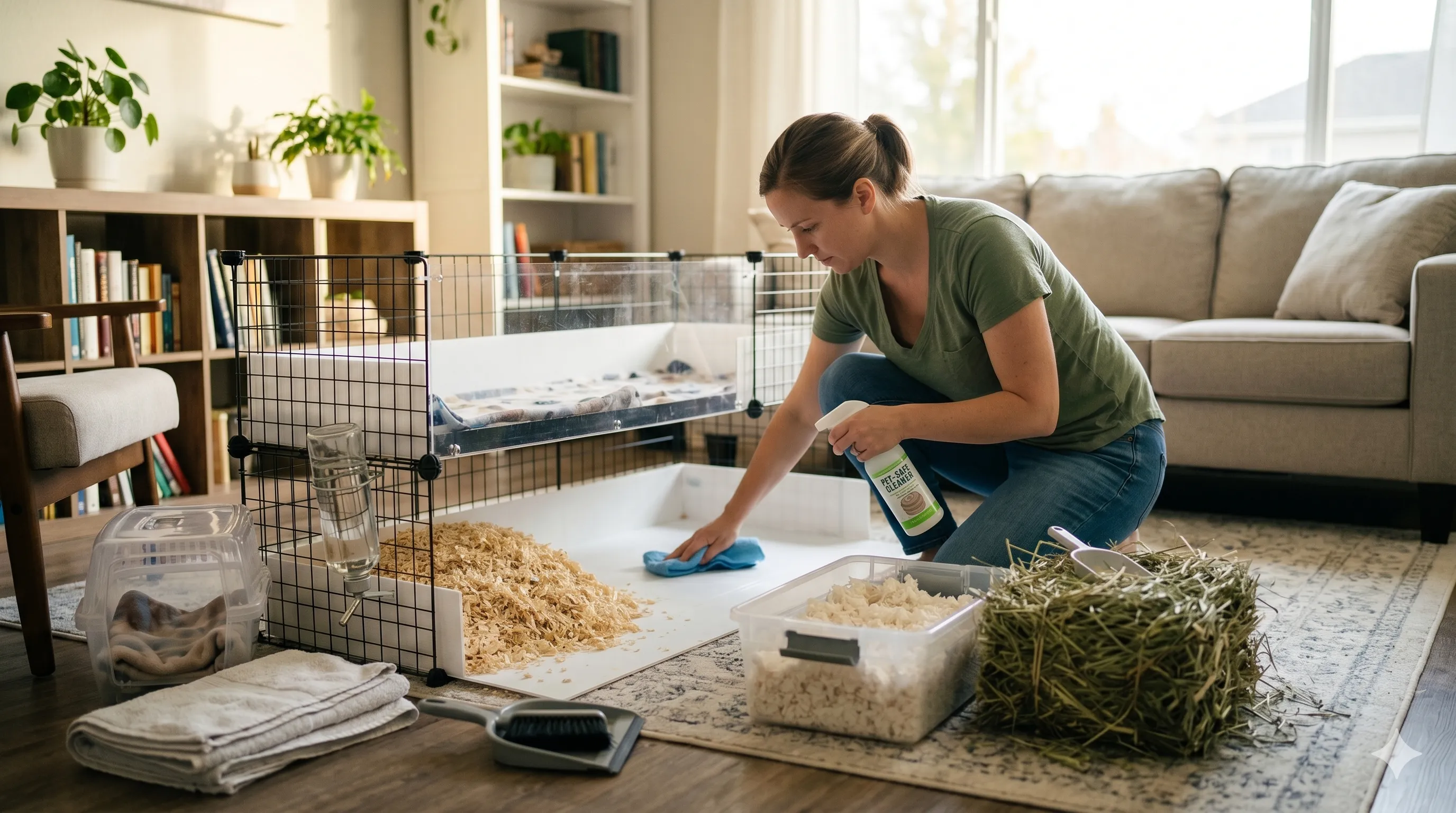
A full weekly clean means replacing all the bedding rather than just the visibly soiled patches, washing the water bottle and food bowl, and wiping down hideouts, ramps and other hard surfaces. Spot cleaning handles the obvious daily mess, but only a full weekly reset actually clears out the residue and buildup that accumulates in corners and on hard surfaces over several days. Most owners find a full clean takes somewhere between fifteen and thirty minutes once bedding, cleaning solution and fresh accessories are all ready to go beforehand, which is short enough to fit into a normal weekend routine without much disruption.
When to Clean More Than Once a Week
Multiple guinea pigs sharing a cage, a smaller footprint, or a particularly messy pig can all mean a full clean twice a week works better than once. If damp patches keep reappearing well before the next scheduled clean even with daily spot cleaning in place, that's a reliable sign the current schedule needs to be more frequent rather than a one-off exception.
Choosing Safe Cleaning Products
What to Avoid
Bleach, ammonia-based cleaners and anything heavily fragranced should stay out of a guinea pig's cage entirely, since the fumes can irritate a sensitive respiratory system well beyond what a person would notice. A guinea pig that starts sneezing more than usual shortly after a cage cleaning is worth a closer look, since a leftover chemical smell is a common and easily fixable cause. Fumes and residue from harsh products can also settle around the face during normal digging and burrowing, and crusty or irritated eyes is worth a read if that ever seems to be happening after a cleaning session.
A Simple Vinegar Solution
A diluted mix of distilled white vinegar and water, roughly equal parts of each, is commonly recommended as a safe, natural option for wiping down hard surfaces and helping break down urine residue. Rinse and fully dry any surface afterward, since guinea pigs have a much stronger sense of smell than people do and won't appreciate lingering vinegar odor any more than a chemical one. Keeping this simple solution mixed and ready in a labeled spray bottle makes the weekly wipe-down faster, since there's no need to measure it out fresh every single time.
Signs Your Cage Needs Cleaning More Often
A persistent smell that returns quickly after a full clean, bedding that feels damp again within a day or two, or a guinea pig that seems to spend more time than usual tucked away can all point to a cage that needs attention more frequently than its current schedule. guinea pig hiding behavior is worth a read if that last sign shows up alongside a genuinely dirtier-than-usual cage, since environment is one of several things worth ruling out.
Expert Tips for an Easier Cleaning Routine
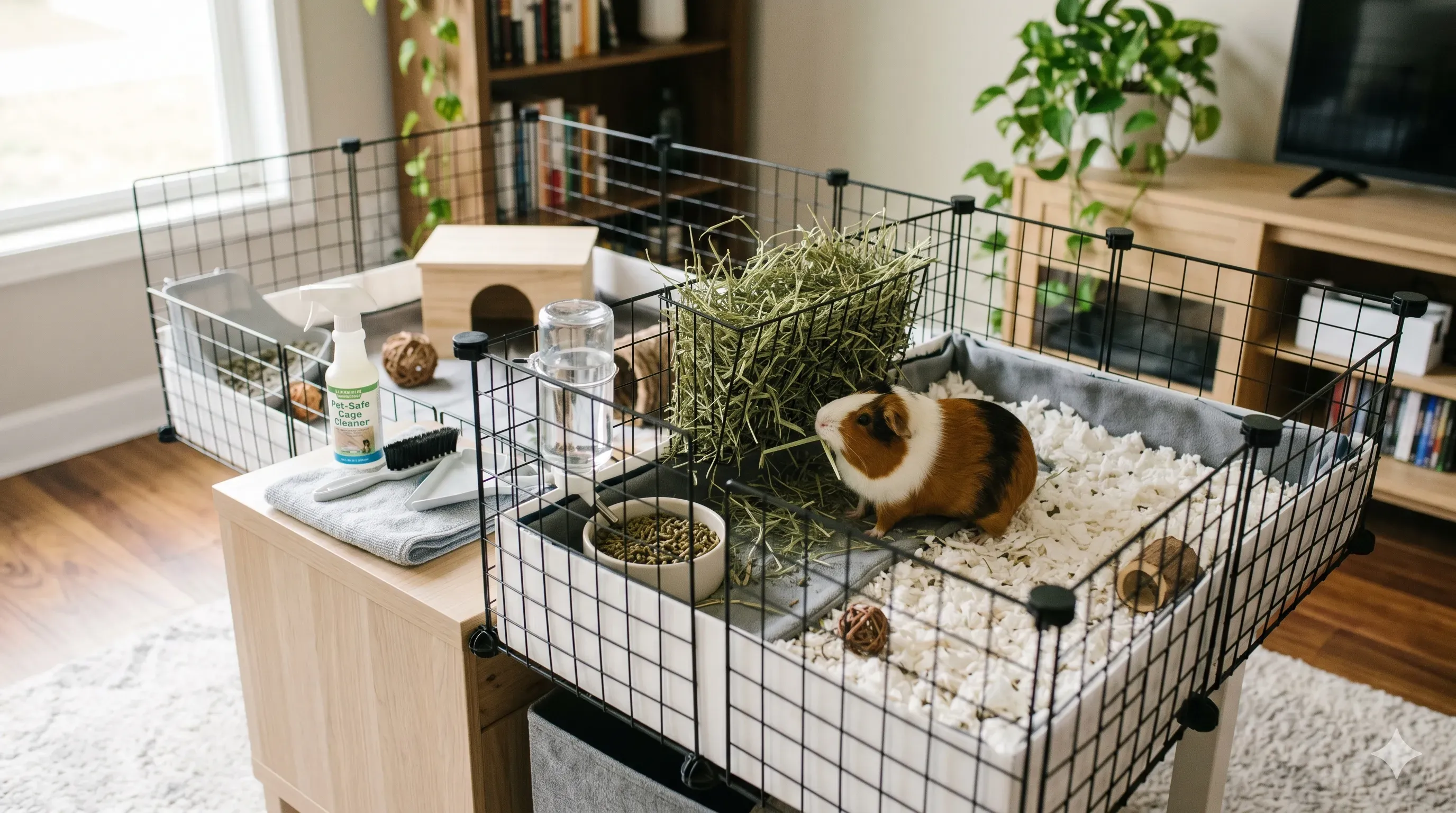
- Keep cleaning supplies stored right next to the cage so the daily spot-clean pass takes as little effort as possible.
- Do the weekly full clean on the same day every week so it becomes an automatic habit rather than something you have to remember.
- Have a spare set of hideouts or accessories on hand so wet ones can dry fully before going back in the cage.
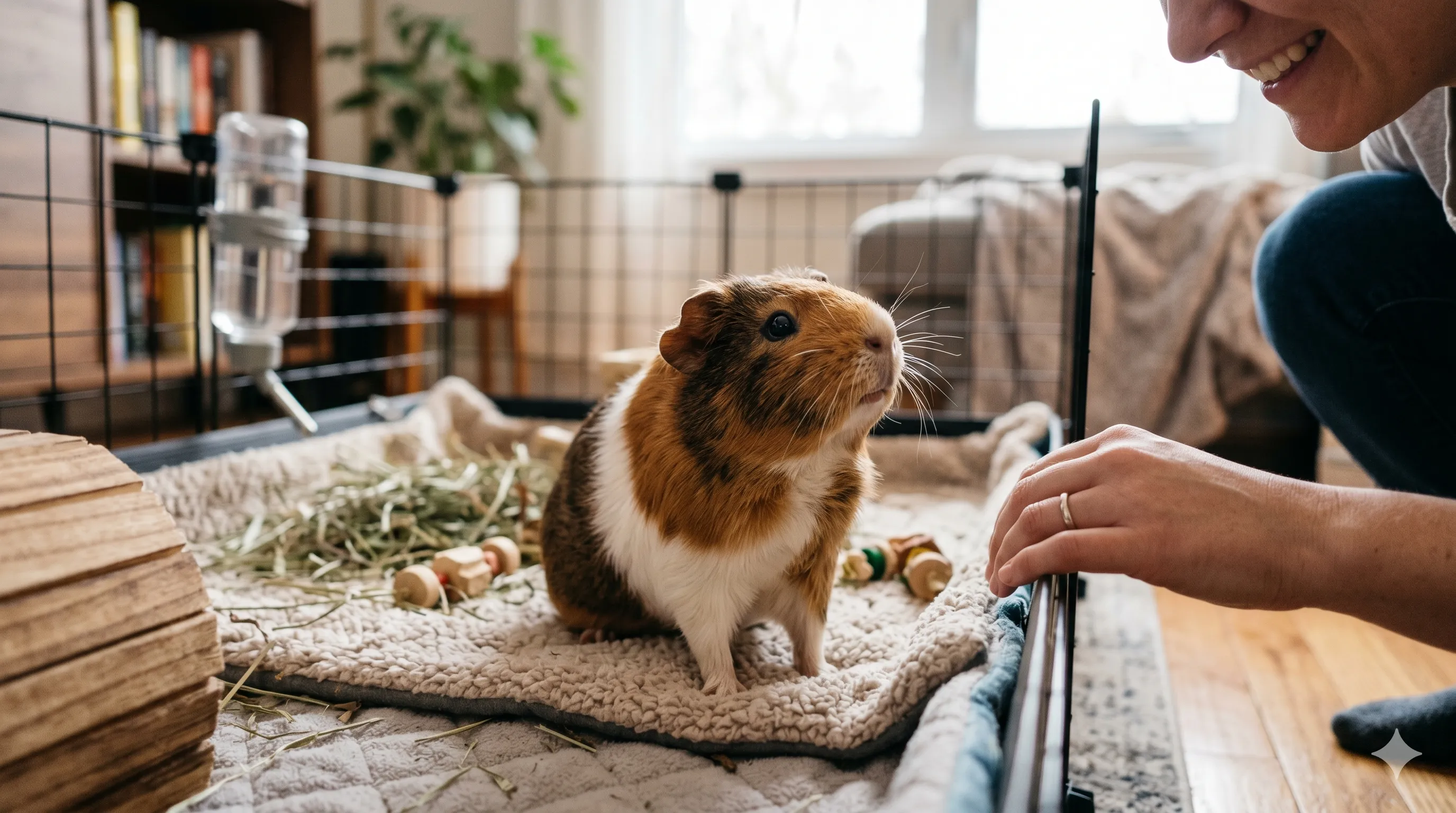
- Watch for confident exploring once a fresh clean is done — it's a good sign the reset was worth the effort.
- Adjust the schedule seasonally, since a warmer room can speed up odor buildup compared to a cooler one.
Common Mistakes to Avoid
- Only spot cleaning and skipping the full weekly reset entirely.
- Reaching for bleach, ammonia-based cleaners or scented products instead of a guinea pig-safe option.
- Putting damp accessories straight back into the cage instead of letting them fully dry first.
- Sticking to a fixed weekly schedule even after damp patches or odor start reappearing early.
- Masking a growing ammonia smell with air freshener instead of cleaning the cage sooner.
Final Thoughts
A simple daily spot clean paired with a genuine weekly full reset covers most guinea pig cages without much extra effort once it's a habit.
Watch for the specific signs that your setup needs more frequent attention, stick to safe cleaning products, and the whole routine stays quick and manageable rather than becoming an occasional overwhelming chore — confident exploring and the occasional happy popcorning are good signs the reset was worth it.
A consistent schedule beats any single deep clean, no matter how thorough.
This content is written to provide general educational guidance for guinea pig owners and pet families and is not a substitute for professional veterinary advice.
Medical Disclaimer
This content is provided for informational and educational purposes only and should not be considered veterinary, medical, behavioral, or training advice. While we strive for accuracy, we make no guarantees regarding completeness or results. Always consult a licensed veterinarian or qualified pet care professional before making decisions about your pet’s health, diet, or behavior.
AI Illustration Notice
Some images in this article may have been generated or enhanced using artificial intelligence for illustrative purposes.
Frequently Asked Questions
Spot clean at least once a day by scooping droppings and removing soiled bedding and leftover food. Twice a day works even better especially in a smaller cage or one with multiple guinea pigs. This quick daily pass keeps things fresh between full cleanings.
A full clean including all new bedding and washed bottles and bowls should happen at least once a week. Multiple guinea pigs or a smaller cage may need this twice a week instead. Watch for damp patches or odor returning early as a sign to clean more often.
Avoid bleach ammonia-based cleaners and anything heavily fragranced since fumes can irritate a guinea pig's sensitive respiratory system. A diluted mix of distilled white vinegar and water is a commonly recommended safe natural option. Always rinse and fully dry surfaces afterward before putting your guinea pig back.
Urine left sitting too long breaks down into ammonia which causes that strong smell. This usually means the current cleaning schedule needs to be more frequent rather than needing an air freshener. A faster cleaning rhythm addresses the actual cause instead of just covering the smell.
A smell that returns quickly after a full clean or bedding that feels damp again within a day or two are both reliable signs. More guinea pigs sharing a cage or a smaller footprint often mean a more frequent schedule works better. Trust these signs over a fixed one-size-fits-all schedule.
Yes, a diluted mix of roughly equal parts distilled white vinegar and water is a commonly used safe cleaning option. It helps break down urine residue on hard surfaces without harsh fumes. Just be sure to rinse and fully dry everything afterward since guinea pigs are sensitive to strong smells.
Yes, a cage housing two or more guinea pigs generally needs a full clean twice a week rather than once. More guinea pigs simply means more waste building up in the same space. Daily spot cleaning still matters just as much regardless of how many guinea pigs share the cage.
Constantly disrupting the whole cage beyond what's actually needed can be more stressful than helpful for a guinea pig. Daily spot cleaning plus a genuine weekly full reset is usually enough for most setups. Extra frequency should be based on real signs like odor or dampness rather than cleaning for its own sake.
Editorial Note
This article is part of PetNurture's educational library.
Topics draw on publicly available educational resources, recognised veterinary organisations, academic publications and established animal welfare references where appropriate.
The specific sources this article draws on are listed in its References section. If you spot an error, please let us know.
References
The information in this article has been reviewed and supported using the following sources.
PDSA
The Ideal Home for Your Guinea Pig
PDSA recommends a three-tier cleaning routine: daily removal of soiled bedding and uneaten food, a weekly thorough clean, and a monthly deep clean with full bedding replacement.
Accessed Aug 6, 2026
Humane Society
Guinea Pig Housing Requirements and Bedding Options
The Humane Society notes that cedar and pine bedding release chemicals that irritate a guinea pig's respiratory system, particularly once soiled, underscoring why a consistent cleaning schedule matters.
Accessed Aug 6, 2026
Pet Emergency Guidance
Every pet is unique. If your pet exhibits severe symptoms, sudden behavioral changes, or a medical emergency, do not rely on online guides — contact a licensed veterinarian or emergency clinic immediately.
About PetNurture
PetNurture is an educational library of pet care guides, interactive tools and practical resources for pet parents. We work continuously to keep our content accurate and up to date. Reader feedback helps us maintain content quality.
Related Articles
Popular Guinea Pig Guides
Guinea Pig
Guinea Pig Feeding Calculator
Calculate daily food portions for your guinea pig by weight.
Guinea Pig
Guinea Pig Cage Size Calculator
Find the minimum recommended cage size for your guinea pigs.