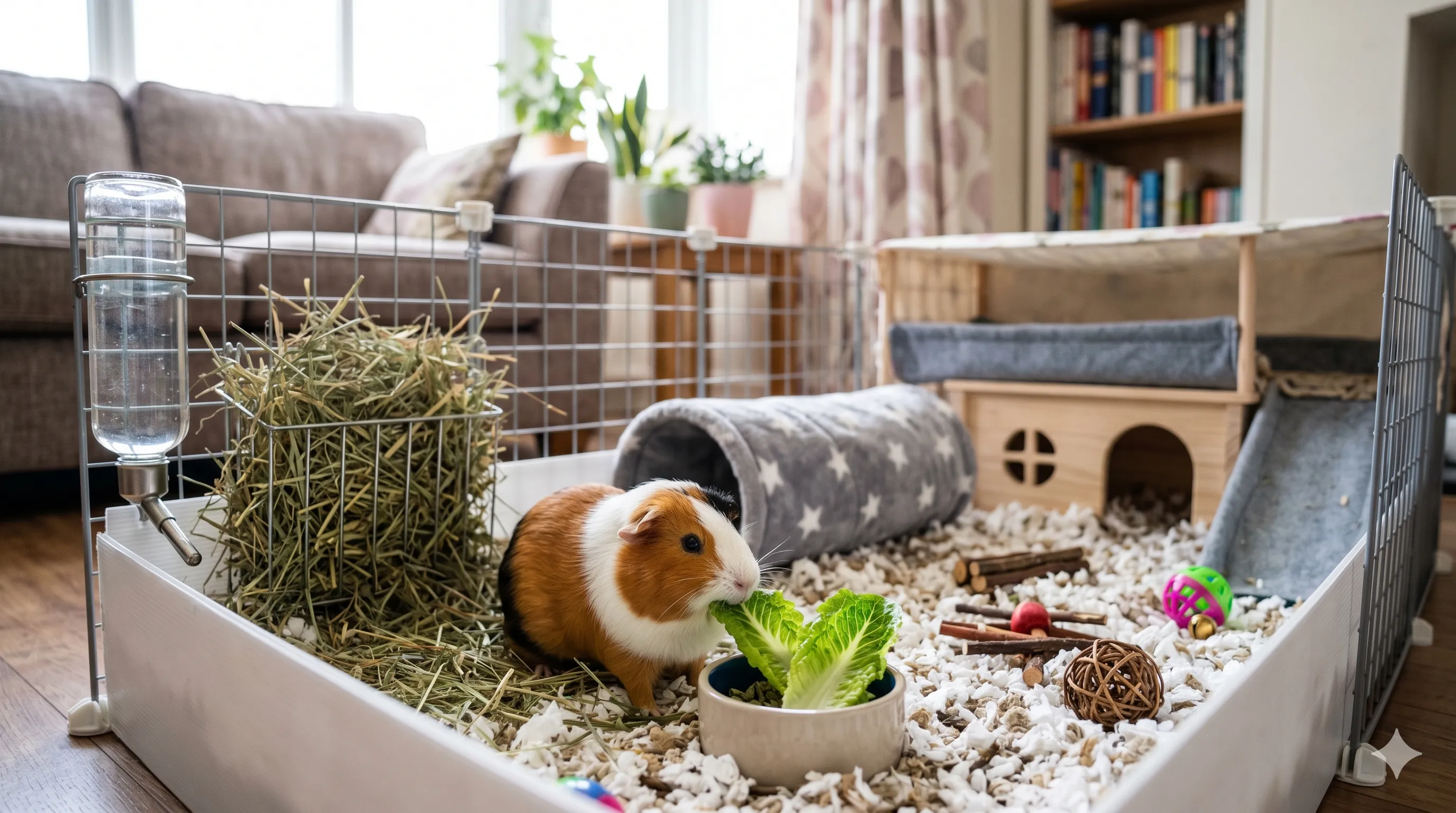
How to Make a Guinea Pig Cage Smell Less (Easy Cleaning Tips)
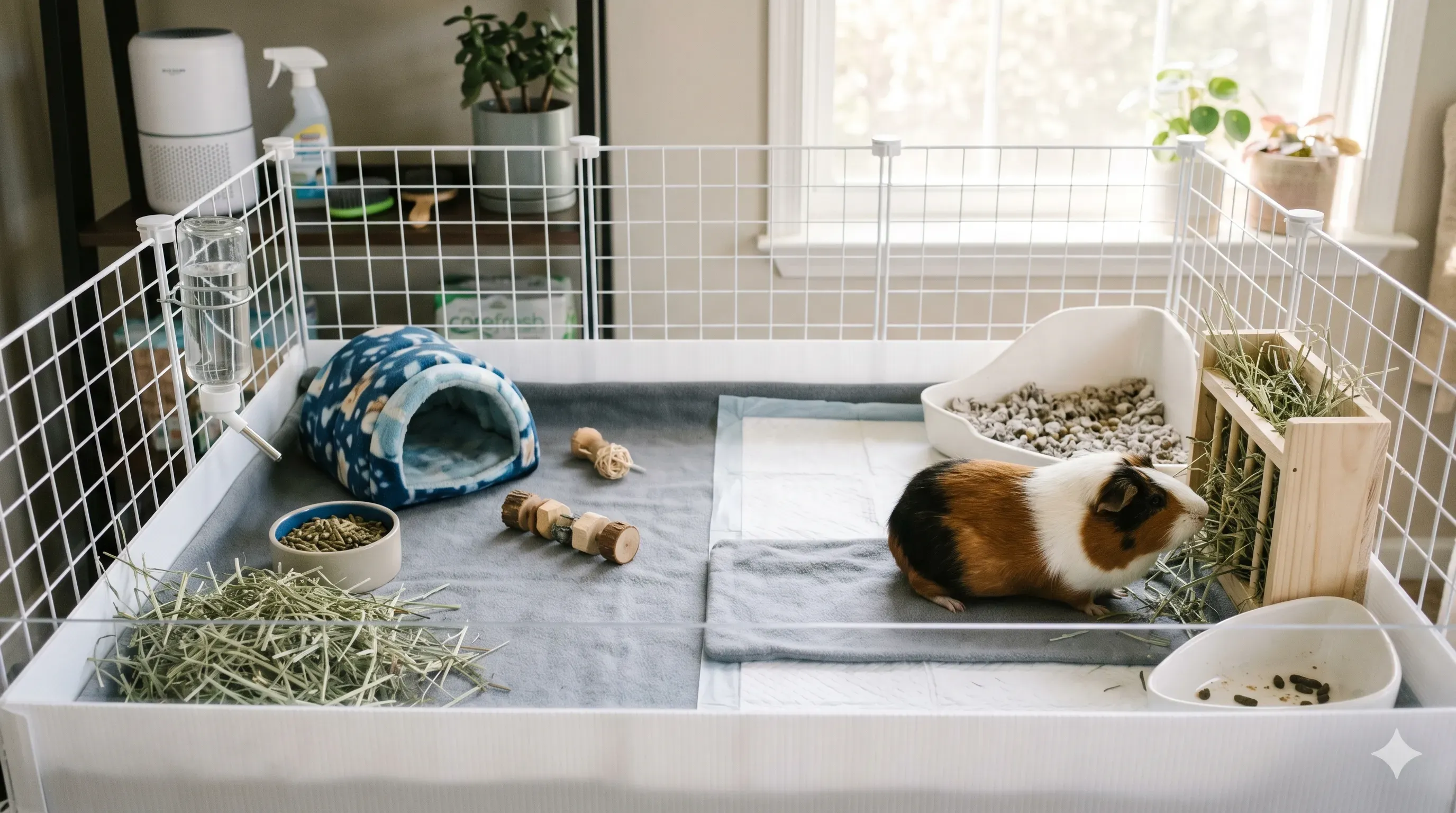
- Why Guinea Pig Cages Smell in the First Place
- A Cleaning Schedule That Actually Controls Odor
- Daily Spot Cleaning
- Weekly Full Cleans
- Fleece Liner Laundering
- Best Bedding Choices for Odor Control
- Fleece with an Absorbent Layer
- Paper and Aspen Bedding
- Wood Pellet Bedding
- Extra Odor-Absorbing Tricks
- Baking Soda Under the Bedding
- Pee Pads in High-Traffic Corners
- Airflow and Cage Placement
- When Persistent Smell Signals a Bigger Problem
- The Cleaning Schedule Isn't Actually Being Followed
- The Bedding Layer Is Too Thin
- The Vinegar Ratio Is Off
- Expert Tips for Long-Term Odor Control
- Common Mistakes to Avoid
- Final Thoughts
Note: This article is for informational purposes only and does not replace professional veterinary advice.
A guinea pig cage that smells strongly of ammonia almost always comes down to three things: not cleaning often enough, bedding that doesn't absorb urine well, and poor airflow around the cage. Fix those three and the smell drops off within a day or two, no air fresheners or scented sprays needed. This guide covers a cleaning schedule that actually keeps odor away, which bedding types absorb urine best, and a few extra tricks like baking soda and better cage placement that make a real difference between cleanings.
Why Guinea Pig Cages Smell in the First Place
The smell itself is ammonia, released as bacteria break down urea in guinea pig urine. It builds up fast because guinea pigs urinate frequently and don't bury or cover waste the way some other small pets do, so a cage left too long between cleanings can go from fresh to noticeably strong within a day or two. Male guinea pigs tend to smell more than females since they have an active grease gland near the base of their tail that adds its own scent on top of the usual urine smell.
Ammonia buildup is worth taking seriously beyond the smell itself. Strong ammonia fumes can irritate a guinea pig's eyes and airways with prolonged exposure, so a persistently smelly cage is a sign the space needs attention, not just something to mask with air freshener.
A Cleaning Schedule That Actually Controls Odor
Daily Spot Cleaning
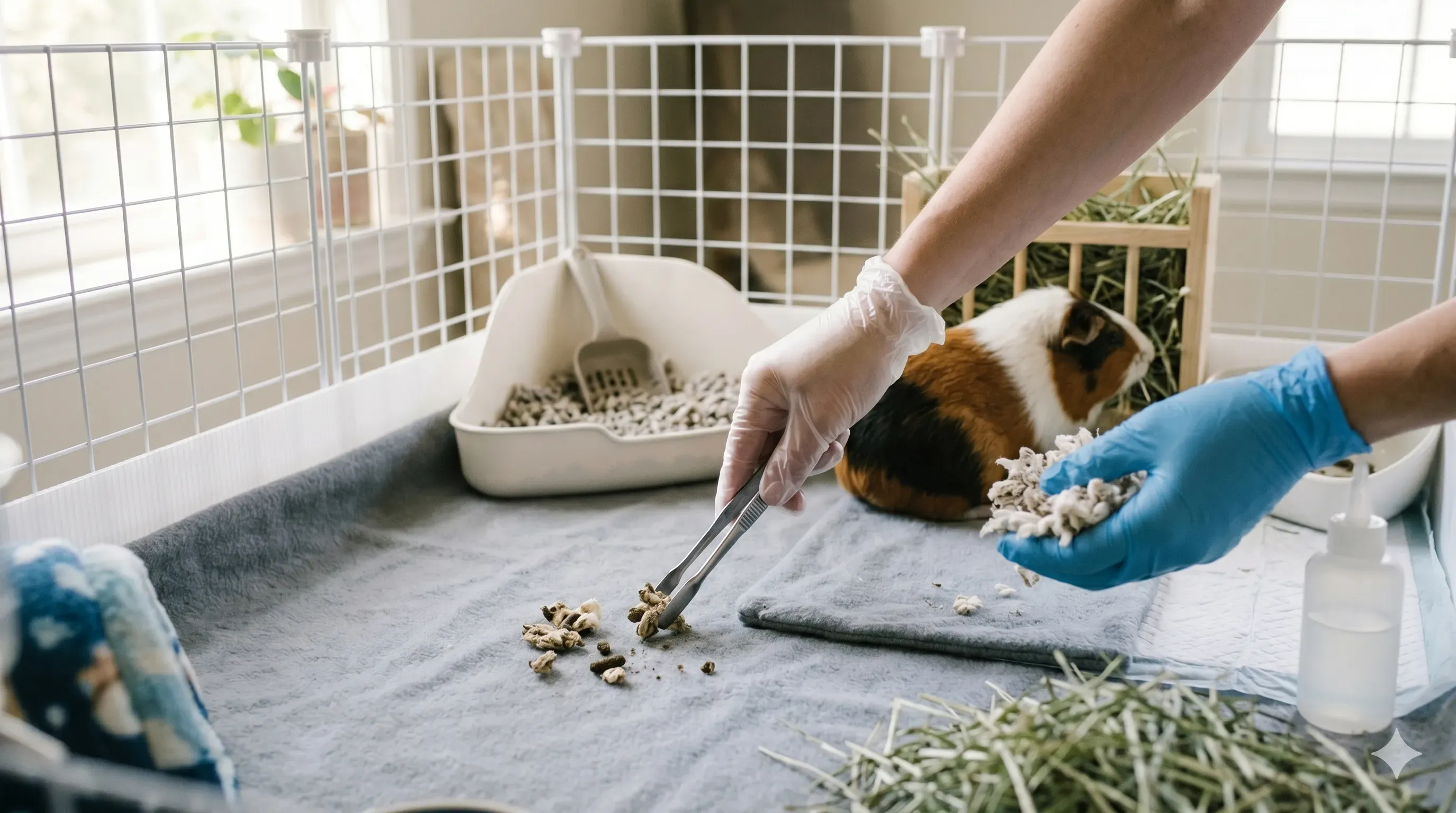
Remove wet bedding, soiled hay, and droppings from the most-used corners every day. This single habit does more for odor control than any product, since it stops ammonia from ever building up to a noticeable level in the first place.
Weekly Full Cleans
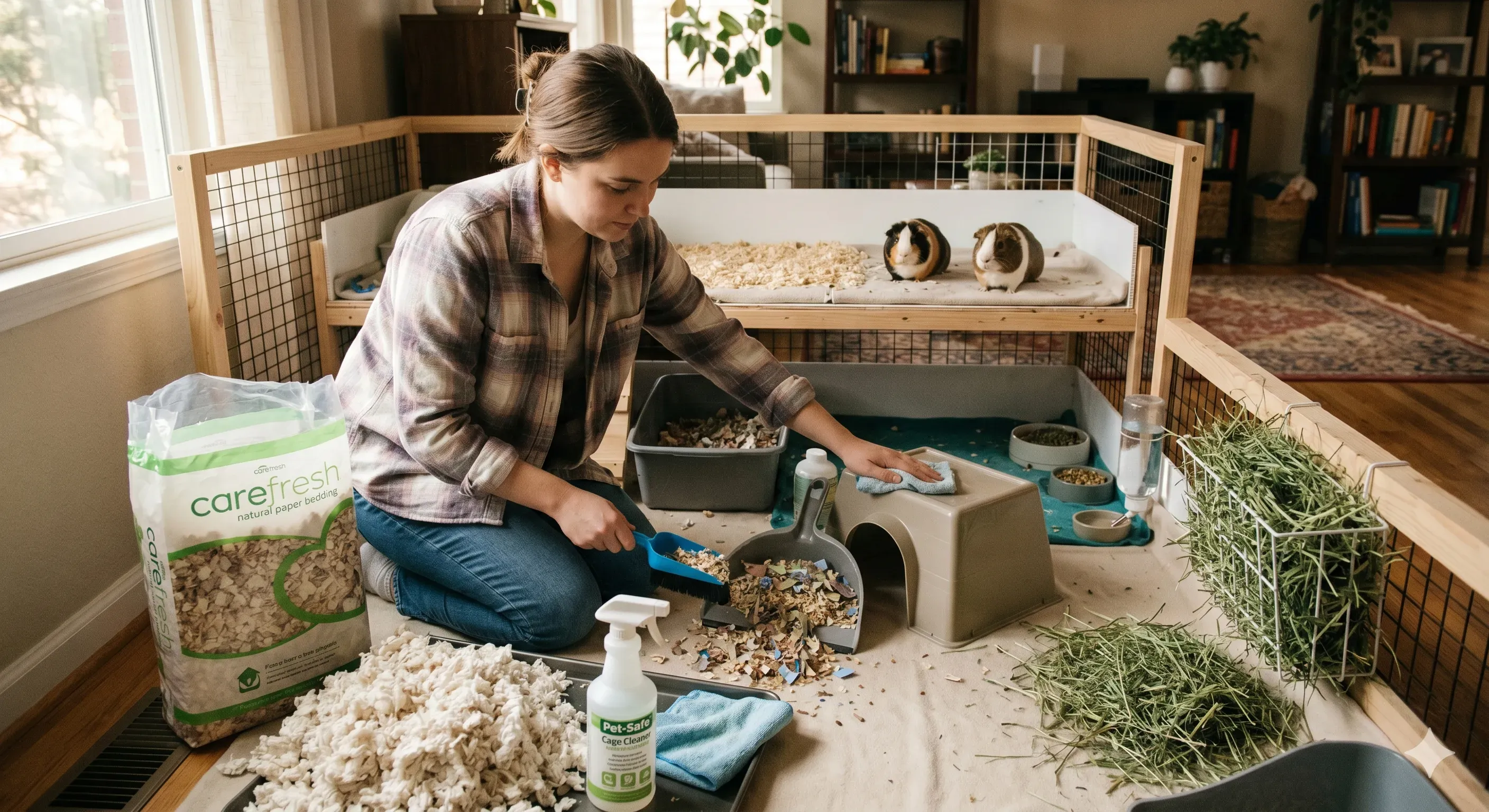
Replace all bedding, wash the base of the cage with a mild pet-safe cleaner or a diluted vinegar solution, and let it dry fully before adding fresh bedding. Cages with more guinea pigs, or a male guinea pig, may need a full clean every four to five days instead of a full week. How often should you clean a guinea pig cage covers this schedule in more depth if odor control is the main thing driving how often you clean.
Fleece Liner Laundering
If the cage uses fleece liners instead of loose bedding, wash them with a free-and-clear detergent and add an extra rinse or soak cycle. Fabric softener and heavily scented detergent can coat fleece fibers and reduce how well they wick urine away, which actually makes odor control worse over time.
Best Bedding Choices for Odor Control
Fleece with an Absorbent Layer
Fleece paired with an absorbent under-layer like towels or a fleece-specific liner pad wicks urine away from the surface, which keeps guinea pigs dry and slows odor buildup between cleans.
Paper and Aspen Bedding
Paper-based bedding and aspen shavings both absorb urine well and are considered safe, low-dust options. Aspen in particular is a common recommendation for households dealing with persistent odor issues.
Wood Pellet Bedding
Wood pellets, the kind sold for stoves or horse stalls, expand and absorb liquid on contact and are often cited as one of the strongest options for odor control specifically. Cedar and pine pellets should still be avoided unless labeled kiln-dried, since raw softwood shavings release phenols that can irritate a guinea pig's respiratory system. The best bedding for guinea pigs goes deeper into comparing these options if odor control is the deciding factor in a bedding choice.
Extra Odor-Absorbing Tricks
Baking Soda Under the Bedding
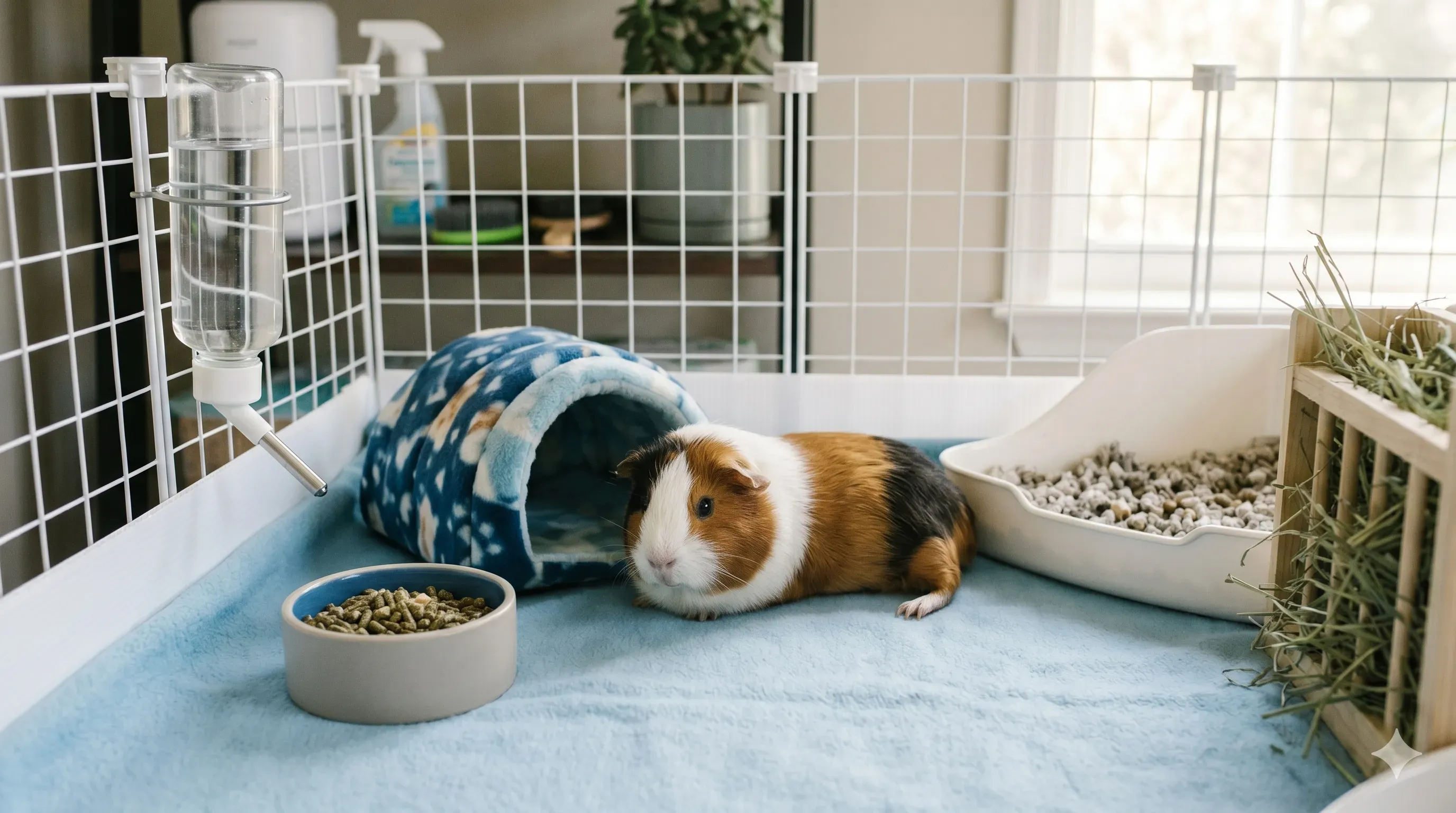
A thin, even layer of plain baking soda sprinkled on the cage base before adding bedding absorbs odor throughout the week rather than just masking it. Keep the layer light so guinea pigs aren't walking directly on a thick powder coating.
Pee Pads in High-Traffic Corners
Lining the corner a guinea pig favors for urinating with a puppy pee pad under the regular bedding adds an extra layer of absorption exactly where it's needed most, and makes that corner faster to spot clean.
Airflow and Cage Placement
A cage tucked into a closed corner with little air movement holds onto ammonia far longer than one in an open, ventilated room. Keeping the cage away from direct drafts but in a room with normal air circulation, or running a HEPA air purifier nearby, noticeably speeds up how fast odor clears between cleanings.
When Persistent Smell Signals a Bigger Problem
The Cleaning Schedule Isn't Actually Being Followed
The single most common reason a cage still smells despite a supposed cleaning routine is that spot cleaning quietly slips from daily to every other day. Setting a fixed time, such as right after breakfast, makes the habit far more consistent than cleaning whenever there's time.
The Bedding Layer Is Too Thin
Bedding needs enough depth to actually absorb urine rather than let it pool on the Coroplast base underneath. A layer that's too thin looks clean on top while trapping liquid and odor below it, which is a common reason a recently cleaned cage still smells within a day.
The Vinegar Ratio Is Off
A one-to-one mix of white vinegar and water handles most routine odor and mineral buildup on the cage base. Stubborn ammonia staining sometimes needs the vinegar left undiluted and given a few minutes to sit before wiping, followed by a full rinse and complete drying before new bedding goes in, since leftover moisture invites odor right back.
Expert Tips for Long-Term Odor Control
- Spot clean at the same time every day so it becomes routine rather than something that gets skipped on busy days.
- Choose bedding based on absorbency first and scent second, since fragranced bedding can irritate a guinea pig without actually solving the underlying odor problem.
- Check droppings during every full clean, since droppings that suddenly look different can point to a diet or health change worth tracking alongside the smell itself.
- Our complete guinea pig care guide covers the full daily and weekly routine this guide's cleaning schedule fits into, if a more complete care checklist is useful.
Common Mistakes to Avoid
- Using scented sprays or air fresheners directly in the cage instead of addressing the bedding and cleaning schedule, which can irritate a guinea pig's sensitive respiratory system.
- Waiting for a visible or strong smell before cleaning, rather than sticking to a set schedule regardless of how the cage smells that day.
- Using fabric softener or heavily scented detergent on fleece liners, which coats the fibers and reduces absorbency.
- Placing the cage in a closed, poorly ventilated corner where ammonia has nowhere to disperse.
Final Thoughts
A cage that smells clean day to day usually isn't the result of one product but a routine: daily spot cleaning, a weekly full clean, bedding chosen for absorbency, and a well-ventilated spot for the cage.
Persistent odor alongside sneezing or crusty eyes is worth a closer look too, since ongoing respiratory irritation from ammonia can sometimes show up as those same symptoms.
Odor control comes down to routine, not products — get the daily and weekly habits right and the smell mostly takes care of itself.
This content is written to provide general educational guidance for guinea pig owners and pet families and is not a substitute for professional veterinary advice.
Medical Disclaimer
This content is provided for informational and educational purposes only and should not be considered veterinary, medical, behavioral, or training advice. While we strive for accuracy, we make no guarantees regarding completeness or results. Always consult a licensed veterinarian or qualified pet care professional before making decisions about your pet’s health, diet, or behavior.
AI Illustration Notice
Some images in this article may have been generated or enhanced using artificial intelligence for illustrative purposes.
Frequently Asked Questions
Spot clean daily and do a full bedding change once a week. Cages with more than two guinea pigs or a male guinea pig often need a full clean every four to five days instead.
Wood pellet bedding and aspen shavings are both strong choices for absorbing urine and controlling smell. Fleece works well too as long as it's paired with an absorbent under-layer and washed without fabric softener.
Yes, a thin layer of plain baking soda under the bedding absorbs odor throughout the week rather than just covering it up. Keep the layer light so the guinea pig isn't walking on a thick powder coating.
Ammonia comes from bacteria breaking down urea in guinea pig urine. Because guinea pigs urinate often and don't cover waste the smell can build up within a day or two if the cage isn't spot cleaned.
It's better avoided since scented sprays can irritate a guinea pig's sensitive respiratory system. Addressing the bedding and cleaning schedule solves the smell at the source instead.
Yes, male guinea pigs have an active grease gland near the base of the tail that adds extra scent on top of normal urine smell. This gland may need occasional gentle cleaning as part of regular grooming.
Not usually since most odor comes from normal urine buildup and a cleaning gap. A sudden change in smell alongside changes in droppings or appetite is worth mentioning to a vet though.
Yes, a cage that's too small for the number of guinea pigs concentrates waste into a smaller area which makes odor build up faster. Sizing the cage correctly makes every other odor-control step work better.
Editorial Note
This article is part of PetNurture's educational library.
Topics draw on publicly available educational resources, recognised veterinary organisations, academic publications and established animal welfare references where appropriate.
The specific sources this article draws on are listed in its References section. If you spot an error, please let us know.
References
The information in this article has been reviewed and supported using the following sources.
Humane Society
Guinea Pig Housing Requirements and Bedding Options
The Humane Society advises against cedar and pine shavings because both can release chemicals that irritate a guinea pig's respiratory system and feet, especially once soiled with urine.
Accessed Aug 6, 2026
PDSA
The Ideal Home for Your Guinea Pig
PDSA recommends a daily removal of soiled bedding and uneaten food alongside a separate weekly thorough cage clean, the same daily-plus-weekly rhythm that keeps ammonia from building up.
Accessed Aug 6, 2026
Pet Emergency Guidance
Every pet is unique. If your pet exhibits severe symptoms, sudden behavioral changes, or a medical emergency, do not rely on online guides — contact a licensed veterinarian or emergency clinic immediately.
About PetNurture
PetNurture is an educational library of pet care guides, interactive tools and practical resources for pet parents. We work continuously to keep our content accurate and up to date. Reader feedback helps us maintain content quality.
Related Articles
Popular Guinea Pig Guides
Guinea Pig
Guinea Pig Feeding Calculator
Calculate daily food portions for your guinea pig by weight.
Guinea Pig
Guinea Pig Cage Size Calculator
Find the minimum recommended cage size for your guinea pigs.